
Interview
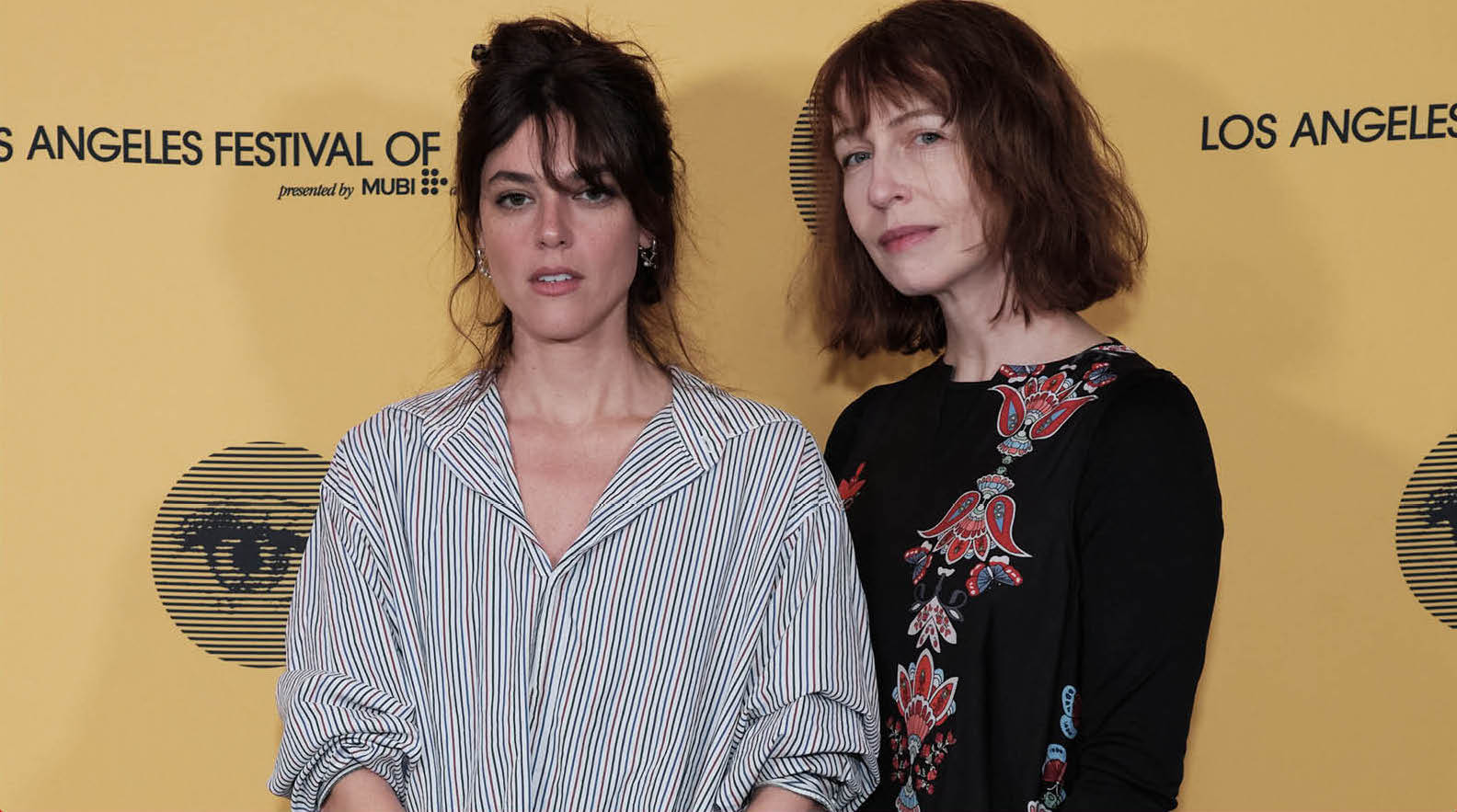
Callie Hernandez & Courtney Stephens
An interview with the two creative forces behind the meta-medical inquiry Invention.
Share:
By the late 1990s, when Callie Hernandez’s father started appearing on public access TV as an alternative medicine huckster, new domestic patent applications in the United States had surged to nearly 150,000 per year, more than doubling from the previous decade. In the world of Invention (2025)—a new film co-conceived by and starring Hernandez, and directed by Courtney Stephens—one of those patents becomes an odd family inheritance.
After making experimental documentaries—including Terra Femme (2021), which quilts together 1920s–’50s amateur travelogue footage by women, and The American Sector (2020), a survey of the Berlin Wall segments strewn across the US—Invention is Stephens’s first semi-fictional film. It follows Carrie (Hernandez’s metafictional character) dealing with the emotional and bureaucratic aftermath of her father’s death. Carrie learns from an estate lawyer that her father left her no money; as a doctor-turned-businessman, he had a “different approach to finances,” and any remaining funds will be used to pay back the investors who went in on his various health gadgets. But he did leave her the patent to an electromagnetic healing device, which she finds waiting for her in a red-walled closet of his defaulted house. Spliced between the Super 16mm fictional scenes are archival clips showing Hernandez’s real father, who also recently passed, hawking his wares and therapies on daytime talk shows. He’s gentler and sweeter than you might expect from a salesman. This is the ultimate feeling of Invention, too—soft and curious like its grieving main character, and unlike the medical regime that its fringey subjects try to escape. Over email, I exchanged questions with Hernandez and Stephens about their “dead dad” film and its exploration of metafiction, loss, and the untrustworthiness of images. —Elena Saavedra Buckley

Invention (2024)
ELENA SAAVEDRA BUCKLEY: You’ve both been asked elsewhere why you wanted to tell this story through fiction but I’m particularly curious as to why you chose to do it through this performance—one in which Callie plays a version of herself navigating his death, only semi-aware of his full healer-persona.
COURTNEY STEPHENS: The choice to work in this metafictional way evolved as the film took shape. We had originally talked about making a fully fiction film, drawn from our experiences of losing our dads but not necessarily biographical. It was the archive of Callie’s dad’s appearances on TV morning shows, cable access, and call-in radio that made us think that perhaps we could make more of Callie’s direct experience, while still anchoring the plotline in fiction, with the provocation being this fictional invention and patent.
CALLIE HERNANDEZ: Yes, the personal element was always present, but the true metafictional aspect only slyly began to reveal itself once I shared my dad’s archive with Courtney. I’d wanted to make a film surrounding my dad and his archive, but it wasn’t immediately apparent that this would be that film until the process was already underway. We were both inherently ingrained in the making of the film and, somewhere in the writing process, it was obvious that Carrie was going to be a manifestation of personal experiences. So, it’s complicated. I lived very close to the story, and we shot in the house where I was living at the time. I suppose that’s how I came to play Carrie. The filmmaking itself was highly experiential and the result was the blooming of an entirely new invention. Hence, the triple (or more) entendre in the title.
CS: On another level, we came to realize that at the heart of the story are fictions, fantasies, and the invention of stories to cope with grief (something that is resonant to the characters of both of our dads, too). It felt like this desire to know the truth about one’s parents, and engaging with their unknowability, could best be told in the fuzzy space between reality and invention.
CH: Yes, the film is almost like an artifact. Someplace in limbo between real and unreal, dead and alive, stupid and reverent. When I initially approached Courtney to collaborate on a “dead dad” film, it was under the guise of a loose collaboration stemming from our experiences, unanswered questions and intrigue around grief. So, I suppose this is where we landed.
ESB: Callie’s character Carrie is a kind of documentarian in the movie, almost interviewing her father’s associates, friends, and patients, most of whom have something to do with his prototyped energy machine. How did you think about each character as a vessel for categories of information that might have been explored differently in a nonfiction film?
CH: The opportunity to get to know a parent through someone else’s eyes really only comes about once the parent is gone. These conversations become an expansion on who you thought they were, who you thought you were, so while many of the personas in the film were relatively true-to-life, all of these delightfully-varied characters were also tasked with being involuntary messengers. And I think in terms of Carrie—irreversibility kind of historically pushes us, whether voluntarily or not, to seek out answers. Somewhere in a grief-logic: if questions are able to be answered, then there will be a (false) sense of comfort during a time of irreparable damage (ie: death). Carrie’s observational demeanor stems from seeking answers, to paying attention to what each person has to say. She’s an intent and highly fragile listener because she listens for signs of relief, for something to resonate, for new information, and, ultimately, a new way forward.
CS: It dawned on me after the fact that the characters in the film almost typify various American characters or categories of belief. There’s the true believer, the manufacturing guy, the Silicon Valley tycoon, the effete—and they each interpret the dad’s work and legacy in very different ways. So it serves to paint a picture of this character, but inadvertently draws a picture of belief and value systems in friction. Though they are all in their way trying to help her come to some resolution and find her way—there is humanity to them. And I think this echoed experiences we both have had, of our fathers being the kinds of men who people had strong reactions to—and having to field those different reactions, alternately heartbreaking, hilarious, bewildering.
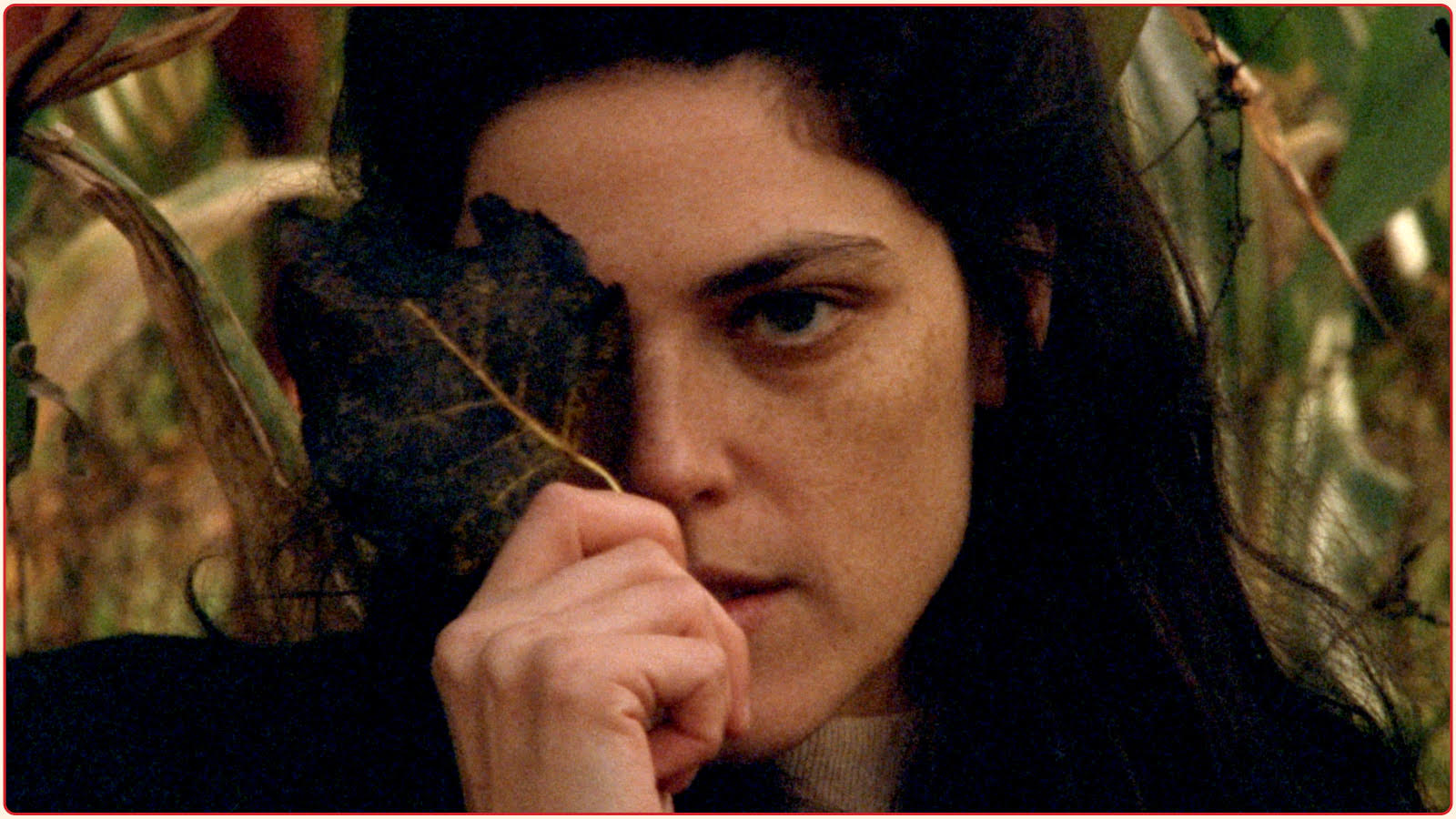
Invention (2024)
CH: Right. Maybe it goes without saying, but each character was necessary in order to give life to the narrative, to pose new questions, to give varying perspectives—and then, it morphed into becoming a study in and of itself. The decision to make Carrie somewhat “removed” was definitely drawn from personal experience, but it was also thematically vital that we didn’t somehow scapegoat Dr. J into being an antagonist in any way. That simply wasn’t a film we were interested in making.
ESB: Callie, what was it like growing up with your dad, and how much did you “believe” him and his ventures?
CH: My dad used to say, “Everything is a paradox.” Growing up with him was certainly paradoxical. At one point, he was a monk in Bhutan, but grew up Jehovah’s Witness and Pentecostal. He believed in parallel universes. We were going to sweat lodges, NLP conferences and reiki circles. He was an MD and a hypnotist and a healer. The week before he died, I was supposed to fly out to Texas and visit him and his girlfriend in their trailer. I was beginning to shoot for a doc on my dad’s new energy healing devices that he’d been testing out on feral kittens. He believed the frequencies from the devices were helping with the kittens’ domestication. The kittens were experiments. Growing up, my sister and I were the experiments. Somehow, I understood this very early on as a child. Everything was an experiment. Despite the fact that things were so deeply paradoxical and hard to follow, there is still a need for connection regardless of context, regardless of “right” and “wrong.”
ESB: Courtney, feel free to answer the same question about your dad. I’d also like to know your thoughts on belief when it comes to the media you’re using, whether the archival VHS footage, daytime TV, or the Super 16mm film. We tend to modulate our trust of images based on their technologies or textures; how did you think about that?
CS: Yeah, interesting: in 2025, which medium feels most like reality, most trustworthy? Phone footage? It used to be a documentary default that digital space signals reality and celluloid is wrapped up with cinema and construction. But we live in such a mish mash now, maybe our sensitivity has shifted from media type and texture to affect and intent. Unlike the canned TV shows, which feel if not scripted, then overdetermined in affect, the fiction scenes in the film make room for a more earnest exploration. There’s more space for real contemplation, so that’s a different reading of reality I suppose. It could be that this echoes a larger disaster we’re experiencing, related to what gets called “content.” Moving image material has become this smooth-tissue texture of the internet, so maybe the heavy lift of shooting celluloid carries something new with it, a kind of intent and attention that can feel either cloying or extremely generous.
As far as my own dad, he was an entrepreneur who patented things and sold investors on his high-risk ideas. I understand him now as someone whose optimism often bled into his sense of reality, but I think, as a parent, he offered up a space for dreaming for which I’m grateful.

The American Sector (2020)
ESB: What was it like collaborating with the other filmmakers you cast, such as Caveh Zahedi, James N. Kienitz Wilkins, and Joe Swanberg?
CS: It was great because all of those filmmakers work in their own ways with autofiction, improvisation, in-between genres. So they got what we were up to and were game to experiment, and brought ideas to the loose outline we were working with to create the scenes.
ESB: At one point, The executor tells Carrie that this country is all about “ideas and the products you can turn them into.” Carrie then says, “Is that true?” Can you talk about that exchange?
CH: I think the line “is that true?” came from my actual response to the question when I first heard it, but I could be wrong. It’s a question I am constantly posing, both in my personal life and as someone who makes films. Obviously, the question reverts back to the thematics of the film: is what’s being said, in fact, true? Sometimes it is, sometimes it’s not.
CS: That may be the most cynical moment in the film. That scene also happened to be the only scripted scene in the film, because we were trying to get the details of patent law right. The executor, played by Kienitz Wilkins, serves as the “realist” in the film because he’s the character least invested in the machine. I’d say the line is meant to cut through the romance of the American visionary, the maverick. I might also mean the line as an attack on the film industry.
ESB: How would you both compare Dr. J’s era of wellness and conspiracy to the one we’re in now? They’re of the same tradition, but his gadgets have a certain techno-optimism that differs from today’s anti-science MAHA-ism [Make America Healthy Again].
CH: There are similarities. My dad was not anti-science, but he was always seeking alternative solutions. To address your mentioning MAHA—the crossover I think is that any group of people has a deep desire for a different outcome, an alternative solution to their illnesses, hope for healing etc.
ESB: How did you decide to end things the way you did?
CS: I think she ends up facing her underlying disappointment. What the invention provides is the dream of somehow altering that disappointment, solving it, recasting reality. But its true function is to bring her to grieve. And even though the entire film is about grief, I think it actually ends at the true beginning of that grief. If the invention gets her there, perhaps that is proof that it—works?
CMH: Yes, grief is nonlinear. Beginnings and endings strongly resemble one another. There are many knots to be tied and untied and tied again. A question begging to be answered is another side effect of the irreversibility of death. The answer is usually the same: we don’t know.
ESB: How did you choose the films to include for your Metrograph series Weird Medicine?
CS: We thought about a lot of films that deal with doctors or medicine more factually, but were interested in this array of films; Robert Kramer’s Doc’s Kingdom (1988) and the short films and miscellany we selected; because they figure medicine, the body, and the search for cures as being elements in the emotional fabric of our lives, rather than matters of information or misinformation.
CMH: Doctors, notorious for suffering from a type of psychological God-complex, forced to confront their own fallibility in Doc’s Kingdom and the casualties of who or what they have chosen to neglect. Niche realms of medical technology and alternative forms of healing, and, of course, the subtle body.

Doc’s Kingdom (1988)
Share:
About the Contributor
Recommended
- Gong Li
 On the enduring eloquence of the timeless actress.
 - Allegro non troppo
 On Italy’s lurid riposte to Fantasia.
 - Juliette Binoche
 An interview with the icon of French cinema, La Binoche.