

At Home With…
At Home With…June Picks
Friends of Metrograph Michael Koresky and Camille Bacon each share a film they love, streaming on demand on the Metrograph At Home platform.
Share:
michael koresky Selects
o fantasma

O Fantasma, dir. João Pedro Rodrigues, 2000
For a generation of moviegoers so starved for on-screen eroticism that the tee-hee boner-boxers of Challengers (2024) gave them the vapors, João Pedro Rodrigues’s confrontationally queer exercise in art kink remains a true challenge. Rodrigues’s debut feature came out in 2000, and its eyes-wide-open gay fantasia was a deliciously bitter pill amidst a burgeoning, increasingly anodyne commercial queer culture—and O Fantasma still feels unmatched in its ability to arouse and thwart desire at every turn. It’s too exquisitely made to be called trash cinema, but it does take place amidst piles of trash, following an alienated garbage collector Sérgio (Ricardo Meneses) who becomes obsessed with—and increasingly aggressive towards—an über-masc hetero stud he spies while on his nighttime rounds. The comfortably middle-class hunk becomes not just an object of lust for the working-class collector, but a vision of unattainable class privilege. Just when you think Rodrigues is simply inviting us into one man’s harmless, autoerotic dream world, he keeps making things very uncomfortable for us. The unwholesome O Fantasma might get us off, but it doesn’t let us off easy, forcing us to question our own carnal desires as much as our social biases.
Michael Koresky is Senior Curator of Film at Museum of the Moving Image and the co-editor of Reverse Shot. His latest book is Sick and Dirty: Hollywood’s Gay Golden Age and the Making of Modern Queerness from Bloomsbury.
camille bacon SELECTS
four women
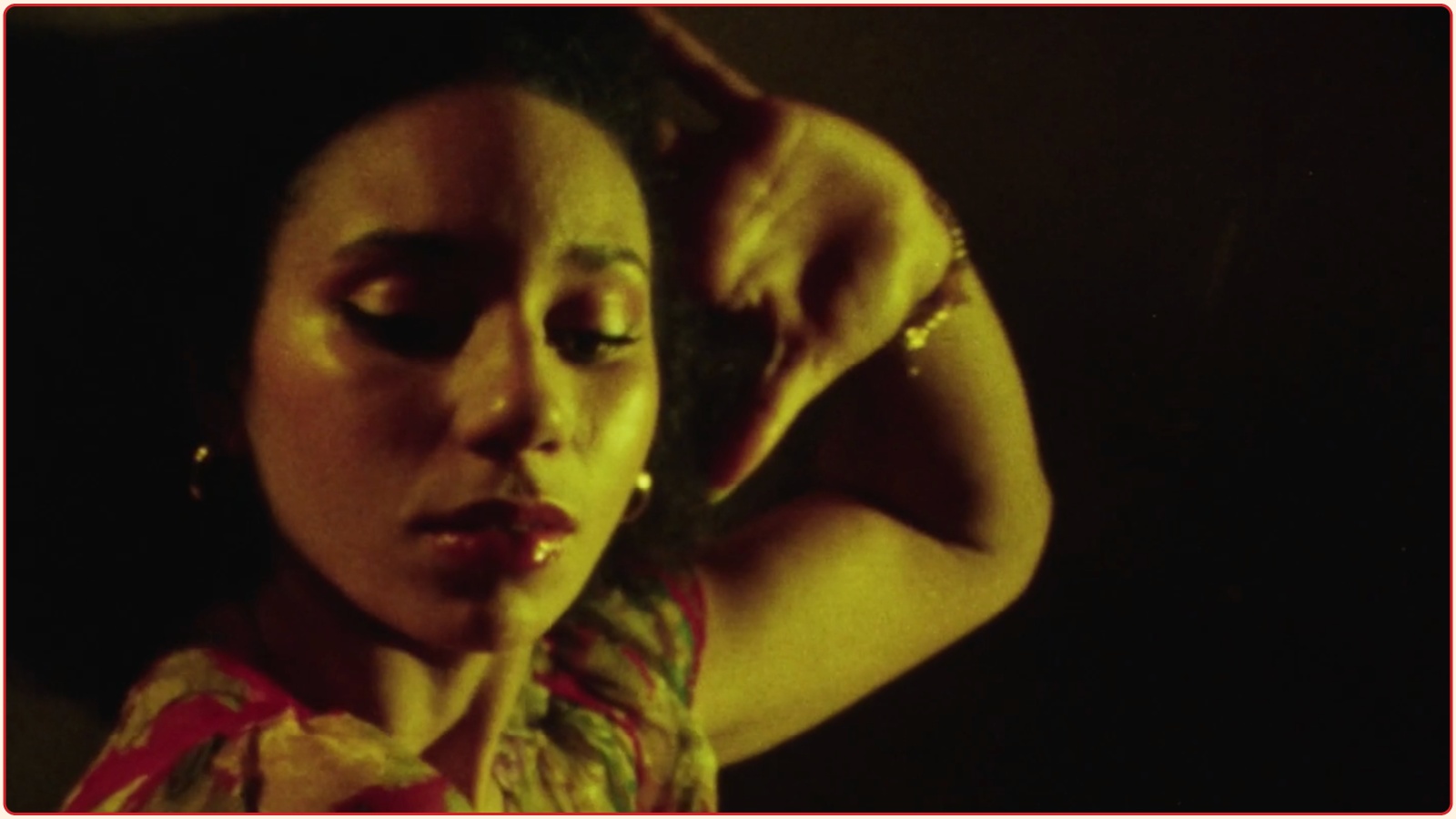
Four Women, dir. Julie Dash, 1975
“An attention to the glamour (in the ancient sense of the word) and sheer gorgeousness of Black women,” Toni Cade Bambara said of Four Women (1975), Julie Dash’s short film, scored by Nina Simone’s song of the same name, and performed by Linda Martina Young. Etymologically, glamour is a daughter of the Latin grammatica, denoting learning and scholarship, and a grandchild of the English grammar, which, when uttered by the Scots in the 18th century, was most often associated with enchantment and magic. “Glamour,” then, “in the ancient sense of the word,” is the confluence between epistemology (knowledge production) and incantation. Four Women exemplifies this reading of “glamour.” Young’s sweeping sinew is a discursive counter-spell; she unfurls from a chrysalis of diaphanous fabric and dances an anti-portrait of four ideological hexes, cemented to justify white society’s pathologizing of Black women’s bodies and being: the Mammy (Aunt Sarah), the Tragic Mulatto (Saffronia), the Jezebel (Sweet Thing), and the Sapphire (Peaches). But that is not all she dances. As Nina charges towards her crescendo and Young’s gestures edge the atmosphere towards its breaking point, her eyes flash red. Her eyes flash red and therein are rivers crossed at nightfall, incendiary names uttered into an ungovernable sky, something of glamour and sheer gorgeousness, indeed. Attent closely, and you might just feel what Toni Cade did.
Camille Bacon is a Chicago-based writer and the co-founder/editor-in-chief of Jupiter Magazine.
Share:
Recommended
- Listen Up! Mihály Víg & Béla Tarr
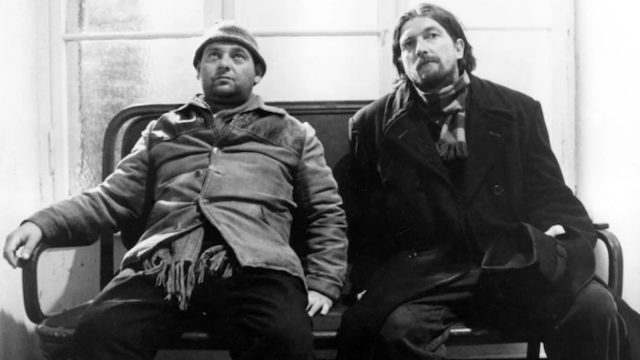 Metrograph’s Listen Up! column, in which we revisit movie scores and soundtracks of note, continues with a look at Mihály Víg’s haunting collaborations with Béla Tarr.
 - Orangey, Revisited
 A video essay ode to the inimitable feline screen star.
 - Green Snake
 On Tsui Hark’s subversive reimagining of an immortal Chinese folk tale, starring Maggie Cheung as a serpent demon.