
Interview
Euzhan Palcy
The trailblazing director discusses craft, history, and her distinct visual style.
Share:
Euzhan Palcy has never been one to sit idly by and wait for permission. A titan of cinema, the Martinican director has spent more than 40 years making operatic, political films that delve into the gaps of the mainstream historical record. Throughout her career, Palcy has made history herself several times over: famously, her much celebrated third feature A Dry White Season (1989)—the South African apartheid drama that pulled Marlon Brando out of retirement, among its many feats—made her the first Black woman to direct a film for a major Hollywood studio (MGM). Prior to this, she’d already become the first Black director to win the Venice Film Festival’s Silver Lion for best direction and a César for best first film, both for her sweeping coming-of-age drama Sugar Cane Alley (1983), an adaptation of Joseph Zobel’s 1950 roman à clef La Rue Cases-Nègres. In 2022, she received an honorary Academy Award, once again becoming the first Black woman director to do so.
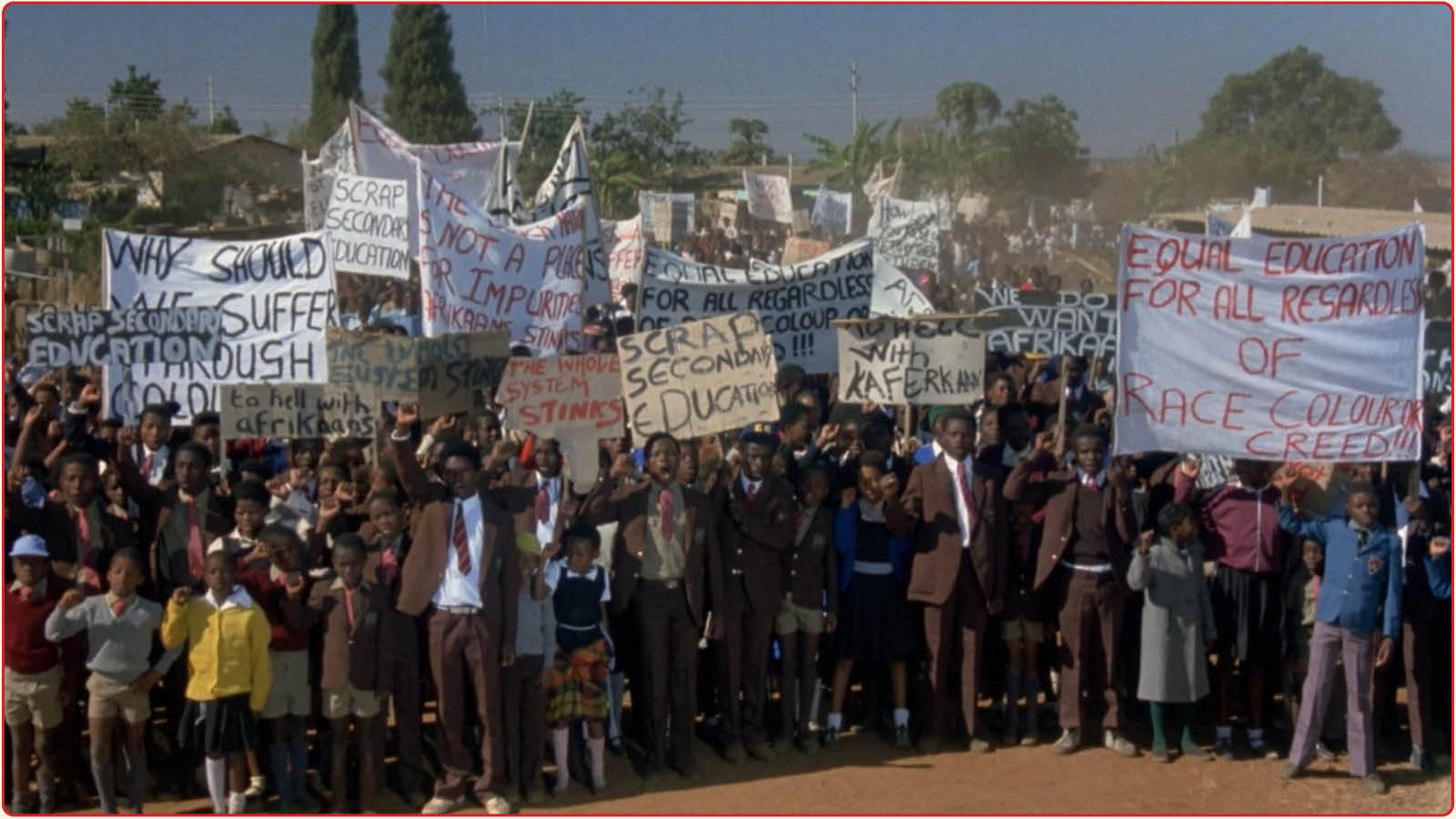
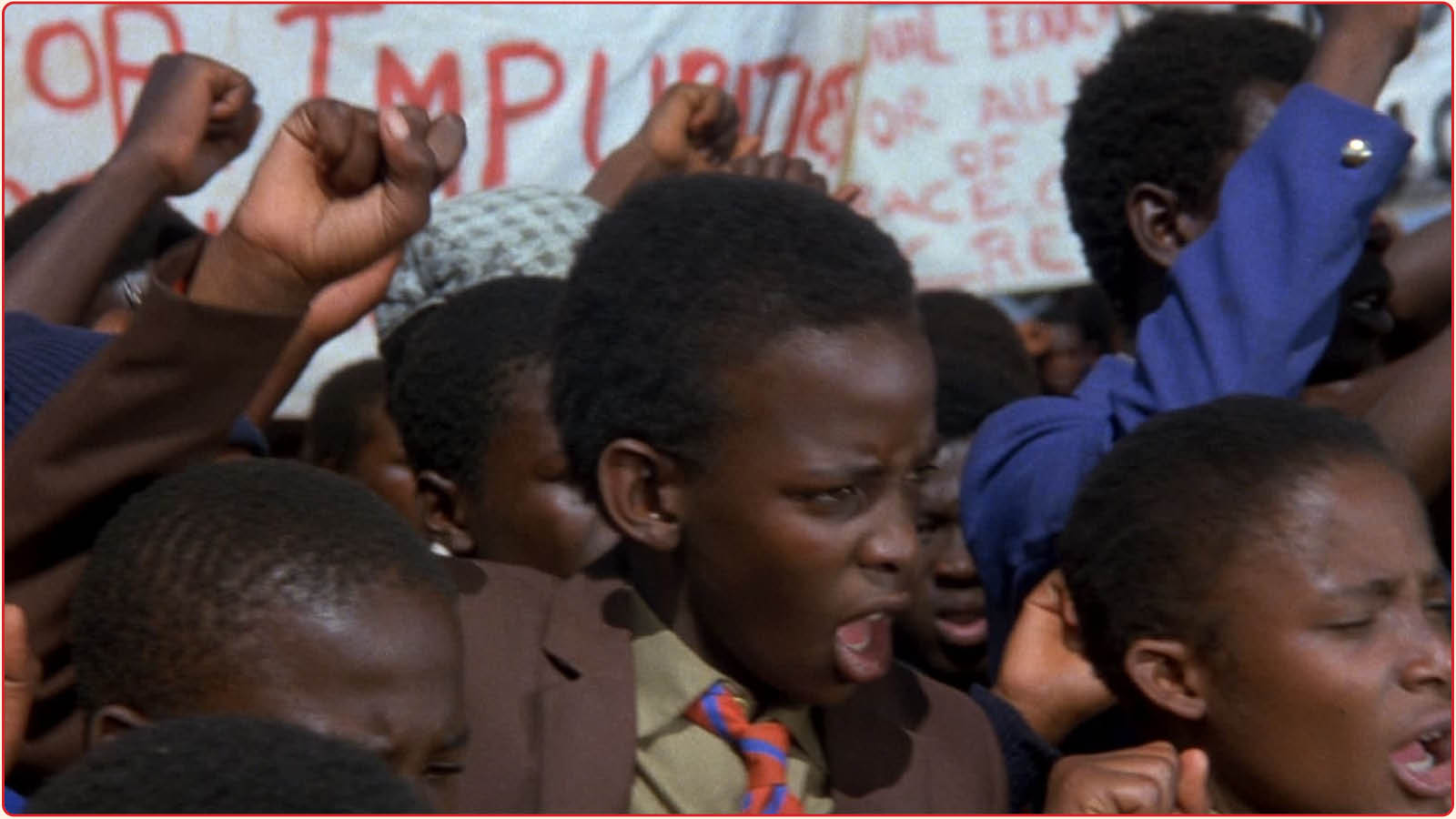
Vibrant and compelling, Palcy’s films are bold works of social commentary. Her breakthrough Sugar Cane Alley put her on the map for her tender, humanist portrayal of Martinique’s Black communities, as it traced the burgeoning political consciousness of a young boy (Gary Cadenat) growing up in a rural slum. A Dry White Season, arguably her best known film, likewise chronicles a political awakening, this time for a white South African school teacher (Donald Sutherland) as he confronts the violent detention of his Black gardener (Winston Ntshona) by the apartheid government. Based on the André Brink novel of the same name, Palcy’s adaptation forthrightly depicts the harsh realities of standing up to South Africa’s violent regime amid a sea of much tamer cinematic fare.
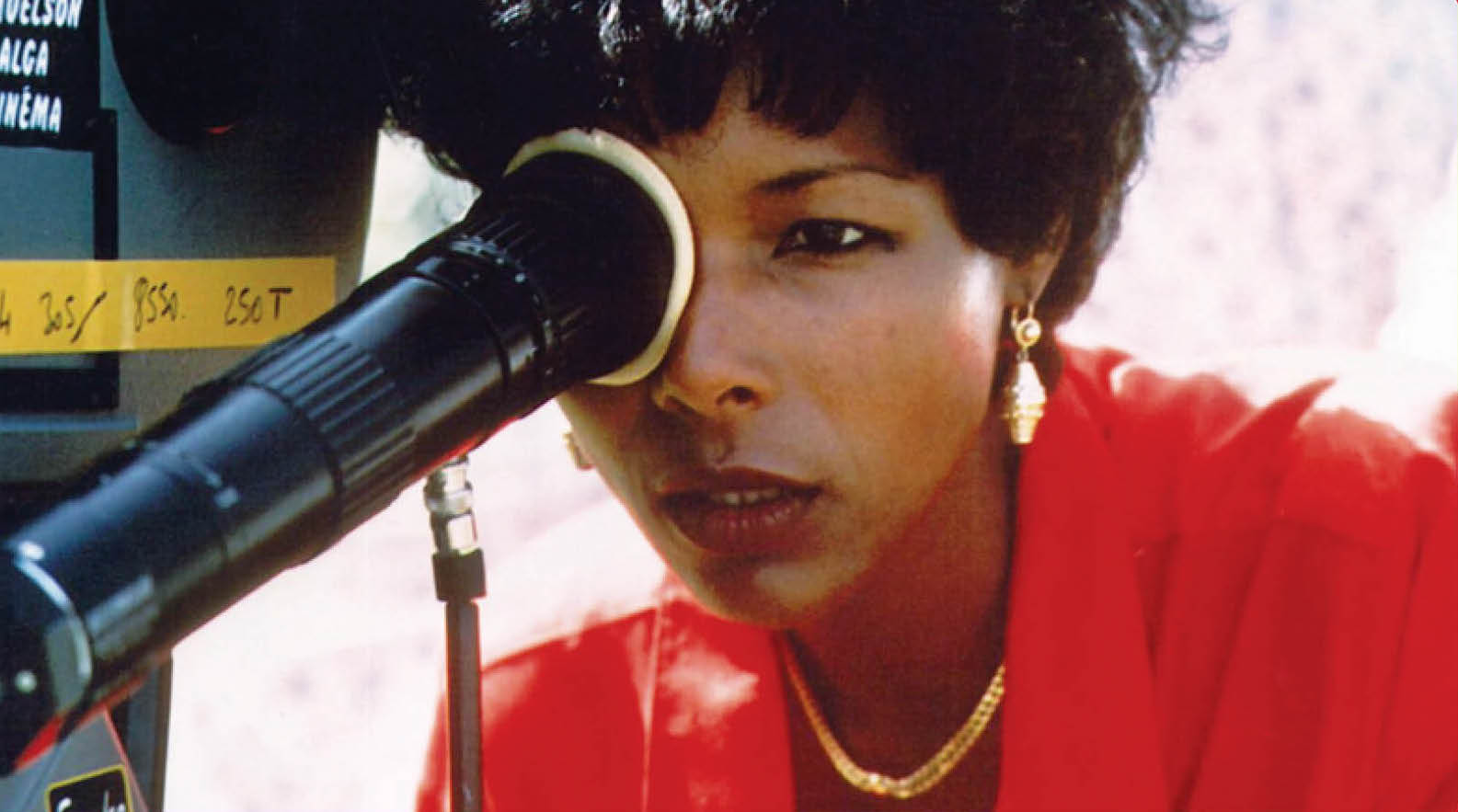
At her core, Palcy is a dedicated technician, drawing as much pleasure from the intricacies of narrative (she has written or co-written the screenplays for most of her work) as the practical aspects of filmmaking: a cursory search for images of the director yields a bevy of pictures that show a fiercely stylish Palcy operating the camera herself (which earned her a central spot in A24’s compendium How Directors Dress). We sat down to discuss her views on craft, interrogating history, and the influence of her “spiritual godfather,” the Martinican poet, playwright, and politician Aime Césaire. —Dessane Lopez Cassell
A Dry White Season (1989)
DESSANE LOPEZ CASSELL: Let’s talk about style. Who are some of the filmmakers that have influenced you and what attracts you to them—aesthetically, conceptually, and beyond?
EUZHAN PALCY: When I started my career, I was looking for female directors but I didn’t know any because they are so rare. Really rare in Martinique, because I became the first one. From a young age, I had a passion for films and I knew in my heart that was what I wanted to do. I used to say, “I would like to do that,” but with Black folks, and for Black folks.
But I can talk about filmmakers like François Truffaut, Costa-Gavras, Ousmane Sembène, Billy Wilder, Hitchcock, Orson Welles. With Hitchcock, I loved all the suspense in his films and how he would trick the audience. My youngest brother and I would take bets on who the killer was. [Laughs] And with Costa-Gavras, I love the political side of his work and all the action and motion in his movies. Truffaut—the kind of topics that he was dealing with, like education, childhood, relationships—I felt a very strong connection with him, and of course with my darling Sembène!
When I was really young, I was doing a job at the television station in Martinique just to have some money for when I’d go to France [for university]. Aimé Césaire asked me to come help out in the audiovisual department that he created in Martinique. I was able to discover African filmmakers like Oumarou Ganda and Paulin Vieyra.And then I discovered Sembène; he was the new generation. All those people brought Africa to me. And Aimé Césaire, the great poet who was my spiritual father, of course, he brought Africa to his people because, at that time, you wouldn’t talk about Africa; you were French, period. We didn’t even know [who our ancestors were].
DLC: Part of what’s really special about your films and you as a filmmaker is this constellation you’re a part of. But I want to focus on Césaire for a second. Tell me about the first time you two met.
EP: I’d known Césaire’s poetry since I was very young. I remember one day, when I was a young girl [hearing his speeches] I told my parents, “That man, he speaks like me!” because he was putting into words all my inside thoughts.
I met him maybe two or three years before I left Martinique. I went to see him because I wrote and directed a film called The Messenger (1975) for Martinican television. I was very young and an autodidact. At the time [the film] created a revolution in the country, because for the first time my people could see themselves on television. Usually we would just see white people or other French programs. And Césaire wanted to meet the person who did that. I remember I had a meeting with him at the town hall—he was the mayor of Fort-de-France—and he asked me, “How did you do that?” He was amazed by the work, that the movie was already very—I wouldn’t say political, but it was very much a work from a young activist. My goal was to bring some color to TV and tell our stories. And I told him, “I want to go to France to study to be a filmmaker.” He wanted to follow my studies and know how I was doing, and if he could help he would do it, because I was really the first person in the country who decided to embrace that kind of career.
Then, you know what he did? He said, “Wait a second.” He disappeared to his secretary’s room next door and came back with an envelope. I was very embarrassed and I said, “Oh, no, no. I didn’t come to ask for anything like that, just to say thank you for the inspiration and all the advice you gave me.” And he said to me, “I studied in Paris. When you are a student in Paris, you never have too much money and you need a lot of money.” I kept that check for months. I did not want to cash it because his name was on it and this was a very nice amount of money. Then one day there was a huge strike and the students from Martinique couldn’t pay their rent, couldn’t eat, couldn’t do anything. And I said, “Well, I guess I have to cash that check.” And with that money we were able to pay our rent, buy food, and whatever we needed. When I told him that a few years later, he told me, “I did that? I don’t remember!”
When I was studying in Paris, Césaire would call and say, “Okay, I’m in Paris, so let’s meet at my house at this time, that day.” I would go with three other girls from Martinique, and he would take us to a restaurant to have a good meal and talk with us. He followed all of [our studies] and encouraged us. We used to call him Santa Claus. If one of us didn’t have enough money, he would help.
I told him when I got a big grant from the [French] government to do Sugar Cane Alley. That grant was only one third of the film budget, so you had to look for the other two thirds with a producer. And at a certain point, I told him, “We’ve got almost all the money, but we are missing this amount to lock the budget.” When he went back [to Martinique], he called everybody—the people working with him at the assembly, at the town hall—and told them, “What would you say if I told you that a young compatriot is making a movie out of the famous book [Rue Cases-Nègres], but she’s missing this amount of money. ” And they said, “Of course, we’ve got to help her.” That’s how, thanks to him, I was able to make Sugar Cane Alley, with all the people’s help.

Simeon (1992)
DLC: Okay, Santa Claus.
EP: He was like a second dad. When I would come back from France, after having kissed my parents and dropped my luggage, I had two people I would go and see immediately: Aimé Césaire and Dr. [Pierre] Aliker who was the deputy mayor; the first famous surgeon in Martinique. He was very political, always fighting for the race. After I did Sugar Cane Alley, I decided to make a three-part documentary about Aimé Césaire. Without being pretentious, I was the only person who he would allow to get this accessibility, and film him for six months.
DLC: I want to keep talking about history, because many of your films deal with the historical record: specifically what’s missing from it or what has intentionally been suppressed. How do you balance concerns of accuracy and authenticity with expressing the fullness of your artistic vision?
EP: When you deal with history, you cannot cheat with that. You have to be honest about it. You can take some license—we need to do that when we are telling stories—as long as it does not distort the truth. As filmmakers, I believe that we have a responsibility.
When I make my films, even if they are tough subjects, there is also some humor, some suspense, a bit of each of these things in the story, because that’s what we are! Black folks, we struggle, but we have a good sense of humor, and I want my movies to have [all of] that inside. Our people have to be on screen in all their beauty, in all kinds of characters, but I am also always cautious that that [my stories have] to be universal. Anybody from any country, from any culture should be able to get into it and it should move them. That’s why the first buyers of Sugar Cane Alley at the Venice Film Festival were Japanese. What connection is there between Japan and the Caribbean? None, except that the story was universal and they identified with the characters.
DLC: I completely agree with the need to find space for joy and laughter as much as all the hard things that we deal with. I’m thinking specifically of Simeon in that regard. Grief is a major part of the story, but it’s also filled with an incredible amount of love and creativity and music. Can you talk to me about the importance of making that film and making it such a joyful production?
EP: After having done A Dry White Season, I needed to do something to bring me back to a normal life. Simeon just came to me. I dreamt of the characters and the music and I started to write. I used it like therapy. It helped bring my joy back, my strength. That’s why the film is so colorful; because that’s the way I’ve dressed since I was a little girl. I’m Caribbean, so colors mean a lot to me because we are so lucky to live in a part of the world with all of those flowers, all kinds of colors. And so Simeon, it’s like me. [Laughs.]
A Dry White Season (1989)
DLC: I want to talk a little bit about how you collaborated with the costume designer Annie Guesnel and the production designer Bernard Vézat. How did you first start building this world together and what were some of those conversations like?
EP: I always work closely with all those technicians because I have a pre-determined idea of what I want. We would be discussing each character and why that one needs to wear that kind of color or that kind of style, or whatever. I put my nose in every department. [Laughs] I’m there with them. Oh yes!
Also, let’s face it: most of them would be white because there weren’t that many Black technicians around at the time, and [white people] don’t really know who we are. So I had to teach them, show them things, and explain the meaning of everything. There is nothing in my movies that doesn’t have a meaning. And at that time maybe I was the first woman director they’d worked with. Because we were very few then.
Also every time I deal with a true story—like when I did Ruby Bridges (1998) or The Killing Yard (2001) —I have a screening of the real [historical] footage. I say, “We are going to make history all together,” so they understand that this is important, it is not fiction. That’s the kind of relationship I have with my technicians. We work really closely. And you know what they were calling me: oeil de Lynx [“lynx eye”: a French expression akin to eagle eyed]. We had a lot of fun.
DLC: [Laughs] It’s good to keep people accountable. That also emphasizes the fact that films become part of the historical record, and that the “historical record” itself is always actively being created and changed. Even with a narrative film, you’re still creating something that will be interpreted and live in the world.
I’ve noticed that you’ve worked with a lot of different cinematographers on your films. How do you collaborate with them and what qualities do you look for in your cinematographers?
EP: I always have a very good relationship with cinematographers because I make sure that they are somebody that I’ll be able to work with closely, and who will respect what I want. The DP is your right hand. If the DP is bad or arrogant or macho—that happens very often—they can make your life miserable, and I swore that would never happen to me.
I remember as a student, I would work on some shoots as an assistant and sometimes you would hear the people saying, “Oh, she’s female. We’ll see what she has in her belly.” They want to check you out because there were so few female technicians. I never wanted that to happen to me. That’s why I went to school and got a degree as a DP. I learned editing and everything, so before I got on set [my crew] would know that I know my craft. We’d speak the same language.
I prep with each department. We sit down, we spend time, we look at everything and I explain why it is important. “No, we don’t want that, we want that.” And it’s the same with post-production, I’m everywhere in it—the mixing, the music—I’m in everything. I don’t control anything, but I’m there, and we do it together. I have a sense of what I want and I work with people who really love that. I tell them that at the end of the day, “I want you to be happy and to say ‘I learned something different.’”
DLC: To zoom out a bit, you’ve been a first many times in your life. What advice would you offer to young Black filmmakers, and especially women filmmakers, who are coming up after you?
EP: First of all, look at yourself in the mirror and be honest. Ask yourself, “Do I really love that idea of being a filmmaker? And why do I want to do that?” After that, my other advice is to be resilient. Don’t expect anybody to give you things; grab what you can grab and if you come through the door and they kick you out, go back in from the window.” [Laughs.] Also, take a lot of vitamins, because you will need to be strong, along with strong legs to work a lot. And treat your crew and your cast well. Usually [filmmakers] treat the cast well but they forget about the crew, and that’s a mistake.

Simeon (1992)
Share:
About the Contributor
Recommended
- Travel Companions: Bahram Beyzaie & Amir Naderi
 On two defining Iranian filmmakers, and two of their most enduring works.
 - A New Love in Tokyo
 On the pulse of pleasure in Banmei Takahashi’s effervescent Pink drama.
 - Let the Dead Bury the Dead: A. S. Hamrah in Conversation
 On the so-called “death” of theatrical moviegoing, Romero’s oft overlooked fourth Land of the Dead (2005), and a whole lot more.