
Columns
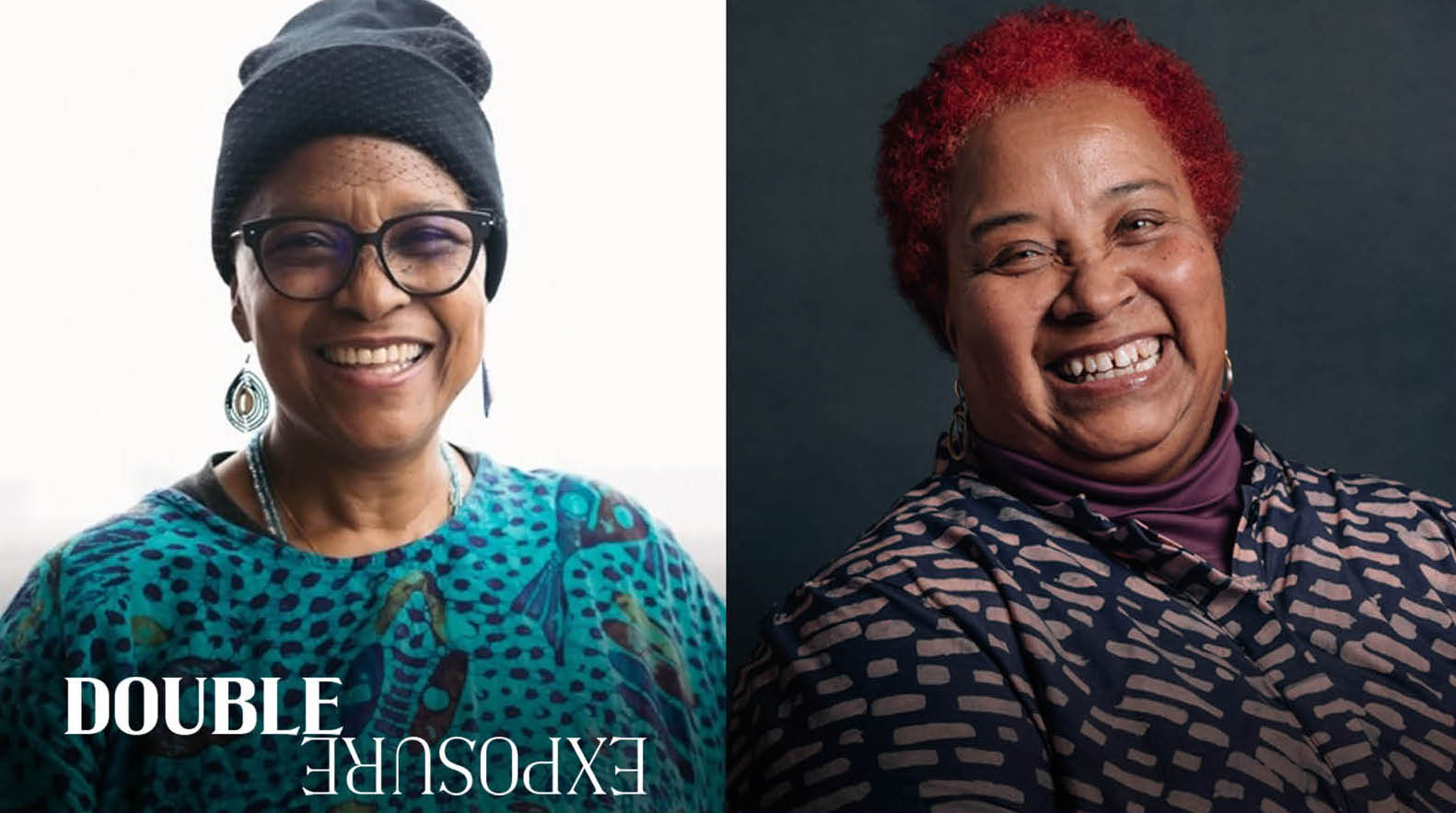
Double Exposure: Portia Cobb and Zeinabu irene Davis
The filmmaker friends discuss the intersections of their practice and influences, from Afrodiasporic folklore to literary luminaries.
Zeinabu irene Davis selects plays at Metrograph Theater from Sunday, February 23.
Share:
Zeinabu irene Davis’s contributions to the field of cinema extend beyond that of filmmaker, producer, professor, writer, and curator. A noted figure of the LA Rebellion, she has been instrumental in paving the way for others in the independent sector. She has selflessly called our names in rooms, at tables, in spaces where we were not present, to uplift and make visible a canon that had not yet been recognized. As a longtime experimental filmmaker, I have seen my own name in film journals, essays, or chapters that she has penned or contributed to.
I first connected with Zeinabu at the Sundance Film Festival, where I was a volunteer, and she was in attendance with other sister filmmakers, Julie Dash among them, from UCLA. This might have been 1990. The following year, we fell into one another’s orbit again, at the Pan African Film Festival in Ouagadougou, Burkina Faso, before we truly bonded after I began teaching at University of Wisconsin-Milwaukee, just 90 miles away from her at Northwestern University in Chicago. Ever since, we have been connected and supportive of each other, both personally and in our filmmaking practice. My daughters and I even appear in her landmark feature Compensation (1999), which chronicles parallel love stories set in the 1900s (in black and white, reminiscent of early silent cinema) and 1990s respectively, and which is now receiving its first major theatrical run.
Her experimental, temporal-defying body of work sublimely channels what I describe as a “Divine Ancestral Feminine,” an echo, a call, and sometimes a response to summon and channel voices that might not otherwise be seen or heard.
It was a delight to speak to Zeinabu about the selection of seven features and short films that she has curated for this program, which certainly affirms the activism and radical thought that animates her filmography, a living resounding legacy. —Portia Cobb
PORTIA COBB: I think it’s interesting that we have some intersecting, overlapping things in common with the start of our careers. There I was in the Bay Area; you were in Los Angeles. When I began to hear about you and your work, you were at UCLA and I was at San Francisco State University. We both have a radio background.
ZEINABU IRENE DAVIS: Oh yes.
PC: I worked in radio in the beginning as a copywriter because I had writing skills. And my writing was short form poetry. My trek into film didn’t feel intentional, although I grew up in Santa Monica. I was more interested in poetry. And that led me later to film.
ZiD: I actually fell into an internship at a public broadcasting station in Providence, Rhode Island, called WYSBE. My first experience in media was working with another Black woman, who had her own show. It was a public affairs show. She took me under her wing and I did everything. I learned how to use a broadcast camera, how to do black and white photography, and how to do interviews for documentary work. She let me write a screenplay. I could bring in actors and I did a little short, that was about some topic we were doing.

Carry Me, I’ll Let Go (2022)
PC: My entry into film was also unconventional. At the end of my radio career, I was very vulnerable as a young woman. I filed a sexual harassment suit and got fired from the [radio] station I worked for, and decided that to empower myself I was going to go back to school and buy my own damn radio station. So, I went to Mills College [Northeastern University in Oakland] and upon getting ready to graduate, people said, “Well, what are you going to do for grad school?” I hadn’t even thought about grad school, but it dawned on me that I could tell stories. I would write spontaneous scripts and I took some lighting design classes and then I was like, “I think I’ll go to film school.”
ZiD: I think this intersection of writing and writers influencing our work is really important to both of us. Poetry inspires both of us with our works. I remember being at Brown and having the privilege of meeting Sherley Anne Williams and Alice Walker and Toni Morrison. And I think that might’ve been the first time I’d met Toni Cade Bambara, who I’ve worked with.
PC: Yes, poets would come to the Bay Area all the time. Jayne Cortez would come through and Jessica Hagedorn, Cyn Zarco. It was really a mecca of emerging poets. Ntozake Shange. I never got to meet her, but she had already left her legacy there.
How did you put these short films together for Rejuvenating the Spirit at Metrograph?
ZiD: I want people to understand and appreciate shorts because I don’t think they get enough love. Everybody always defers to feature filmmakers, but I think that short filmmakers are just as important, because you can really have a little more autonomy, whereas in a feature, you might be beholden to somebody else for that money to do it.
PC: I was really pleased to see [in the series] The Gods and the Thief (2001), by Pierre Désir Jr. There are so many things about that film that intrigue me, like the texture, the light and the shadow, and the trickster character element. Because there’s mystical things going on, relating to Africa and our belief systems. That’s knitting its way through.
ZiD: Pierre was one of my biggest collaborators because he did camera work for me on Compensation and Cycles (1989). And you see a lot of the outgrowth of what we did with Cycles in particular that is present in The Gods. And when I was watching it with Marc [Chery, screenwriter and Davis’s husband], who’s the other half of the “Haitian Sensation”—
PC: I love that.
ZiD: That’s what they called themselves when I met them at UCLA.
But when we watched it together again, Marc was commenting on how Pierre was using the Ti Malice [trickster figure in Haitian folklore] folktale and extracting it into his environment in upstate New York, where he made the film. And that’s Pierre’s brother, Richard Desir in the film.
It follows that LA Rebellion ethos, which is to put your community into the film. Richard is his brother, and another character is played by his cousin.
PC: As you’re talking about the inclusion of community as actor, as performer, I also thought about how his camera uses nature or how nature becomes the set: everything is in the natural world.
I know how much he loved that land. He loved that space. So, to see it introduced in this way really made me think of him and of his particular technique and the way that he used the camera.

Pandemic Bread (2023)
ZiD: This is a great segue, from The Gods and the Thief to Don’t Hurry Back (1996). When I was programming these films, I wanted films that did something of a call and response with each other. I always felt like The Gods and the Thief is kind of talking to [Cobb’s film] Don’t Hurry Back.
Yours is an Afrodiasporic fable, and his is a reinterpretation of a Haitian character. Both of you play with form and use this collage of images. The way that you both capture our Afrodiasporic culture has always been an influence on me and how I think about work and time.
The way I connect Pierre’s way of storytelling with my own is that I felt like it was writing itself. I would get to the editing studio with notes that I’d taken, but I was always creating an archive and piecing it together with a story that seemed to me to be writing itself. So that the whole idea of fable, it came from a place of dreaming as well. And I can see that in Pierre’s [work]. It looks like a dreamscape, you know?
PC: Very much so. I’m interested in what you thought about Alexis [Hithe]’s film Carry Me, I’ll Let Go (2022) and Four Women (1975)?
ZiD: Four Women, one of Julie [Dash]’s first pieces, is from 1975. When you look at it, it’s like, she could’ve done that yesterday. It does not show the age of being a 50-year-old film. So, that just tells you how powerful Julie’s visual sense is and how much she has always been ahead of the curve. So I wanted to put Julie’s film Four Women with Alexis’s film Carry Me, I’ll Let Go because it’s a generational thing. Both of those films use dance and talk about identity as Black women, but they expand that conversation in different ways.
I loved the way Alexis used found footage of this weathered film as the background piece for her dance performance. And then, she’s talking about how we are supposed to be stewards of the land on this planet that we’re on and building community.
I just really like the way that those two pieces speak to each other about the experiences of Black women and engaging with experimental film as a form. Dance was always one that I think [filmmakers] start with because it is an expression of the body.
PC: Dance is very present in your storytelling as well. But, of Alexis’s film, I didn’t know when it was made. It felt like something made earlier: I thought of Barbara McCullough, for instance. For me, it looks very analog in its editing and its form. When I read that it was more current, I was surprised. Julie’s film also offers that: seeing it again, I had forgotten that it was one [actress] dancing and portraying these different characters. Because I hadn’t seen it in a while, I thought it was four different dancers.
[Linda Martina Young] really embodied these different personalities.
ZiD: Yeah. I just want to say one last thing about those four films. What also runs through The Gods and the Thief, Don’t Hurry Back, Carry Me, I’ll Let Go, and Four Women is there is some improvisation going on, either through dance or storytelling or what have you. The only one that doesn’t is Pandemic Bread (2023), but it was important for me to include in this series because it was the last film Pierre and I got to work on together.
We had this really interesting relationship for 40 years. When I did different films, he would do the storyboards. I had begun to do that work with him [on Pandemic Bread] even though he had the cancer diagnosis.
I feel really fortunate that even though I lost Pierre and I wasn’t able to film with him, I got another new cinematographer who I also enjoy working with, Norbert Shieh. We would use examples from other films that we had seen to figure out how we wanted to do the lighting or the composition. And we looked at our own films; there’s things that he does as a documentary and narrative filmmaker that I wanted to make sure we brought into Pandemic Bread.
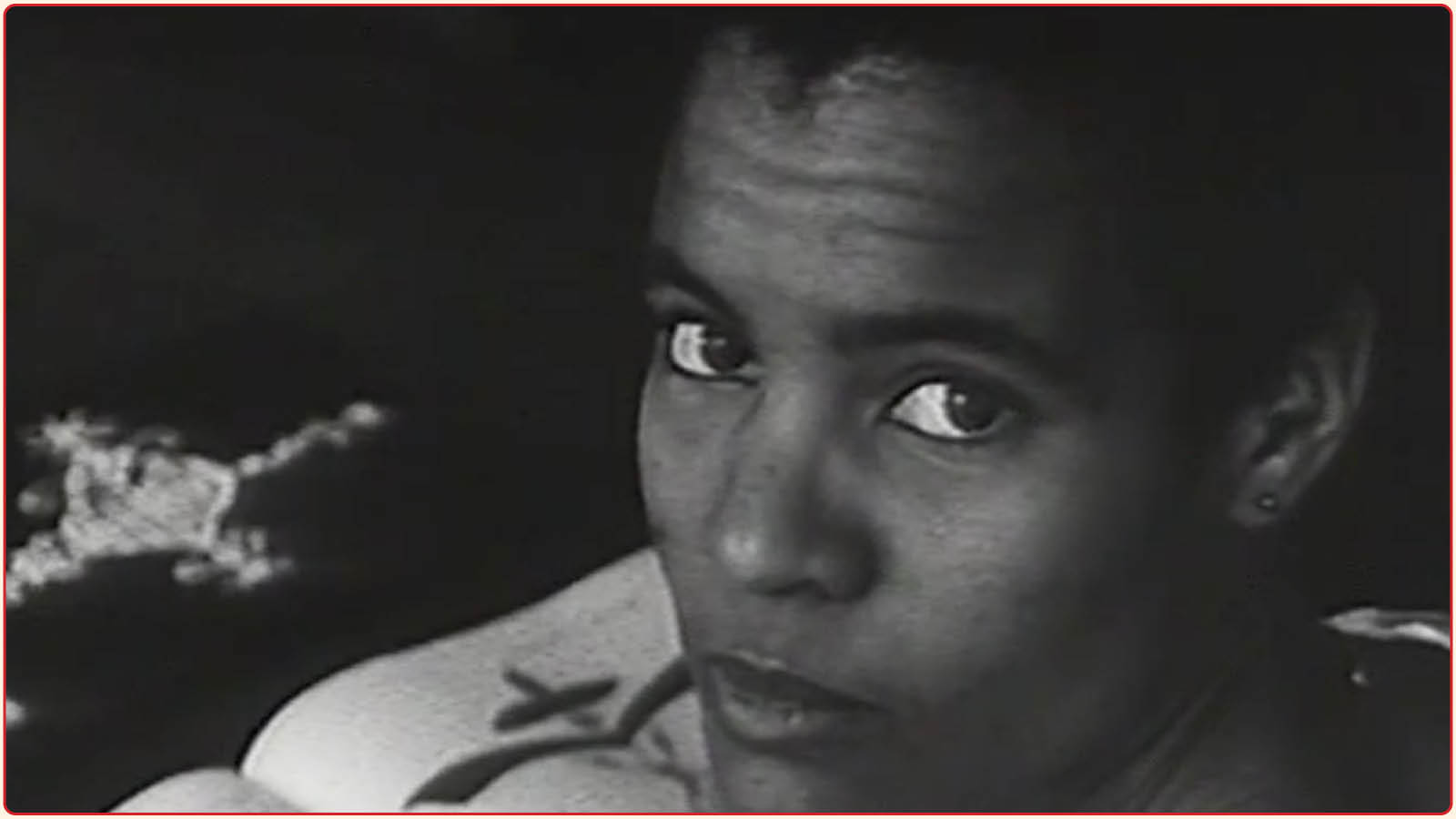
The Gods and the Thief (2001)
PC: What would you say are some of the signature elements and impulses that shape your films?
ZiD: I always have some kind of altar in the film. You could be revering one of the orishas, which is a part of the Yoruba religious past, and/or ancestor altars, too. I usually combine both ancestor altars and orisha altars in some way, shape, or form. There’s altars in Pandemic Bread. There’s an altar in Compensation. I’m really into making sure that honoring ancestors is central to my films.
I lost my mom when I was really young. She didn’t get to see me graduate from college. She actually died the day after my 22nd birthday. So almost all of my altars that are on screen were an image of my mother’s photograph, and there’s one where she’s holding me or something like that.
[It’s] a way to bring her into the work and to thank her again: the gift of being able to go to film school because she had cancer and didn’t reveal how bad it was. She just wanted me to finish college. And she was worried that I wouldn’t finish if I had come home, when she was in her last days.
PC: I did not know that story about your mother. But it makes me think of where I am in my process of using stories that my mother has shared with me about her Gullah identity.
The body of work that I’m tapping is coming from those resources, her stories, her memory. So that’s really special to hear about your journey, especially being so young, and to continue to remember her in that way.
And I really love altars. I mean, I’ve had people come to my home recently from Brazil, and I don’t realize that I’m creating an altar. You and I have created an altar together as well, honoring other filmmakers, at the Sojourner Film Festival. It just seems like that is an impulse that’s beginning to show itself in my work more.
Do you have any treasured memories from making one of your films? And how would you say your work as a mother has influenced what you made?
ZiD: I will say you supported me for so many years as a filmmaker. You lived in Milwaukee and I lived in Chicago. We would go back and forth and visiting with each other, and it was really special to me that you trusted me to have Nirvana [Cobb Jewell] act in Compensation.
PC: That was a special time. When Compensation is shown or when I talk to others about the film, the anecdote is that you have to have your people.
ZiD: That’s right. You have to have your community, man.
PC: And learning to work with your people.
ZiD: Right.
PC: I think about people like Austin Allen [documentary filmmaker and editor] being the person I trusted most with editing. When his hands touched something, he listened. It was just like you working with Pierre.
ZiD: Do we have any other advice for younger filmmakers out there?
PC: I’m blown away by some of the really amazing emerging filmmakers. I’ve got my ear to the ground because I’m always trying to engage with younger filmmakers, like Marquise Mays.
It really is about staying connected to other filmmakers always. I remember the first time I met Bill Greaves when we were on a flight to FESPACO and I was just bubbling over. And I think about us having the privilege of being around filmmakers like Ousmane Sembène.
ZiD: The other thing I try to tell my students and other younger filmmakers, is that you should make sure you see other people’s work.
PC: And from other periods of time.
ZiD: Yes, that’s exactly what I don’t like about this current state of where we are right now: we don’t get enough exposure to foreign cinema. What was so expansive for us was the kinds of films that we got exposed to when we were in film school or from just hanging out with other filmmakers. People saying, “Oh, did you see this film from Tunisia? Did you see this film from Cuba?”
PC: The first time I saw an African film—which was probably Sembène’s Ceddo (1977)—it helped me to recenter myself, like, “Oh, you can shoot from a lower angle.”
All of those devices that weren’t present for me in some of the other works that I was being pointed toward. And I still tell my students this.
Even thinking about Daughters of the Dust (1990) and how we teach it; it takes a lot of courage to present certain films that center Blackness in predominantly white institutions. You see people getting up and walking out of the room or putting their heads down or on their phones. It really is a challenge. But the ones that will succeed are the ones who do take it in or leave themselves open to learning. I love that about teaching, because when they come through the threshold, it’s like, this is what this class is about.
I think we have a lot to offer younger filmmakers and their radical imagination, you know? How do you move from one thing to another? We’ve seen filmmakers of our time doing that. Cauleen Smith or Kevin Jerome Everson both started off as artists. It’s really rich to think of how these films in your program speak to each other and how relevant they are to one another. I really appreciate being a part of that discussion.

Four Women (1975)
Share:
Recommended
- Nina Menkes
 On the surreal dream worlds conjured by the American indie filmmaker.
 - The Company’s in Love
 On Max Ophuls’s first feature and the signature tragedies it set in motion.
 - Futures and Pasts: Running on Empty
 On Sidney Lumet’s tale of morally compromised counterculture veterans trying to keep a family together.