
Double Exposure
Double Exposure: João Pedro Rodrigues and Matías Piñeiro
Welcome to Double Exposure, Metrograph’s column in which two filmmakers interview one another about the craft.
Three by João Pedro Rodrigues is currently streaming on Metrograph, playing O Fantasma (2000), The Ornithologist (2016), and Will-o’-the-Wisp (2022).

Share:
For our latest Double Exposure column, we bring together in conversation Portuguese filmmaker João Pedro Rodrigues and Argentine filmmaker Matías Piñeiro—two artists celebrated for the restlessly curious and shapeshifting features they have produced over the last two decades that have seen them emerge as singular voices in contemporary queer cinema.
On the occasion of Metrograph At Home’s spotlight on Rodrigues, screening three of his most playful and provocative films—a triptych of torrid yearning and twisted delight, featuring libidinous trash collectors, Buñuelian bird buffs, and fully-frontal firefighters—Piñeiro caught up with Rodrigues to speak to him about the evolution of his craft, where he finds inspiration, and how he sustains his desire for making films.
MATÍAS PIÑEIRO: Hola! Happy Red Carnation day, to start!
JOÃO PEDRO RODRIGUES: Hola, hola! And thank you!
MP: Nice to be talking to you in New York this morning and afternoon over there in Lisbon. My first question has to do with your first film, O Fantasma (2000), and with its relationship to the most recent, Will-o’-the-Wisp (2022). Did starting to make your last film feel different to the first? There’s always a sense of enthusiasm and anxiety when you begin a film—for me, at least; each person is different—but has anything changed in that regard for you?
JR: It’s always, for me, anxieties. I am a shy person and the fact that as a director you have to deal with other people when you’re shooting… When I started, I didn’t know the people as well as I do now, because I’ve been working with the same people, a bit like you. Now I’m less afraid. But it’s so difficult to make films nowadays. It’s so hard to get money. For instance, my next feature, I will be shooting next year—I should have been shooting this year, or even last year—so when you finally arrive to that moment, it’s exciting. But also, when I must wait so long, there’s a point where I feel discouraged. But I try not to lose this desire of making the film. Even if, like with this new film, it’s been so long. Now it’s working. But sometimes I ask myself, what is wrong? Is there something wrong with the film, or with me?
For O Fantasma, it was a very small crew. We wanted to keep it small, because the subjects were intimate subjects, and it was my first film. I was learning. I still think I’m learning. Whereas my last film, Will-o’-the-Wisp, was shot just after the pandemic. That was a special moment when you could reunite with people and be together. It was made very fast, for me, not even a two-week shoot. We were playing with a lot of contemporary subjects, and with irony. There was real pleasure in doing a film that was also a little irreverent. I had never gone so much into comedy, but it’s something I want to explore more. This lightness, and at the same time being serious, someone like [Ernst] Lubitsch could do it, but it’s difficult. It’s something I see also in your films. How do you say, it’s a lightness that is somber.
MP: Yes. Lately, I have been thinking a lot about the concept of edge, how to have an edge in a way, and something about what you just said reminds me of this need to have a little edge in the gaze through which we look at the world. I have talked about this with a couple of filmmakers, including Ryusuke Hamaguchi—about how movies can treat certain topics, for instance, as in a Rohmer movie, where there is a way to it that is a little broken, a little perverse, not reconciled. Even if a film is a light comedy or a romance, or if it is immersed in genre, there is a gaze, a look at things that is not soft, that doesn’t avoid an edge. This seems to be necesary so as not to be so innocent as a narrator. I don’t mean it cuts, but it’s like a broken tooth, you know? Something that is not smooth… It’s a concept that’s been on my mind.
JR: I think it’s connected with the way that we are: it’s you, yourself, or me, myself. There’s a darkness that is always present, or a despair. It’s also a bit of a desperate thing to make films… in the end, you’re talking about yourself. Even if you’re treating the subject lightly. I also feel you have to risk going somewhere that you think you shouldn’t. If you are too comfortable in your own filmic world, you end up repeating yourself.

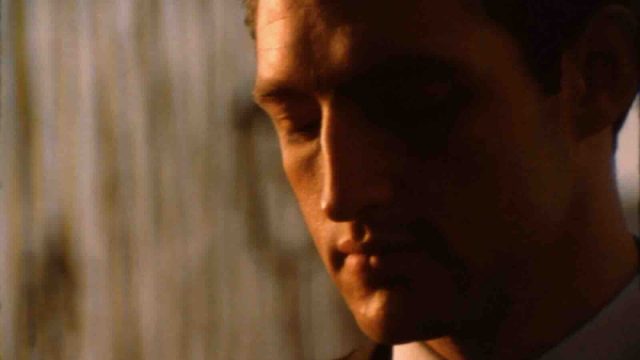
O Fantasma (2000)
MP: It begins to be like a formula… If it worked previously, you say, “Okay, I will apply this again.” Even if it’s not conscious. I don’t think that we do things so consciously, but it’s still important to find ways of avoiding that happening. For instance, in my case, I try to choose things at the beginning of a film that are different. In order to go somewhere else, I might choose to shoot all in one location or in four different moments of the year or with a Bolex, for instance.
JR: Well, something that I really hate is those cameras that fly. What is it called? Drones. They have become a prototype of a certain cinema, yet at the same time I’m interested in working with that technology to make something different, or that will make sense in the world of my films. I used it for The Ornithologist, and it was a simple idea: a drone can go up like birds. So let’s use it for that purpose, for the birds that look at us.
MP: Embracing the enemy, and absorbing them.
JR: Sort of. Like I’m going to make a short film this summer (co-directed with my partner João Rui Guerra da Mata) and we are going to shoot it in Imax. I saw Imax for the first time just recently and I’m curious to try it. The idea is not to make a spectacular film, but to see: where does it go?
MP: Are you going to work with the cinematographer Rui Poças again? And how is that relationship? Because he has shot almost all your movies.
JR: Yes. By now, we’ve built up this relationship of trust, and friendship. For me, it’s hard to think about shooting a film without him.
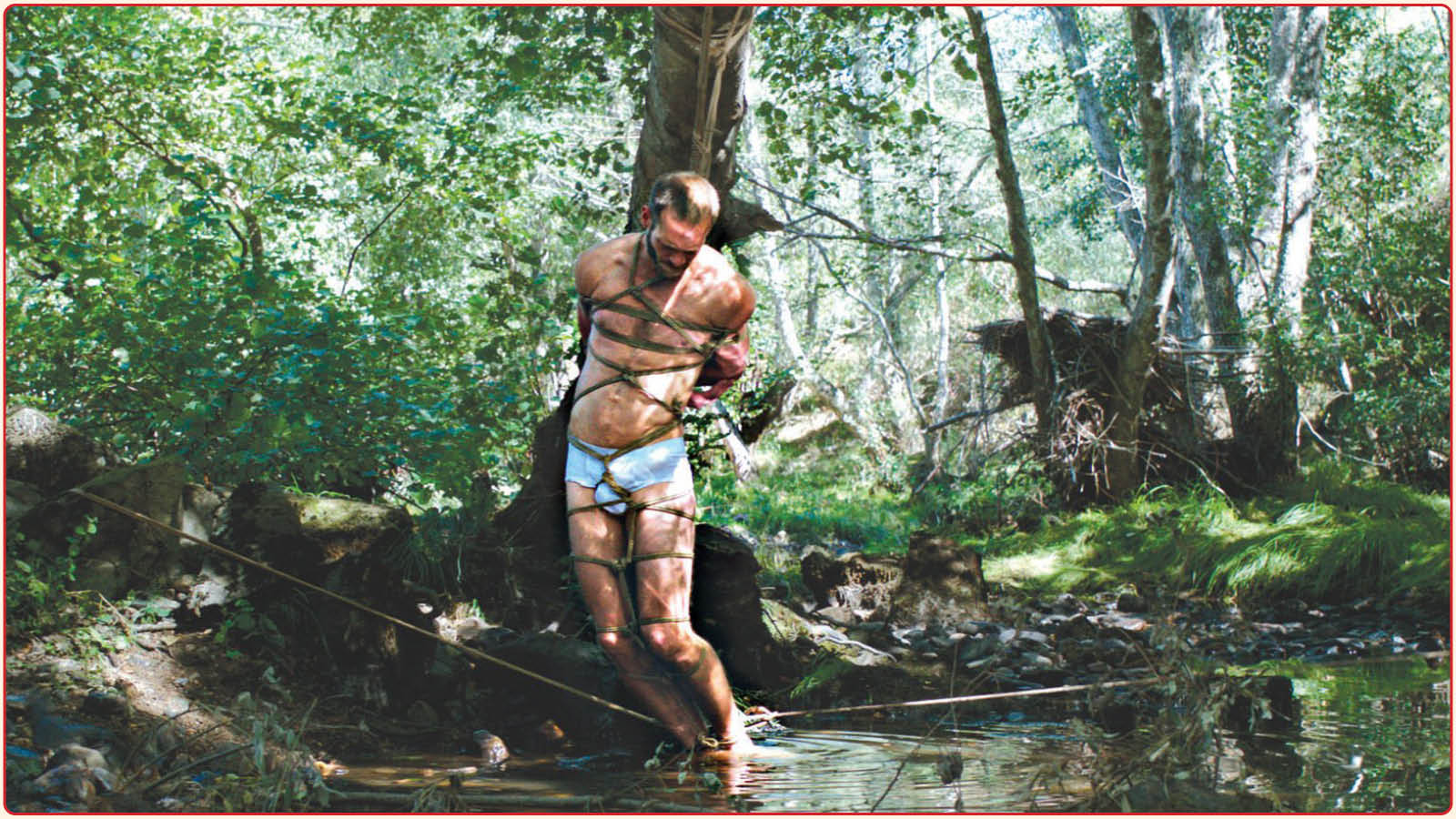
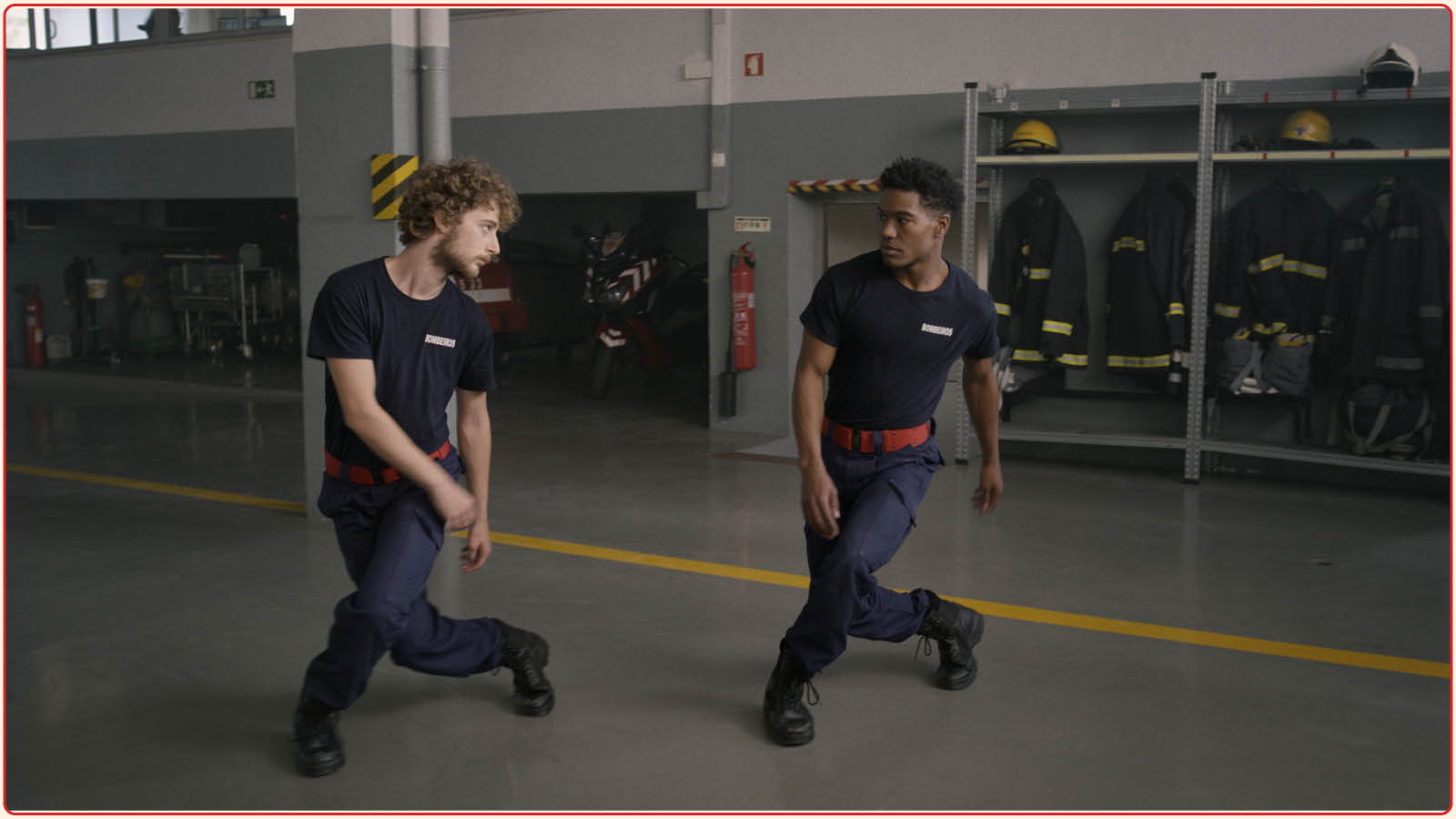
MP: Your films make me think about the frame. Specifically, about pose. Pose—as in the body of the actor magnetized by the sides of the frame—is something that seems to attract you. I can see it in all the movies: the musicals in Will-o’-the-Wisp; in The Ornithologist, when the main character wakes up, tied up to the tree, or a man playing a dog in O Fantasma. I’m wondering if there’s reference to other mediums, something that might be anti-cinematic? A pose, maybe, comes from the idea of photography, of stillness?
JR: For me, this interest comes from painting, mostly. Especially in classical painting, an image tells a story. It’s a fixed image, but it tells the story of the whole life, or a big part of it, in an image. I like the limits of the frame, and considering what you keep inside and what you keep out. In classical cinema, for example, there’s this idea of photogenia—and even if the actors are ugly, it’s not making fun of them; it’s like they are, in their ugliness, the most beautiful beings. Which is what I like. I hate cinema that mistreats people, that ridicules people. I think this idea of how to film people is also a way of desiring them. There’s a lot of desire in how you compose an image. Even the idea of cutting a body in pieces can be very erotic.
MP: Your films are charged with eroticism. I wonder, what does this feeling rely upon? You’re giving us some clues in what you just said: the frame, the gaze. But I wonder if a film can make erotic something that has not been yet? I am curious about the idea of expanding what is erotic.
JR: For me, it’s everything. It’s not, say, when you’re filming a sex scene that is the most erotic thing. Bresson, I think, is the most erotic of directors, and he was only filming people and objects. There’s a physicality to his films that was a big influence on me. At the same time, it’s something in how you are looking at one of his films as if you’re touching it, because of the materiality of the bodies in his films.
The Ornithologist (2016)
MP: This balancing of restraint and distance, how does it work for you? When do you need to show, and when do you restrain? This also can be beyond topics of eroticism and sex—the balance between the high and the low, the intense and the not-intense, the dark and the bright, we can go beyond. Is it in the writing? Is it something that you can modulate in the shooting? In the edit? Or is it something more intuitive?
JR: For me, the writing fashions the whole film. Writing a film is like making the film for the first time. Because I really try to be as precise as I can. And as simple as I can, also. Of course, in the shooting, there’s a tension you cannot attain when writing, which comes from being with people in a set. Though perhaps the thing I’m mostly afraid of when shooting is not knowing what to do. I have learned better how to deal with that now, to not be afraid to tell people that I’m unsure. I used to be very obsessed with knowing everything beforehand, so as not to expose myself. I think it’s because I’m shy, I have to know what I’m doing in advance.
MP: There’s also a tendency to think cinema is an innately hierarchical discipline, which is something we’re taught in film schools or by looking at movies. It’s not easy to deconstruct or reshape that idea, to redistribute that energy.
JR: Yes. If in the end, if it goes wrong, it’s somehow your fault.
MP: An actor doing a play, it might be not a very good performance, but next week they can do it again, or they can jump from one project to another. I find it very beautiful, the idea for an actor, “Ah, next week we can do it again.” We don’t have that. We make a movie and then it stays. Imagine that you made a mess one day as an actor, then it evaporates. It’s very intense while you’re living it, but the sense of present tense that we inhabit is very interesting. Similarly, I wonder, how do you relate to the blank page?
JR: I fear it in the sense that I always have it. I never know which film to do after I make, after I finish a film. It’s very mysterious. I don’t know how to explain it. From where comes the desire to make a film?
MP: Would you be able to trace where it came from for the three movies that are streaming at Metrograph? Was there an inciting image, a book, a conversation?
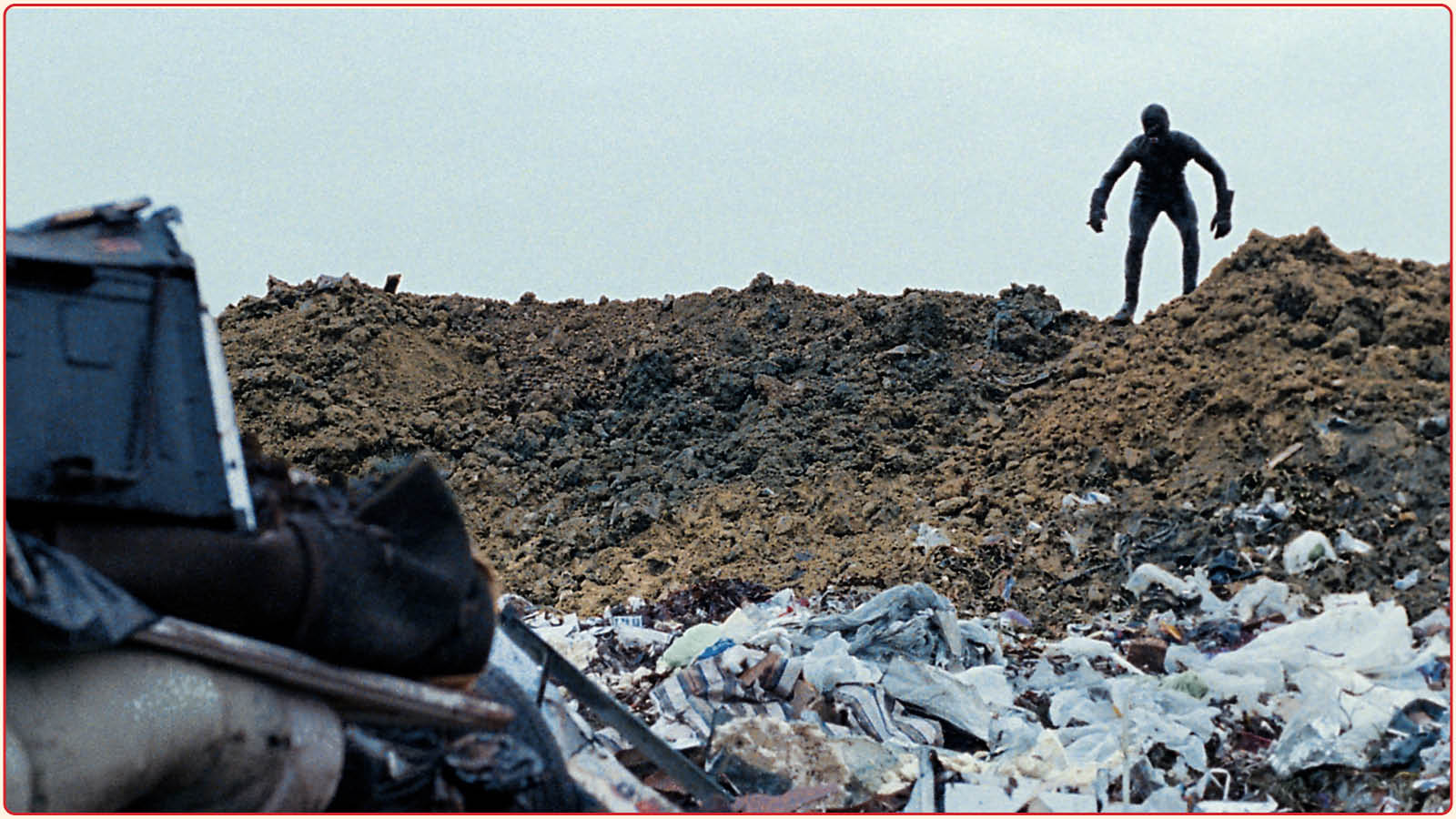
JP: For O Fantasma, I became very obsessed with the garbage collectors who work at night, these people nobody talks about… The name of the film comes from this idea—they are like ghosts of the city because nobody looks at them, and so I decided to try. I approached a place where they work and followed them every other day for, I don’t know, six months, more. That’s where the film came from.
MP: How about The Ornithologist?
JR: I think The Ornithologist relates to my first film, because it’s also a journey of a lonely character. And that journey is like a fable or—because the ornithologist is more inspired by the life of a saint, Saint Anthony—so it’s like o Caminho da Cruz. The Stations of the Cross.
It’s like a new geography of the life of that saint, based in my own experiences. In a way, it’s me reflecting back, because I was studying biology and then I changed course, so perhaps I could have become an ornithologist if I hadn’t gone into cinema. It’s like an unfulfilled desire that I tried to fulfill. My films, of course they are personal, but they are not about me. But that is the one that has the most connections with me.
MP: And Will-o’-the-Wisp?
JR: I think it was the idea of living in a world where you have to think twice about how to say something. There are so many, how do you say, interditos?
MP: Forbidden things, limitations, constraints.
JR: There are so many constraints, but more ideological, that you cannot talk about. If you talk about ecology, you have to be very serious; if you talk about sex, racism… of course they are very serious subjects, but this idea of being able to be playful with the world that we live in… I came from another century and I lived a big part of that century, and I have arrived to a new century. When I was young, I thought the world would evolve in a positive way, in the sense of freedom. I think it’s been the opposite. The film comes from that desire to break something. To be iconoclastic. I think everything became very tame, especially in cinema. So I’m trying to talk about things like class, racism, gender, in a way that is my own. And not to be afraid.
Will-o’-the-Wisp (2022)
MP: Are you seeing this will in other films? What are you watching today? What is catching your eye?
JR: I’m malgré moi [in spite of myself], as the French say. My eye goes back. For instance, I’ve been watching a lot of pre-Code films, especially because of this idea that the films from that time possess qualities that later got lost. There was a freedom that, in mainstream cinema at least, was never regained. It’s like people didn’t think twice if they were doing it right or not. Of course, they thought it twice, because the film is written, but after that time, it seems, you have to think hard to avoid censorship… In Portugal, we had censorship until ’74…
For example, I discovered recently an incredible film, The Story of Temple Drake (1933). With Miriam Hopkins. Do you know it?
MP: Yes.
JR: You remember there are moments when there’s no light? For almost a minute, it’s black. It’s incredible. When we did O Fantasma, we wanted to see how far we could go on the picture side into darkness. The story also deals with a sort of darkness, so it resonates.
MP: I’m interested in pre-Code, too. I think that there is something there in how they were telling what they were telling that allowed the audience to see those big actors as people—a human side to them like it might take decades the industry to do. I don’t know what it comes down to exactly, but I remember seeing a John M. Stahl film starring Irene Dunne, and Irene Dunne seems just like aneighbor. And it’s not a independent film, it’s a Hollywood melodrama!
JP: There’s a sympathetic way of dealing with everything in these films. They feel more human… It’s also very curious, this question of how you deal with certain rules and how you can overcome them. How can you rearrange or pervert a code—not only the Hays Code, but all codes that have been developed throughout film history—how can you go against that?
MP: I think that there was a less desire to control, and a greater search for ambiguity and… edge. In that pre-Code era, things that were crooked could happen. Little mutants could appear. I’m interested in trying to see that today, too.
JP: Today, because most independent films are somehow truly free, in them you can see people trying to explore their own way.
MP: I was thinking about this, especially because nowadays in Argentina the idea of freedom is like a poisoned word because our right-wing government has a stake in this word “freedom,” to do whateverthey want in the name of it. It’s the freedom of and for a few, and a degrading of the concept of care and understanding of those who are not like you. But going back to pre-Code, there was a possibility there to do something that would expand the possibles or represent others. Maybe they didn’t know yet how to accommodate the transition from the sound era to the talkies yet, so they left the camera more static and longer shots, and so then you see Irene Dunne working through space with her acting. You see the possibility of not being in full control.
JR: There is a connection between this transition from silent cinema to the talkies, this technical challenge that, I think you’re right, helped the language. And then the morality of some of these films are really…
MP: Loose! I like to think this possibility of not being in full control, the luxury of not knowing… Something can then exist anew in the world, a movie made of dissonant fragments like a Frankenstein.
JR: Which is so different to that feeling now that, because as you don’t do so many films, you’re trying to obsessively do everything right, and perfect. And it’s nice that films are not perfect. There’s a certain rugosity.
MP: Yes, which goes back to my idea of the edge. It’s another possibility. Something that is not perfect, nor polished, nor reconciled. The idea of a form that keeps expanding, that keeps you questioning.
O Fantasma (2000)

Share:
About the Contributor
Recommended
- Yuliya Solntseva
 On the actress-turned-filmmaker’s unsung authorship.
 - Futures and Pasts: Socrates
 Rossellini’s one-of-a-kind approach to the costume drama, and his 1970 film on the last years of the Athenian truth-seeker.
 - The Illiac Passion
 On the most elaborate of Gregory Markopolous’s modern myths.