Interview
[wpbb post:title]
By David campany
This May, writer and curator David Campany joined Metrograph to present William Klein’s The French.
The French screens at Metrograph and At Home through June 22.

Hi, good evening everyone. My name is David Campany, I’m a curator at the International Center of Photography (ICP), which is just down the road at Essex Market. I’ve come directly from there where I’m installing a very, very large William Klein retrospective, which goes right from his very first works, which were abstract and figurative paintings, through to his street photography, his fashion work, his films.
Now, Klein is a complicated artistic figure. He was born in New York; in fact, his grandparents came from Hungary and settled in the Lower East Side, they had a store on Delancey Street. They did quite well and moved uptown, and William Klein was born in 1928 on 110th Street. But he was obsessed with European art, and as soon as he could he disappeared to Paris. He’s lived-still lives, he’s 94 now-in Paris, he’s been there since 1948. But he hopped backwards and forwards, he became a very well-known fashion photographer for Vogue in the ’50s and ’60s, was making documentary and feature films from 1958 right into the late ’90s-three feature films and around 27, 28, I can’t put my finger on the exact number-documentaries.
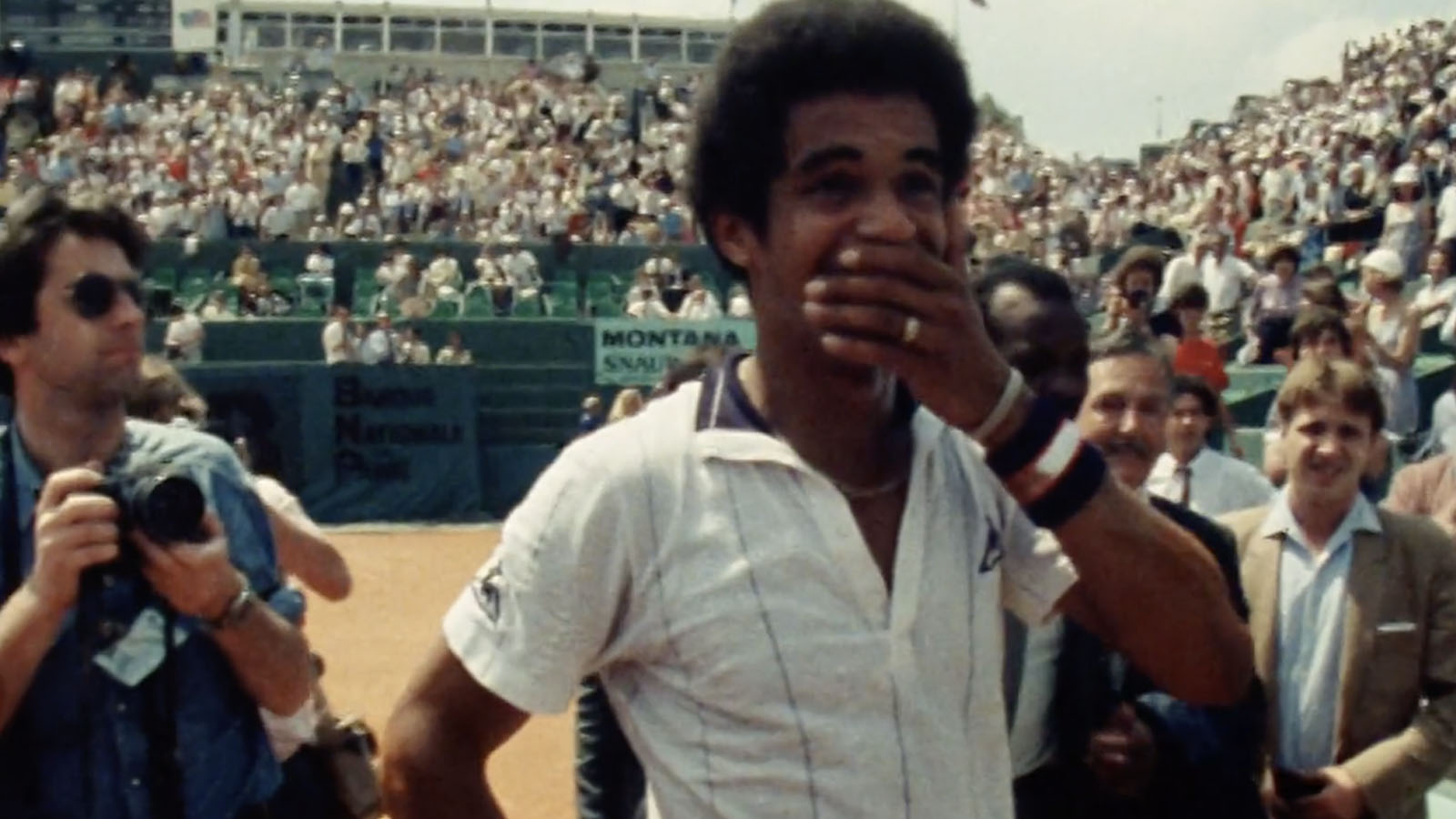
He was always very interested in sport, made a film about the young Cassius Clay in 1964. Whenever you see footage of the young Cassius Clay in black and white, it’s usually from Klein’s film that he made in Miami as Clay was preparing to fight Sonny Liston. It’s strange that the avant garde filmmakers in France were all obsessed with sport, particularly tennis- Jean-Luc Godard was a huge tennis fan-and Klein had a chance to make a film about “the French”-not the people of France, the French as in the French Open-Roland Garros as it’s called, which is happening right now as we speak.
“Klein is in the locker rooms, he’s behind the scenes at all the important meetings-nothing like that would happen today, even with someone as charismatic and as charming as Klein, who seemed to be able to get himself into almost any situation in his filmmaking.”
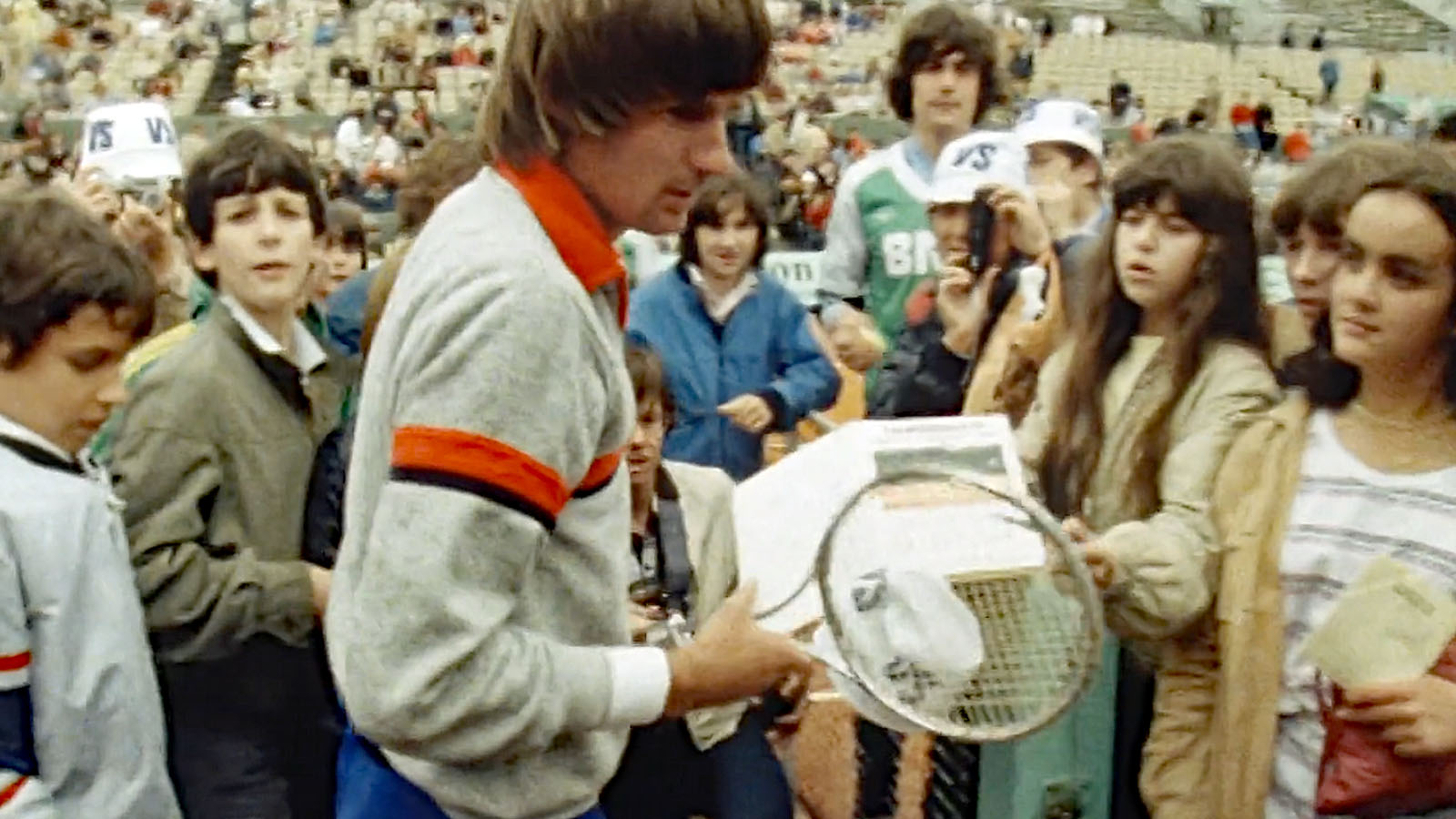
Now, this was 1980, 1981. And it’s an interesting time both in the history of Klein’s filmmaking and also in the history of tennis. It was undergoing enormous transformation at the end of the ’70s, beginning of the ’80s-it was becoming a kind of mega, global sport: with more and more money; more and more pressure; more and more athleticism-actually, you will notice in the film that they’re not as athletic, these athletes, as we remember; when I was 13, watching Wimbledon in 1980, they looked like gods to me, now they look like regular people that you might see on the street. It was not yet a kind of completely closed world, tennis. Some of the footage you’ll see is unimaginable today. Klein is in the locker rooms, he’s behind the scenes at all the important meetings-nothing like that would happen today, even with someone as charismatic and as charming as Klein, who seemed to be able to get himself into almost any situation in his filmmaking. So you’re seeing tennis at a real cusp, before it turns into the sport that we really know it to be now.
There was money in it, but not so much-actually for a long while, particularly during the ’70s, tennis players were paid not just in prize money but in appearance money. And they were regarded as characters. So all of those figures you may remember from tennis, you know, the Ilie Năstases and the Jimmy Connors, those kinds of figures, the sport seem to cultivate these kinds of personalities, and they were paid accordingly. Then the whole money situation becomes much harsher; the sport becomes much more serious.
But you’re seeing that happen in this film, the transformation of it into the kind of contemporary spectacle. It’s stunning, just how much access William Klein managed to get. There were three camera people. Most of the sports footage was done by people that weren’t Klein, but for anything kind of personality-based, Klein’s behind the camera. And there’s no voiceover, which is really interesting. So if Klein is not getting it on camera or on mic, it’s not in the film. And that gives it an enormous feeling of intimacy because there’s no God voice telling you what’s going on, or what to think, anything like that. You’re just with the events as they unfold. He doesn’t film it the way tennis gets filmed for TV. Pay attention to the cutting as he moves from difference scenes, what’s on court, what’s behind, he’ll often cross-cut conversations between different players to almost construct a conversation- very kind of dialectical editing, as they would call it. And it has an extraordinary ending, which I won’t give away. So enjoy it. There are lots more Klein films being screened, and I do urge you to come see the big exhibition I’ve been working on for two or three years at ICP, which opens on Friday. Thanks for coming.