
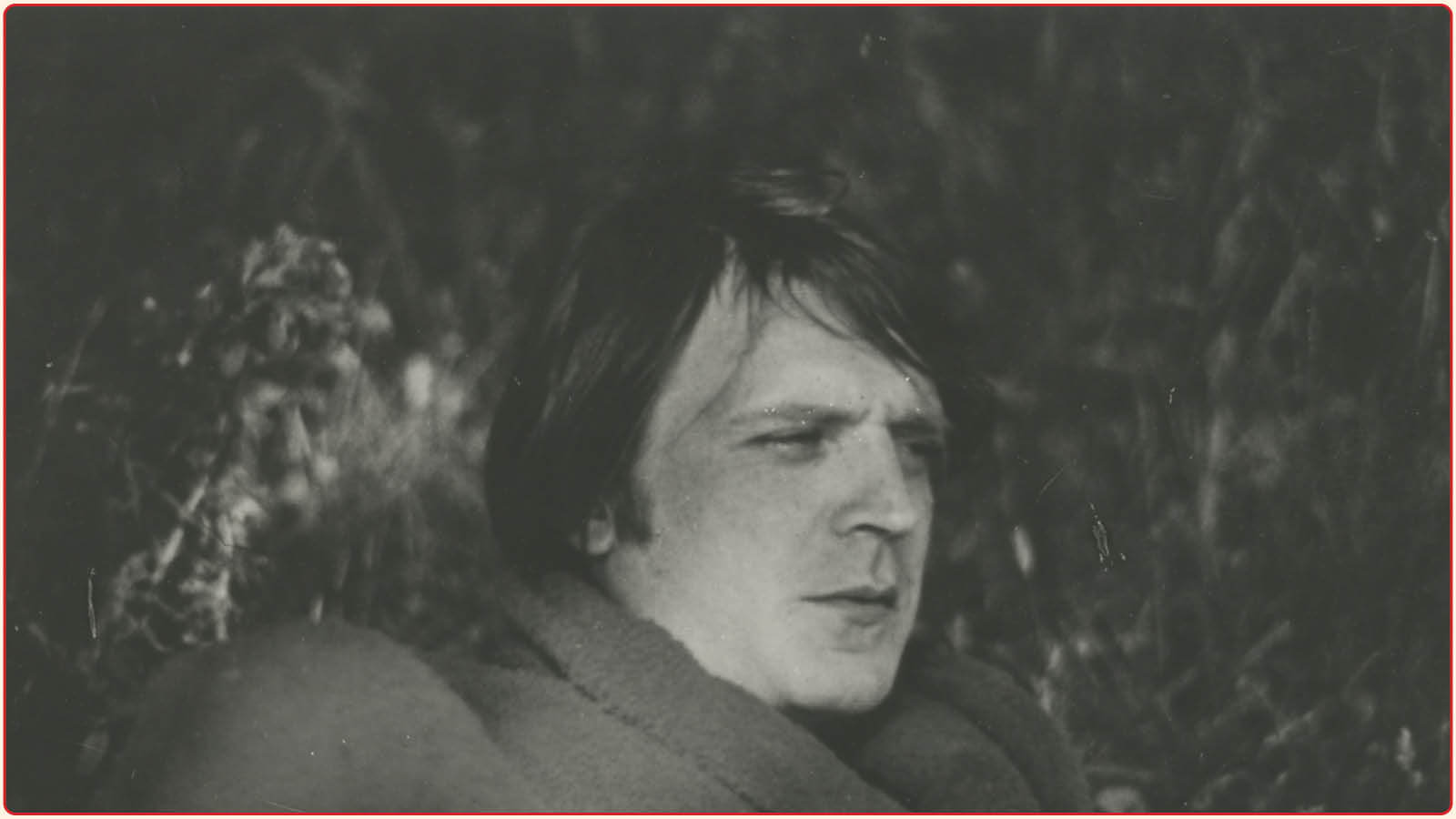
Daniel Pommereulle on the set of La Collectionneuse (1966), courtesy of the Archives Daniel Pommereulle.
Essay
Rediscovering Daniel Pommereulle
On one of the French New Wave’s lesser-known screen dandies.
Share:
As New York’s Ramiken gallery prepares to showcase the work of French artist, painter, sculptor, filmmaker, and sometime actor Daniel Pommereulle—the first stateside presentation of his art—his performances in the generation-defining cinema of European auteurs reveal yet another side to his layered artistry. His work is equally enjoying renewed success in Europe 20 years after his death in 2003 (a tribute at the Musée d’Art Moderne in Paris in 2024, and a retrospective in Switzerland in 2023). A French artist, painter, performer, filmmaker, sculptor and poet, Pommereulle entered the world of cinema in the 1960s through his encounters in the bars, clubs, and cafés between Saint-Germain-des-Prés and Montparnasse. Filmmakers Éric Rohmer, Jean-Luc Godard, and François Truffaut were seduced by his rebellious dandy persona, his provocative personality, and hoped to capture Pommereulle on the screen as he was in life. But he had never been an actor. It was as a representative of a new generation of artists that he made friends with the directors of the French New Wave and appeared in their films.
While preparing to act in La Collectionneuse (1967), he expressed his strong interest in cinema as an artist, as if driven by creative necessity. “May the cinematic eye always rise above the sky,” Pommereulle wrote in a letter to Rohmer in 1966. This phrase underscores the cinematic nature of his entire body of work.
His first paintings, his object installations (1964), the hypnotic visions in his short film Vite (1969), up to the glittering blades on his Premonition Objects series (1973-1975), and then the transparent, colored blocks on his glass and steel sculptures (from 1983 onwards) all share the same objective: to attempt, each time, to seize the full attention of our gaze, so as to arouse vision and prompt a stream of mental images, in order to capture the movement of thought and the energy of light, that is speed. Pommereulle drafted out his work in the moment, seeking to keep the mind and the senses constantly in motion.

Vite (1969)
After he returned from military service during the Algerian War, Pommereulle set out to shake up traditional art circles. In 1963, he started participating in “happenings” around Paris with significant figures of the American counterculture such as Alan Kaprow and Carolee Schneemann. Pommereulle expanded his field of experimentation. From the American Center to La Coupole, he fell in with French playwright and filmmaker Marc’O and his group. Marc’O, who had teamed up with the Letterists and Situationists, sought to push the limits of theatrical expression by drawing inspiration from the methods applied by the Living Theater. Marc’O directed Les Idoles (1967), a musical comedy which was to become an emblem of the ’60s, some psychedelic images of which would happen to be reproduced in Jean Eustache’s masterpiece The Mother and the Whore (1972), a film whose affinities with Pommereulle’s work are remarkably extensive, in their shared approach to space and time, to how people spend their time, to deliberate idleness. The segment lasts barely a few minutes, but reveals the ties that linked the constellation of actors and artists (Pommereulle included) who were the driving forces of filmmaking and underground Parisian art.
In his lifetime, Pommereulle made two shorts: One More Time in 1968 and Vite, with his friends from the Zanzibar Group. “Zanzibar” refers to the so-called “Dandies of May ’68”: a collective of very young members who made experimental films revolving around the civil protests in Paris. As with many artists of their generation, cinema proved to be one of the most effective means of blending art and life. The core of the group included painter Olivier Mosset (who had returned from Andy Warhol’s Factory in 1967), filmmaker Serge Bard, actor Pierre Clémenti; director Patrick Deval, Jackie Raynal (who edited films by Rohmer and Pollet, and directed one of Zanzibar’s major films, 1968’s Deux Fois) and Sylvina Boissonnas, wealthy heiress and patron of the arts, who gave the artists the impetus and financial freedom to fulfill their projects. The group also included filmmaker Philippe Garrel, critic Alain Jouffroy, singer Nico, and ’60s rock icon Zouzou, among others. Although very different from one another, the Zanzibar films shared the “Spirit of May ’68” and the same radical discourse. They were all united around a desire to change cinema by discarding traditional conceptions of image and narrative structure. Their authors wished for a clean slate at a time when France was experiencing the largest mass protests in its history.
At the beginning of ’69, while spending several months in Los Angeles with Marlon Brando, Pommereulle wrote the following line in his preparatory notebook for the Vite screenplay, “Don’t even think in seconds—fast, much faster, the very idea of seconds still seems too slow to me.”
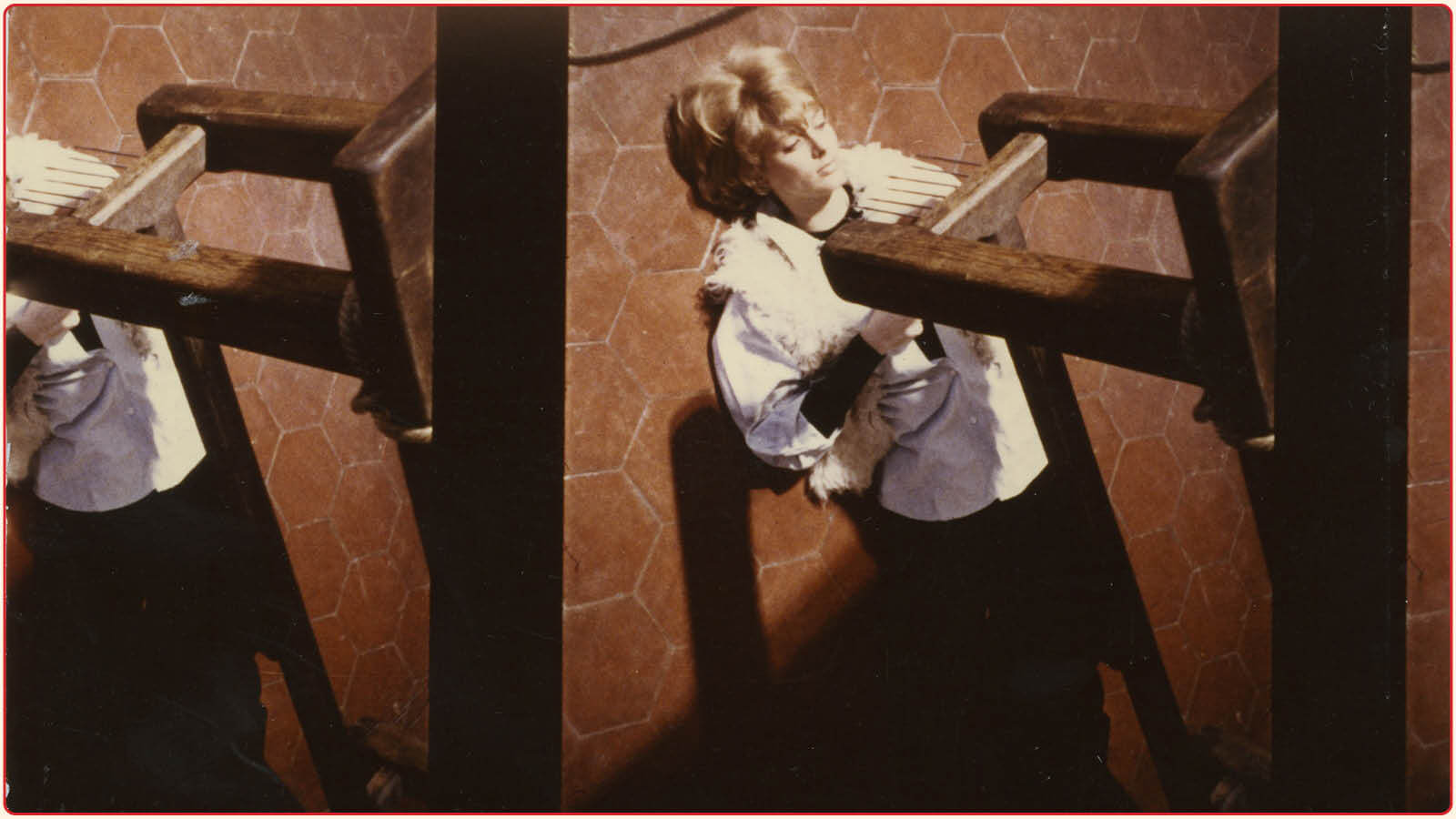
Vite (1969)
Critics have lauded Vite, a flash of a film, as standing apart in the history of experimental cinema. With this film, Pommereulle sought to shake slumbering minds and overthrow the establishment, which had suppressed rebellion and forced France’s young generation to wage war in Algeria. In the film, Pomereulle appears in the Moroccan desert, alongside a child, insulting his audience on camera, clearly stating the side he has taken in the context of decolonization. A furious cosmic incantation, the film interweaves trance scenes with images of the moon and Saturn which hypnotize the viewer. Pommereulle’s point was to get a head start on his audience. He was calling for the birth of a new, living world.
The project of the authors of the Zanzibar movies was to make a single film, “a manifesto film” in 35 mm, and then to call it a day. This radical vow was consistent with their revolutionary state of mind, which prompted Jean-Luc Godard to declare “THE END OF CINEMA” on the last intertitle of Weekend (1967). It wasn’t so much about announcing the death of cinema as desiring to put the medium in crisis, and to split society apart, in order to bring about aesthetic, moral, and political renewal.
In Pommereulle’s case, the film’s title could thus become nearly prophetic; moving from VITE (fast) to VIE (life) only comes down to a single letter. Pommereulle summed it up as follows: “I’ve also always believed that cinema is a means of getting closer to oneself, rather than the opposite, a means of getting out of oneself. It’s a film that taught me to keep very close to myself.”
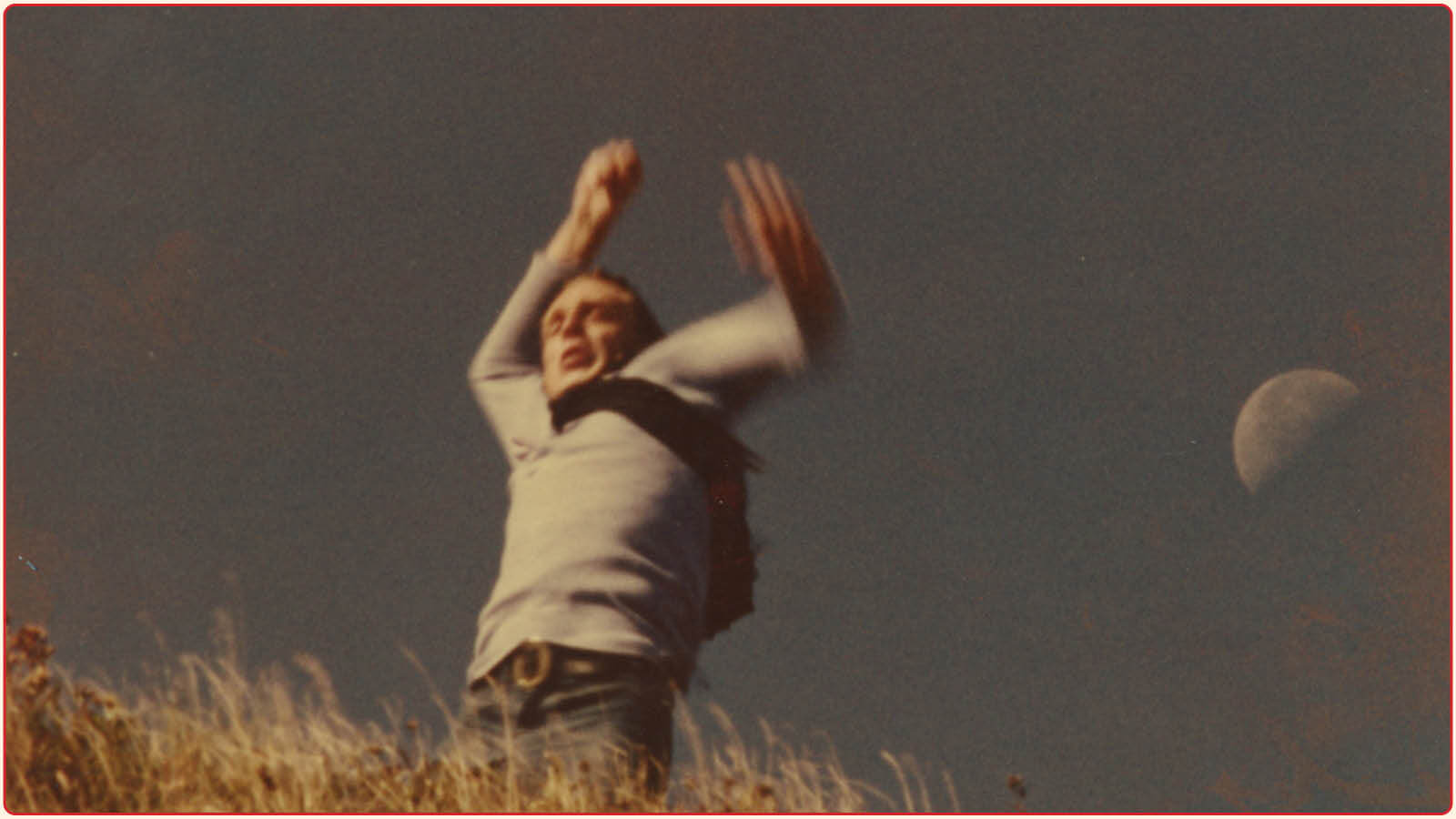
Vite (1969)
Share:
About the Contributor
Recommended
- The Maiku Hama Trilogy
 On the retro riffs and magnetic lead of Kaizo Hayashi’s newly restored cult trilogy.
 - Juliette Binoche
 On the eloquent hunger of the iconic French actress.
 - I’m Not Everything I Want to Be
 On Libuše Jarcovjáková, the queer photographer drawn to the social fringes of Soviet Prague.