
Interview
Alek Keshishian
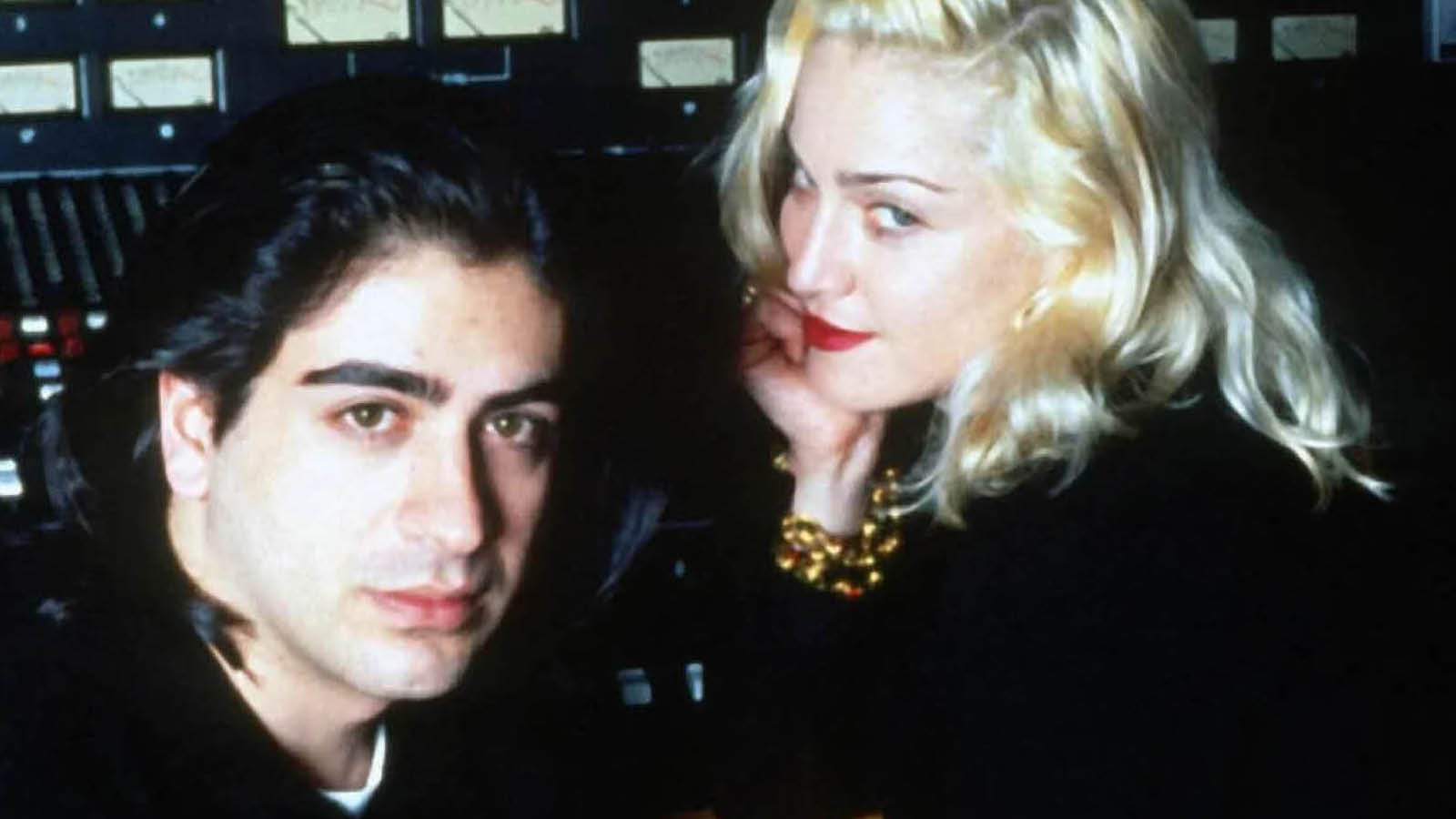
How the 24-year-old director Alek Keshishian captured Madonna’s world tour, on and off stage.
Share:
In 1990, following the release of her album Like a Prayer, Madonna embarked on the Blond Ambition World Tour, a 57-show extravaganza that would make her one of the most successful touring acts in the world, second only to Michael Jackson. The show featured now-iconic costumes by Jean Paul Gaultier, and elaborate sets that evoked German Expressionism and Catholic iconography; the sitting Pope John Paul II called it “one of the most satanic shows in the history of humanity,” likely due to Madonna’s simulated masturbation scene during her performance of “Like a Virgin.” The following year, a film documenting the tour, Madonna: Truth or Dare, was released and became the highest grossing documentary of all time, a title it would hold for over a decade. Though it features performances of several songs, captured and edited with operatic bravado, Truth or Dare is far from a traditional concert film. Much of it depicts the behind the scenes tour life—shot in black and white on 16mm—not only of Madonna herself, but also of her dancers and crew, revealing scenes that even today feel shockingly intimate and unguarded. Truth or Dare was conceived of and directed by Alek Keshishian, a 24-year-old who had never directed a feature film before. In anticipation of Metrograph’s screenings of Truth or Dare nearly 35 years after its release, I spoke with Keshishian about how he managed to gain the trust of one of the most famous people in the world, construct a movie that has endured decades later and inspired countless other behind-the-scenes popstar documentaries (including Kashishian’s own Selena: My Mind & Me in 2022), and how celebrity has evolved in the decades since. —Gabriel Jandali Appel
GABRIEL JANDALI APPEL: How were you first introduced to Madonna?
ALEK KESHISHIAN: I did a pop opera adaptation of Wuthering Heights when I was an undergraduate at Harvard, in 1986. The first artist who gave us rights to use their music, because we had no money, was Madonna.
GJA: You just wrote a letter to Madonna?
AK: Yeah, my producer and I wrote letters to all the artists whose music we wanted—because it was a pop opera, it was meant to be wall-to-wall music. So the voice of the character Catherine was [expressed through the songs of] Kate Bush, until Catherine sold out to Edgar, then she became Madonna, and then right before she died, she morphed back to Kate Bush.
And unbeknownst to me, Madonna was on top of everything. When I came to LA after I graduated, [her agency] CAA called me and said, “Madonna wants to know if you have a VHS of Wuthering Heights.” I told them I had a really bad video that my parents made, and they said, “She’d really like to see it.” I found myself in a conference room with Madonna right after she had recorded “Live to Tell.” She was at her peak and I was a huge fan.
Madonna: Truth or Dare (1991)
GJA: And then Truth or Dare came together a few years after that?
AK: Some time after, I was living in LA. I’d directed a few music videos, and my phone rang one day, and it was Madonna, acting like it was perfectly normal for her to call me. She said, “Hi Alek, it’s Madonna. I don’t know if you know but I’m about to go on tour.” Like, do I know you’re going on tour? Yeah, me and my gay friends all have tickets! She said, “I’m wondering if you want to do my HBO special?” At the time, it was just going to be a TV special with some backstage black-and-white footage. She said, “I’m going to Japan in four days. The Japanese fans are really something else and I think you may want B-roll footage of that.” So first I went to see her perform the Blond Ambition World Tour in the middle of a Disney soundstage. Four days later I was flying first class for the first time in my life, seated next to Madonna, going to Tokyo.
GJA: Wow. How long were you in Japan?
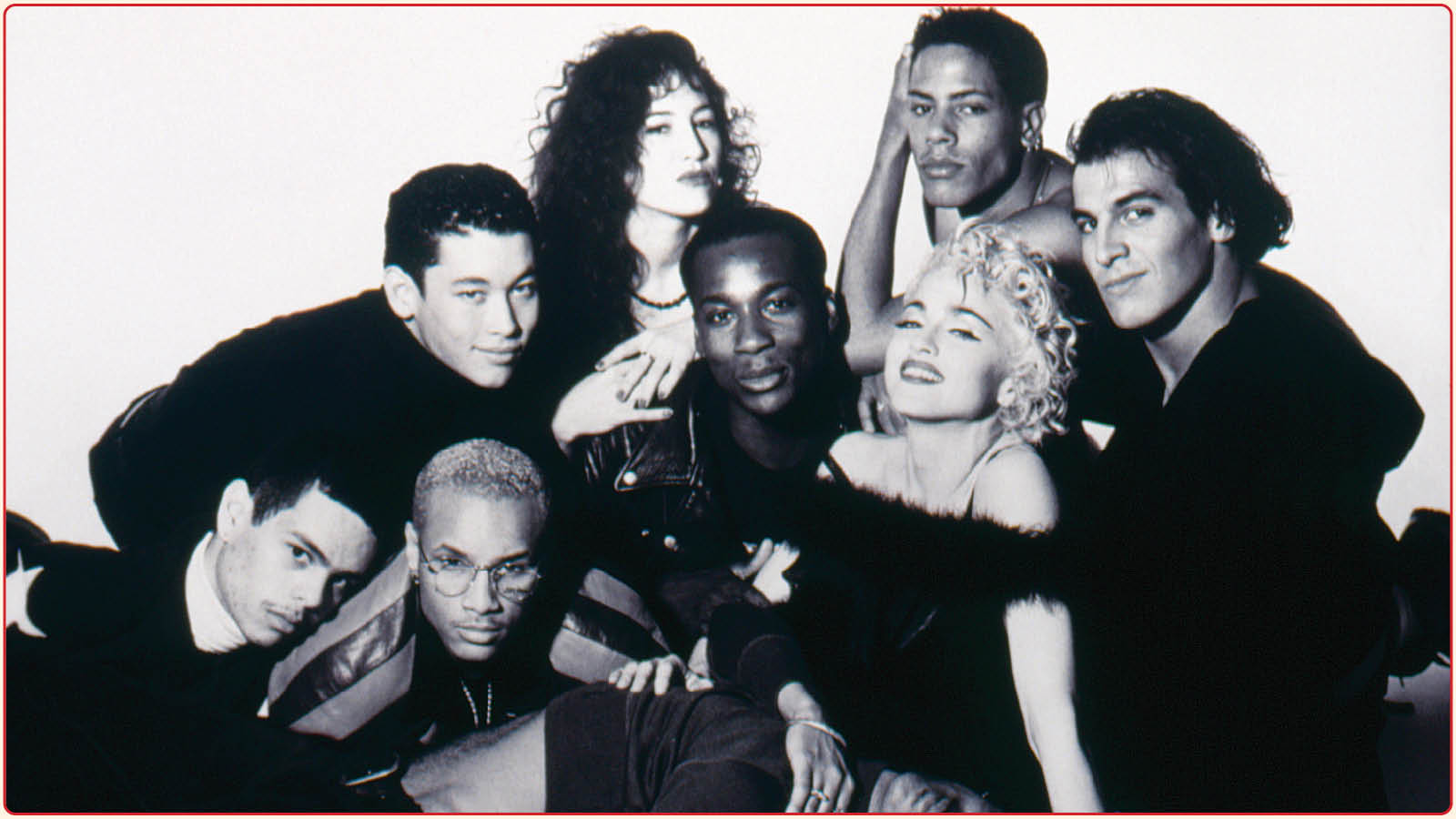
AK: Maybe a week, 10 days. I had all this time off, so I decided to interview the dancers. The only time I could interview them was when they were in bed because they’d be out all night, and they would never wake up before they had to go to the venue. I would knock on their door at 2pm, and come in with my camera crew. As I was doing them, it clicked in my head: this is a Fellini movie. This is a movie about this wild mother and her misfit children. It’s a family story. I found out about [her childhood friend from Michigan] Moira McPharlin, the first girl she had kissed, so I said, “We’ve got to get Moira in the film.” I was like, “Oliver [Crumes, one of Madonna’s dancers] hasn’t spoken to his father. We need to arrange an encounter.” Back in LA, I showed Madonna the bed footage—which wasn’t planned—and I said, “I think we have a movie, not an HBO show. I think it’s about backstage life.” I got all my triggers in Japan.
GJA: By the end of Japan, you already have the idea of the movie in your head.
AK: Yeah. I have an idea of the movie and I am ready to convince Madonna to do it against the advice of every single one of her advisers—her lawyers, her agents, [her then-boyfriend] Warren Beatty—saying “What are you talking about? The U2 documentary Rattle and Hum (1988) just came out; it was a disaster. No one is interested in documentaries. And who is this kid? He’s 24 years old and you’re going to give him final cut?”
Madonna: Truth or Dare (1991)
GJA: You insisted on final cut from the beginning?
AK: It was never a discussion because Madonna was smart. I said if I don’t get final cut then it’s a puff piece. We were best friends by the time Japan was over. We spoke every morning first thing, every night last thing. We became best friends on that flight to Japan. She spent the first half of that flight teasing me, and there was this moment where something clicked. By the time Japan was over, we were honestly like soulmates in a weird way.
I wasn’t really convincing her, I was just telling her what I thought. I’d say to my producers, “I need another techno crane.” They’d be like, “Uh, that is $4,000, we can’t afford that.” And I’d be like, knock knock, “M? I need another $4,000.” “Why?” “Because I need another techno crane.” “Why?” “So you look better.” “Okay.” We had this relationship that people didn’t understand, because it wasn’t a relationship she had with anybody else. And I was really lucky. It was like God went, “For your first movie, you’re going to be Steven Spielberg.” Nothing else after compared to that.
It went all the way through to selling the movie. New Line wanted the movie for $5.5 million. Miramax wanted it just for the US for $2.5 million. I was like, “Sell it to Miramax.” Her managers and agents went crazy: “Not only have you listened to this idiot while making the movie, now you’re listening to him about who to sell it to, for $3 million less?” I said, “New Line does not understand the movie we’re making; Harvey does.” Sure enough, she turned around and went, “I’m selling the movie for the US to Miramax.” And guess what? A month later New Line turned around and said, “What? The movie is in black and white? We don’t want it.” They had to have a fire sale for the European rights, which made me look great.
GJA: There was never a consideration at the end of let’s rent a studio and do talking head interviews with the dancers, with Beatty, with her manager… ?
AK: Never. In fact, that’s my biggest regret about Selena [Gomez: My Mind & Me]—there was a period of time when I wasn’t filming and we had to use talking heads. In that period of two, three years where she had her psychotic episode, there was no other solution. I tried eight million artistic versions, some of them very cool, but they were confusing. With Truth or Dare, we do have some interviews with Madonna, but they’re in situ. Which is the hardest thing to do… Pure cinema verité is so time-consuming and expensive, requires so much patience—you’re sitting there waiting, waiting, waiting for something to happen, and it only can happen on camera. But there’s an immediacy to it. I think that’s what makes Truth or Dare interesting—you don’t feel like you’re getting any kind of reinterpretation.
GJA: Let’s talk about the performances. Did you always know which performances you were going to shoot?
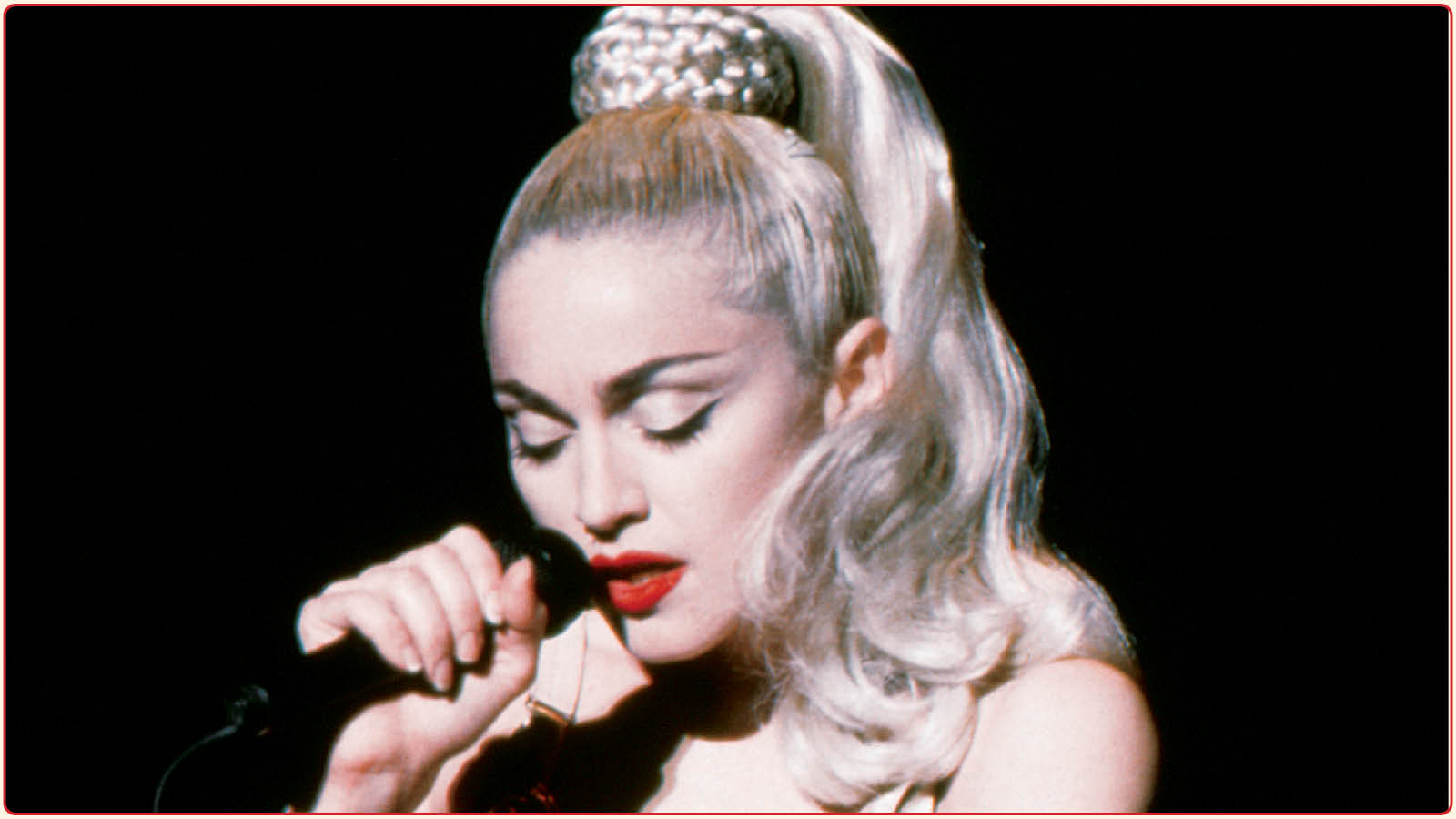
AK: Yeah. We knew we were gonna shoot three shows in Paris, and I had 22 cameras to disperse. That’s a puzzle piece because your cameras can’t shoot each other, so you’ve got to pick the dates that your Steadicam is on stage, and the days where this camera or this crane is working. I don’t know if you remember, but in the movie, during “Keep in Together,” which is the last song, the mic keeps cutting out, and that was my fault. My crane hit the microphone and it cut her sound. And afterwards everybody was like, “Alek is gonna finally get it from Madonna. She never calls him out for anything.” I picked up the phone and she was like, “What the fuck was that?” I said, “It’s going to be so good for the movie.” Because I instantly knew I could use that moment for the scene that had happened three months earlier in LA when she freaked out at the sound guy. Documentary filmmaking is creating story. I can’t remember what I had for lunch yesterday, I can’t remember the name of the person I met yesterday, but I could remember there’s this scene where she gets down on her sound person for the sound cutting out, and now I could use this moment to illustrate this piece of the story. She just said, “Okay.” People were so angry that, once again, she had let me off, but she trusted me.

Madonna: Truth or Dare (1991)
GJA: Did you have a 16mm camera running during the concert as well, or is that a trick of editing?
AK: Yeah, because we had a different crew who had the 16mm cameras—they had the Anton K1, the classic documentary film camera that probably is no longer made. I had my doc crew at all times shooting 16mm. But on the days that we did the concert, it was me on a headset speaking in French—thank God for high school French—to 22 camerapeople. I was in a separate room with monitors. It was a real trial by fire. I mean, I’d never done anything like that before.
GJA: Were there any moments during production where you knew you had gold?
AK: With Madonna, every scene was interesting. Madonna is so eloquent, she’s so glib, she’s so smart, it was an embarrassment of riches: “What do we take out?” But still, I had no idea the film would do so well. Madonna and I didn’t think anyone was going to watch this movie. We were like, “We don’t care. We want it to be X-rated.” I didn’t expect anything. And I think that freed me up. It was the bravest I’ve ever been.
GJA: I was going to try to get through this interview without asking about Beatty, or Instagram, or reality TV, but rapid-fire: Beatty made you cut a few scenes from the film—
AK: No. Beatty made me cut nothing from the movie. Not a single frame has been cut from the movie because of Warren Beatty.
GJA: So this is an apocryphal story that’s all over the internet?
AK: Not a single fucking frame. He threatened a legal suit, and we went, “Go ahead.” And he did not cut one single frame. So he was completely ineffective.
GJA: They are obviously two completely different people, but can you say a little more about how it felt doing Selena in the 2020s, how different celebrity was then than with Truth or Dare?
AK: Listen. Madonna was Madonna. Madonna did what she did all before social media, before you could curate your public/private image. I think that’s really affected things. Because now when I try to get somebody to do a documentary, they tend to say no, because they’re like, “Why should I do this? Why should I give up my persona to a stranger when I can curate it myself?” At that time, Madonna had no other venue in which to show herself. Selena obviously did. And I came this close to Selena cancelling the film, because she was mortified by it.
I mean, Selena opens her psyche to that documentary. I’m astounded that she allowed it to be released. I remember her watching it for the first time and saying, “I think this is a work of art; I don’t know if I can release it.” Selena is one of the most special human beings I’ve met. I know this sounds overblown, but she’s closer to Princess Diana or Mother Teresa than anyone I’ve ever met. She is truly about helping other people. And that’s the only thing that gets her through her discomfort.
Of course, Madonna has a courage that is unequaled in the pop world. She has always been on the vanguard of what isn’t acceptable. She has come out for things that were not popular, she was attacked her for her love of gays, her AIDS advocacy, her female sexual expression, and everything else. Her level of courage is beyond anything… I think many people have gotten twisted up in whatever their present-moment feeling is about Madonna. But you know what? This woman brought so much light to the world. And Truth or Dare is just one miniscule capsule that shows the specialness of her light.
Gabriel Jandali Appel is an editor at Metrograph.
Madonna: Truth or Dare (1991)
Share:
About the Contributor
Recommended
- Anocha Suwichakornpong
 The two filmmakers discuss exile, the shock of political awakening, and the filmmaking ecosystem of Southeast Asia.
 - The Holy Girl
 On Lucrecia Martel’s transfixing portrait of adolescent fervor.
 - Somersault
 On Cate Shortland’s assured directorial debut on sexual awakening.