

Wives (1975)
Essay
Anja Breien
On the late Norwegian filmmaker, master chronicler of feminine ennui.
Breaking Free: The Films of Anja Breien plays at Metrograph from Friday, September 11.
Share:
THE OPENING IMAGE OF WIVES: TEN YEARS AFTER (1985) finds a woman lying spread eagle, her splayed calves flanking the frame. Suddenly, a man’s head emerges. A lover performing cunnilingus, perhaps? No, a doctor with bad news. “Chlamydia,” he announces with a frown. The patient furrows her brow.
Of all the yearning, conflicted women the Norwegian filmmaker Anja Breien depicts across her films, Mie (Anne Marie Ottersen) is perhaps the most libidinous. A divorced mother in 1975 Oslo, she is seeing two men at once, and longs for a world that welcomes polyamory. Instead, she is confronted with a complex and unstable situation: dependent on her lovers, defined in relation to her ex-husband, responsible for her children—and now, a sexually transmitted infection.
Mie is one of a trio of women followed by Breien in her exuberant, naturalistic Wives trilogy, which traces the evolution of the group’s friendship over three decades. Each film unspools over a limited period—around two days—and focuses, essentially, on a single motive: a spree of shirking responsibilities. The series begins with the friends at 30 years old, newly married with young children. They reappear a decade later, mostly divorced and trying to start over. In Wives III, they are about 50, jovial as ever, but also reflective, taking stock of the years behind them and the changing terms on which romance and family have configured their lives.
Despite the trilogy’s temporal and structural parameters, the films themselves feel distinctly unconstrained. They follow the baggy rhythms of life without imposing much in the way of dramatic progression or cause and effect. That slackness was baked into the production: Breien developed the films collaboratively with her actresses, who helped shape their characters and improvised much of their dialogue. Across each installment, the wives simply follow their whims, and if the stories drift without destination, that’s because the leads were doing just that.

Wives (1975)
These decennial dispatches from the frontiers of Norwegian feminine ennui are the defining works of Breien’s varied career, which stretched from the 1970s through the 2000s. The 11 features she wrote and directed deserve to be considered alongside the oeuvres of fellow European filmmakers working in a feminist tradition, like Chantal Akerman, Lina Wertmüller, and Kira Muratova. Yet despite the spry modernism of Breien’s work, she has remained little known in the United States, even among cinephiles. After her death, at 85, in May of this year, not a single major American publication ran an obituary.
Although famous in her native Norway, Breien’s features have proven difficult to track down in the United States. After premieres at major festivals like Cannes, Venice, and Locarno, her films—sometimes grouped under the 1970s Norwegian category of kvinnefilm, or “women’s film”—often went on to commercial releases in Europe, occasionally followed by appearances at American festivals, including Seattle, Chicago, and New Directors/New Films in New York. But the work never found meaningful distribution in the U.S., and their theatrical screening here remains a rare opportunity.
Breien was born in Oslo in 1940, where she studied French before attending the renowned French film school L’Institut des hautes études cinématographiques (IDHEC), known for training filmmakers such as Louis Malle, Alain Resnais, and Claire Denis. After her graduation in 1964, Breien served as an assistant director on a feature, and then dove into short films, including May 17th, which pokes fun at Norwegian nationalism. (May 17th is Norwegian Independence Day.)
The filmmaker would hit on the idea that came to define her career just a few years later, upon the release of John Cassavetes’s 1970 film Husbands. Breien saw the American indie become an international phenomenon, its study of male debauchery dividing audiences around the world.
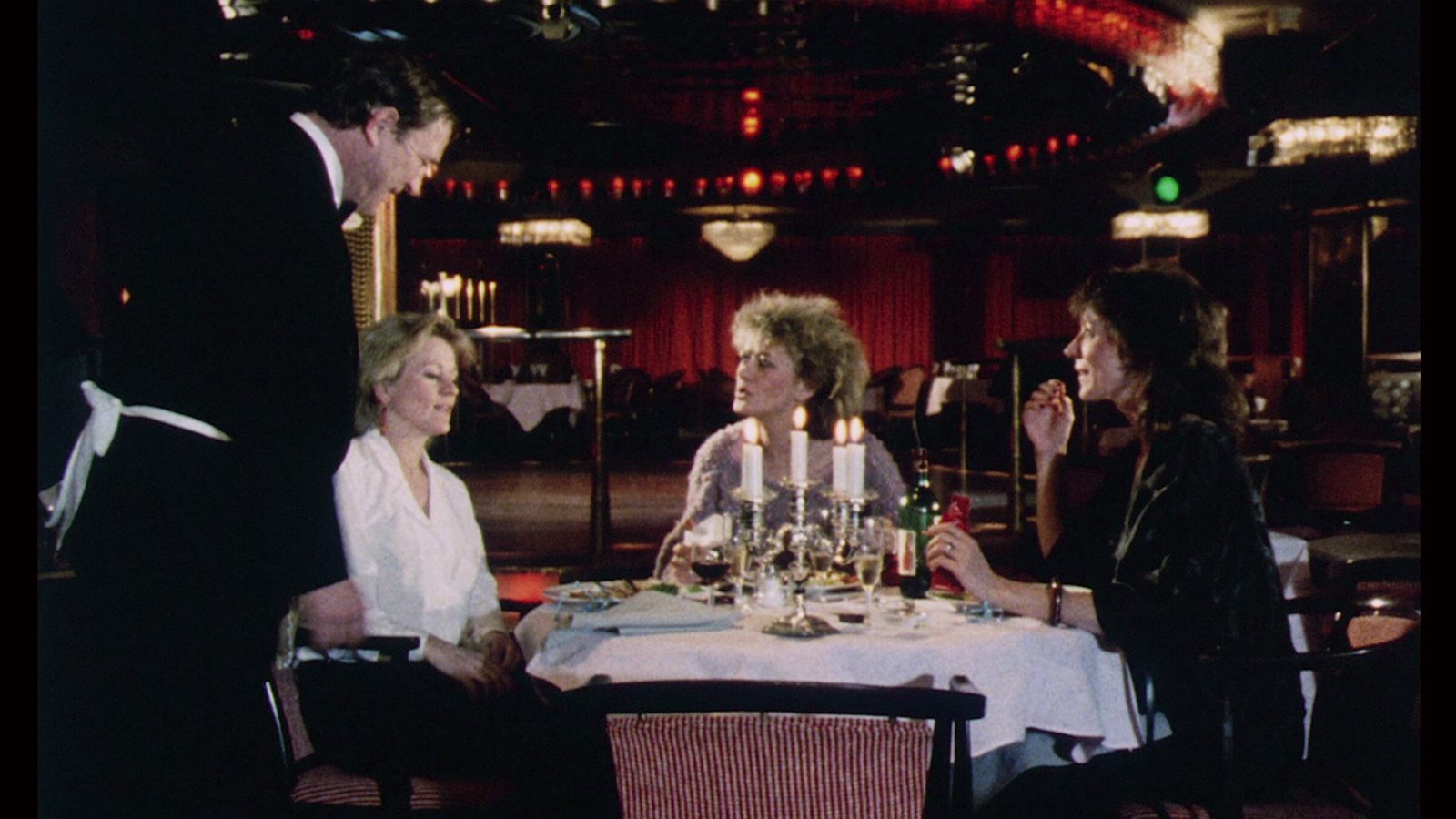
Wives: Ten Years After (1985)
It’s surprising to note that Betty Friedan, the feminist activist and author of The Feminine Mystique, was a fan of Husbands, calling it “the strongest statement of the case for women’s liberation I have yet seen,” given that it “unmasks the festering rage pent up in the Good Housekeeping‐seal‐of‐approval American Dreamhouse.” Friedan is being sincere, but her gushing praise is something of a bluff. In Husbands, women are mostly invisible, invoked only as nags or sex objects. The title is ultimately a kind of joke: these husbands chafe at everything the word requires of them, and prove much more loving, attentive partners to their pals than to their spouses.
Enter Breien, whose Wives (Hustruer in Norwegian) was meant as a riposte to Cassavetes’s macho love-fest. Her film centers on Mie, Kaja (Katja Medbøe), and Heidrun (Frøydis Armand), three childhood friends who reconnect at a reunion for their all-girls primary school. Over the days that follow, they play hooky from their domestic lives, loitering at cafes and the sauna while dodging their worried husbands. From the start, Breien shows how thoroughly the women’s individual identities have become entangled with marriage and motherhood. “What does your husband do?” an old classmate asks Mie at the reunion by way of catching up. As children, she, Kaja, and Heidrun were known as a troublemaking trio. Now adults, they are socially legible through their attachments to men.
Reunited during their benders, the women slip back into the mischief of their girlhood, trading the anhedonic grind of their usual routines for novelty and spark. In both Wives and Wives: Ten Years After, they roam the streets as a pack, channeling an exceptional sort of bravado. Cushioned by drink and female company, they stop men in public spaces to leer and make advances. Baffled, many of the strangers demur and flee. But our flirts aren’t wounded by the rejection. On the contrary, their capacity to repel men thrills them exactly as much as their ability to attract them.
That’s a key element of Breien’s work: the gravitational pull men continue to exert on her protagonists. In each installment, Mie, Kaja, and Heidrun rely on the men in their lives materially, sexually, and emotionally, to varying degrees. Introducing one another to their boyfriends and lovers, they seem to understand themselves through these mutable relationships, which leaves them caught between their complicated need for men and their distress over what that need means and entails.
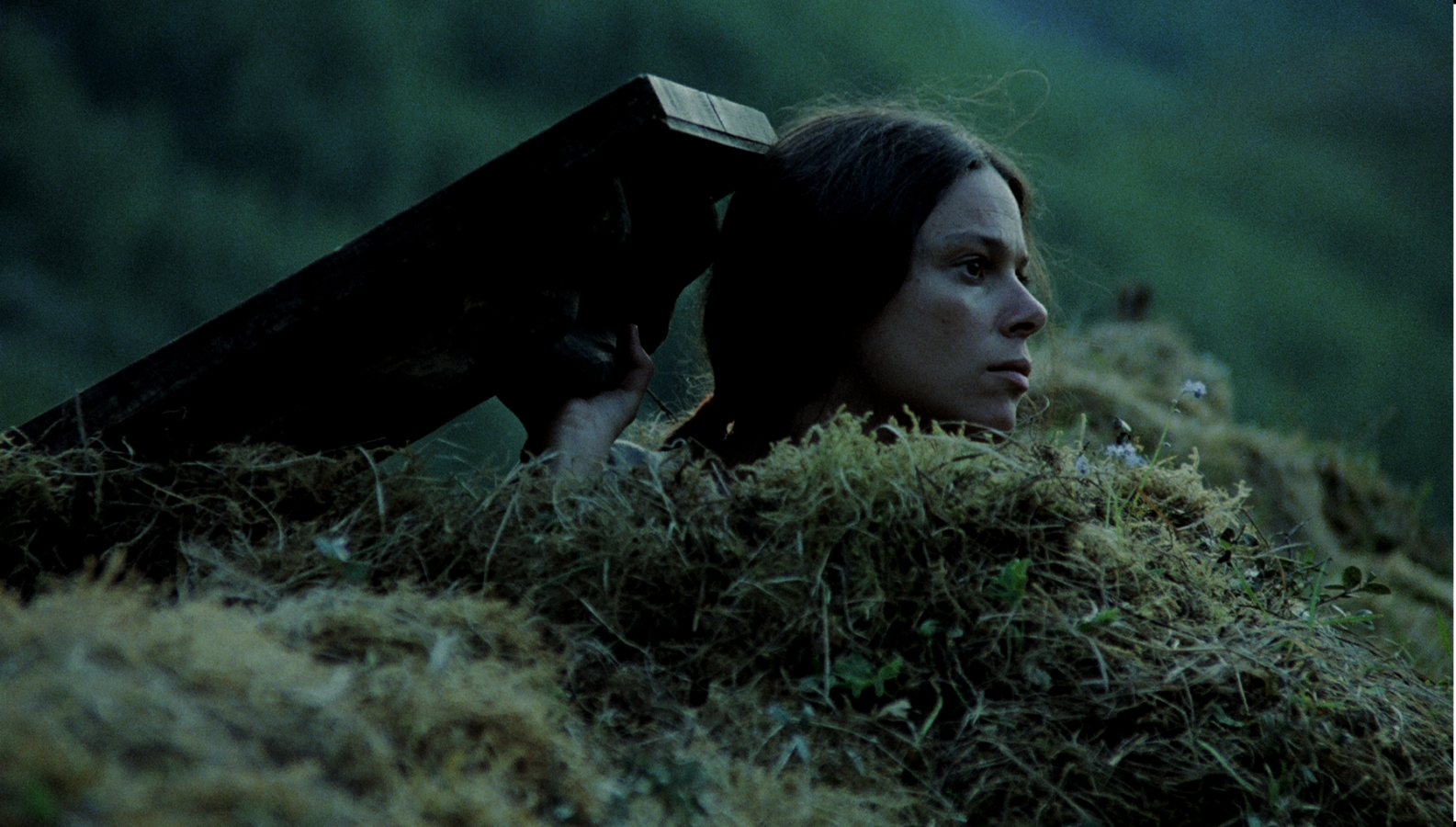
The Witch Hunt (1981)
That contradiction takes a darker form in Breien’s The Witch Hunt (1981), a staggering drama that screened in competition at Venice Film Festival and received a Special Mention. Set in western Norway around 1630, the film was conceived as a commentary on contemporary sexist repression, and it overflows with images of a world gone cold: icy, craggy mountains; slaughtered animals; even a corpse frozen inside a glacier. Together, they suggest a society frozen in place, where the witch hunts of the 17th century persisted into the 20th under a new name: chauvinism.
The film’s heroine is Eli Laupstad (Lil Terselius), a seamstress who has left her husband to return to her ancestral home in the mountains. Once there, she finds herself drawn to Aslak (Bjørn Skagestad), an epileptic farmhand, who falls hard for Eli before turning on her. When he accuses her of witchcraft, the villagers need little convincing: a woman living alone and earning her keep is suspicious enough. Eli is sentenced to death. Breien foreshadows her fate in the film’s vivid opening, where Eli tries to help Maren (Mona Jacobsen), a mute woman fleeing a witch-hunting mob. Terrified and helpless, Maren is literally without a voice: innocent yet unable to speak in her own defense.
The distance between The Witch Hunt and Wives is shorter than it might seem. Whatever the century, Breien’s unruly women run up against the same stubborn questions of money, sex, and independence. The Witch Hunt offers Eli no escape from her troubles. Wives proposes several, although none without their compromises.
A chief complication lies in the children. The women of Wives understand that shunning their husbands is one thing; ducking their offspring is another. At certain points, kids creep into their conversation: “You have no idea how nice it is, especially in the beginning. They’re so dependent on you,” Kaja, who’s visibly pregnant, tells Heidrun in the first installment. Heidrun, unmoved, counters by pointing out that Kaja, in turn, is dependent on her own husband, putting the whole family under his sway.
Crucially, Heidrun is the only childless wife, which liberates her from a sentimental picture of motherhood. Separated from her husband, she’s also the most financially independent. In Wives, she has a job at a chocolate factory, and Wives: 10 Years After finds her apprenticing to be Norway’s first female chimney sweep. Emerging from the chimney covered in soot, she embodies a traditionally masculine form of labor—manual, dirty, emphatically undomestic. She takes pride in her employment, even as she recognizes that the workplace has its own inequities. Gazing at Kaja’s pregnant belly in Wives, Heidrun recalls a factory co-worker who was fired for becoming pregnant.
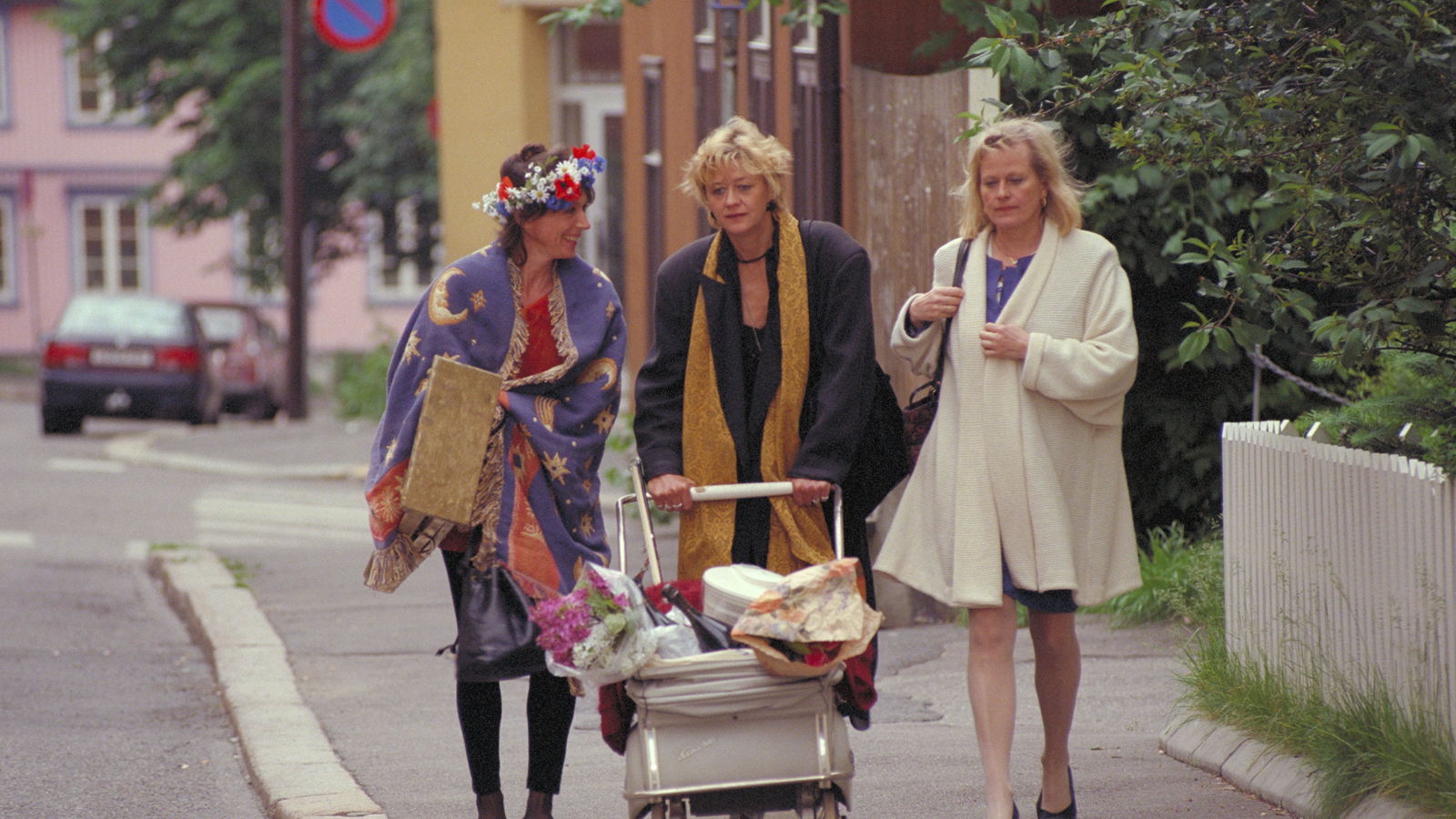
Wives III (1996)
Kaja belongs to the opposite side of the spectrum. In Wives, she doesn’t have a job or a lover. While the women frolic on their bender, Kaja periodically worries about her husband catching her off duty. “The homefronter is watching the crowds. That doesn’t happen every day,” Mie teases at one point. But by the next movie, Kaja’s years of repression have provoked a revolt. She reveals that she’s been seeing a therapist for a troubling new tendency: During dinner parties, she climbs atop the table and strips naked.
As a trio, Mie, Kaja, and Heidrun are Sex and the City avant la lettre, from back when feminism had only two waves. Their divergent sensibilities articulate broader uncertainties about women’s lives at the time, and offer three competing possibilities for how a woman ought to live. As the films check back in with the wives over the decades, the crew becomes a barometer for shifting gender roles and social mores, for how women are seen and how much they control their own futures.
After Wives, Breien made several more influential films, including Games of Love and Loneliness (1977), about a couple at the turn of the century, and Next of Kin (1979), a mordant comedy about a family squabbling over an inheritance. When Next of Kin competed at Cannes, Breien gained a famous fan: Ingmar Bergman, who said that it should have won a prize.
The film opens on a memorable image: a teenage girl bursting into laughter at her great uncle’s funeral, causing a minor family scandal. Hanna (Hæge Juve) is swiftly established as the group’s black sheep, a rebel amid a deluge of bourgeois propriety. As the film goes on, we come to understand Hanna’s defiance, and can hardly fault her bristling at her greedy relatives and family orthodoxies. She is an archetypal Breien protagonist: a woman conspicuously out of step with the people around her.
Breien makes the stakes of such a transgression explicit toward the end of Wives, in a scene where the women argue over finances. Heidrun has been bankrolling the group’s spree and dryly asks how the unemployed pair plan to repay her. In a flash of anger, Kaja snaps at Heidrun, “You’re not a real woman!” The accusation hangs over the whole trilogy—and really, Breien’s whole oeuvre. What counts as a “real woman”? What is she supposed to want, and what kind of life should she build for herself? If Breien’s films resist prescription, they seem equally suspicious that there is any real woman to become.

Share:
Recommended
- Anja Breien
 On the late Norwegian filmmaker, master chronicler of feminine ennui.
 - Mississippi Mermaid
 On Yves Saint Laurent’s striking costumes in François Truffaut’s subversive neo-noir.
 - Lady in the Water
 On the death of the critic in M. Night Shyamalan’s watery fairy tale.