
Columns
Cracked Actor: David Gulpilil
Our Cracked Actor column takes a look at personalities, iconic and obscure, who lit up the screen. For the latest entry, Jake Wilson pays tribute to the inimitable Indigenous Australian actor David Gulpilil.
Walkabout (1971) is playing at Metrograph on Friday, August 14, as part of Going Up the Country.
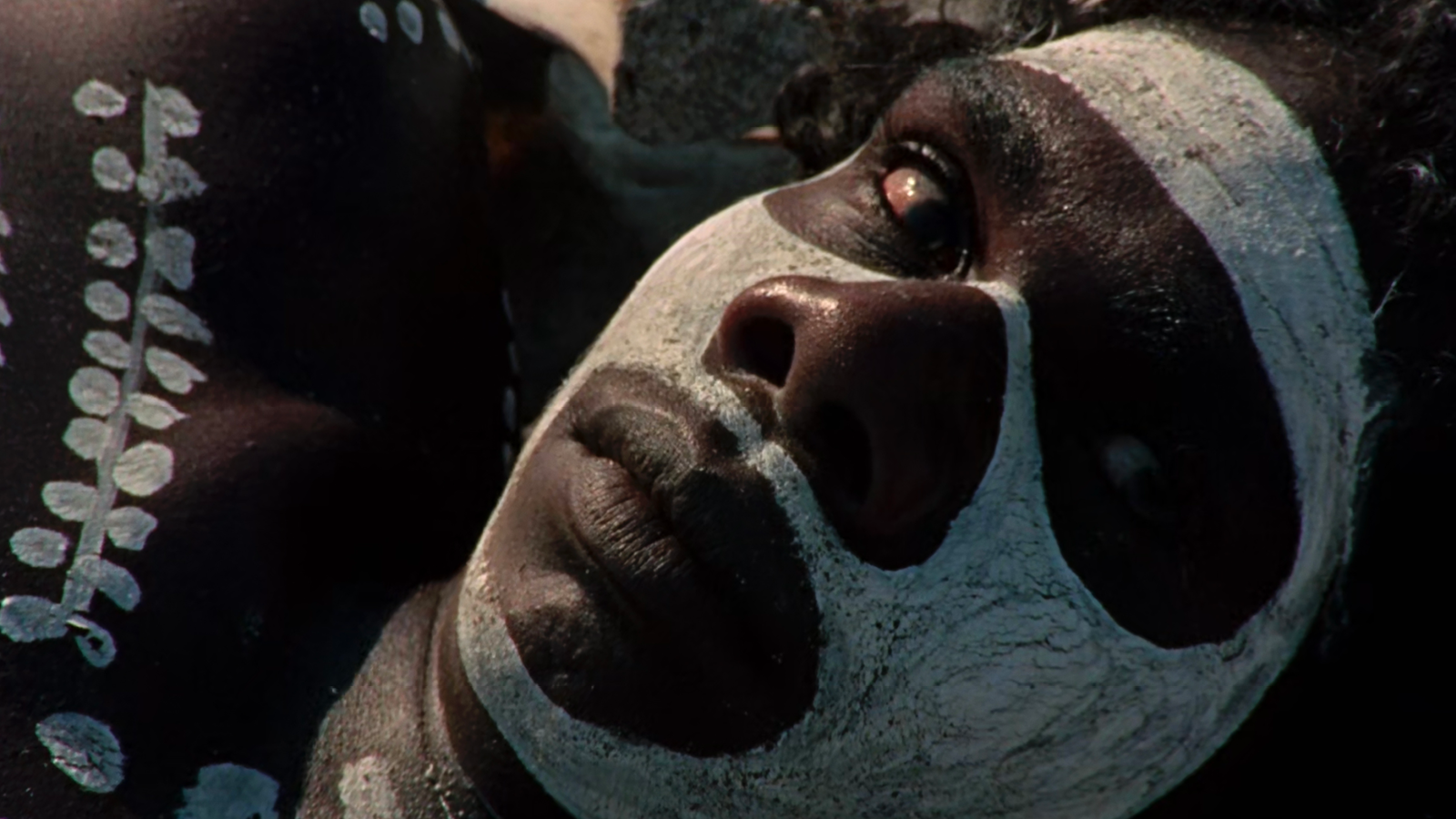
Walkabout (1971)
Share:
SINCE THE DEATH OF DAVID GULPILIL RIDJIMIRARIL DALAITHNGU in 2023 at the age of (probably) 68, it’s become commonplace to describe him as the greatest actor in Australian cinema. For myself, I have no doubt such praise is warranted—but when we make a statement like this, what exactly do we have in mind? The easy answer would be to credit Gulpilil with innate “quasi-magical” screen presence, as if all he had to do was stroll into shot and let the camera take care of the rest.
Depending when he was asked, Gulpilil might not have objected to that way of putting it. “Acting, for me, it’s a piece of cake,” he boasts in Darlene Johnson’s 2002 One Red Blood—one of a number of documentaries on Gulpilil and his career, which lasted half a century and made him one of the most widely recognized Indigenous faces in the world. On other occasions, Gulpilil appeared to resist the idea that he was acting at all, as in an interview he gave to The Sydney Morning Herald that same year. “I don’t pretend to be someone,” he said. “I want to be the person, who they are, how they sit and how they look even when they move outside the angle of the camera.”
Whatever his process looked like from his own perspective, Gulpilil was a dedicated, highly technical actor, evidenced by his body of work. As for how he came by his technique, it wouldn’t be unreasonable to put him in the same basket as Buster Keaton, Judy Garland, and Jackie Chan, stars whose careers as adults would be unimaginable if they hadn’t been immersed in specific performing traditions from early childhood. When the British director Nicolas Roeg arrived in Arnhem Land seeking a young ceremonial dancer to appear in Walkabout (1970), the Elders brought him to the teenage Gulpilil, whose gifts were already celebrated in the local community and beyond (it’s said he won prizes at Darwin Eisteddfods, though the details are fuzzy, as with much about his early life). The rest is history—but the part of this history less often highlighted is that Gulpilil continued to see himself as a song and dance man in the most traditional sense, even as his training in movement and mimicry supplied a basis for everything he did in cinema.
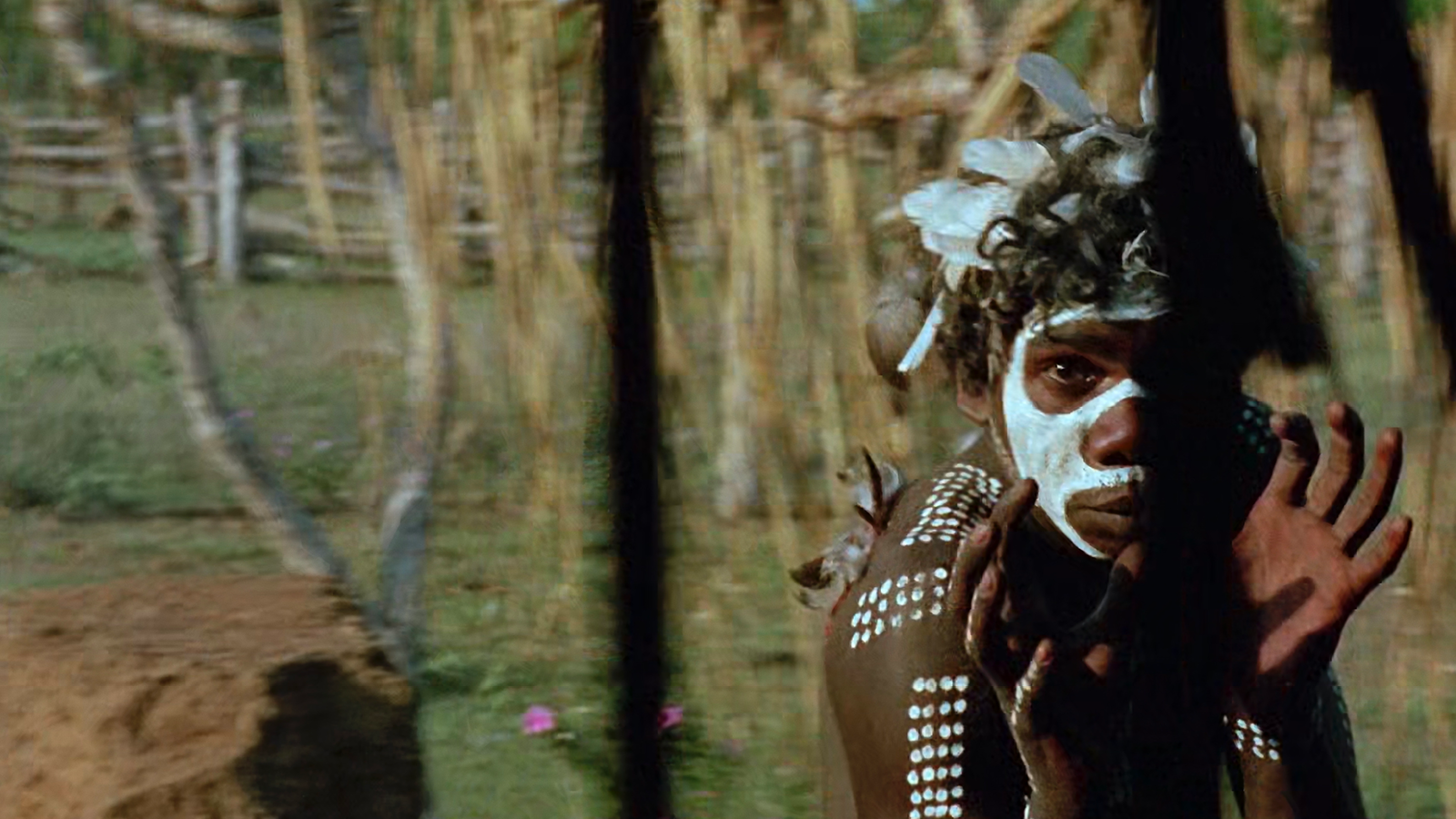
Walkabout (1971)
Of the 20-odd feature films Gulpilil appeared in, Walkabout is the only one acknowledged as a world classic. But while its splintered storytelling still looks excitingly bold, its romantic primitivism hasn’t entirely aged well: an unsympathetic critic might accuse Roeg of viewing Indigenous people as just another exotic feature of the most far-out place on earth, alongside the red rocks and the lizards. “Over-determined” would be a polite word for the slight storyline, involving Jenny Agutter and the director’s son Luc Roeg as British siblings lost in the Central Australian desert, and Gulpilil as a tribal youth who bonds with them despite the lack of a common language (his unsubtitled dialogue is in Mandhalpingu, his father’s tongue). Having fulfilled his purpose as a guardian angel he commits suicide, apparently out of unrequited love for Agutter’s character; many years on, this non sequitur continued to strike Gulpilil as both baffling and hilarious, as I can vouch having heard him chuckling over it when I met him in 2014.
If the crux of Walkabout is the characters’ failure to communicate, the behind-the-scenes story could be seen as a case of life imitating art. Regardless, the aspect of the film that still jumps off the screen is Gulpilil himself, a force capable of breaking down cultural barriers from the moment his character’s initial wary look gives way to a huge, welcoming grin. Compared to his later film work, this might be deemed a “non-professional” performance, but already there’s no separating his personal charm from the physical assurance he brings to any task he’s given, from his casually expert way of throwing a spear or kindling a fire to his dancing at the climax, and more generally his knack for turning himself into an expressive silhouette (as in the shot of him perched on one leg like a brolga, which became almost a logo for the film).
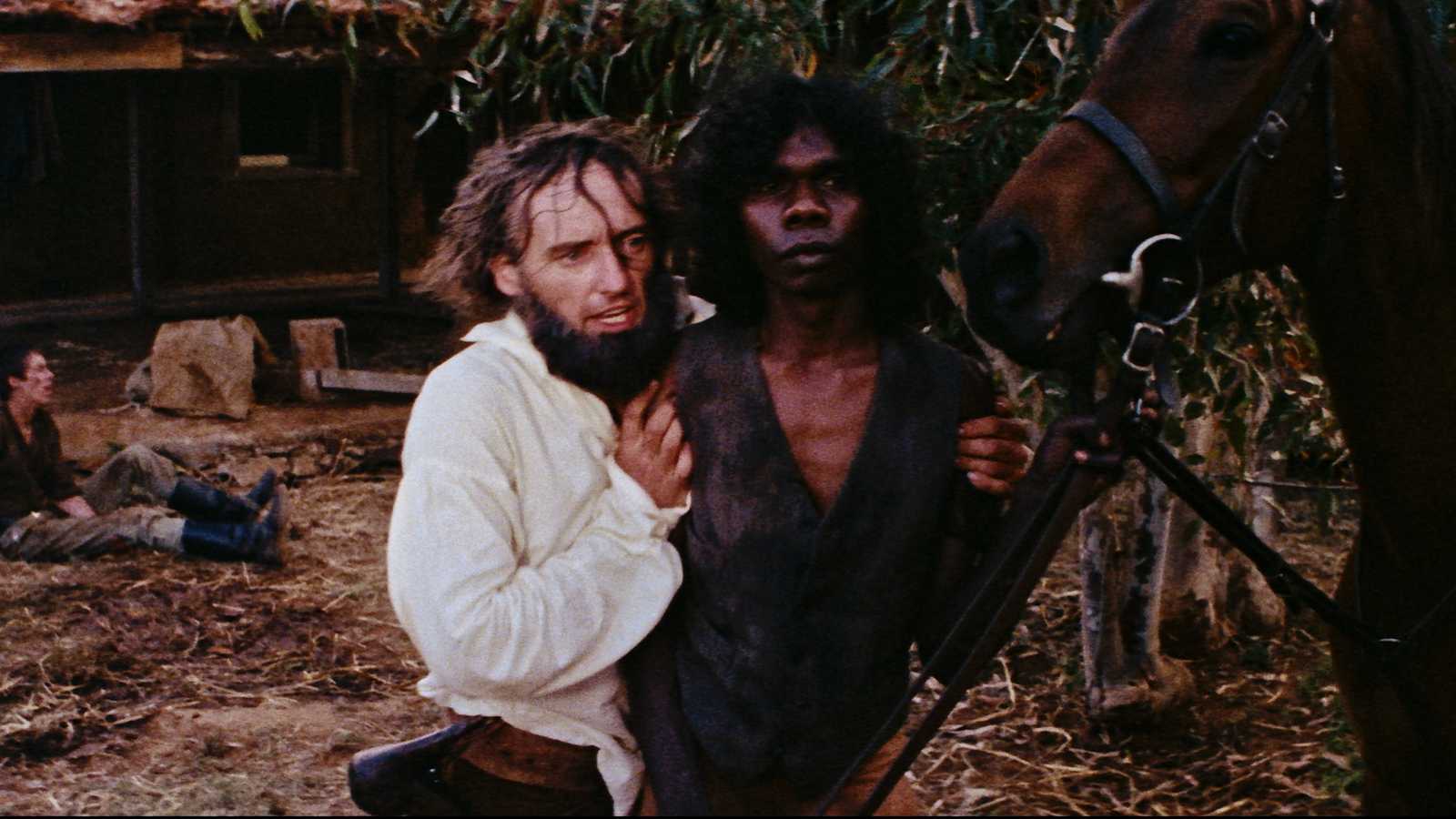
Mad Dog Morgan (1976)
A star was born, without question. But what kind of star would he be allowed to become? Gulpilil’s sporadic film appearances over the next decade suggest a desire to explore new possibilities, yet largely confine him to the stock role of the quasi-mystical sidekick who initiates the male lead. In Philippe Mora’s wild bushranger film Mad Dog Morgan (1976) he’s often pushed to the edge of the shot, looking on in what appears to be unfeigned amazement at the Method antics of his US co-star Dennis Hopper, a true believer in living the part. (The pair got on famously, getting up to much trouble on- and off-set.) Perhaps some of Hopper’s swagger made its way into Gulpilil’s subsequent performance in Henri Safran’s Storm Boy (1976) as the beachcomber Fingerbone Bill—a loyal friend to the young hero, but also a rifle-wielding outsider whose bright red sweater recalls the red jacket worn in Rebel Without a Cause (1955) by Hopper’s hero James Dean.
Beloved by several generations, Storm Boy was the film that secured Gulpilil’s permanent status as an Australian icon (it didn’t hurt that a tie-in edition of the original novel was widely used in schools). But while Australian cinema had acquired the habit of casting him as a precocious mentor, arguably it wasn’t till the following year that he got to grow up on screen in his own right, with a crucial role in Peter Weir’s New Wave thriller The Last Wave (1977). Once again, he served as foil to a star imported from the US: in this case, Richard Chamberlain as David Burton, a respectable Sydney lawyer haunted by enigmatic visions (both here and in Mad Dog, the bond between Gulpilil and the lead has an unmistakable homoerotic charge). Gulpilil’s character Chris is an enigma in his own right, a leather-jacketed inner-city dweller who adheres in secret to the old tribal laws. This conception called forth some of the most precise and layered acting Gulpilil had done to that point, especially in a scene where Chris and a tribal Elder (Nandjiwarra Amagula) have dinner at David’s home: a literal sense of needing to tread carefully is evident from Chris’s first tentative steps into the living room, a far cry from Gulpilil’s usual springy walk.

The Tracker (2002)
After The Last Wave, the film offers started to dry up, setting aside a self-parodic appearance in Crocodile Dundee (1986) as the “city boy” Neville, who pretends to believe that a camera will steal his soul. This was another role Gulpilil viewed with mixed feelings in hindsight (especially given how little he was paid for it). Yet as his career gained its second wind in the 21st century, his work came to incorporate an element of conscious self-parody, even self-critique. This was true in particular of his collaborations with Indigenous directors, such as Johnson’s short Crocodile Dreaming (2007), where he starts by spoofing himself as a preening celebrity in sunglasses, before heading home to the Northern Territory leaving the frivolity of showbiz behind. A more ambiguous knowingness is visible his commercial work from the same period, such as his appearance as a tribal Elder in Baz Luhrmann’s campy blockbuster Australia (2008): in a fascinating defence of the film, the critic Laleen Jayamanne describes Gulpilil as a “surrealist” actor, shifting abruptly from one archetype to the next. The richest and slyest Gulpilil performances of all are in his two tragicomic late films with Rolf de Heer, The Tracker (2002) and Charlie’s Country (2013)—even if both are also showcases for De Heer’s punishing side, with the Gulpilil character put through increasingly agonizing ordeals. Shot in South Australia’s Flinders Ranges and set during the era of frontier massacres, The Tracker resembles one of the simplified fables that have been a de Heer speciality from Bad Boy Bubby (1993) on. Yet in the end we’re given room to arrive at different interpretations, or no interpretation at all: perhaps we never stood a chance of grasping the true nature of Gulpilil’s Tracker (an Indigenous Australian employed by the law, often to track down fugitives or missing persons), whatever we might suppose we’d glimpsed beneath the clownish persona he’s forced to assume (he spends much of the film in chains, which jingle like a jester’s bells).
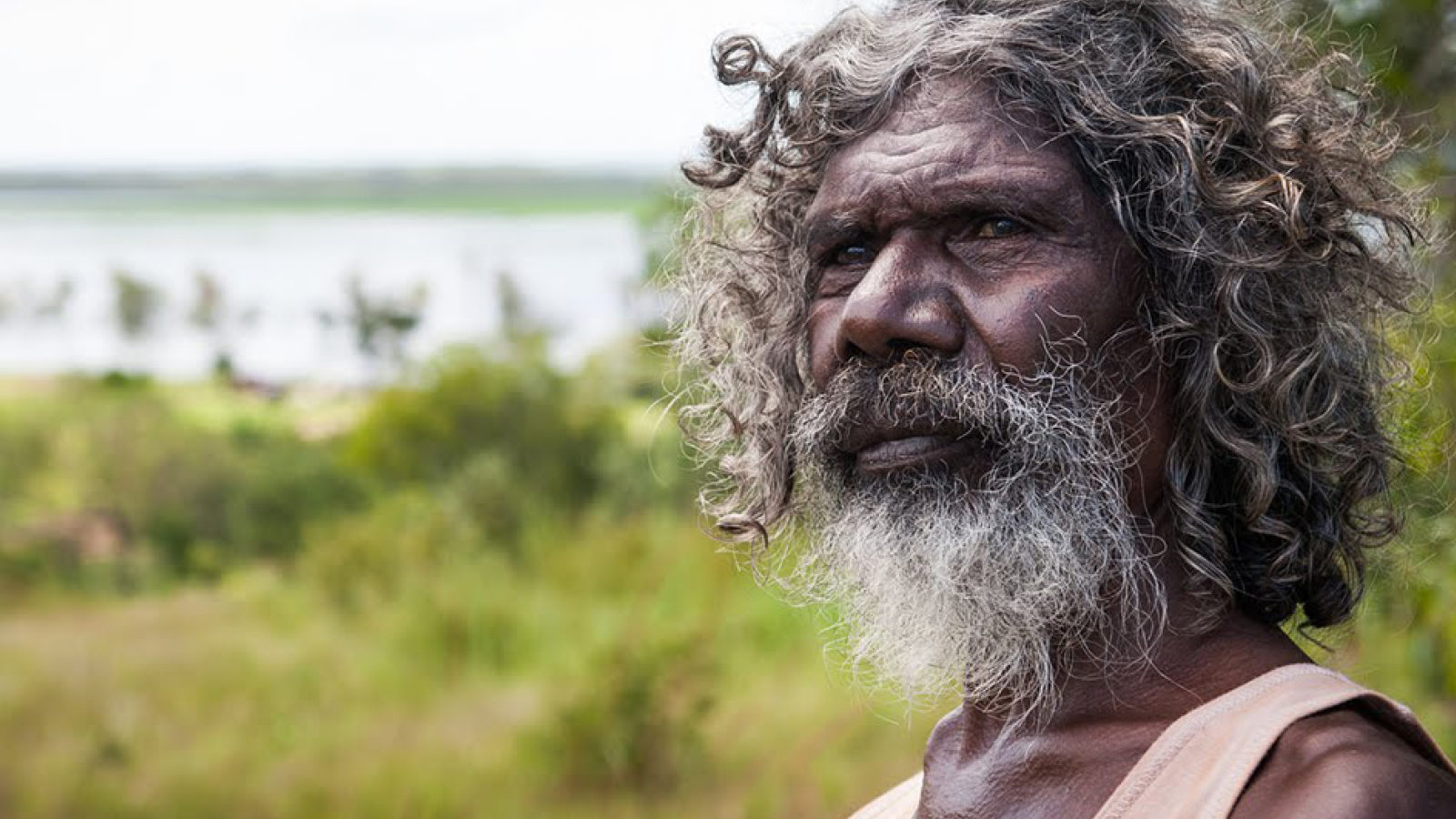
Charlie’s Country (2013)
Set in present-day Arnhem Land, Charlie’s Country was his first lead role. It was conceived by de Heer as a comeback vehicle for his friend, and can be equally seen as something of a personal testament, as many viewers would have surmised even if Gulpilil wasn’t credited as co-writer. While the story is fiction, Gulpilil freely acknowledged a kinship with the protagonist Charlie, a broken-down drunk who rails against white society for treating him like a second-class citizen on his own land. From the observer’s perspective too, Charlie has much in common with the man we see and hear in Molly Reynolds’s documentary My Name Is Gulpilil (2021), made when its subject was already dying of lung cancer, and at his request: aside from having been through many of the same troubles, they share a fierce yet mischievous sense of humour, and a mindset that combines fatalism with determination not to give in.
Even so, to equate actor and role completely would be unjust, no less so here than elsewhere. Charlie, like Gulpilil, may have danced in his youth for the Queen, but he’s neither a household name nor on any kind of path to becoming one, whereas the Gulpilil of Charlie’s Country is a living legend in the process of giving the performance that crowned his career (it won him the Best Actor award in the Un Certain Regard section at Cannes, among other accolades). Watching the devastating scene where Charlie breaks down in a Darwin hospital ward after a failed attempt to “go bush” and live in the traditional ways of the Mandhalpingu people—a moment that speaks to both his personal troubles straddling the white and Indigenous worlds, and the wide-spread devastation inflicted by colonization—I can’t doubt this performance was achieved at significant personal cost. But nor can I doubt Gulpilil took great pride in what he’d accomplished as an actor, freeing us in turn to take an admiring pleasure in his craft, not least his ability to convey both untold misery and undying spirit through the look in his eyes and the set of his shoulders.

Share:
Recommended
- Christopher Doyle
 The legendary DP discusses working in different cultures, his collaborations with Wong Kar-wai, and dancing with Pina Bausch.
 - Cracked Actor: David Gulpilil
 Looking back at the inimitable Indigenous icon.
 - Spider Baby
 On Jack Hill’s classic horror-comedy, a film outside of time.