
Column
[wpbb post:title]

Column
BY
[wpbb archive:acf type=’text’ name=’byline_author’]
In his new column Futures and Pasts, Metrograph’s Editor-at-Large Nick Pinkerton highlights screenings of particular note taking place at the Metrograph theater. For the first entry, he recommends Walerian Borowczyk’s bewitching journey into the dark side of the City of Lights, La Marge (1976).
La Marge plays Metrograph on Saturday, July 20 as part of Long Live Scala Cinema!
Walerian Borowczyk’s La Marge (1976) acknowledges a truth that rubs uncomfortably against the official culture of mourning, of the widow’s weeds of yesteryear and the venerable tradition of solemn posthumous eulogizing: namely, that bereavement can act as a disturbingly potent aphrodisiac. The body of a loved one, our own bodies understand, is now beyond earthly pains and pleasures, and with this terrible knowledge one can be seized by a ravening gluttony, a sudden, urgent craving to stuff ourselves to bursting at the banquet of carnal delights before closing time comes.
The grieving party in La Marge, played by American expatriate Joe Dallesandro, his trademark Tristate patois dubbed over in French, is one Sigismond Pons, a strapping specimen of haute bourgeoisie introduced in a prelapsarian overture at the countryside villa that he shares with his wife, Sergine (Mireille Audibert); his young son, Elie; and their housemaid, Feline (Louise Chevalier). What we see of their domestic arrangement is a portrait of connubial bliss and gracious living, though auguries of tragedy are visible even in these scenes of frisky foreplay and al fresco breakfasting: the landscape outside is whipped by wind and rain, Elie shows a worrisome proclivity for wandering out of protective sight, and boudoir preliminaries between the couple are interrupted when M. Pons badly scratches his bicep and elbow on the thorns hidden in a spray of mimosa flowers. The petals of the flowers of romance, we see, conceal jagged teeth, in an image of blighted eros to recall William Blake’s “The Sick Rose”:
The invisible worm, / That flies in the night / In the howling storm, / Has found out thy bed / Of crimson joy; / And his dark secret love / Does thy life destroy.
Eroticism and its concealed dangers were by 1976 considered Borowczyk’s established specialties. He was born in 1923 in the western Polish village of Kwilcz, his father a railroad worker and Sunday painter whose naïf canvases helped to inspire a sense of vocation in his son. Opportunities for higher education forestalled by the war, Borowczyk finally arrived in Kraków in 1946 to study painting and sculpture at the Academy of Fine Arts, where fellow future filmmaker Andrzej Wajda was briefly a classmate. At the beginning of the ’50s Borowczyk would relocate to Warsaw where, in addition to becoming a sought-after designer of film posters and contributor of satirical sketches to weekly journals, he gained an international reputation for a series of sui generis animated shorts made both in collaboration with Jan Lenica and on his own. In 1958, with one half of a Grand Prix at the Brussels Experimental Film Festival to his name for the short Dom (co-directed with Lenica), Borowczyk quit Poland for Paris, where he continued to produce celebrated animations that employed stop motion, hand-drawn and painted material, and cut-out decoupage-the last a key inspiration for Monty Python’s Terry Gilliam- through the ’60s and, in 1968, finished his debut live-action feature, Goto, l’île d’amour (Goto, Island of Love). The next major transformative development-or to some eyes, de-evolution-in his career came with 1973’s Contes immoraux (Immoral Tales), a four-episode anthology film rife with images of incest, anti-clericalism, and eroticized carnage, and Borowczyk’s first full-length foray into the sexually explicit material that would become his stock-in-trade, a succès de scandale that won him a new popular audience while shedding a number of earlier critical admirers.
Scenes of household harmony and “healthy” passions, like those which open La Marge, don’t exactly abound in Borowczyk’s cinema of deviant, destructive desires-and sure enough, our protagonist is soon to be expelled from his Eden. At the behest of his wife’s uncle (André Falcon), a randy middle-aged vintner hawking Roussillon dessert wine, Sigismond sets out on a business trip that the older man says will take him to “Toulouse, Bordeaux, Poitiers, Nantes, Paris…”-though only the last-named city will be seen onscreen, and it is in Paris that the greater part of La Marge takes place. The transition from countryside to city, courtesy editor Louisette Hautecouer, is jarring in the extreme, a hard cut from a passing landscape of sun-dappled vineyards accompanied by the ethereal folksy melody that threads through the film’s first reel-“Song for You,” taken from the lone, self-titled 1976 LP by the French duo Square-to a handheld shot of the Rue de Rivoli porticoes at night, the only music the harsh roar of traffic. (The same year Borowczyk produced a companion piece of sorts for West German broadcaster ZDF, the 40-minute Brief von Paris, a sullen city symphony that depicts the director’s adopted home as a clangorous warren of harried and hurried humanity in which signage for La Marge, screening at the Caravelle cinema on the Boulevard de Clichy-now part of a Pathé complex-is briefly visible.)The Paris of La Marge is largely plunged in darkness, anti-scenic, and at once eerily underpopulated and cacophonous, the din of street noise audible in Sigismond’s hotel room equal to that of the Place du Trocadéro at rush hour. The people we do see are almost exclusively engaged in some kind of sexual transaction, either looking to buy flesh or vending it: a striptease artist, a long in the tooth hotelkeeper at a hot-sheet joint with a proclivity for peeping into keyholes, a chambermaid who shamelessly and repeatedly flaunts her wares in front of Sigismond, the gaggle of streetwalkers who cluster around him as he ducks into an antique shop in one of the city’s arcades, the preening pimp (Denis Manuel) who’s seen operating a kind of finishing school for aspirant prostitutes. Sigismond finally reaches for his wallet when, strolling into a café after nightfall, he’s approached by Diana. The part is played, with a gelid composure that thaws in subtle measures, by the Dutch-born model-turned-actress Sylvia Kristel, then recently soared to niche celebrity playing the title role of the libertine Emmanuelle in the first two of many high-gloss softcore films based on the novels published under the nom de plume Emmanuelle Arsan-and in the process of attempting to distance herself from her most famous role by taking on auteur projects, like Borowczyk’s film and Claude Chabrol’s Alice ou la dernière fugue of the following year. (This effort would not always be honored by opportunistic distributors, who released La Marge in certain territories under the title Emmanuelle ’77.) Dressed in funereal black as she will be throughout the film, sporting a feather boa that gives her the air of a great carrion bird, Diana espies Sigismond sitting at the bar, touches up her makeup in preparation to announce herself, then crosses the room to say hello by way of brazenly caressing her mark’s groin, that world-famous crotch generally believed to be the cover star of The Rolling Stones’s 1971 album Sticky Fingers.
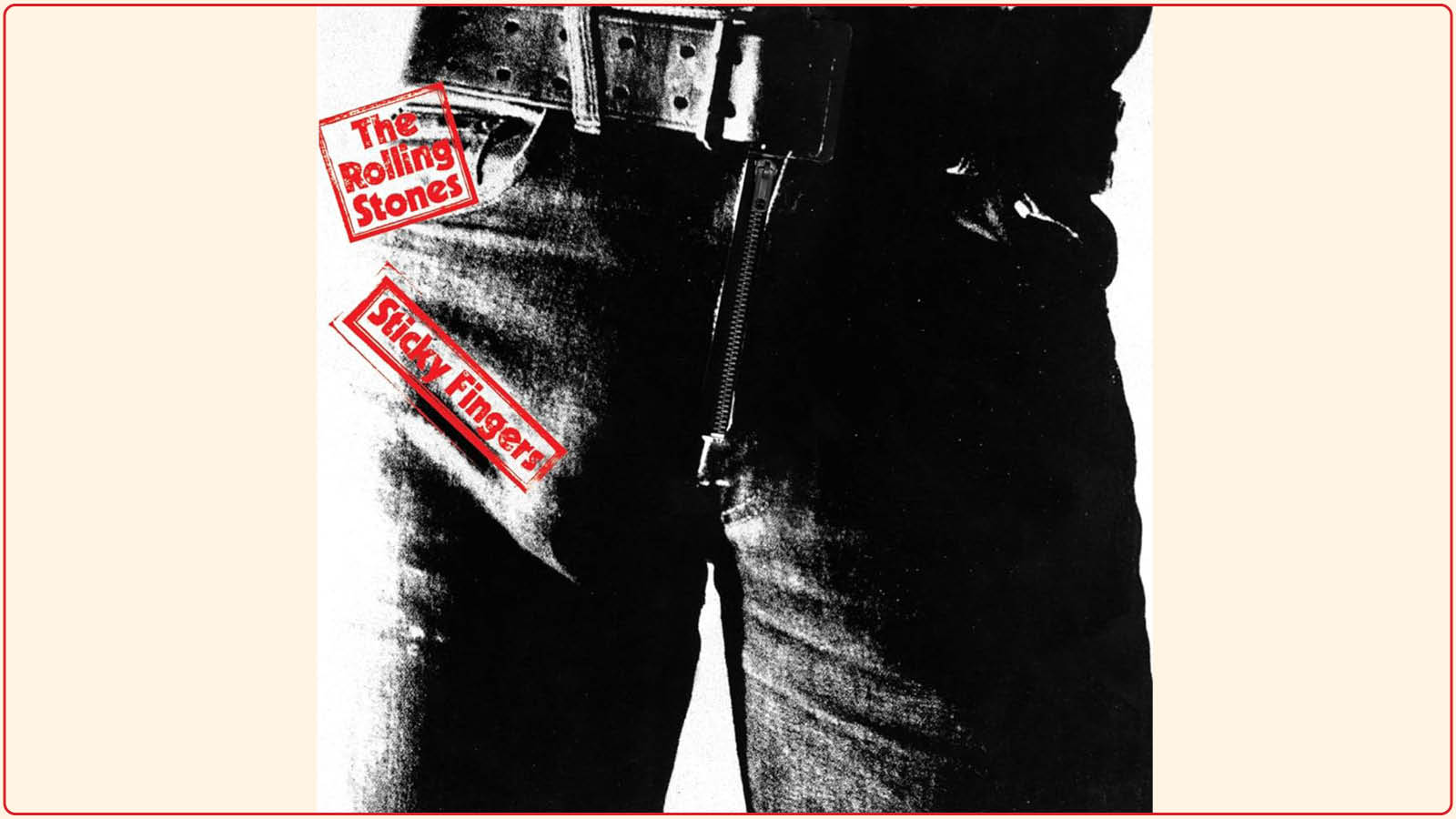
Cover artwork for The Rolling Stones’ album Sticky Fingers.
In this moment, the first in which the film’s leads share the screen together, they are shot from the waist down, faces seen only fleetingly with a tilt of the camera, and an impersonal, mercantile ambience hangs over what follows in her hotel chamber: Diana accuses Sigismond of paying her with a counterfeit note, extracts further francs from him for granting the privilege of mussing her hair, and, when he lies her down to commence with business, the framing through the bedstand seems to both cut her body into sections and serves to act as a barrier between the two.
If their later meetings have a different tenor, this is in no small part because Sigismond has changed. The day after meeting Diana, he receives a letter from home, of which he reads only a fragment-enough to learn of his wife’s suicide, but not the motive behind it. Taking in the news with a benumbed grimace, he wanders through the sprawling construction site that a few short years previous had been the splendidly shabby, chaotic Les Halles food market, seen here as a muddy pit, a quagmire that local wags nicknamed le trou des Halles (“the hole of Halles”). The location is significant, as the razing of Les Halles was an event of considerable psychic trauma for many Parisians. Now today the site of a shopping mall, the market and environs had been central in the construction of the Situationist concept of the dérive, a philosophy of improvisatory urban exploration, analyzed at length in a 1958 essay by Abdelhaftid Khatib, visible in Guy Debord’s Sur le passage de quelques personnes à travers une assez courte unité de temps (1959), and eulogized after a fashion in his 1978 In girum imus nocte et consumimur igni. With the leveling of Les Halles, the photographer Robert Doisneau, who documented the bulldozing and its aftermath, would say, “Paris has lost its belly, and a part of its soul.”
The site of Sigismond’s personal cataclysm is, then, also that of an insuperable depletion suffered by the city of Paris-and, like many an old-timer who exists surrounded by the ghosts of what once was when strolling the streets of their youth, from this moment forth Sigismond ceases to live wholly in the present, visited repeatedly by fleeting flashbacks of his former happiness. In a later scene at the café where Diana and her colleagues convene nightly, La Violette on Boulevard St. Denis, a cramped joint with décor largely unchanged since the days of the Popular Front, the yearning for better times past is likewise distinctly felt. A trio of working girls, including Diana, raptly watch part of a television transmission of Julian Duvivier’s 1937 Pépé le Moko in which a character, played by the chanteuse Fréhel, tearily listens to an old phonograph of her own singing, reminiscing about the good old days “on Scala Boulevard in Strasbourg.” The pangs of nostalgia in the viewers, in a pungent bit of irony, are provoked by watching another generation’s depiction of the pangs of nostalgia-a thrall broken when a customer insists on playing an obnoxiously chittering modern pop song on the jukebox. (The scene, in the words of Friends of Walerian Borowczyk co-founder Daniel Bird, epitomizes the film’s “tension between a romanticized past and the brutal present.”)
Pépé le Moko was the first movie financed by Robert and Raymond Hakim, Egyptian-born brothers of checkered reputation whose credits include films by Jean Renoir, Jacques Becker, Michelangelo Antonioni, and Luis Buñuel, the latter of with whom they enjoyed a considerable popular success with 1967’s Belle du Jour, one of three Buñuel films cut by the venerable Hautecouer. (La Marge would be the brothers’ last production, and the last film edited by Hautecouer, whose career likewise stretched back to the 1930s.) The Hakims had initially approached Borowczyk to make a film from Belle de Seigneur, a 1968 novel by the Greek-born Swiss Jewish author Albert Cohen; the director counter-offered to adapt the winner of the 1967 Prix Goncourt, André Pieyre de Mandiargues’s La Marge, which largely sets its scene in the sin city of Barcelona. (As filming in Spain proved tricky in the tumult following the death of Caudillo Franco, the action of the novel was transplanted from Catalonia to Paris.)
Borowczyk would maintain an ongoing dialogue with de Mandiargues’s work. He had adapted a 1959 de Mandiargues short story, La Marée, as the first episode of Contes immoraux, and twice more after La Marge drew on de Mandiargues for source material: for the “Marceline” episode of Les héroïnes du mal (Immoral Women, 1979), adapted from 1946’s Le Sang de L’Agneau; and for Cérémonie d’amour (Love Rites, 1987), Borowczyk’s final completed feature, based on the last novel de Mandiargues published in his lifetime, the same year’s Tout disparaîtra. (Cérémonie d’amour shares more than authorial provenance with La Marge; Marina Pierro’s lipstick touch-up before her seduction of Mathieu Carrière in that film, for example, recalls Kristel’s cosmetic preliminaries to approaching Dallesandro.)
The premiere joint effort between Borowczyk and de Mandiargues was 1973’s 12-minute Une collection particulière (A Private Collection), a guided tour through a diverse assortment of antiquarian pornography-some authentic, including photographs from the treasure trove of Michel Simon, noted pervert, legend of French cinema, and star of Borowczyk’s 1971 Blanche; some ingenious devices manufactured by Borowczyk for the film-written and narrated by de Mandiargues. The two men had been introduced by Anatole Dauman, an influential Polish-born producer whose working relationship with Borowczyk had begun with 1959’s Les astronauts (Astronauts), co-directed by frequent Dauman collaborator Chris Marker, and would continue through Une collection particulière, the features Contes immoraux and La Bête (The Beast, 1975), and the short Escargot de Vénus (Venus on the Half-Shell, 1975), which explores the sensual Surrealist art of Bona Tibertelli De Pisis, de Mandiargues’s wife, who recites Rémy de Gourmont’s text “The Physique of Love” on the soundtrack. (The Borowczyk films released under the auspices of Dauman’s Argos Films have remained in fairly regular circulation while others, like La Marge, are relatively scarcely screened.)
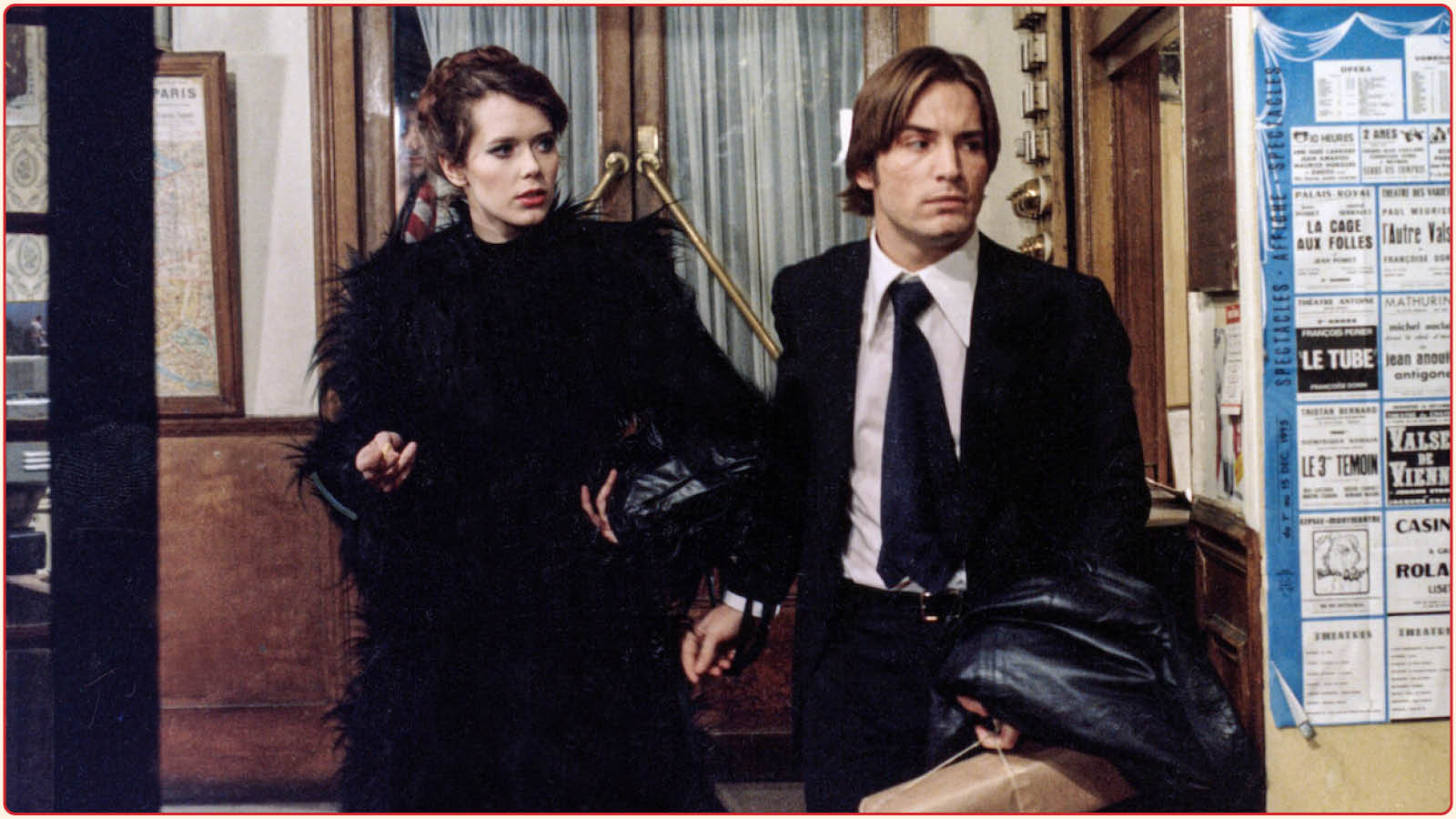
La Marge (1976)
The meeting of Borowczyk and de Mandiargues came at a pivot-point in the former’s career; while thwarted desire is very much at the crux of his live-action features Goto, l’île d‘amour and Blanche, after Une collection particulière the explicit depiction of sexuality assumed a central role. The candid eroticism that had slowly become permissible in literature and the plastic arts, as in the work of de Mandiargues and De Pisis, was by the end of the 1960s now available to many international filmmakers newly unfettered by the strictures of censorship, ushering in a golden age of pornography, soft- and hardcore, that made stars of splendid specimens like Kristel and Dallesandro and produced landmark works like Contes immoraux and Nagisa Ōshima’s Dauman co-produced In the Realm of the Senses (1976).
From the perspective of the present, this seems as remote as the Jacobean theater. Pornography is today more ubiquitous than ever, of course, but following a last flowering of artistically ambitious erotic cinema at the outset of the present millennium, depictions of sex have been largely siloed off from narrative cinema, save for the efforts of a few stalwart holdouts like Catherine Breillat, recently found lambasting the HR-brained imbecility that has introduced the reign of the “intimacy coordinator.” If weekly viral social media posts are any indication of changing public attitudes, the idea that sex scenes are prurient and unnecessary detours from the all-important duty of nudging a film’s plot along appears to be well on its way to being something like received wisdom.
The above assumes a constrictive, conservative, and deathly dull system of valuation that places streamlined efficiency in “storytelling” above all other qualities that a movie might embody, and imagines the cinematic equivalent of the airport bookstore page-turner as the apex of the medium. The story of La Marge is one of emotional destitution and erotic desperation against the backdrop of a cold, mercenary urban landscape, and could no more be conveyed without sex scenes than a film about the sinking of the Titanic could do without a very big boat. Borowczyk traces the shifting dynamics of Sigismond and Diana’s relationship through three lovemaking sessions, each imagined distinctly from one another. After their first desultory and professional coupling and the news of Sigismond’s wife’s death comes a second meeting, a new intimacy and chemistry: to the tune of “Une Femme,” a 1973 chanson recording by Charles Dumont, Sigismond rolls two hard-boiled eggs he’s brought as a snack along Diana’s bare torso-a touch that Georges Bataille might well have appreciated-before, with a bit of yolk still clinging to her lip, they get down to business in earnest. Sigismond exhibits no outward signs of despair here at his recent loss, but it seems to have unloosed a new hunger in him, and this is enough to cause Diana to violate the first commandment of her pimp, earlier seen drilling it into one of his new girls: Thou Shalt Not Come.
We may account Sigismond’s comportment in this second assignation to his being insensate with shock, but in their third and final meeting, which she mostly spends on her knees before him, his expression in orgasm is a dam-burst of mingled agony and ecstasy, as though something suppressed has suddenly been violently wrenched loose. She flees the scene, terrified at the ferocity of his response and perhaps at her own newly discovered vulnerability, leaving him to return to his room and resume reading the unfinished letter, which reveals the inspiration for his wife’s suicide and gives him a motive for his own, soon to follow: Elie, their son, had been found drowned in the family swimming pool.
If his filmography filled with bosoms heaving over frilly, complicated corsets, chilly chalets decorated with monumental furniture, and exquisitely curated vintage smut is to be taken as any indication, Borowczyk was not much a man for the modern world. (The antique shop visited by Sigismond was owned by Borowczyk’s friend Robert Capia, a specialist in antiquarian dolls who appears in several of the director’s films, which gives some sense of the company he cultivated.) His compositions betray a passion for the flattened frontal perspectives of medieval art, and of his features, only three-La Marge, Cérémonie d’amour, and Emmanuelle V (1987), the last “official” film in the much knocked-off series, with Monique Gabrielle taking over from Kristel in the title role-are set in identifiably contemporary, real-world settings. (The island kingdom of Goto has to all appearances entered the 20th century, but is a place found on no map.) Much of La Marge‘s distinctive atmosphere is owed to the fact that the film feels at once entirely of its moment and out of time; you could just as well imagine Jean Gabin ambling into La Violette as appearing on the television set inside it.

Emmanuelle (1974)
Along with its documentation of some of the less scenic corners of Paris in the mid-’70s, the most strikingly up-to-date aspect of La Marge is its prominent use, unique in Borowczyk’s filmography, of fresh-off-the-FM-radio pop and rock music. Diana and Sigismond’s first frottage at the café is accompanied by “Lazy Ways,” a cut from the 1976 album How Dare You! by the British band 10cc; “I’m Not in Love,” their UK chart-topper of the previous year, is the soundtrack to the pair’s first, rather stilted lovemaking. Elton John is likewise represented by two tracks, both from 1973’s Goodbye Yellow Brick Road, “Saturday Night’s All Right for Fighting” and “Funeral for a Friend/Love Lies Bleeding,” the latter which accompanies Sigismond’s final, fatal nighttime expedition, in which he drives his sleek Citroën SM to the Paris suburbs and, after being haunted in his mind’s eye by images relating to his son and wife’s deaths and harassed by a particularly pushy prostitute, finally succeeds in putting a bullet through his broken heart. (A glimpse of harness horses trotting past suggests the vicinity of the Vincennes Hippodrome in the Bois de Vincennes.) Borowczyk works wonders in making evocative use of unappetizing mid-’70s MOR, and touches the sublime when he gets his hands on an actual masterpiece like Pink Floyd’s “Shine on You Crazy Diamond,” the band’s tribute to fraught former frontman “Syd” Barrett, which plays through for nearly five minutes over the baleful blowjob and Sigismond’s subsequent pursuit of a fleeing Diana through the streets and into the Métro.
La Marge is suffused with music, but its dialogue is sparse-Jeremy Richey, in a recent book on Kristel, likens her costuming here to that of Greta Garbo in G.W. Pabst’s 1925 The Joyless Street, while Kristel herself would cite Marlene Dietrich as an inspiration, both suggesting Borowczyk’s debt to silent cinema. Its storyline could be succinctly summarized in a single sentence, but the viewer willing to surrender to Borowcyzk’s cinema of discreet gestures and objects laden with enigmatic meaning will find it a remarkably rich work, brocaded and patterned with unusual, indelible details. Some of these reveal, in time, possible motives for their isolation: for example, an early shot of Elie kneeling on the edge the breakfast table, straining to reach an apple, may be taken to anticipate the likely circumstances of his death, attempting to fish a rubber ball out of the pool. Others-Diana disgustedly dumping the contents of an ashtray on the café floor, the unusual amount of attention given to a dingy doll propped up on a chair in her chamber, the skinflint hotelkeeper scampering to turn off the taps left running during Diana and Sigismond’s second meeting-act as sordid grace notes, narratively extraneous yet enormously evocative.
There are shattering close-ups to be found in La Marge, but the human face is not the ne plus ultra of expression for Borowczyk, who chooses to focus on Diana and Sigismond’s feet and straining thighs to show their achievement of sexual harmony, and who consistently refuses, in his framings, to conform to accepted hierarchies of importance between the animate and inanimate. Of the unusual import placed upon things in his work, Borowczyk would say in a 1976 interview: “Through objects you discover human nature. Have you ever seen an object created by nature that had any rapport with man? Rarely. Only that which has been crafted by someone.”
The confusion and collision of the organic and the man-made is something of a leitmotif in La Marge: the treacherous mimosa flowers in the marital bed, the paralleled orange and rubber ball, Elie’s approaching his mother with a handful of wine labels that he refers to as “butterflies,” only to be primly corrected: “They’re not butterflies. They’re labels”-the sort of unclouded taxonomic distinctions that Borowczyk consistently delights in muddying the waters of. The world of the film is one in which living flesh is up for sale like a manufactured commodity; Sigismond, significantly, is seen early in his Parisian visit being cruised by window-shopping filles de joie while he negotiates the purchase of a comically phallic vintage spyglass.
There is no sense of moral proscription in Borowczyk’s depiction of any of this, any more than in his insistence, in film after film, on the devastating power of desire. Freedom is a universal aspiration, eros is a means of emancipation, and emancipation begets destruction and disorder-not, for Borowczyk, as the wages of sin, but as a manifestation of the universe’s natural tendency towards entropy, visible already in the images of reconstitution and disintegration found in early animations like Dom and Renaissance (1964). It is not for pat solutions that one turns to Borowczyk’s enigmatic films, but for expressions of familiar dilemmas in exotic forms, for his is a Wunderkammer cinema, as filled with mysteries as the human heart.
Nick Pinkerton is a Cincinnati-born, Brooklyn-based writer focused on moving image-based art; his writing has appeared in Film Comment, Sight & Sound, Artforum, Frieze, Reverse Shot, The Guardian, 4Columns, The Baffler, Rhizome, Harper’s, and the Village Voice. He is the editor of Bombast magazine, editor-at-large of Metrograph Journal, and maintains a Substack, Employee Picks. Publications include monographs on Mondo movies (True/False) and the films of Ruth Beckermann (Austrian Film Museum), a book on Tsai Ming-liang’s Goodbye, Dragon Inn (Fireflies Press), and a forthcoming critical biography of Jean Eustache (The Film Desk). The Sweet East, a film from his original screenplay premiered in the Quinzaine des Cinéastes section of the 2023 Cannes Film Festival.
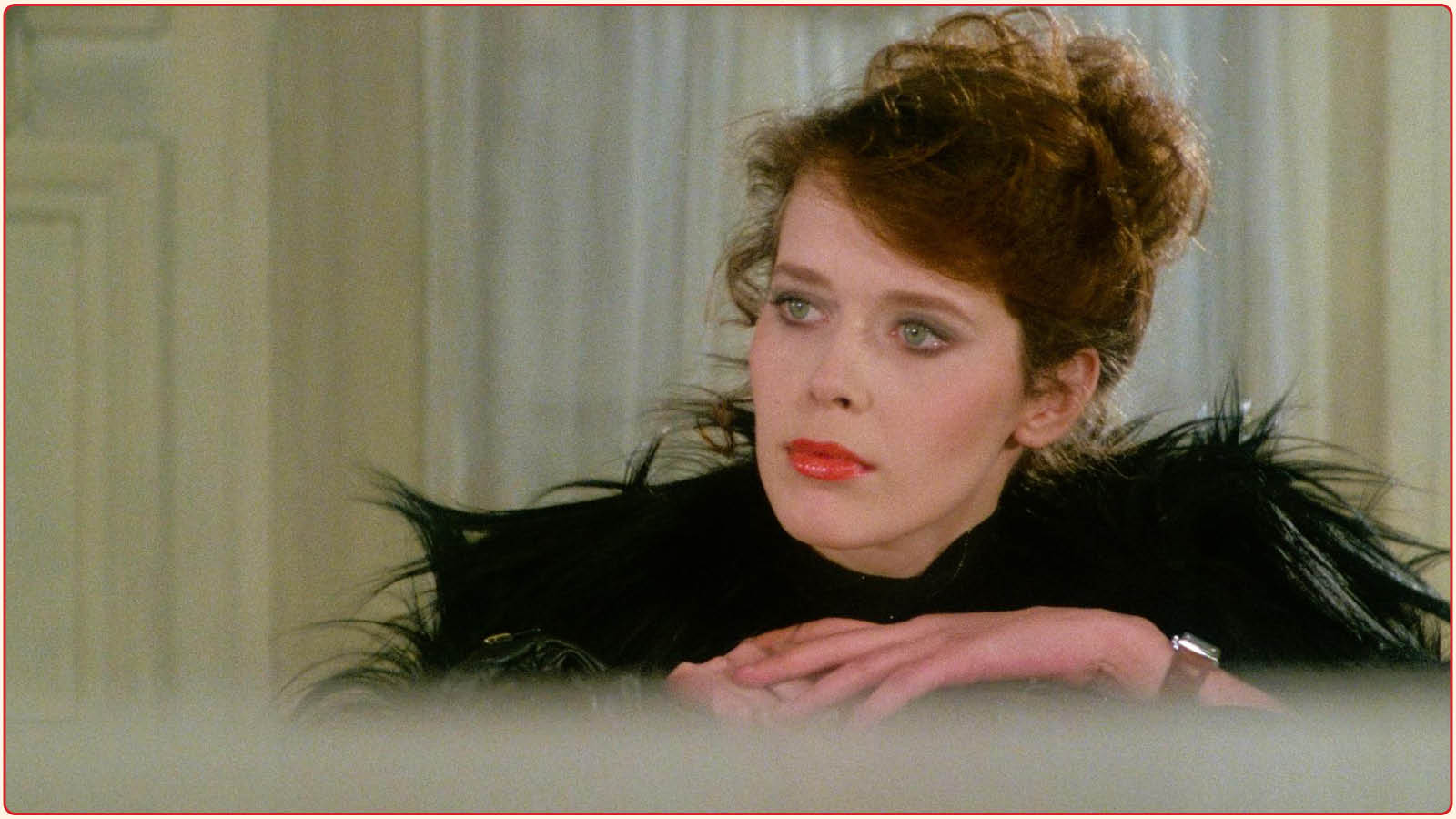
La Marge (1976)