
Herbaria (2022)
[wpbb post:terms_list taxonomy=’category’ html_list=’no’ separator=’, ‘ linked=’yes’]
[wpbb post:title]
By [wpbb archive:acf type=’text’ name=’byline_author’]
On Leondro Listorti’s Herbaria.
Herbaria plays 7 Ludlow from Friday, March 24, as part of Metrograph Expanded: Botanical Imprints.
 Herbaria
At one point in Herbaria, hands extract a twisted, crackling reel of film from a can. It’s been through a lot-now it looks more like a sloughed-off snakeskin. Once upon a time, though, the decayed snippet must have let light pass safely through its cells-who knows what images of movie-made kisses or foot chases it once contained? But the serpentine echo becomes explicit a small while later when we glimpse a shot of what look like snakes preserved inside jars. More often in Leandro Listorti’s ruminative documentary, the comparison made is between film and plants. Herbaria brings together these fragile kin in our material world and shows the care they require.
This is more than a poetic conceit. Listorti manages the film archive at the Museo del Cine in Buenos Aires, and coils of film reels still capture the imagination and the memory (or mine, at any rate) in a way distinct from the compulsive-successive attractions of digital culture. (I don’t think I’ve ever said, “I’ll always hold close to my heart the YouTube link that dear old Gramps texted to me.”) Though an iPhone makes a fleeting, dreamlike appearance, Herbaria lives and breathes among the towering stacks of archives and the sun-kissed greenery of fields and trees; it’s a film that might leave you wanting to go lose yourself in a museum or a used bookstore and forget what time it is.
Plants and movies share a sense of life but also death, per Listorti: extinction and decay have cratered the numbers of extant species and surviving films across cinema history. (A text card cites that over 500 species of plants disappeared since 1750, but even that figure sounds low.) We hear from an Argentine botanist and a German film preservationist on the processes of saving what would otherwise be lost forever, but it is yearning rather than loss that haunts the muted hues of the film’s 16mm and 35mm images.
Plants and movies share a sense of life but also death
Listorti moves dialectically between his primary subjects, but with each circling back, he turns the page on another figure from the past. He traces a small lineage of botanists-specifically Argentine-taking us to Aimé Bonpland, a Frenchman who mapped out South America with Alexander von Humboldt, and then, in 1816, returned to Argentina and never went home again. “Amado” Bonpland, as he’s referred to here, holds a cherished place as a pioneering naturalist, as does (crossing into the 20th century) Dr. Cristóbal Hicken, founder of The Instituto de Botánica Darwinion in Buenos Aires-whose nephew, Pablo, in turn amassed a collection of film projectors and cameras.
A more recent migration comes to the fore with living avant-garde lion Narcisa Hirsch. Born in Berlin before World War II, Hirsch found safe haven in Buenos Aires, and went on to create work that merged happenings and performance art, structuralist filmmaking and memoir. Here, sporting wraparound shades, the nonagenarian filmmaker recalls pristine days of untouched nature in the 1960s and the foreign species she favored in her gardening. I think, too, that among the cabinets and editing tables and clips of pelota games, she’s here to remind that history walks among us as well.
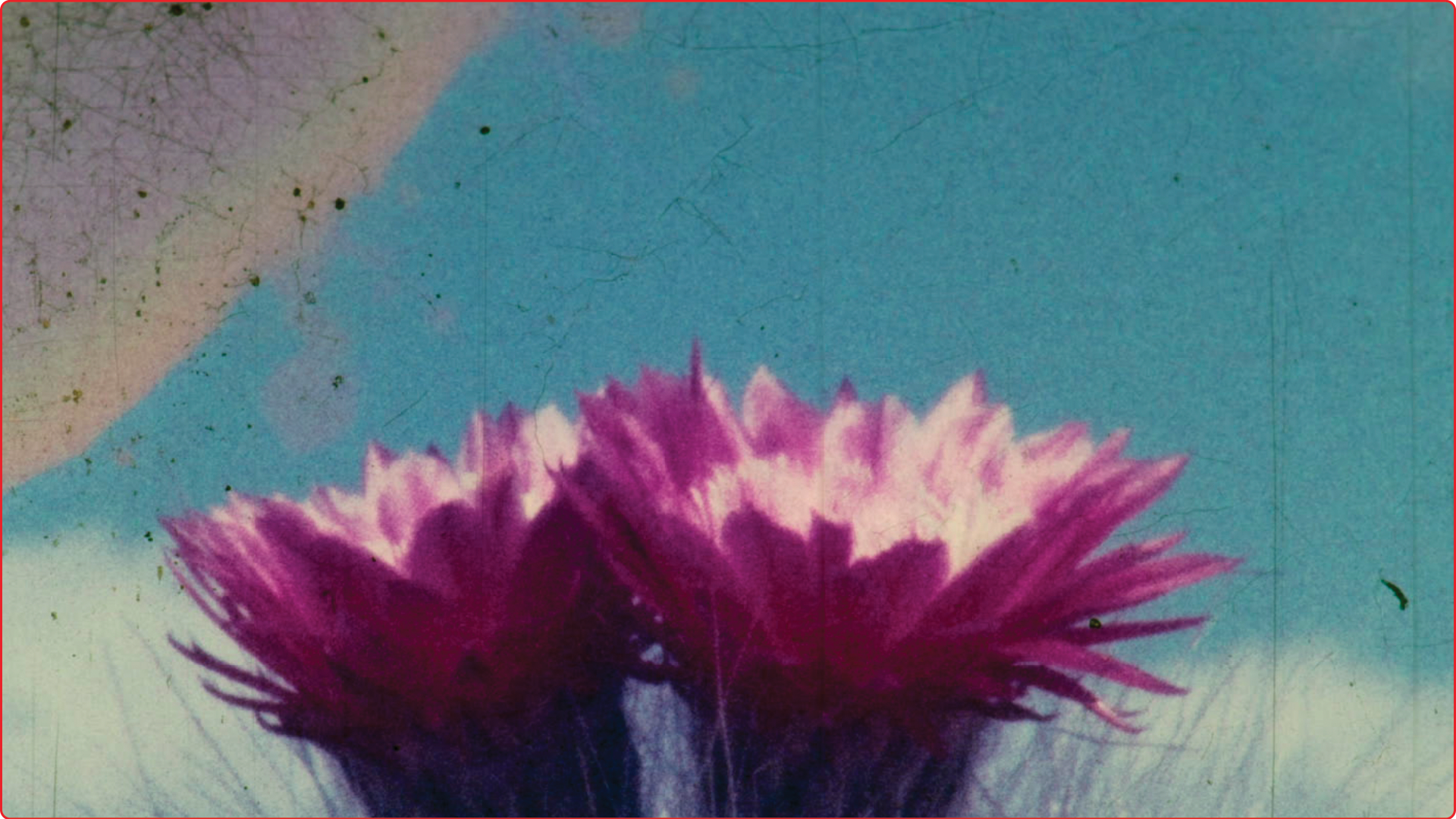
Herbaria is like its own wander through a becalmed archive, or perhaps a curiosity shop of notions and phenomena. We hear of a movie that no longer exists in physical form, because its film elements were destroyed in the course of scanning (suggesting a kind of-ascension? The mind… reels). The definition of “vinegar syndrome”-the pungent decay of film, releasing acetic acid, the substance that lends vinegar its particular smell-is lingered over to underline the sensory nature of film. Images of taxidermy dioramas in museum are accompanied by a voiceover explaining “latent life,” the way certain organisms can continue to exist, suspended in a dormant state. (Can this also describe film sitting on shelves, awaiting projection, safe for hundreds of years under the right conditions?) And near Herbaria‘s end, we pause to observe a tinted silent film about underwater wildlife, such as the Pennatula, a plant-like creature that resembles a feather pen upright on the ocean floor, waving in the deep.

Herbaria (2022)
Listorti previously made The Endless Film (2018), a collage of remnants from unfinished Argentine films, often described as a Frankenstein creation (and indeed someone muses in Herbaria on how monsters can offer an escape from shopworn preconceptions). Herbaria, which had its world premiere last spring at Visions du Réel, itself joins a variety of 21st-century shorts and features-ranging from Sofia Bohdanowicz’s Point and Line to Plane (2020) back to Bill Morrison’s Decasia (2002)-that ponder the materiality of archives in the digital era and eternally return us to the tactile origins of the culture that we gaze upon. (An originary postwar work here is Alain Resnais’s 1956 short Toute la mémoire du monde.) In conjoining film preservation with the also seemingly never-ending endeavor of botanical archiving, Listorti lends cinema even more blossoming metaphors of biodiversity and growth (and yes, obsession and mortality).
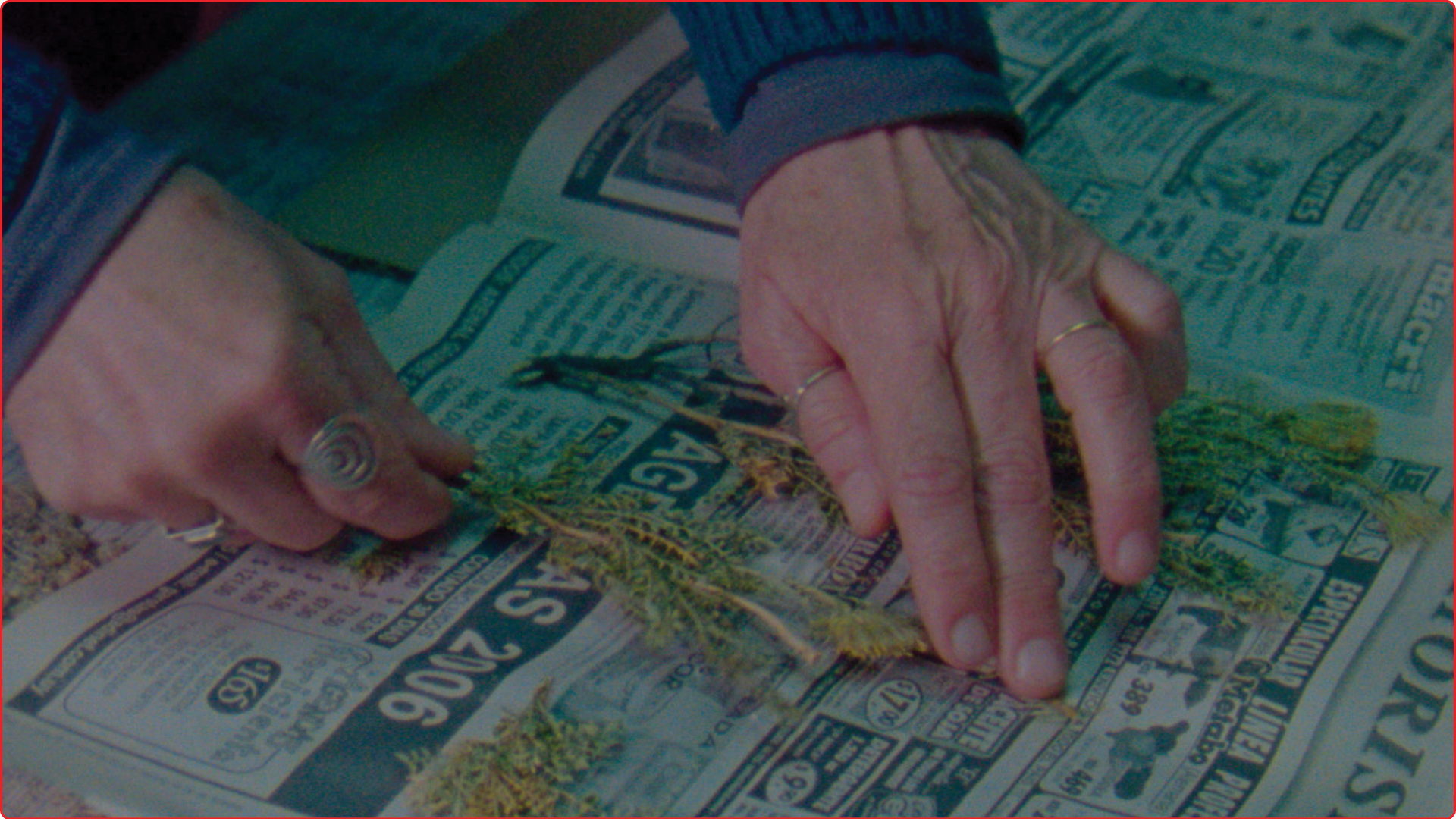
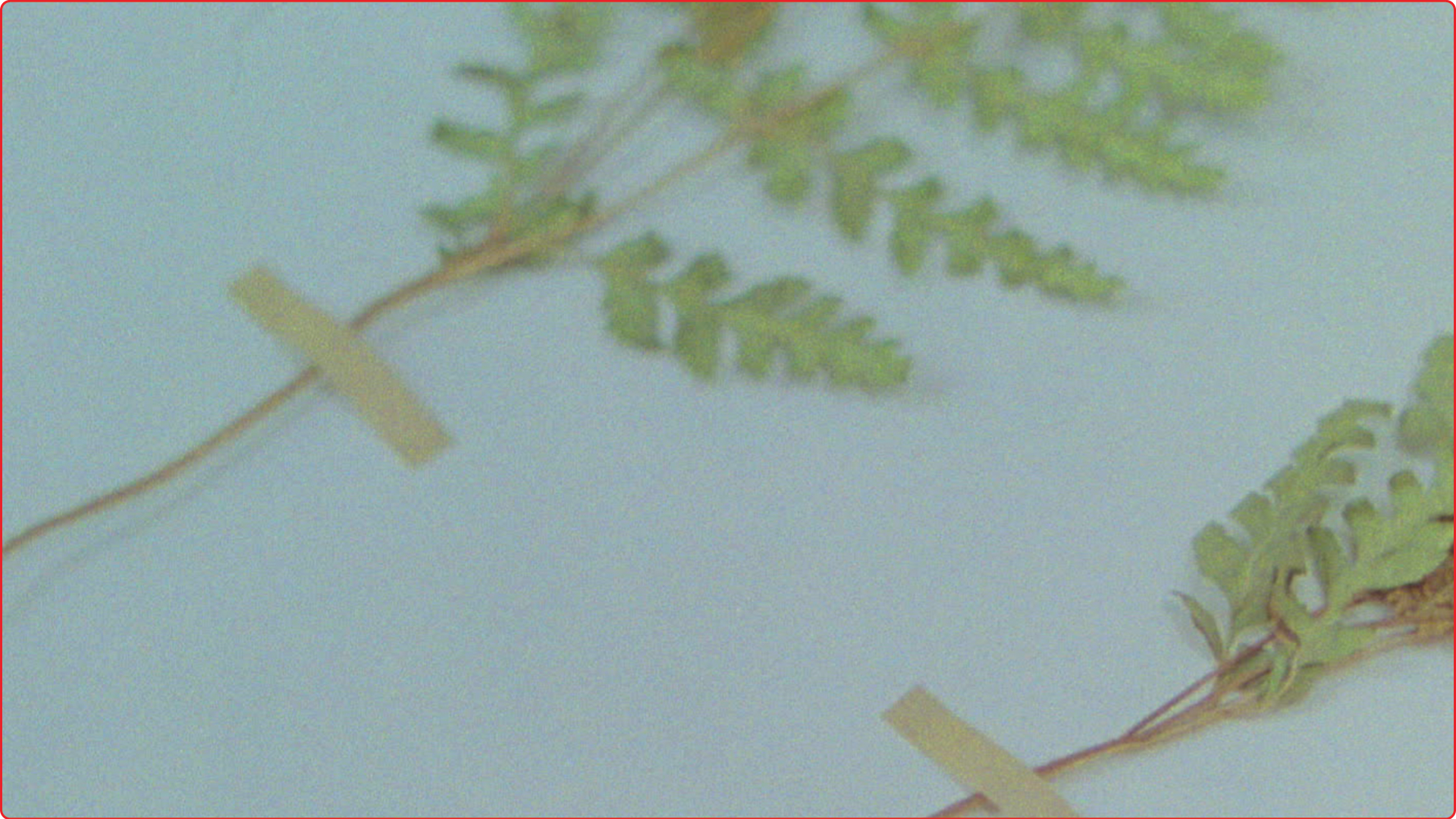
Watching someone mull over a frond on a computer screen or daintily press leaves into a book, and seeing the stacks of yet-to-be-sorted files waiting in a botanical archive, the question did occur to me: is this all a ritual as much as a science? That’s not to discount the discipline of taxonomy or the labor involved. Rather, a dual purpose underlies so many such archival projects: preserving and remembering the objects under conservation, and showing, through this attention, that we value them and the culture they embody. This may sound self-apparent to anyone with a prior interest in “culture work,” but consider this re-declaration, too, part of the ritual.
Through Listorti’s pacifying eyes, plants and film intertwine serenely like climbing vines in our minds, and one understands with a start: we need them both to live.
Nicolas Rapold is a writer and editor whose work has been published in Artforum, the Criterion Collection, Sight & Sound, The New York Times, and the Village Voice, among other publications. He was editor-in-chief of Film Comment magazine (which received the Film Heritage Award from the National Society of Film Critics), and curated the magazine’s Film Comment Selects programs. He hosts the podcast The Last Thing I Saw and the screening series Essential Films, and is a contributing editor at Screen Slate.
Herbaria (2022)