
[wpbb post:terms_list taxonomy=’category’ html_list=’no’ separator=’, ‘ linked=’yes’]
[wpbb post:title]
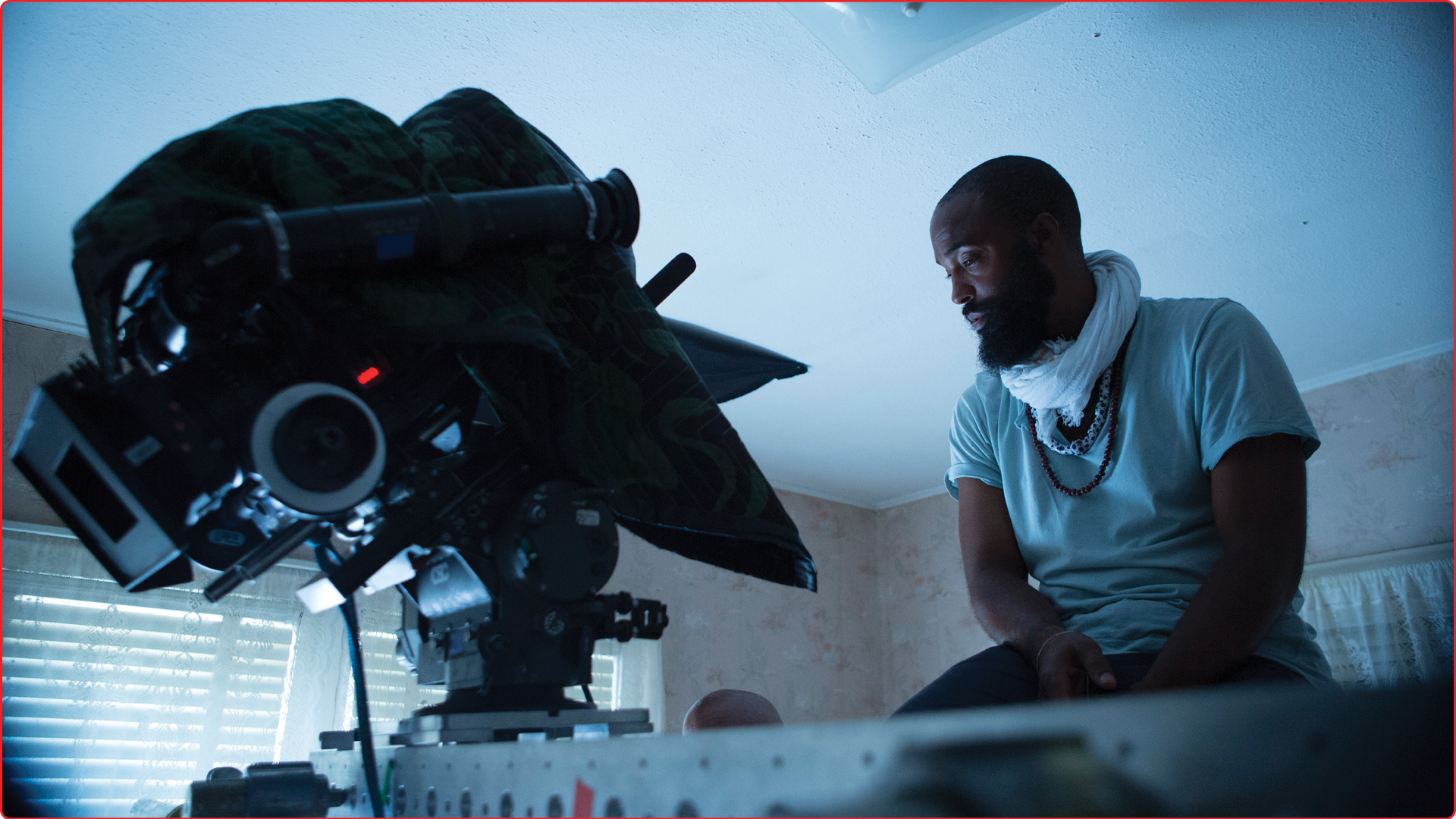
Bradford Young
[wpbb post:terms_list taxonomy=’category’ html_list=’no’ separator=’, ‘ linked=’yes’]
BY
[wpbb archive:acf type=’text’ name=’byline_author’]
An interview with cinematographer Bradford Young about his work crafting the Southern drama Ain’t Them Bodies Saints.
Ain’t Them Bodies Saints plays 7 Ludlow from Saturday, February 4 as part of Filmcraft: Bradford Young, ASC.
Bradford Young comes to 7 Ludlow In Person to present Mother of George and Babylon on February 3.
Bob Muldoon (Casey Affleck) and Ruth Guthrie (Rooney Mara) are in love. They’re also outlaws, and not long into the feature Ain’t Them Bodies Saints (2013), they are pinned down in an old cabin in the Texas hills. Taking fire, Ruth shoots back and wounds a deputy, Patrick Wheeler (Ben Foster). Bob takes the fall for the shooting and the crime spree, and while he’s behind bars, Ruth gives birth to their daughter. Four years later, Bob escapes from jail and sets off toward Ruth-and toward a confrontation with the spoils of his shadowed past.
Ain’t Them Bodies Saints was directed and written by David Lowery and shot by Bradford Young. For his work on both this film and Mother of George (2013), Young won the Excellence in Cinematography Award in the US Dramatic Competition at the Sundance Film Festival. (He also won the Sundance honor in 2011, for Pariah (2011). I caught up with Young by phone to discuss his work on Lowery’s film.-Jon D. Witmer
JON D. WITMER: Despite the title card that says “This was in Texas,” the story feels like it isn’t tied to one specific place.
BRADFORD YOUNG: It’s allegory. It’s a fable. It’s mythology. It doesn’t really matter if it is or isn’t true. One reason David and I really connected is that we both come from the South, where we have great storytelling models-sitting by the fire, or whatever it may be, while an elder tells a story. In this movie, the attention to space and character as a real thing wasn’t as important as how it made you feel. Even the time period is never explicitly mentioned. Our frame of reference was very loose, late ’70s or early ’80s. It’s really all about, “Once upon a time in Texas, this thing happened-maybe.” [Laughs.]
JDW: How did you and David come to collaborate on this project?
BY: I knew the producers, Jay [Van Hoy] and Lars [Knudsen] from Parts and Labor. We made Mother of George together. I read David’s script, he and I had a Skype conversation, and that was it. We were already referencing the same films, and we had similar thoughts about where we thought Saints could go visually. David is also a cinematographer and an editor, so he’s very in tune with those things. Before I got on, he and the producers had already decided to shoot on film.
JDW: What were some of your references for the film’s look?
BY: We looked at McCabe & Mrs. Miller (1971) and Heaven’s Gate (1980). We both think Heaven’s Gate is an American masterpiece not just visually, but also politically; it’s one of the most progressive films made in the last 50 years. We also both love the cinematography of Agnès Godard [AFC]. There’s a calm to her work in 35 Shots of Rum (2008) that we thought might work for Saints. We had a lot of common ground about the way we feel films should speak to audiences.
JDW: What did you test during prep?

Ain’t Them Bodies Saints (2013)
It’s not only about topography as landscape; it’s about the body and the face as landscape. It’s a film in which people are so expressive, yearning, missing things and missing other people.
BY: My schedule for prep was three weeks, and I did two days of testing and one day of nailing down the look at Cineworks, where [colorist] Bradley Greer helped me hone in on what we wanted the film to look like. We had a small budget, so I couldn’t really do any photochemical work-I couldn’t push, pull, skip bleach or anything like that. But I had all of that in mind for the look of the film. I had some formulas to try out with the testing. It was really about underexposure: How many stops of underexposure can I [get away with] on the negative before the image falls apart? There’s a sweet spot before the image decays too much. I wanted to create a veil, like a shroud of burlap over the image. We also described the look as “something we shot through a bottle of bourbon.” [Laughs.] It almost feels like that.
JDW: There is an overall impression of warmth, but there are points of contrast, too, such as the cyan feel when Bob is in prison. There are also moments with pure white light, as when Ruth gives birth.
BY: We wanted that scene to be clean, to feel very crispy and resolved, and we had a bunch of light pumping on Ruth. I had a great opportunity to work with [gaffer] Christian Epps. He and I basically came up with a set of rules. We wanted to use older tools to confirm the period look. We were staying away from HMIs and fluorescents; we were primarily only going to use tungsten. There’s a difference between a filament that vibrates and a filament that burns, and we were into the idea of something burning. Tungsten felt very natural. It gave the film a base of pure white light, and through things like underexposure or whatever the light was pushing through, it would get warmer.
JWD: We see lamps and other practicals in the frame for most interiors. How much of your exposure actually came from the practicals?
BY: The only time we had a bunch of film fixtures in the room was during the birthing scene. Other than that, we were lighting through windows or with practicals in the room. With one exception, everything in Ruth’s house was lit only by the practicals you see in frame. I capped every lamp with a piece of blackwrap, and sometimes we used Streaks ‘N Tips [black spray] on the bulbs. There’s an early morning scene, when Patrick shows up to tell Ruth that Bob has escaped from jail, where we had a China ball because it was just too hard to shape the practical in the ceiling without it becoming really intrusive. That’s the only time we ever hung a light [in Ruth’s house] that wasn’t in frame. Jade Healy, our production designer, and Malgosia Turzanska, our costume designer, were so incredible we didn’t really have to do a lot. But we did add quite a bit of negative fill so I could really control the light. We spent a lot of our time shaping light with bounces, toppers, bottomers and lots of black on ceilings. We always added negative fill to the wall that wasn’t in frame.
JDW: Were any of the interiors built onstage?
BY: Everything was a practical location. It took us a long time to find a spot that we liked for Ruth’s house, and we used that location for the exterior and interior. For the house where Skerritt [Keith Carradine] lives, next door to Ruth’s, we shot the doorway scene at the exterior house, but we used a different interior for the shot of him looking at Ruth’s letter.
JDW: In addition to shooting on film, was the decision to frame in 2.40:1 made early on?
BY: Definitely, and there was no science behind it. This is a film about landscapes, so it just needed it. We didn’t need height, and actually, in some instances height would have gotten us into trouble because we were trying to keep a lot of modern things out of the frame. But it’s not only about topography as landscape; it’s about the body and the face as landscape. It’s a film in which people are so expressive, yearning, missing things and missing other people.
JDW: There are a few shots where Ruth is right in the middle of the frame, which feels appropriate because she’s the center the other characters revolve around and gravitate toward. Did you and David work with storyboards or shot lists?

Ain’t Them Bodies Saints (2013)
BY: We had basic ideas about how we wanted to execute things, but we didn’t really need storyboards, and if there was a shot list, it was really just so the Teamsters would know where to put the truck. It was a lot of blocking with the actors and seeing where the camera belonged. There was a lot of workshopping, which was beautiful to watch because David is so good with actors. He gave them a lot of room to do their thing, but when he needed [something specific], he would tell them, “It needs to be this way.” I felt it was important that we guide the audience to always keep their eyes on Ruth. She is such a strong character, and I didn’t want us to throw her off balance [with the framing], because she never really is off balance. My tendency is to set somebody on either side of the crosshairs, but it felt like we had to anchor her, and setting her in the middle of the frame did that. That’s also part of the reason why I shot with a shallow depth-of-field. I wanted to keep the audience’s focus on her. Rooney lights about a stop over what your meter reads, so I always kept her at a T1.4 for day interiors; I kept her about a stop under even what my glass could handle, and I exposed around a T2 or T2.8. She’s a light form!
JDW: What lenses did you use?
BY: I had a set of Cooke S4s and a set of Arri Master Primes. Everything before the birth of the baby was shot with Master Primes, and everything after that was shot with Cookes. I also kept a [Tiffen] Low Contrast 1 in front of the lens, and when I wanted to go hardcore, I’d use a 2. The 50mm was our workhorse, and we used the 40mm if we wanted to go a little wider, especially for Steadicam work. We had two Arricam Lites from Arri CSC, and our camera operator, David Isern, also operated Steadicam. We had 28 days of principal photography in Shreveport, and we did about five days of pickups in central Texas. I operated on the pickups, and for that we got a Millennium XL, a Platinum and Primo primes from Panavision Dallas.
JDW: What film stocks did you choose?
BY: Kodak Vision3 500T 5219 [for interiors and night exteriors] and 250D 5207 [for day exteriors]. I rated both at the specified ASA, and I underexposed by slapping an ND in front of the lens and just ignoring it. For day and night interiors we always used an ND.3, and for day exteriors we went between ND.6 and ND.9, depending on the scene. Most nights I couldn’t sleep because I felt like I probably went too far! If I wanted to underexpose something by 2 stops, I’d tell [1st AC] Joe Anderson to put an ND.6 in front of the lens, and he’d say, “Remember, you’ve got to go ND.9.” Even when I tried to jump ship, he and Christian would keep me on the boat!
JDW: Joe is also credited as the second-unit cinematographer. What did his work in that role entail?
BY: He got all the beautiful shots of cars, like the shot at dusk where Bob gets to the crossroads and decides to go right, and the shot when Patrick’s police car is off in the distance with that beautiful backlit dusk. Joe is not assisting much now; he’s shooting a lot more. I’m very grateful he was able to help out. Sam Ellison, our second AC, is also an incredible collaborator. He also came to help out the homies.
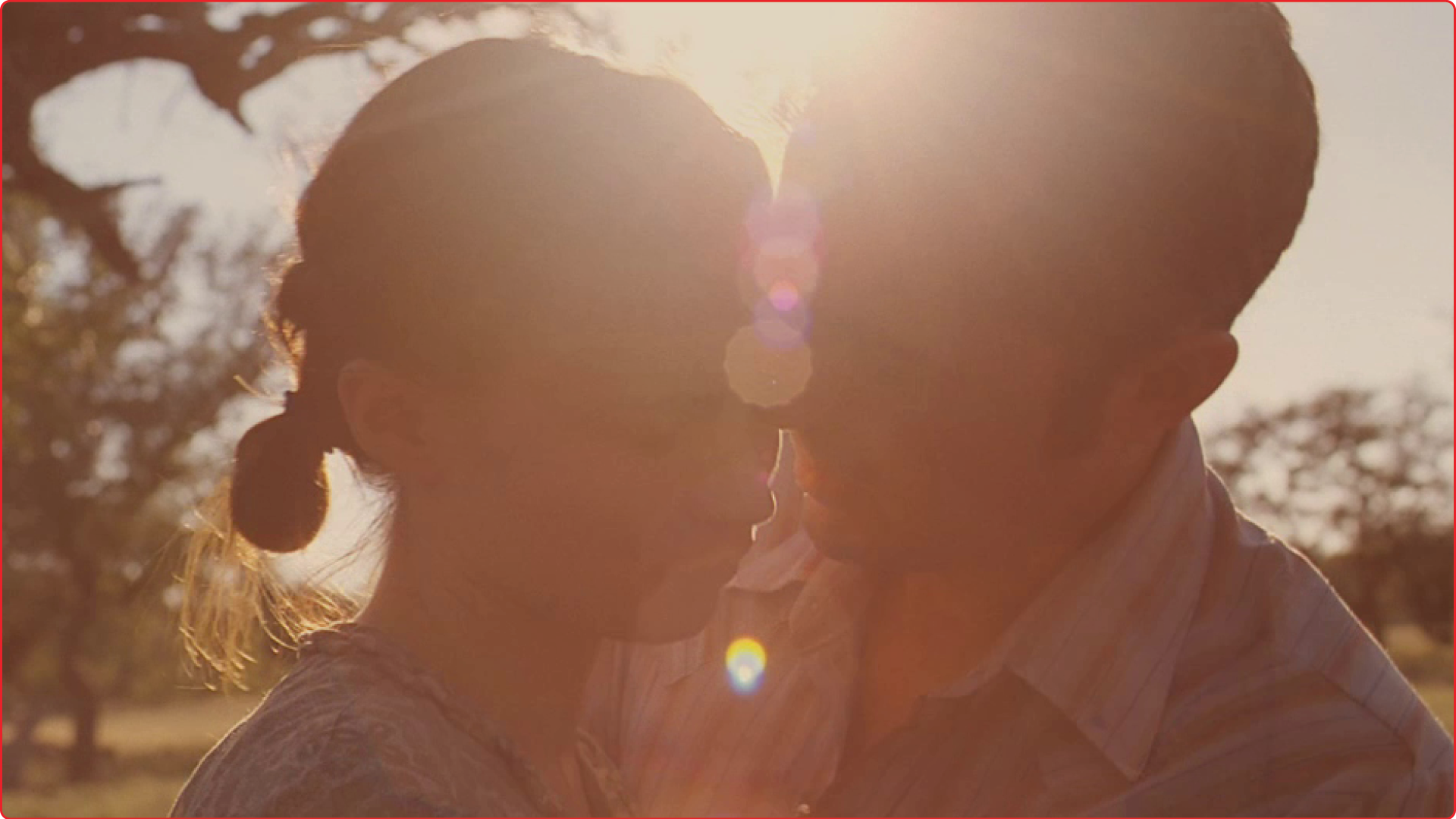
JDW: In the night scene of Bob and Ruth in the truck, waiting for a heist to go down, there’s a beautiful color contrast with a warm key and a cooler fill. How did you light that?
Ain’t Them Bodies Saints (2013)
BY: The idea was that we were mixing sodium vapor and mercury vapor as our two sources. We used a 400-watt sodium-vapor lamp through the front windshield, and we cut it up like crazy. For the cyan light coming through the back, I had a 5K gelled with ¼ Plus Green and CTB right above the car on a Condor. We tweaked the colors later to make them feel a little more orange and blue. That’s the scene that has the heaviest strokes in terms of lighting because we wanted it to feel a little over-the-top. I used the Master Primes, and I didn’t underexpose at all, so the blacks are a lot sharper.
JDW: As long as we’re talking about people in cars, how did you shoot the night scene in which Bob is driving his truck and approaching headlights pass by him, then turn around and follow him?
BY: All of that was on a process trailer. To light Bob, we used a 1K straight onto a bounce card and cut up so it fell right on him and sort of caressed the window. I didn’t want him floating in black, so we had to also make it subtle on the truck. For the car that hits him with the headlights, we rigged two Par cans on a pickup with a little putt-putt generator in the back. We had to mount the lights because the truck was too low when we had Bob’s truck up on the process trailer. Once we raised the Par cans, they were right at Bob’s eye level. Those Par cans were at full blast; when they hit the lens, we would almost lose the image for a couple of seconds. It fits that scene because he’s so paranoid.
JDW: For the daytime driving scene in which Bob carjacks Will [Rami Malek], were you supplementing the daylight inside the car?
BY: We tabled off a 12-by-12 solid that basically extended over the whole car, and I pumped in 5Ks gelled with Full Blue and pushed through Full Grid or silks, so the light was super soft, almost wispy. We used the word “wispy” a lot. You felt it but you didn’t really see it. That was an important idea for that scene. I wanted to make the car very subdued so that you can see the faces, but they’re almost silhouetted against landscape. I had just enough light to get their eyes or wrap around the cheek- bones. I had one [light] on Casey and one on Rami, and I leaned more toward exposing for the landscape than exposing for the car.
JDW: In the store that Skerritt runs, bare tungsten bulbs hang from the ceiling and daylight comes in through the front windows. Did you have big units outside to serve as sunlight?
BY: No. Any daylight you see in the store is what was available. The sun stayed behind us the whole day, so when we were looking out the front, we weren’t getting direct sun. I used UltraBounce for a little more control and a little more contrast; we just repositioned it at times to give us a little more pump. All the bulbs you see hanging from the ceiling lit the wide shots. For the close-ups, it became very complicated to control the bare bulbs because of all the shadows, which weren’t very pleasant. [The light] wasn’t punchy enough. We tried to use China balls, but then [the actors] just seemed too beautiful. So we ended up using clip lights with silver hoods from Home Depot, and we clipped gels to the front. For all the close-up work with Casey and Keith at the cash register, we shaped the light with a clip light on a C-stand. If you saw a picture of it, you’d say, “C’mon, guys, get it together!” [Laughs.]
American history has such a contentious relationship with African Americans, so much so that it has always clouded my view of this place we call home. Shooting Saints reminded me how beautiful, topographically, this country is, and that this imperfect society cannot trump the resilience of space and individual character.
JDW: How did you approach Sweetie’s bar? It has an almost subterranean feel.
BY: I had two soft lights, 1K and 2K Zip lights, coming back toward camera from what was supposed to be the front door. One was over the door and one was over the cigarette-vending machine. There was also an old-school practical fixture on the shelf above the bar; we put a brown paper bag over it to make the light really warm, and we also put a brown paper bag in front of one of the Zip lights. We also had a practical bulb over the jukebox, bulbs over the pool table, and a bulb on the wall at the door. Over the tables, we rigged some household floodlights so the tables could pick up a little bit. Once Casey sits, he’s hit by the Zip light, and I had a little bounce just off camera. For Nate [Parker], we had to bring the light in closer and cut it up. The light expires on Nate’s face really quickly, but with Casey it just wraps and keeps going.
JDW: There’s another night exterior at Ruth’s, when Bob gets out of his truck and steps into the yard and into front-light as he looks into the house. He gets back into the truck in silhouette, as though a dark shroud has come over him.
BY: In the close-up of him looking in the window, there are two 60- watt bulbs over his shoulder from the house across the street. Above the truck we put the 1,000-watt sodium vapor on a Condor, hanging the bucket over the middle of the yard. We teased that light so it didn’t really hit the truck precisely, and that’s how we got that clean silhouette of Bob. We opened up one side of the sodium vapor to let it leak onto the house, and we had the 400-watt [sodium vapor] pushing through a tree, so we got a little bit of that tree-branch pattern on the house. I also had a 60-watt practical on Ruth’s porch. For [Affleck’s] close-up, he walks into focus and gets those two little pops in his eyes, and that was a 1K bounced into a beadboard and scrimmed down to make it really wispy.
JDW: You did the final grade with Joe Gawler, a collaborator on Pariah. What did that work entail?
BY: I’d sent Joe a look book with photographs that I thought spoke to the film, and by the time I got in the room with him, he had already set up a look-up table that was really amazing. It took a lot of the pinch off the transfer, which was very sharp. He set it up so Ruth had that beautiful, creamy look to her skin. We also wanted the environment to feel a little like a subdued cyan, and he’d already done that. We spent most of our time just figuring out how hard we wanted to build those blacks. Joe is a pure collaborator whom I take a lot of guidance from. There are moments when I don’t say anything because I’m just watching him do his thing. Once you get him in that zone, he’s invested, and I was excited that he was excited about this film and what we were able to do with it.
American history has such a contentious relationship with African Americans, so much so that it has always clouded my view of this place we call home. Shooting Saints reminded me how beautiful, topographically, this country is, and that this imperfect society cannot trump the resilience of space and individual character.
This is an excerpt of an interview which first appeared in the September 2013 issue of American Cinematographer. It has been reprinted with the permission of the publisher.

Bradford Young