

Interview
Zar Amir
The Iranian artist on the passions that transformed her into an international multihyphenate.
Zero Compromise: The Films of Zar Amir plays at the theater from Saturday, September 27.
Share:
The Tehran-born, Paris-based Zar Amir directed her first short film Khat (2000) at just 18 years old and has since proven herself a dynamic force in international cinema. Writer, director, casting director, producer, and actor, she was recently awarded top honors at the Cannes Film Festival for her gripping performance in Ali Abbasi’s gritty thriller Holy Spider (2022). In Natalie Musteata and Alexandre Singh’s layered 2024 short film Two People Exchanging Saliva, narrated by Vicky Krieps, Amir plays a lonely woman with a compulsive shopping habit in a dystopian world where kissing is punishable by death. Ahead of Metrograph’s seven-film tribute series to Amir, the two filmmakers exchanged questions over email with their star, discussing her passion for film, her migration to Paris following government censure, and the directors who have long influenced her craft.
NATALIE MUSTEATA AND ALEXANDRE SINGH: Growing up in Tehran, were there any profound moments when you knew for certain that you wanted to pursue a career in cinema? And once you did, what were your very first experiences in the Iranian film world?
ZAR AMIR: My parents used to watch a movie every night when I was a child. In Iran of the ’80s, VHS players and any kind of VHS cassettes were forbidden. You could get arrested and face lashes for having forbidden movies. So there were movie dealers who had every movie you could imagine, from American blockbusters to independent European or Asian masterpieces. I was around 10 when we moved to a neighborhood in the center of Tehran, in a building where a great theater director and his wife, a great actress, were living. Their son was almost my age; we grew up together, and became like a family. I was lucky enough to be able to observe and learn what they did, to see their passion, their ambition, sometimes their obsession. And all of a sudden I found myself in love with this creative way of building a world on stage and on screen.
At the age of 16, I was already reading [Samuel] Beckett. During those high school years, I was living in two parallel worlds: one side mathematics and physics, the other side reading playwrights and making short movies with my friends. I knew I wanted to continue studying cinema and become a director. My neighbor gave me the best advice: “Now you know everything about cinema technically, if you want to become a good director you need to learn how to direct your actors, and for that you need to learn acting yourself. Better you start with stage and theater.” I listened to him and studied stage acting.
I should add that I was always afraid of acting. When I made my first short Khat, our movie dealer said one of the greatest documentary filmmakers also bought tapes from him, and I should show him my rough cut. I started to work with this filmmaker on his documentaries, and I think working on and watching documentaries really helped my acting. I learned so much from these people early in my career.
NM & AS: When you arrived in France in 2008, you were confronting both a career cut short and an entirely new language and culture. Can you describe those first moments living in Paris and what it was like finding your footing as an artist? Were there encounters, with either people, films, or works of art that really marked you?
ZA: Arriving in France without having any connection to the industry, and not speaking the language was very frustrating. But I was determined. I knew there was nothing I could do other than cinema and theater and my artistic little creations. While working as a babysitter and waitress, I tried to create a community from zero. I worked on small theater projects and short movies with other Iranians and eventually with my journalist friends around the world, focusing on multimedia, cultural reports, then filming and editing stuff in the fashion area, or online websites. I did anything I could to improve my technical capacities.Meanwhile, I did my best to enjoy this rich artistic Parisian life, and got inspiration from so much I didn’t have access to in Iran… all the movies I could watch easily, theaters and exhibitions. With my status as a refugee, working internationally was very hard, and I had a very dark period where I lost my hope and passion. But I didn’t give up, of course.
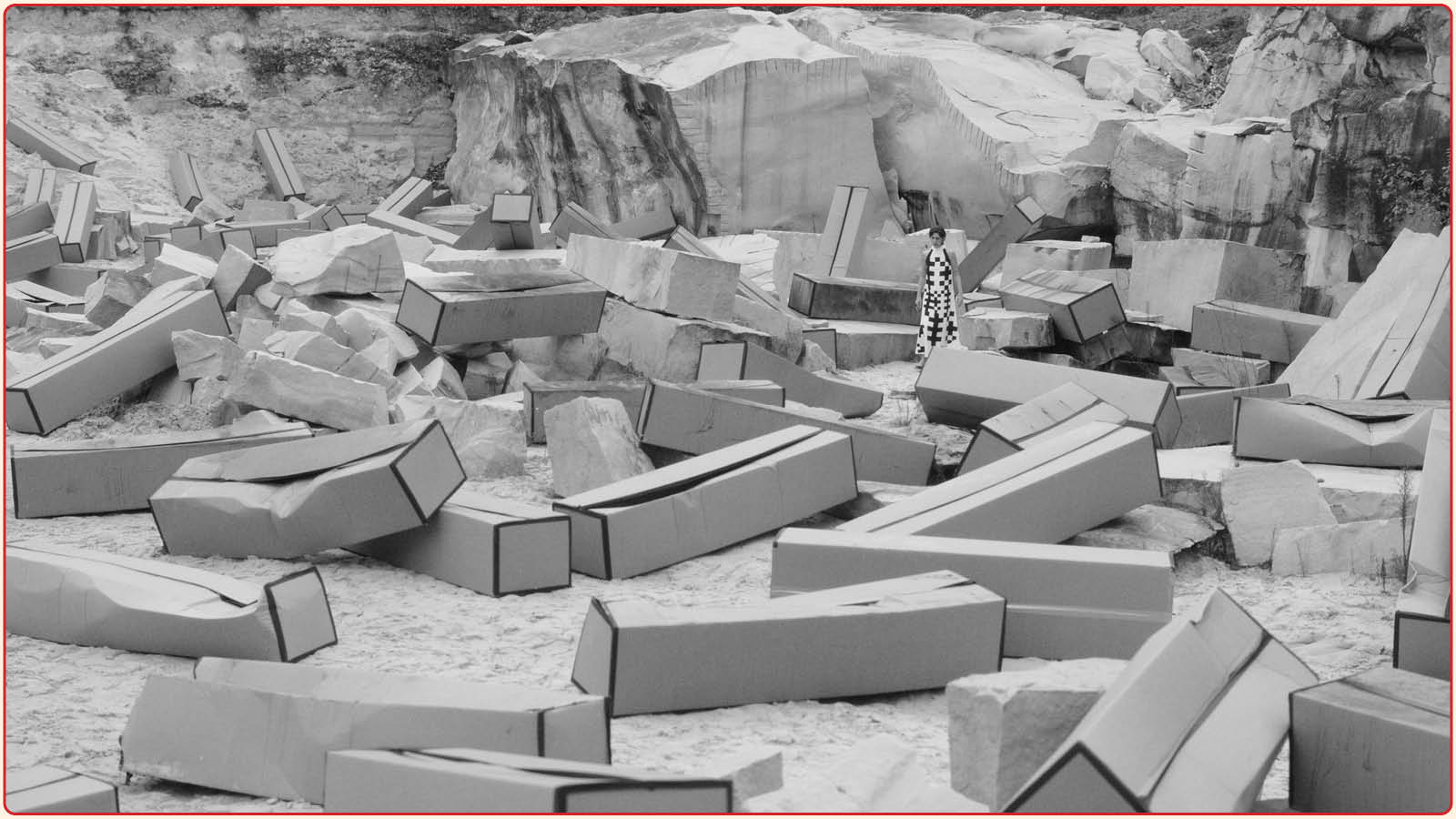
Two People Exchanging Saliva (2024)
NM & AS: In Paris and the world over you have a special place in the Iranian artistic diaspora, both as a professional collaborator and as a warm friend to many Iranians working in different cultural fields. We are struck by the warmth, creativity, and solidarity of the Persian artistic diaspora. Could you talk about that cultural sensibility and how that interweaves with the pressing political situation in the country?
ZA: In diaspora communities in Paris, I experienced not only friendship and support, but also frustration, fear and paranoia. All these generations of Iranians forced to leave their beloved land suffered. I think at some point we became conscious of the trauma we were living with and tried to overcome it. We started to help each other instead of staying isolated. Generation after generation blew fresh air into the community. But the more we were oppressed, the more we gained in solidarity—even in this industry. Holy Spider is a great example. We had so much help from the diaspora community to make that film.
NM & AS: When we first reached out to collaborate with you on our absurdist film, Two People Exchanging Saliva, you told us that it was the kind of project you’re delighted by but rarely approached for. You recounted how you were similarly excited by Ali Abassi’s magical realist film Border (2018), which led you to work with him on Holy Spider. Can you speak a little about your interest in absurdist cinema? And relatedly: for you, what makes a project or a character irresistible?
ZA: That kind of look at life fascinates me more than anything else. Beckett, Kafka, Camus, Ionesco, or Gogol, grotesque novels opened a world full of imagination to me as a young student. I remember when I saw Eraserhead (1977) the first time, adrenaline flowed through my veins. That was the genre I wanted to express myself with. Movies like The Trial (1962) by Orson Welles or Pi (1998) by Darren Aronofsky did the same. Everything I wrote or I tried to create when I was in Iran, even in my photography, was with this intent. In France, unfortunately, there wasn’t a place for such creation. Our movie was a gift to me as an actress. It’s so inspiring, so magic. This is the real cinema to me.
This is what makes a character irresistible. This potential of creation, of imagination, the way it connects me to myself and reveals to me the unknowns within me. It’s rare to find all these qualities in a comedy or a good vibe storytelling; these journeys are made from dark, strange, and absurd experiences.
NM & AS: Working with you as a performer, we were struck by your emotional sensitivity and ability to drop into a character’s perspective even in the most gruelling circumstances. We’re thinking particularly of our final shoot day in the quarry outside of Fontainebleau, where we filmed your character, Angine, searching for Malaise (played by Luàna Bajrami). It was a freezing November day, cut short by intermittent rain, and all you had to wear was that wispish geometric dress. And yet, within a couple of takes you had brought the entire crew to tears. Could you reveal how you prepare beforehand and on the day of the shoot to connect to your character’s inner life?
ZA: Well, it’s a different process for each movie. I just never take it easy. The easier the character seems to interpret on paper, the more challenging it is to find that unique personality, to connect to that inner thing which is deeper than clichés. Most of the characters I’ve dealt with require long, deep research, and that’s the most interesting part of the preparation for me: when I must dive into materials to get inspired. I don’t like rehearsals outside of set. At the same time, I always have a whole plan from A to Z in my mind when I come to set. That way, I can follow my instincts.
I admit that I’m sometimes not very easy, questioning a lot of things that I don’t understand, challenging my directors or even different artistic departments. I’m sure sometimes I can seem egotistical or not an easy actor but it’s just about my plans and instincts. I’m very concentrated on set, every pause, or minutes between takes are essential for me to stay connected to what I have found in the takes before or trying to go further and get connected to something that I don’t yet know or haven’t yet tried. This is what makes it authentic for me in the first place.

Holy Spider (2022)
Share:
About the Contributor
Share:
Recommended
-
Susan Seidelman
 An intimate conversation with the trailblazing American filmmaker.
 -
Carol Kane
 Fifty years in 50 minutes with the irrepressible screen icon.
 -
Mark Lee Ping-bing
 The legendary cinematographer reveals his three core beliefs.