
[wpbb post:terms_list taxonomy=’category’ html_list=’no’ separator=’, ‘ linked=’yes’]
[wpbb post:title]
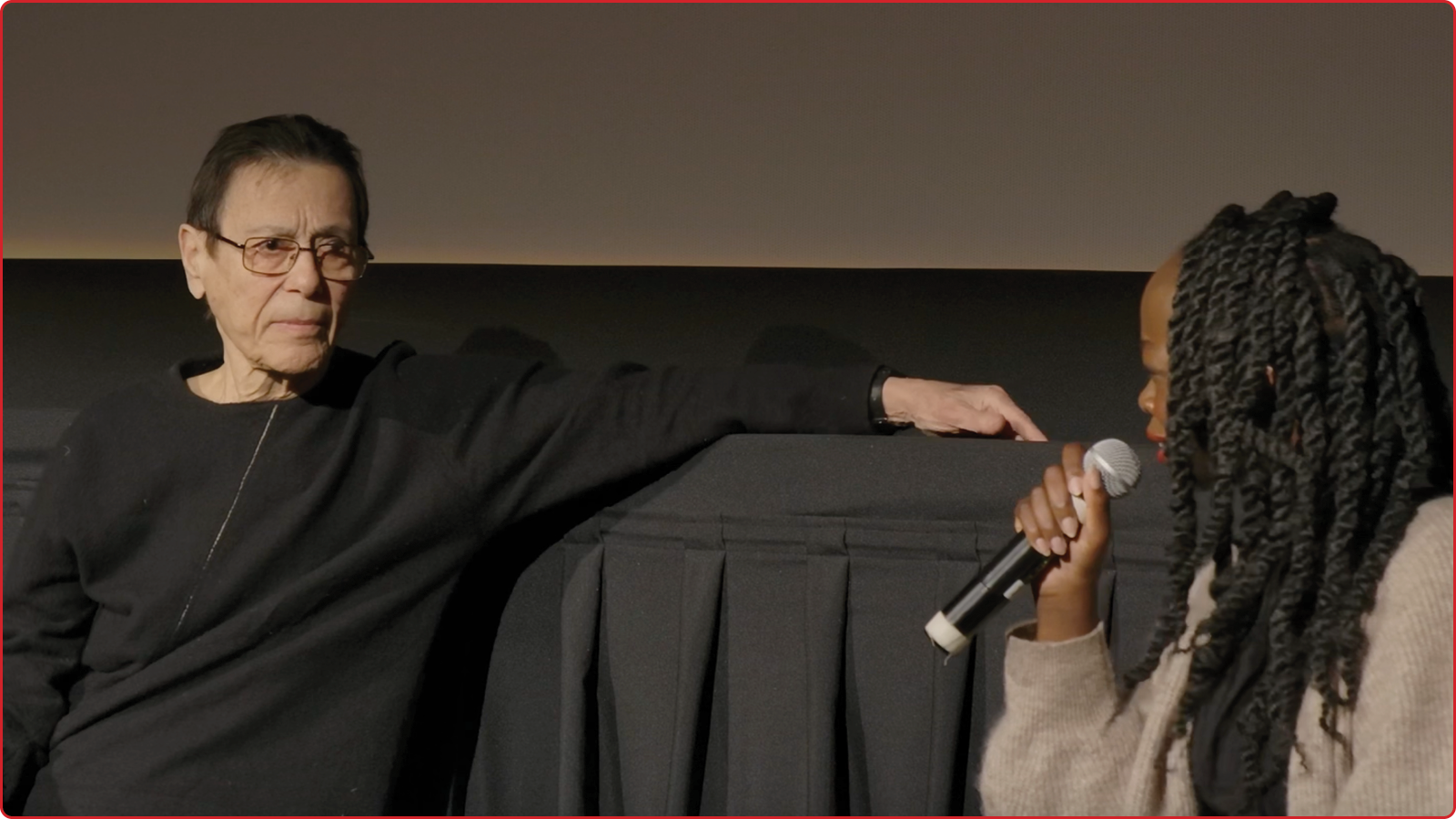
Yvonne Rainer and Lydia Ogwang at Metrograph, February 26, 2023.
[wpbb post:terms_list taxonomy=’category’ html_list=’no’ separator=’, ‘ linked=’yes’]
BY
[wpbb archive:acf type=’text’ name=’byline_author’]
A Q&A with famed director and choreographer Yvonne Rainer and Metrograph Programmer Lydia Ogwang, following a screening of Rainer’s 1990 film Privilege.
Yvonne Rainer: A Retrospective is available now on Metrograph At Home.
LYDIA OGWANG: Yvonne, thank you so much for being here. I like to start these Q&As off with what I call an easy question, but I don’t know if there are any easy questions in relation to this film. When we were speaking earlier, you mentioned you hadn’t seen this film in a little while, so I want to start by asking what is it like to watch Privilege (1990) again now? Not only now as an artist, 33 years since it was made, but also as a person. There’s a lot to dig into there.
YVONNE RAINER: Well, that’s complicated. I hadn’t seen this for quite a while. But I am amazed at how much I was willing to take on, I am amazed at my own-what, audacity? I don’t know what you might call it-in putting these different things together. In the same vehicle, to talk about menopause in the mouth of a white woman-a surrogate for me, of course-and racism, white racism; mixing it up, which has always been the way I deal with making films.
It was one reason I left dance after 10 years and started making films, so that I could mix up autobiography with what I was reading, and politics, and daily life-film offered these possibilities. Every film is a different example of ways of cutting and playing around with traditional narrative techniques. Like sync sound intertitles, and in the later films, using professional actors and dealing with characterization. I’m amazed I found different ways of dealing with this way of making films from early on. In the first, Lives of Performers (1972)-I was playing around with sync sound, cutting, and all the things you can do in film that is much harder on an open stage… I don’t know, am I answering the question?

Lives of Performers (1972)
LO: Absolutely. You’ve dug into a lot of things that I was going to ask about. You mentioned the different disciplines that you are incorporating in this film, which is part of what makes it so impactful. There’s a lot of, for lack of a better word, “information” coming at the audience in different ways. I’m curious, who was your intended audience for this film?
YR: My intended audience? My intended audience is myself, basically. And I know that coming out of a politically radical or liberal background, my audience pretty much agrees with me. I mean, I’m not trying to convert a more conservative audience. And I have accumulated followers who share political and social inclinations. So, it’s you guys.
LO: Because it is such a complex work, what is the end goal for you? Is it some sort of understanding for yourself? Is it to communicate something outward? To make change in the world around you? There’s the question of political efficacy, all of those things.
YR: I should add I’m very aware my audience is predominantly white, and always has been. I’ve been criticized as a dancer when I returned to dance-and more recently, myself and my contemporaries from the ’60s, my milieu, were attacked for our seeming exclusion of a Black audience. I don’t know whether I’m answering your question, but continuing in this vein I have never made very extensive efforts to broaden my audience.
More recently in terms of my dance history, I realized that the Black dancers were going uptown to Alvin Ailey [American Dance Theater] on Broadway, and we whites were in the Judson [Dance Theater] basement. And anyone who came got their work on the programs. And although some of the participants in the Judson programs were going down South with the buses to broaden the opportunities for voters of color, and I went on anti-war protests and all of that, I didn’t really expect the kinds of politics and particular social issues I was dealing with to attract a broad audience, partly because I was always in this experimental mode.
The films are hard to follow if you only go to Hollywood movies. You have to keep with them. That was always part of the project, to draw on traditional narrative conventions, but then break them, break them, break them, over and over. You have to relax and then pay attention, and then maybe you relax. They’re demanding films. I know that, I always knew that, and it was a good part of my motivation.
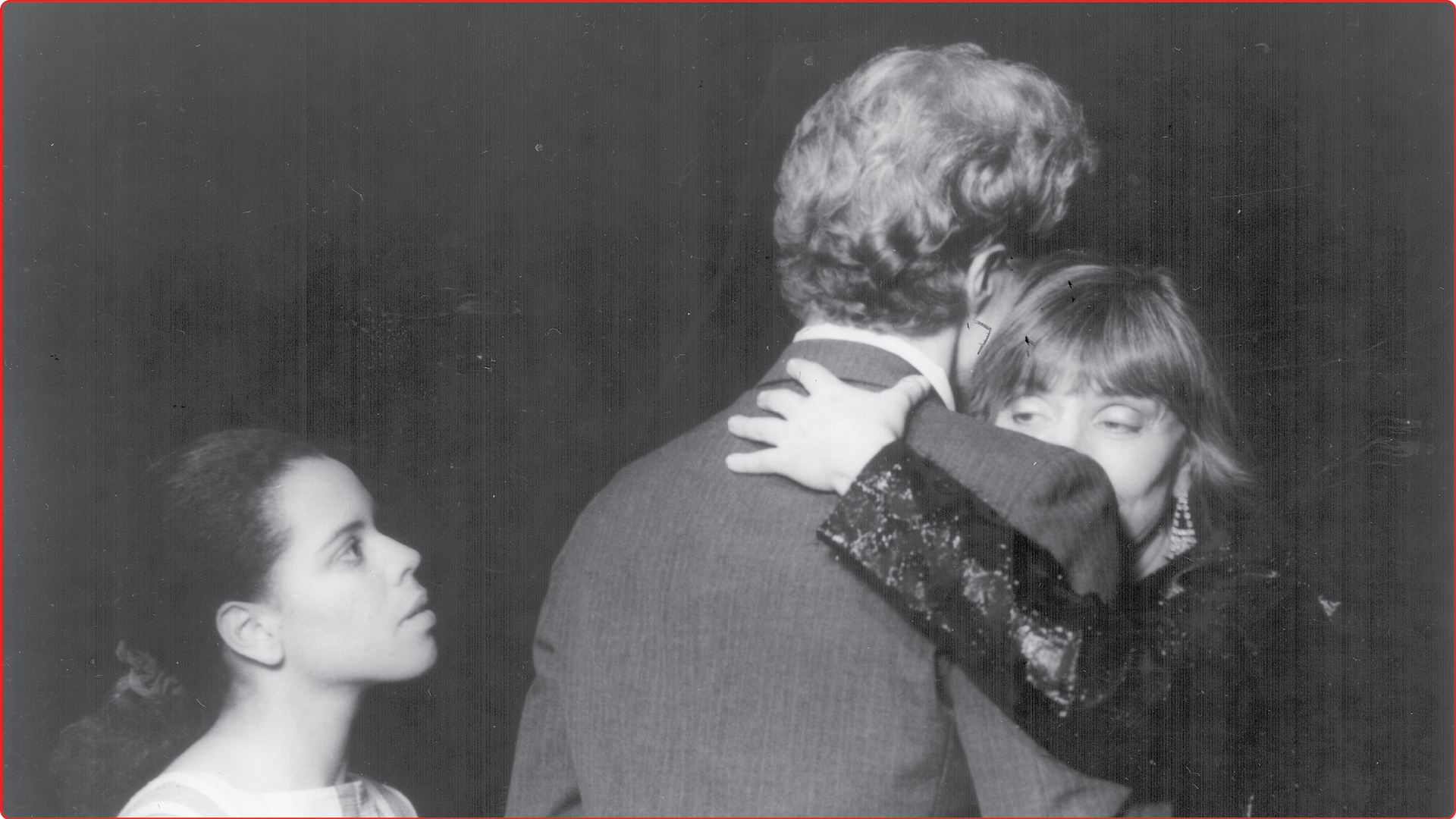
Privilege (1990)
LO: There’s a wonderful interview with Yvonne on the Metrograph Journal conducted by Lynne Tillman. In it, you mention something that really struck me, that back in 1990 you had a contemporary who was a Black person who was dismayed to see that the film didn’t make as big of an impact as she would’ve wanted it to. You expressed concern about whether Black people would even be able to see these films, or come out to watch these screenings? I think there is a question of access to what you were speaking to, but I’m also curious about how things may have changed, in terms of the reception of or access to your work between 1990 and now. Are you having more diverse audiences? Are you getting chances to speak to people who are beyond your milieu, as you say? Who are further from your own experience in terms of age, race, ability, all of that?
YR: Well, I’m still pretty lackadaisical; I mean, I leave it up to the sponsors to advertise the work and bring in the audience, but I’m very pleased that every 10 years or so, there’s a whole new generation of people of whatever race or background who are interested, and come, and don’t walk out. Did anyone walk out of this film? Yeah. Often in the old days I would sit in the back, and sure enough , there would be walk-outs. It was just too cut-up and demanding, what I was doing… I’m very pleased to see all of you.
LO: I want to talk about dislocation as a narrative tactic, because you do a lot of this, and in different ways, in each of your films. The obvious one in Privilege is having Novella Nelson take on the role of Yvonne Washington. What draws you to this tactic? What is it about that as a storytelling device that you’ve found so enigmatic over your film career?
YR: Yvonne Washington, of course she is reciting things that I had brought to the script, things I was reading about race and other political matters, and that set up [Jenny, played by Alice Spivak] as the victim or the object of the accusations of Yvonne Washington. Novella Nelson represents what I was reading and trying to digest in terms of political, racial, social history, but Alice represents a lot of my own history. They were used to present some of the contradictions of living in this country.
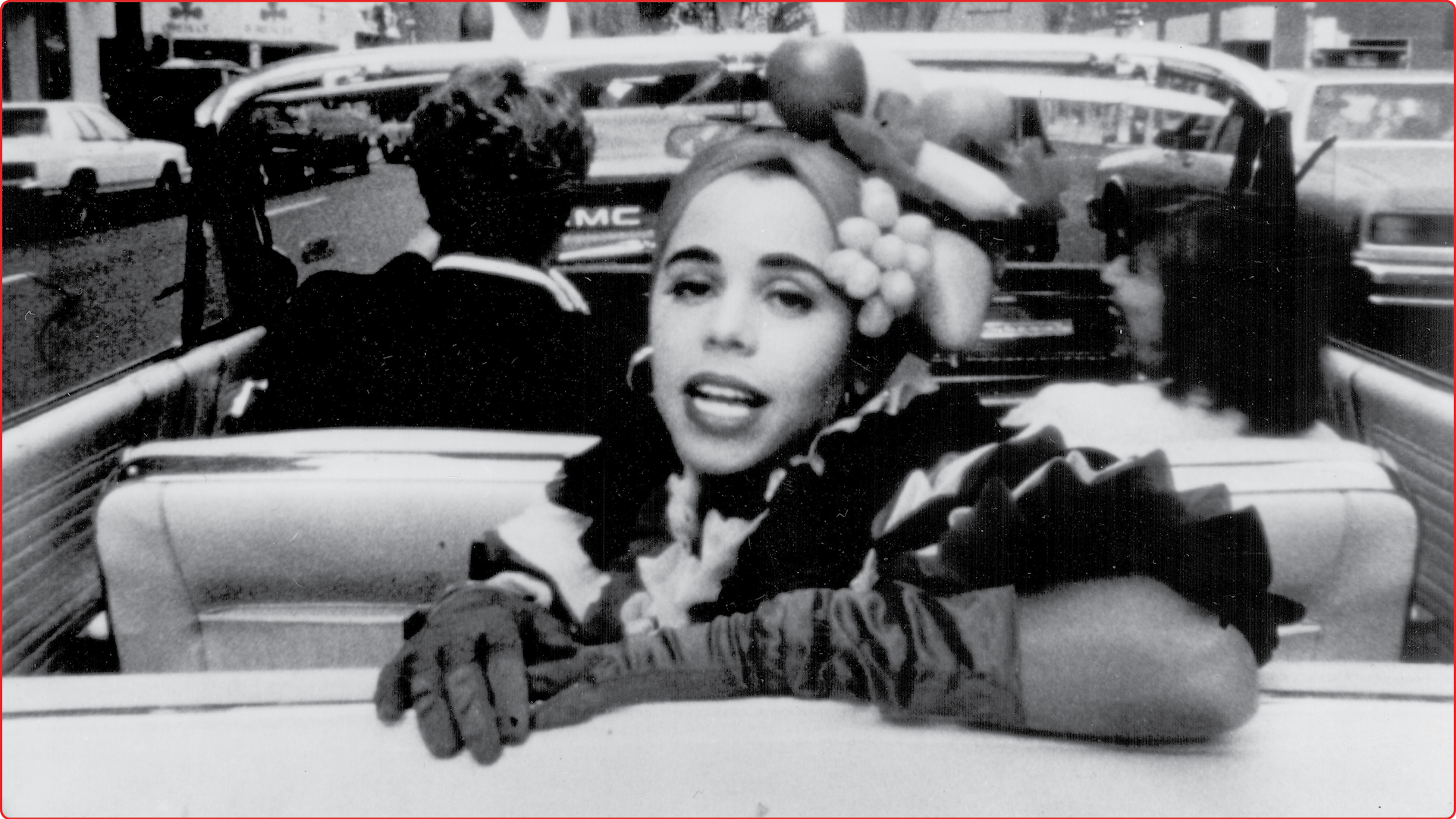
Privilege (1990)
LO: Are there any questions from the audience?
AUDIENCE MEMBER: Hi. I know you were drawn to the medium because of all the possibilities of playing with these cinematic devices, but did you know from the outset of this film that you were going to work with these techniques such as intertitles, archival footage, actors? Or did the process shape the final product?
YR: As with most of my films, they’re totally scripted. I don’t make many changes. I make a lot of changes in the editing, but [figuring out] the material I’m going to use is always preceded, often by a couple of years, by the process of creating the script.
The most pleasurable parts of my years of filmmaking were the writing of the scripts and the editing. That was always a private practice. Babette Mangolte taught me editing in the first two films. After that, it was always a solitary endeavor.
AUDIENCE MEMBER: In the opening credits, it says, “A film by Yvonne Rainer and many others.” I felt you really made an effort to show the perspective of people in different social positions, backgrounds, and give them a voice. As a director, to give up that space felt empowering. I was curious how you got to that point, to make that decision?
YR: Oh. Well, that’s a different aspect of the work. Everything that comes out of these performer’s mouths has gone through my mind. I mean, it’s come out of my reading and experience and my autobiography. But maybe I should explain the complexity of my growing up.
My father was an Italian immigrant, came here when he was 20. Left school at the age of 10 or 12 to become a stonemason’s apprentice. My mother was born in Brooklyn, and her parents were Polish Jews-probably left in the late 1890s because of a pogrom. By the time she came, friends of hers knew all these anarchists who had emigrated, and my father was part of that group.
So there were these contradictions in my house of political radicalism, living in an all-white, working-class, Protestant neighborhood, being asked by my playmates where I was from because I was slightly darker than they were. I would blurt to these kids that I didn’t believe in God-it caused a lot of trouble. And my mother, she was always unwell in various ways, I won’t go into that. So, my experience, the contradictions of my childhood and adolescence, are in this film in various ways.
The most pleasurable parts of my years of filmmaking were the writing of the scripts and the editing.
LO: It feels like you are comfortable with ambiguity, in what you’re saying. You grew up with a lot around you.
YR: Ambiguity and contradictions, yeah, it seemed the only way to go… I don’t know. And now I’m very discouraged by what’s going on in this country, and since the awful president we had before the present one. It’s a strange country, to say the least.
LO: We’re out of time, but I did want to end on a positive note. Do you have any positive words to end on?
YR: Courage! Courage! Be active. Read the New York Times, or other radical or progressive stuff you can get your hands on. Join groups if you can. Protest. Write letters. Give money.
AUDIENCE MEMBER: Watch Yvonne Rainer films!
LO: That’s the most important one. Thank you, Yvonne, courage is a great note to end on. You are a courageous artist, these are courageous films. Everyone, please join me in thanking Yvonne Rainer.
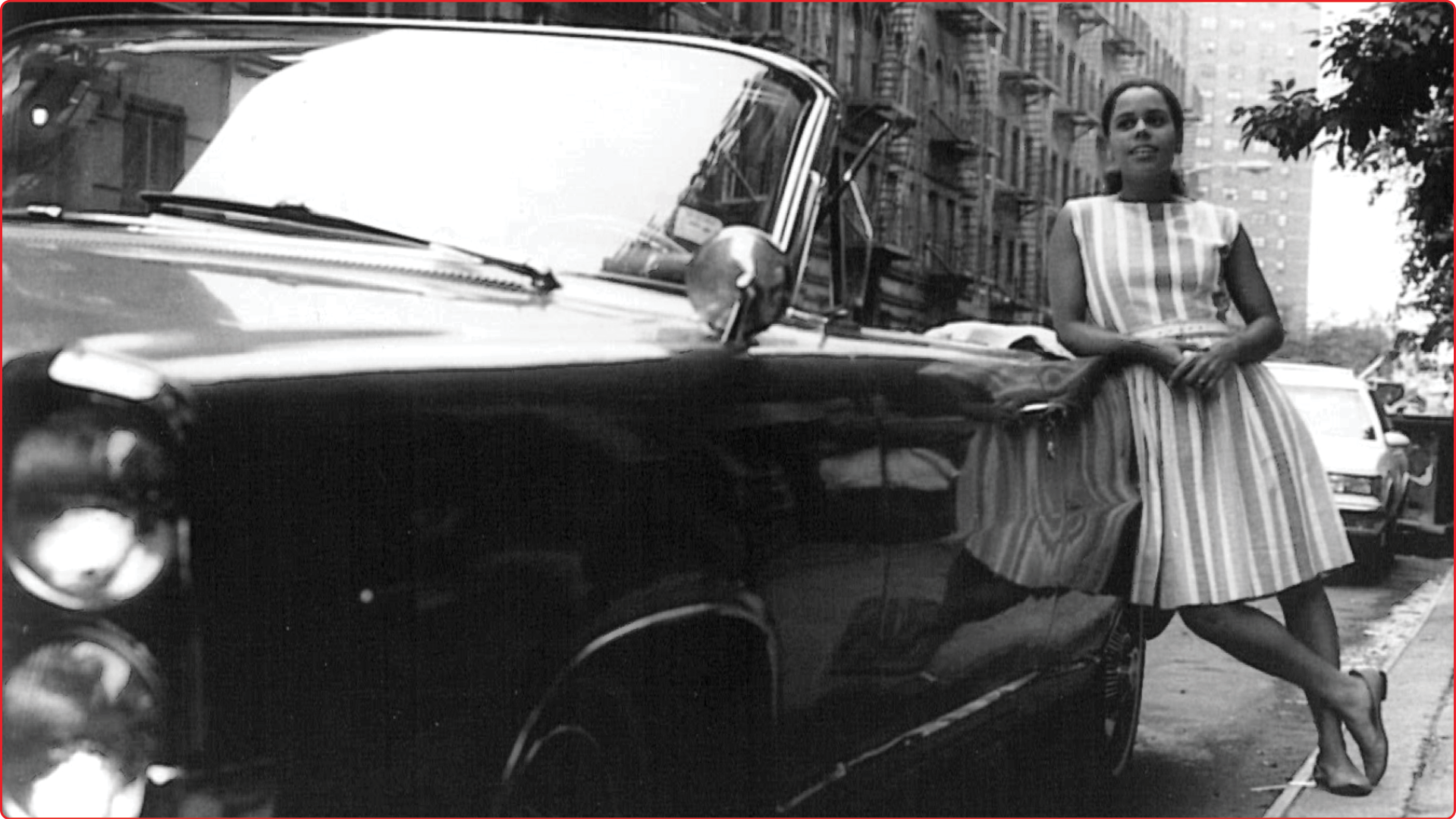
Privilege (1990)