
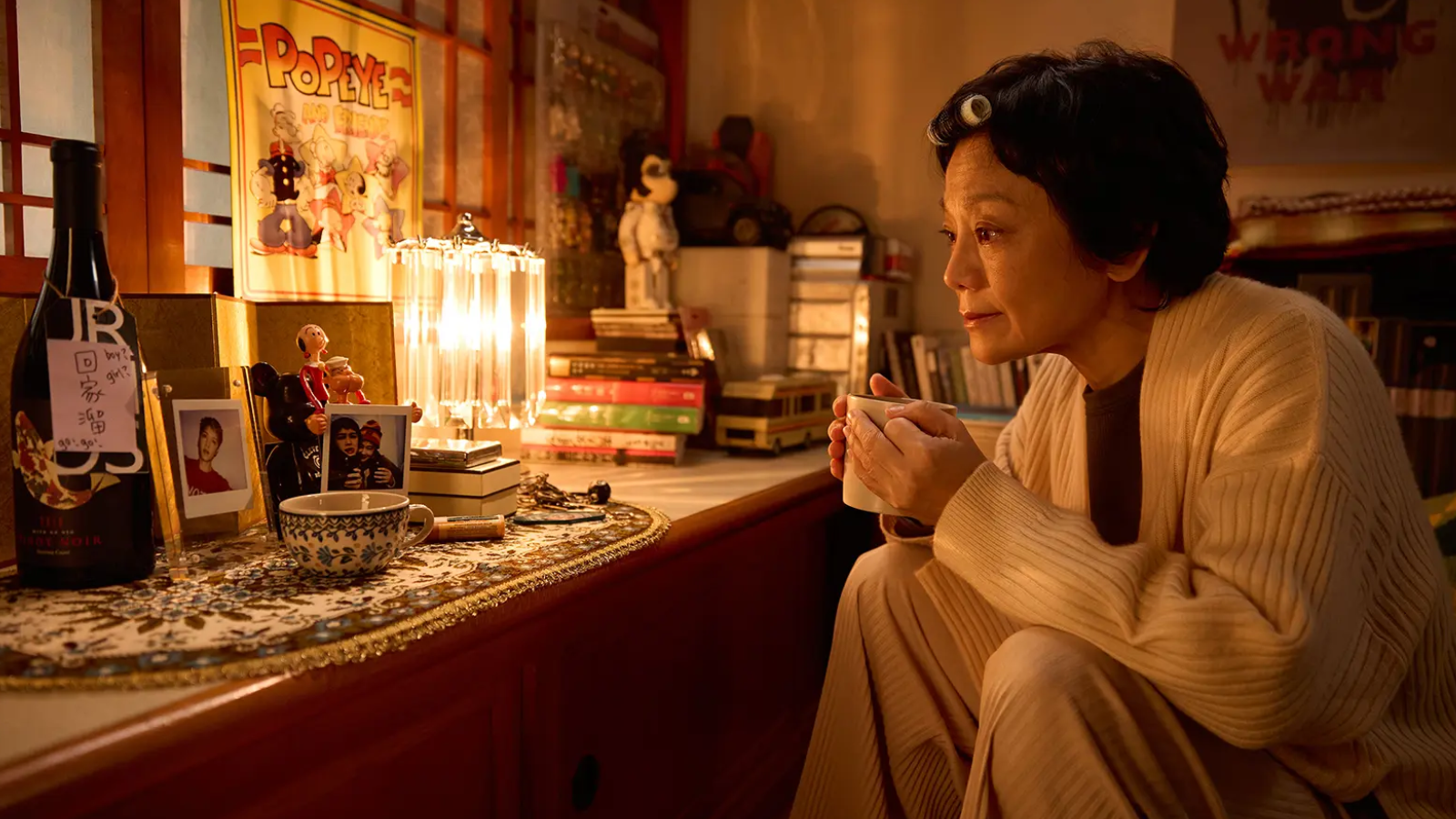
Daughter’s Daughter (2024), dir. Huang Xi
Interview
Sylvia Chang
A titan of New Taiwanese Cinema and the Hong Kong New Wave discusses her latest award-winning role.
Daughter’s Daughter opens at Metrograph Theater on Friday, November 21.
Share:
IT’S NO EXAGGERATION TO SAY that the Taiwanese-born multihyphenate Sylvia Chang is one of the most consequential cinematic figures of the past five decades. The breadth of directors she has worked with all over the globe speaks for itself, amongst them King Hu, Edward Yang, Mabel Cheung, Johnnie To, Tsui Hark, Ann Hui, Jia Zhangke, Ang Lee, Stanley Kwan, and Bi Gan. But the weight these names carry can also obscure the pivotal role that Chang played in ushering in both New Taiwanese Cinema and the Hong Kong New Wave. First starting out at the Golden Harvest studio in the early 1970s, Chang went on to star in, produce, or write seminal works of both nations’ watershed film movements, such as Yang’s first feature That Day, on the Beach (1983) and Ann Hui’s debut The Secret (1979), and has continued working ever since, with her career today numbering over 100 credits.
In addition to the eclectic brilliance of her long acting career, Chang remains a powerful filmmaking force through her own elegant directorial work. In works such as Passion (1986), Tempting Heart (1999), and 20 30 40 (2004) she provides nuanced, novel twists on genre tropes, resulting in films that capture the emotional travails of women across generations with no shortage of heartbreak and humor.
Chang’s most recent award-winning role comes in a film co-produced by her and Hou Hsiao-hsien: Huang Xi’s sophomore feature Daughter’s Daughter (2024), in which she plays Aixia, a Taiwanese woman navigating her relationships with her mother and two estranged daughters. After a catastrophic event, Aixia travels to New York City to tend to one of her daughter’s affairs, and in the process must confront her past failings as a mother, and the possibility of moving forward in the later years of her life. Delivering a signature performance of immense control and depth that moves realistically between the poles of grief and acceptance, and that comes to define the entire headspace within which Daughter’s Daughter operates, Chang keeps the conflicting yet very human impulses that form the emotional core of the film united—just the latest in an oeuvre filled with many such instances of captivating mastery.
I had the great honor of meeting with Chang over Zoom to discuss her latest triumph and her film career at large. —Ryan Swen
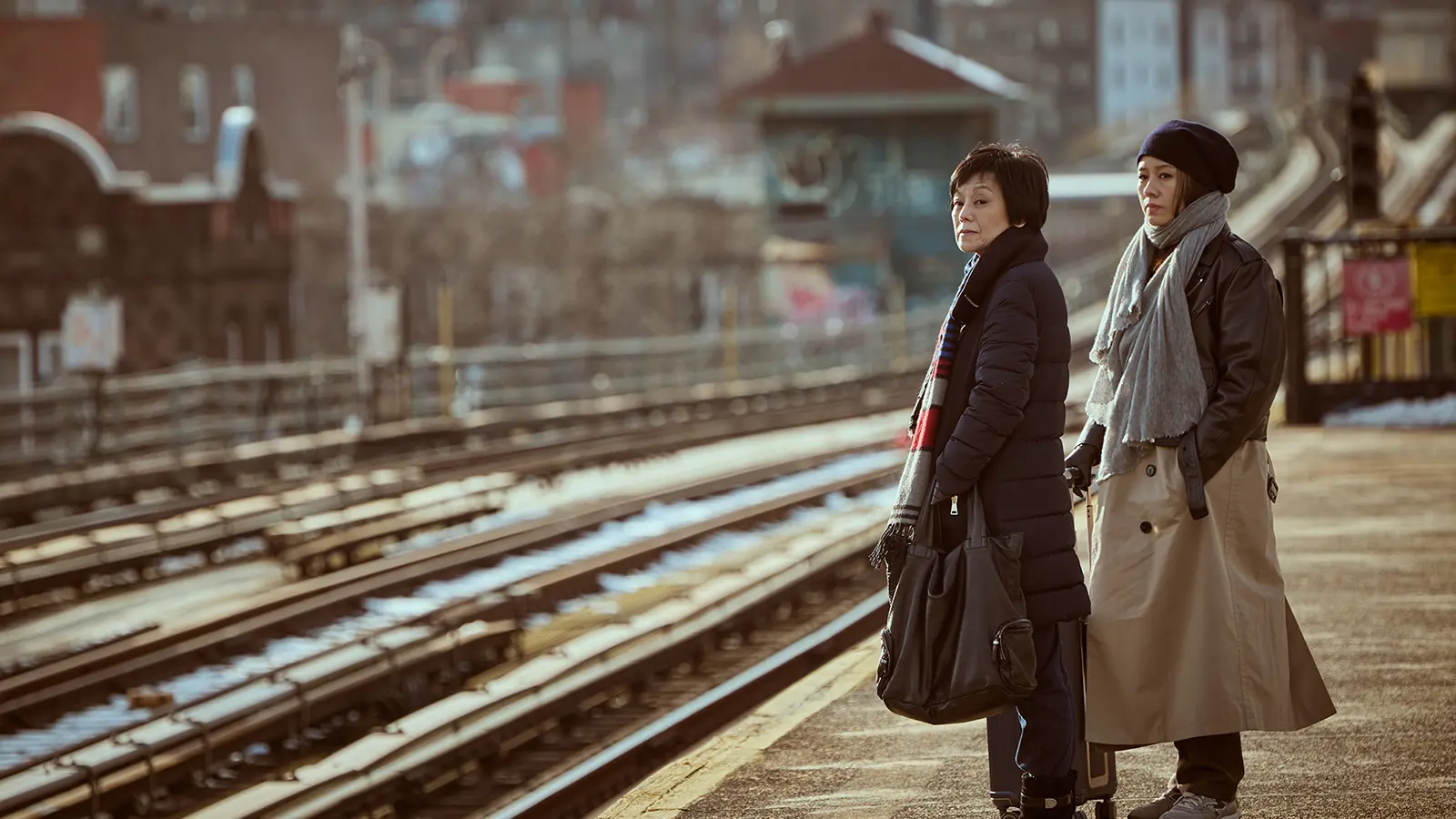
Daughter’s Daughter (2024), dir. Huang Xi
RYAN SWEN: How did you first learn about the script that would eventually become Daughter’s Daughter?
SYLVIA CHANG: About eight years ago, during a phone call with Hou Hsiao-hsien, he asked me to look into the script. That’s how I learned about Huang Xi. She had been working closely with him as an assistant director. Her father is also a very close friend of Hou’s.
[Reading the script] it was a very sad story. I asked Huang Xi, “Why do you want to make such a sad story?” We were discussing the script over and over—and then we ran into the pandemic. That gave us some time to rethink, and to rewrite. When I come to think of it, the pandemic gave me time to really know my character, Aixia, and to look at her differently. It took us a long time, but I guess it was meant to be that way.
RS: This is the first time you’ve worked in New York City since making your film Siao Yu (1995), a period of almost 30 years. What was it like after all this time?
SC: Things are not so different. [Laughs] I’m quite familiar with the places where we were shooting—my uncle used to live in New York. I always stayed around that area: Canal Street, Chinatown, Soho. It hasn’t really changed that much… Shooting was still the same: cold, very cold.
RS: A beautiful scene happens when you’re eating a cookie inside a crowded deli; it’s shot from outside the window as we see a number of customers behind you. What was it like carving out that conflicted, intensely private emotional space in the middle of what’s meant to be a public place?
SC: I remember I said to Huang Xi at the beginning of the shoot, “Even though it’s a very sad situation, we really want less tears. We don’t want to make the whole film very down. I think what we’re trying to do is find a way to go forward.” So I told Huang Xi, “I really don’t know when I will cry.” I didn’t plan it, I didn’t design it. I didn’t want to do anything like that. But of course, when I found the cookie and I started eating it, somehow, I just couldn’t help myself. The tears came naturally, spontaneously. But I knew I was among other people, and I did not want to expose all of my emotions at that time, so I tried to control it. I was glad the camera was far away, because though it was getting close, it wasn’t the right time yet for me to cry out.
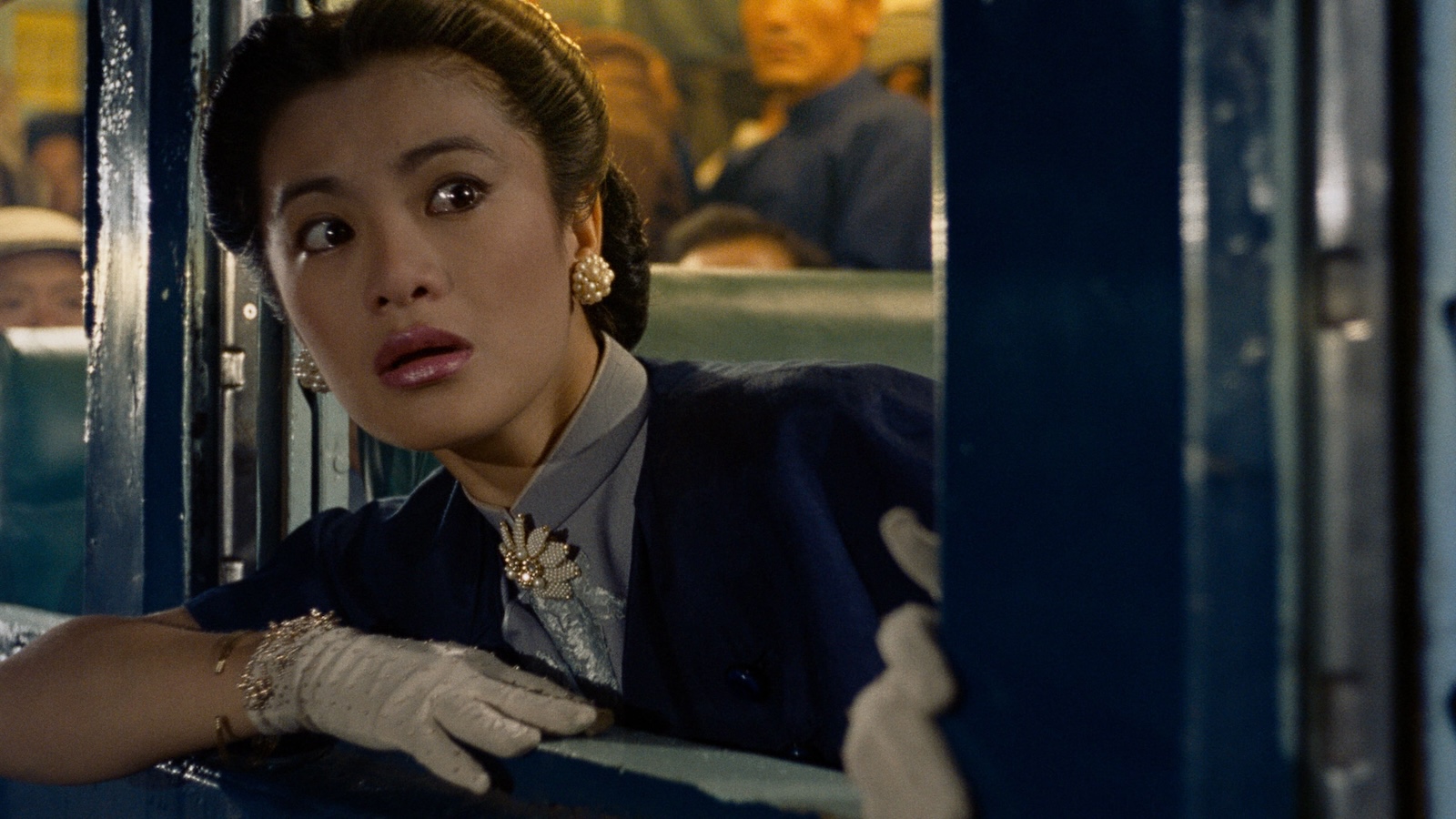
Shanghai Blues (1984), dir. Tsui Hark
RS: Even from an early stage, your body of work is especially remarkable for how much you have worked in both Taiwan and Hong Kong, often alternating between the two film industries within a single year. In more recent years, mainland China has also been a productive place for you, appearing in films such as Mountains May Depart (2015) and Long Day’s Journey into Night (2018). Do you see there being specific periods where it made more sense for you to make a film in one place or industry, or does it simply vary from film to film?
SC: I’m not a very ambitious woman, definitely, and I don’t do much planning. I’ve been very lucky. Something unexpected always comes to me, and that then leads to another thing. All these wonderful directors I have worked with, they just came to me with wonderful roles and stories that challenged me to act differently. But when you reach a certain age, it’s harder, because there are less interesting characters you can play—I don’t know how many mothers I’ve played. But then you really have to explore the different characters, rather than just “being a mother.” You have to better know the character. When Daughter’s Daughter came to me, I found the situation [it proposed] very interesting.
RS: In much the same way as an actress like Isabelle Huppert, you seem to have a cinephile’s sense of which directors are most interesting to work with. How have you honed this personal curation over the years? What excites you about working with up-and-coming auteurs?
SC: I’m always looking for something different. I love to see what other people can provide me with. That’s why I say that they give me all these challenges. I’m curious about how they would treat different situations—and when I work with them, I’m just like a newcomer again. I put aside whatever I knew before and start a new role. For me, that’s the most interesting part [of the process].
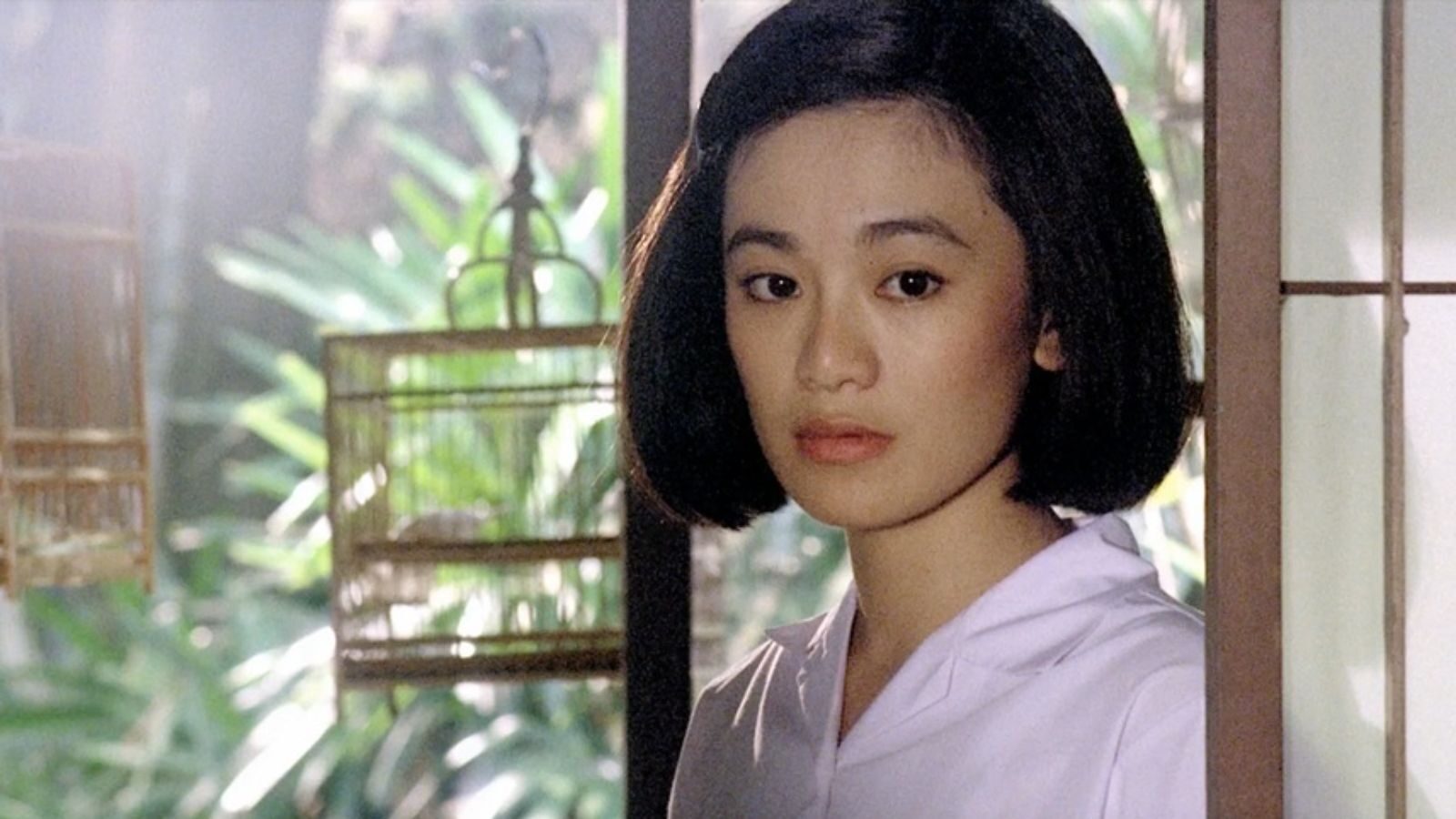
That Day, on the Beach (1983), dir. Edward Yang
RS: You also been a vital figure in the development of both the New Taiwanese Cinema and the Hong Kong New Wave—the former in particular as a producer on the TV series Eleven Women (1981), the directorial debut of Edward Yang, and the foundational omnibus films In Our Time (1982) and The Sandwich Man (1983). When you were shepherding these projects, was it your intention to cultivate groundbreaking works and filmmakers?
SC: As I told you, I really am not a very ambitious woman. [Laughs] At that time, I just felt: if I have the ability to do something different, why not do it? Maybe, part of my character is that I’m quite courageous. I’m not a person who is scared of failure. I always thought [each project was] going to be successful, though it didn’t happen every time—but it’s okay, because I don’t take them as failures. Even with Eleven Women, people remember it now, but at that time, it didn’t make a lot of money. Actually, I lost a lot of money producing that. I’m sure many of the films that might not be successful in the moment, people will remember. You know, even with The Secret—people still talk about that film. There must be a reason for it. So all I want to do is make good films with good filmmakers.
RS: Your acting work showcases an impressive range from comedy to tragedy, elements that often are juxtaposed within a single given film that you have yourself directed—such as Tempting Heart, in which the main character experiences the full gamut of teenage romance and heartbreak alongside the sobering realities of adulthood. What attracts you to this mixing of tonal registers?
SC: At the beginning [of my career], I hated crying on the set. I hated playing a character who cries all the time. I didn’t feel I was good at melodrama like that. So I’ve always loved comedies, humorous things. But, like the old saying, there’s a thin line between comedy and tragedy. It’s your attitude; it’s how you look at it.
I think Huang Xi’s also like that. She wanted to inject more, not comedy exactly, but more relief into Daughter’s Daughter. But, well, the situation is so sad. Even in my own work, I always want to see the lighter part of life. I want people to have a happier life, a happier attitude.

Daughter’s Daughter (2024), dir. Huang Xi
RS Over your career, what trends have you noticed regarding the roles that are offered to you?
SC: First of all, I think filmmakers always come to me when they have problems. They think I can solve all problems, which is not true. [Laughs] But I do like to try; if anybody approaches me, I will try my best to help. From sharing and helping, I also learn; it’s give and take, so, no regrets. Especially young filmmakers, they know it’s easy to convince me to help them.
RS: As a final question, are you planning on returning to directing in the near future?
SC: If nothing goes wrong, then I’ll probably start directing [a film] next year. I’m still working on it, but the subject matter is something I’ve never done before, so I do need to do more homework… it might take a little while, but that’s okay. Sometimes I feel that time is running out, and I should move a little faster, but somehow it doesn’t come that way. When I reached a certain age, I decided that, even though the films might not be very commercial, or perhaps not that many people understand what they’re talking about, I just have to be honest with myself and really speak from the heart.
Share:
Recommended
- Can She Bake a Cherry Pie?
 On Henry Jaglom’s effervescent anti-rom-com.
 - Re-Wind
 On the AV dreams and celluloid nightmares of Hisayasu Satô’s Re-Wind.
 - Listen Up! Mihály Víg & Béla Tarr
 Metrograph’s Listen Up! column, in which we revisit movie scores and soundtracks of note, continues with a look at Mihály Víg’s haunting collaborations with Béla Tarr.