
Columns
RidicuLists: The Top Five Literary Works by Ed Wood
Film history is a house with many rooms. In Ridiculists, Will Sloan explores some of its nooks and crannies. For the latest entry, a look at five of the cult independent filmmaker Ed Wood’s finest books.
Will Sloan presents Plan 9 from Outer Space takes place at Metrograph on Thursday, October 9 with Sloan present to introduce the film and sign copies of his new critical biography Ed Wood: Made in Hollywood USA, which is available to purchase from the Metrograph Bookstore.
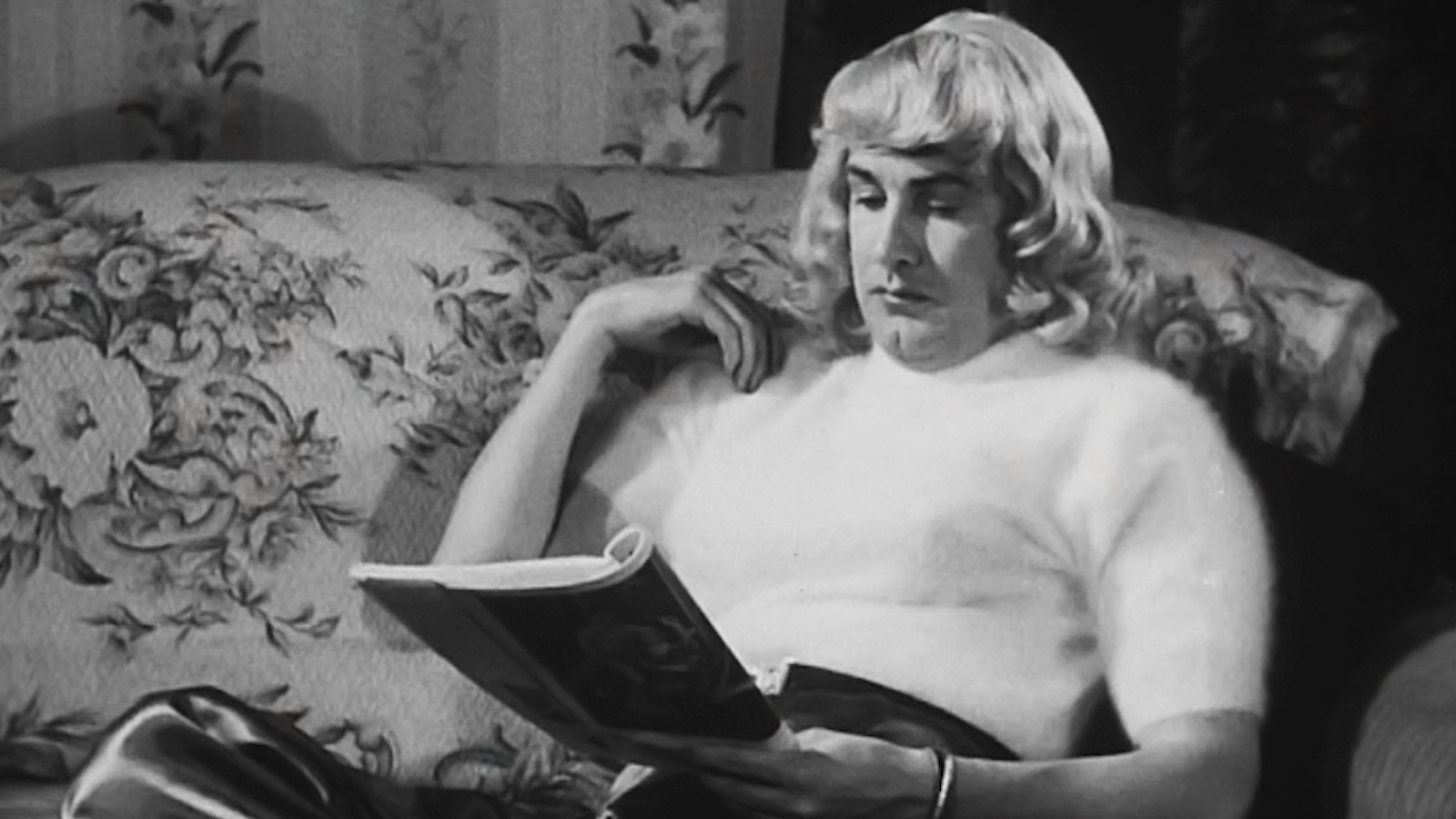
Ed Wood, in Glen or Glenda (1953)
Share:
EDWARD D. WOOD JR. BUILT his reputation as “the Worst Director of All Time” across the span of many years, with boomer kids stumbling upon his Bela Lugosi vehicles Bride of the Monster (1955) and Plan 9 from Outer Space (1957) on TV and adventurous moviegoers discovering his cross-dressing oddity Glen or Glenda (1953) throughout the ’60s and ’70s. The otherworldly strangeness of these films was enhanced by their air of mystery. Who made these strange objects?
By the time of these TV airings, the World’s Worst Director was well past the acme of his success. Between the 1960 release of his last “above-ground” directorial effort The Sinister Urge and his death in 1978 at age 54, Wood made most of his income as a writer, churning out at least 50 books and hundreds of magazine articles, mostly pornographic in nature. As described in Rudolph Grey’s pioneering biography Nightmare of Ecstasy (1992), Wood’s last 18 years were a hellish descent into poverty and alcoholism, and many who gravitate to the more innocent delights of Wood’s early films prefer to ignore his post-1960 output (Tim Burton’s 1994 Wood biopic, adapting Grey’s text, politely ends with a triumphant premiere of Plan 9 from Outer Space). But for those seriously interested in Wood, his vast literary output encompasses some of his most revealing work, which we explore here through a spotlight on five of his most potent literary achievements. It may not be pretty, but Wood’s subterranean bibliography affirms him as a tenacious and deeply personal artist—warts and all.

Plan 9 from Outer Space (1957)
Death of a Transvestite (aka Let Me Die in Drag) (1967)
Born in Poughkeepsie, New York, in 1924, Edward D. Wood, Jr. spent his boyhood watching Buck Jones Westerns and Lugosi horror movies at his local theaters. But when he finally arrived in 1948, he struggled for years to find a doorway into the industry. He kicked around town for a while—acting in community theater, working as a studio “gofer” at Universal, directing the occasional TV commercial or short film—before his nurturing of an acquaintance with Lugosi helped secure his first feature as director, Glen or Glenda. Made to cash in on the media circus surrounding Christine Jorgensen, the first American to undergo a widely publicized gender-affirming surgery, Wood turned the film into a semi-autobiographical confessional about his own penchant for cross-dressing (Wood stars as the cross-dressing title character; his real-life girlfriend, Dolores Fuller, plays Glen’s oblivious fiancée).
As Wood’s life and career progressed, he became more open about his cross-dressing, and its depiction in his films and novels grew less anxious. Death of a Transvestite is a sequel to Wood’s debut novel Black Lace Drag (1963), catching up with contract killer Glen/Glenda as he awaits execution. Hours before his execution, he makes a bargain with the warden: offering a full confession to his life of crime if he can just wear his beloved women’s clothing to the electric chair. Like so many of Wood’s heroes, Glen/Glenda shares the author’s fondness for angora sweaters, and is fascinated with the idea of passing. An early scene in which Glenda toys with a horny old gas station attendant is an example of how Wood’s drag novels play with the gay/straight binary that Glen or Glenda strictly enforced.
Death of a Transvestite was published by Pendulum Publishers, a specialist in dirty paperbacks and magazines that was Wood’s most consistent employer in the ’60s and ’70s. Pendulum publisher Bernie Bloom said of Wood, “He was the most prolific writer I’ve ever known. And the fastest. He could write better drunk than most writers could sober.” This is a fair assessment of the actual talent that sustained Wood in his later years: he could spin a yarn, quickly and competently. Death of a Transvestite is typical of Wood’s early novels, a fast-paced, rollicking sex-and-crime adventure that flows episodically until Wood hits his page count. When artists become ultra-prolific, individual texts can become less important than threads that develop across a career; throughout Wood’s many novels you’ll find “rugged” men, sex-crazed young girls, predatory old lesbians, sadistic girl-gangs, and cross-dressing young men who may or may not be gay or trans, but always, always, always love angora.
Diary of a Transvestite Hooker (1973)
Wood struggled in Hollywood in the years before Glen or Glenda and never regained a foothold in the mainstream after The Sinister Urge (1960). By certain metrics his life and career were failures… and yet, he could still rightly boast that he directed six feature films, most of them nationally distributed. He was certainly luckier than “Randy,” the protagonist of Diary of a Transvestite Hooker. “I had no idea of entering a life of prostitution when I got off the bus on Vine Street in Hollywood,” says Randy. “I did honestly believe that there was some sort of spot for me in the movies and television business… where I could at least make a living. Ha!” He discovers that “money runs out fast in Hollywood.” Far from the dream world of Bride of the Monster (1955), Randy lives in the Hollywood of all-night liquor stores and hourly-rate hotels where Wood spent his last days—occasionally brushing up against the Dream Factory only as some famous director’s plaything. One senses in Diary of a Transvestite Hooker an ambiguous, fractured self-portrait, shards of which are spread across the story’s bleak landscape. When Randy observes of one addicted sex worker, “She becomes an alcoholic… stimulating herself on the same cheap brand of wine or rot-gut whiskey as the male population,” he could be talking about his author.
The Only House (1972)
When Pendulum Publishers announced plans to branch into pornographic films, Wood eagerly volunteered to direct. These may not have been the films he dreamed of making in Poughkeepsie, but still, here he was—a director on a set. Wood’s films for Pendulum included The Only House in Town (1971) and Necromania (1971), and while this 1972 book takes its title from the former, it’s actually a novelization of the latter—fleshing out the story in sometimes startling ways.
As in the film, the novel follows Danny and Shirley Carpenter, a married couple whose sex life has gone “frigid” (poor Danny’s premature ejaculation problem is largely to blame). They seek treatment at the sanitarium of Madame Heles, which also happens to be a haunted house, allowing Wood to indulge his recurring interests in both horror atmospherics and marital strife. Wood fills in the often-traumatic backstories of his characters with sordid details of abuse. In one shocking scene, a cross-dressing sex worker is violently gang-raped in an alley. In another, a hard-drinking, middle-aged couple bicker through a dreary sexual encounter—spouting dialogue that will remind readers of Wood’s own troubled marriage as described in Nightmare of Ecstasy. Writing quickly, Wood’s pornographic novels at times become something close to autofiction, as we see him working through his own deteriorating conditions on the page.
Saving Grace (aka Sex Salvation) (1975)
One of Wood’s last published novels shows his interest in corrupted innocence unabated. The story begins with teenage Grace Abernathy being first sexually assaulted by a school friend and then violated by the preacher she had met for guidance. The bulk of the story follows her journey as she runs off with a charismatic (and fraudulent) young cult leader. Before she steals her father’s money, she guiltily remembers a passage from Corinthians: “Neither fornicators, nor idolaters, nor adulterers, nor effeminate, nor abusers of themselves with mankind, nor thieves, nor covetous, nor drunkards, nor revilers; nor extortioners, shall inherit the kingdom of God.”
Certain of these words could describe Wood himself, living in squalor at the corner of Yucca and Cahuenga. The book was written in a period when, as his second wife, Kathy, states in Nightmare of Ecstasy, “he was getting more and more depressed.” Though as pornographic as anything Wood wrote, Grace’s story apparently took on a personal significance for the beleaguered author. “They say that people, when they feel they’re going to die, they get kind of religious,” Kathy adds, “And Eddie, something kind of happened to him, I don’t know what it was, but he wrote this crazy book.”
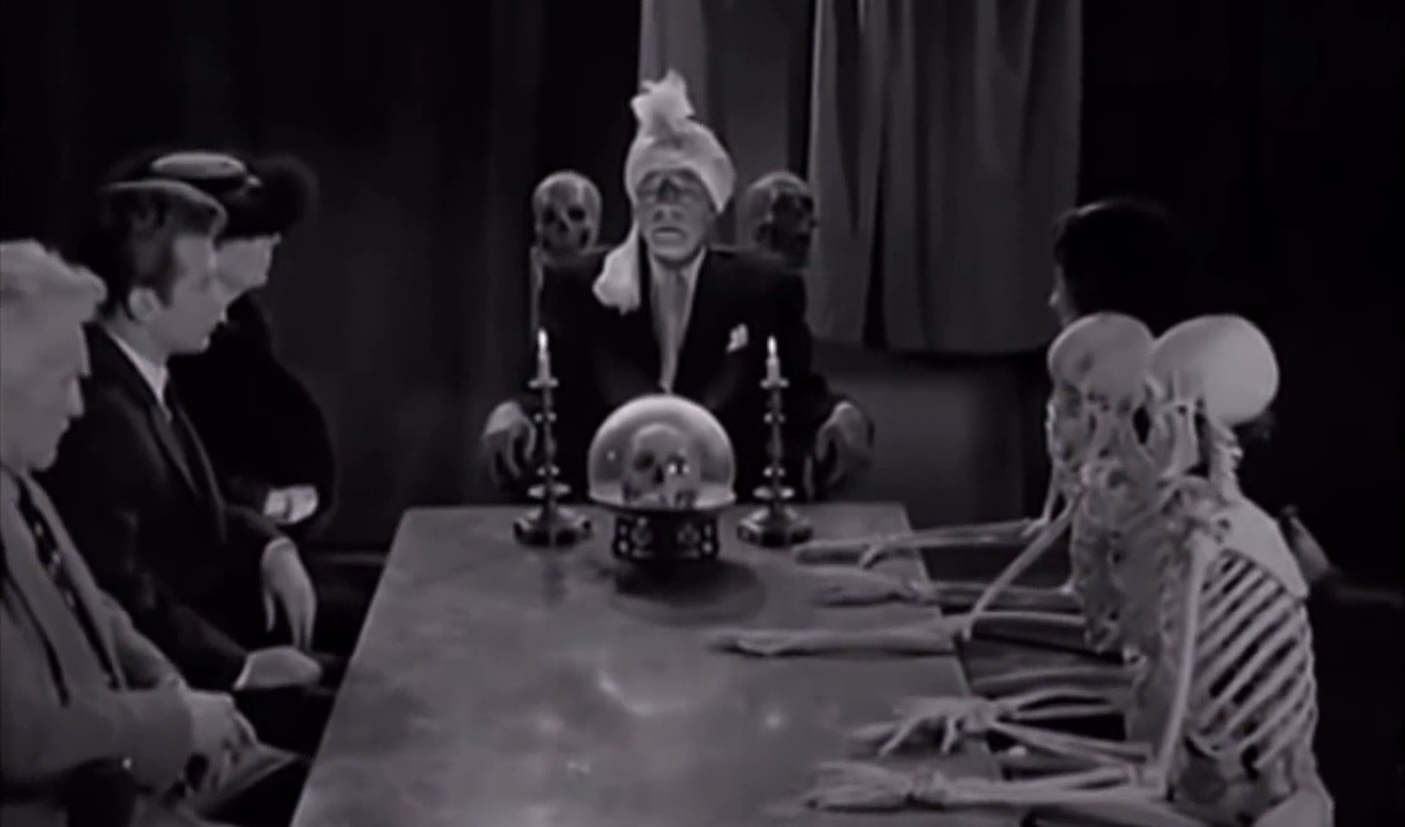
Night of the Ghouls (1959)
Hollywood Rat Race (1998)
You’re fresh off the bus in Hollywood. You won your small town’s beauty contest, were swell in the school play, and are ready to take the film capital by storm. But things aren’t working out as planned. The studios don’t care about your headshot. There’s a well-worn casting couch in every agent’s office. There’s nobody in this town you can trust… except Wood, who is here to guide you with this Hollywood how-to manual.
Posthumously released, but written in the mid-’60s during Wood’s long professional fall (he notes the recent release of 1965’s Orgy of the Dead, for which he wrote the screenplay), Hollywood Rat Race nevertheless finds Wood affecting the persona of a grizzled industry lifer—a pro who has seen it all. “I’ve raced cars, played poker, and fallen from stagecoaches,” he writes. “I’ve been lucky. None of my films have been left on the laboratory shelf.” The savvy reader will here note that Wood’s Night of the Ghouls (1959) had indeed been left on a laboratory shelf and wouldn’t see release until 1982—just one indication that he may be a less-than-reliable narrator.
The closest we have to a Wood autobiography, Hollywood Rat Race is a bipolar experience, regarding the Dream Factory with alternating sweetness and bile. Wood’s sentimental stories about old cronies like Tom Keene and Lugosi alternate with jaundiced warnings about predatory agents and unfeeling producers. Wood’s closing chapter is a lament for a city in decline, advising readers to stay home and forget stardom: “Believe it or not, your life is more real than the Hollywood scene.” Elsewhere, however, he stands up for Hollywood against the snobs who denigrate it. “There has been an influx of people who somehow manage to get into our guilds and our unions, by hook or by crook, yet trumpet their disdain for our fair city,” he writes. “I don’t understand these people. I’ve loved films since I was an usher collecting throwaway stills from the ash cans behind the theater.” I’m reminded of a scene in Limelight (1952) in which Charlie Chaplin’s hard-luck vaudevillian Calvero is asked if he hates the theater: “I hate the sight of blood, but it’s in my veins.”
Share:
Recommended
-
Ridiculists: Art vs. Commerce in Five Roger Corman Films
 Film history is a house with many rooms. In Ridiculists, Will Sloan explore some of its nooks and crannies. For the latest entry, a look at the battle between art and commerce in five Roger Corman films.
 -
At Home With… October
 Friends of Metrograph Crispin Glover, Signe Baumane, and Mark Polizzotti each share a film they love, streaming on demand on Metrograph At Home.
 -
Mary Stephen
 An interview with the renowned editor about her beguiling directorial work, including her lyrical new feature and her newly restored oneiric debut.