

Essay
[wpbb post:title]
By James Lattimer
On Kelly Reichardt’s “lost film,” Ode.
 Ode (1999)
Given how seldom Ode (1999) is screened, one might start by calling it a lost film. Together with the shorts Then a Year (2001) and Travis (2004), which were, like Ode, made in the same lengthy gap between River of Grass (1994) and Old Joy (2006), the 48-minute film is one of Kelly Reichardt’s least known works, mainly accessible via the poor VHS transfer from German television that’s been bouncing around the internet for a while now.
Despite the success enjoyed by River of Grass at Sundance, Reichardt struggled for more than a decade to get a second feature funded, including a project with Jodie Foster on board as a producer; back then, independent cinema was an even more hallowed boy’s club than it is today, with all the accompanying gatekeepers to match. “At that time, independent filmmaking was very much a white boys’ scene,” Reichardt told me as part of an interview for the Viennale’s TEXTUR series in 2020. “It wasn’t by accident that there were so few women and people of color making feature films and getting them into the world. It took effort to keep it that way. There were very definite gatekeepers.”
That these three shorter, Super 8mm works were made as a way to step outside the imperatives of commercial funding-at the time possibly forever-perhaps explains Reichardt’s ambivalence towards them now, when the process of getting her films financed has become more straightforward: “It’s good they are lost,” she told Orla Smith the same year. “They were just learning tools.”
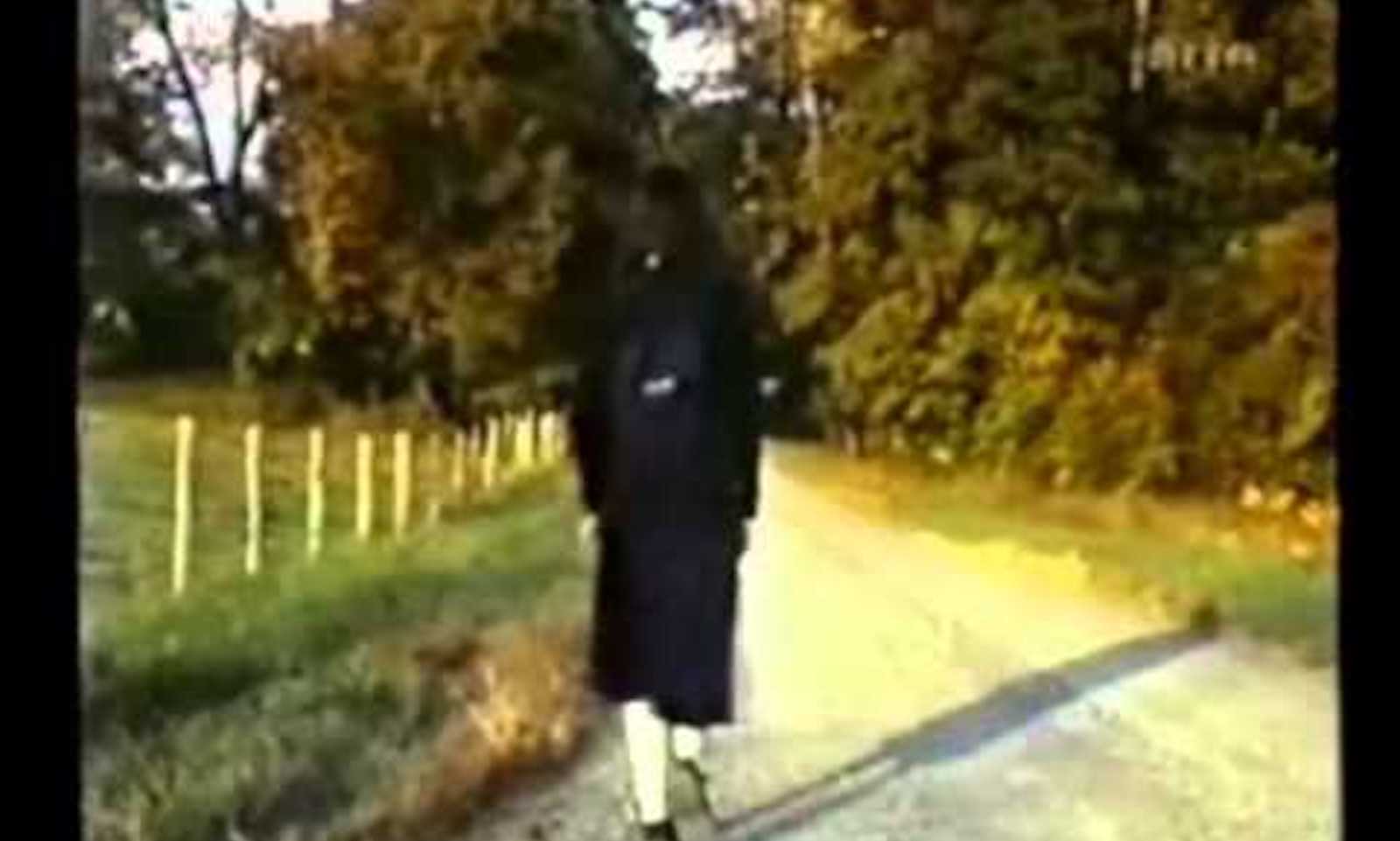
If Reichardt’s words are true and Ode is thus also a learning tool, what exactly did it teach? Shot over two weeks on location in North Carolina with just two main actors and one other crew member, producer Susan Stover, Ode is certainly instructive in terms of the sort of work that emerges when a filmmaker can simply follow her instincts free of external pressures: there are restrictions to contend with, for sure, but other doors open up along the way. While Reichardt’s subsequent features expanded this model considerably, the underlying idea has remained the same: a small team of trusted collaborators working at a modest scale, unburdened by bigger commercial necessities and the compromises that go with them. Ode is equally instructive in terms of what sort of images emerge when you ignore the need for interiors, by necessity or otherwise, of what comes into view when the great outdoors takes centerstage: light and shade, faces bathed in sunshine or given contrast by shadow; an instinctive, organic palette of yellows, greens and browns; the textures of nature, whether birds and branches set against an October sky, the shimmering water of a creek, or ants swarming over pine needles, each like tiny, seemingly incidental threads that together form a film’s complex weave. Beautiful as they are here, they are also still a training of sorts. There will be many more such images to come.
That these three shorter, Super 8mm works were made as a way to step outside the imperatives of commercial funding-at the time possibly forever-perhaps explains Reichardt’s ambivalence towards them now.
Ode is also an adaptation, or an adaptation of an adaptation of an adaptation to be more precise, based on the Herman Raucher novel Ode to Billy Joe, itself a novelization of the film of the same name for which Raucher wrote the screenplay, which took its bearings in turn from the Bobbie Gentry song. All four explore the suicide of the titular Billy Joe, a teenage boy who has just jumped off the Tallahatchie Bridge on Choctaw Ridge, Mississippi; although his untimely death is clear from the outset, the song keeps the reason for it a mystery, even as Raucher fills in the gap.
Reichardt sticks with Raucher’s motive while also referencing the story’s multiple tellings; how many repetitions does one need to make a myth? The point is made right at the beginning, by the narrator-a device Reichardt won’t return to after this film-who says, “It’s a story as American as apple pie, an all-American girl from an all-American town”; such explanatory statements will also be conspicuous by their absence in her later films. Yet once the cause of Billy Joe’s suicide is eventually revealed, the phrase takes on new significance, although ambivalence is perhaps the better term, and a more typical expression of Reichardt’s approach. If every all-American town does indeed make it impossible for feelings to be lived out as they are felt, if the evening sun by the Ferris wheel is no place for idle kisses, if there is no place for simply being who you are, that apple pie doesn’t taste so sweet. That said, if every all-American town does indeed have a Billy Joe, at least some of them will manage to escape; marginalization is suffering, and perhaps it always will be, but according to Reichardt’s view of the world, difference doesn’t lack for strength.
Ode (1999)
Ode isn’t only the story of Billy Joe, though, his name has been removed from the title for a reason. It’s also the story of Bobbie Lee, the minister’s daughter, who is also marginalized, not by her desires, but by her strict religious upbringing. An all-American girl-the all-American girl?-whose world falls apart when she receives the news of Billy Joe’s death at the beginning of the film, which is also its end. Is what happens in-between a love story? The couple are quick to say “I love you,” after he runs after her as she rides in the truck, after their brief meeting at the record store, after they realize that they knew each other already, after the emails they exchange, a transitional era’s clunky courtship. Aside from this mention of the modern world, it’s easy to forget that it’s 1999, the year before Bobbie Lee is allowed to go out on dates; bridges, forests and rivers, churches and white picket fences, smalltown America, Super 8mm film, each and every one of them as timeless as love itself.
But what is love and what is circumstance? Bobbie Lee quickly forgets what it was like when Billy Joe wasn’t in her thoughts, and it’s hard not to wonder whether a switch turned on so easily could just as easily be turned off. She says she has 20 voices in her head all the time, one of them God, and Billy Joe is a way of blocking out the noise; perhaps when you have so few options, you cling to the ones that come your way.
And there’s also what is left in the title when Billy Joe is removed; Ode is also an ode. The music never stops playing as such, conjuring up old Americana and the timelessness it holds while anticipating what will come. The original score is courtesy of Will Oldham, the same bearded man who would go on to bluster and berate in the mountains east of Portland in Old Joy. Yo La Tengo appear on the soundtrack too, the same band whose sounds play all the while as the car holding Oldham and his friend takes curve after curve in search of those elusive hot springs. Meandering between typical and atypical, between outlier and prototype, Ode is just another journey in search of something, one of the first bends in the same, still winding road.
James Lattimer is a critic and film curator based in Berlin.

Old Joy (2006)