
Interview
Michael Koresky
An interview with the author of Sick and Dirty: Hollywood’s Gay Golden Age and the Making of Modern Queerness.
Share:
I must confess that Sick and Dirty: Hollywood’s Gay Golden Age and the Making of Modern Queerness, the latest book by critic and longtime Reverse Shot editor Michael Koresky, contained little to surprise this customer. The author’s prose style, familiar from more than 20 years of acquaintance, remains invariably lucid, respectful of the reader’s intelligence, and remarkably fleet-footed. Writing a book about queer American cinema, Mr. Koresky has rather perversely focused his attention on a period—namely, that during which the Production Code Administration was at the height of its repressive powers—when queerness was “present” in films as subtext or structuring absence, offering in-depth, scrupulously researched, and sensitive readings of often fallen-out-of-fashion films rather than regurgitating received wisdom on a handful of canonized titles. Instead of settling for shopworn and shorthand descriptions, Koresky insists on depicting figures like Lillian Hellman, Tennessee Williams, and Joseph Ignatius Breen in such a manner as to make vividly clear their compulsions, their contradictions, and the crucial parts they played in the time they lived. It is yet another work of wit, scholarship, lightly worn erudition, and historical consciousness from Mr. Koresky, whom we dearly hope will settle down some day and write a nice listicle riddled with grammatical errors.
I met with the author on the back patio of McMahon’s Public House in Park Slope, Brooklyn, to discuss his new work and his frankly show-offish history of professional excellence. —Nick Pinkerton

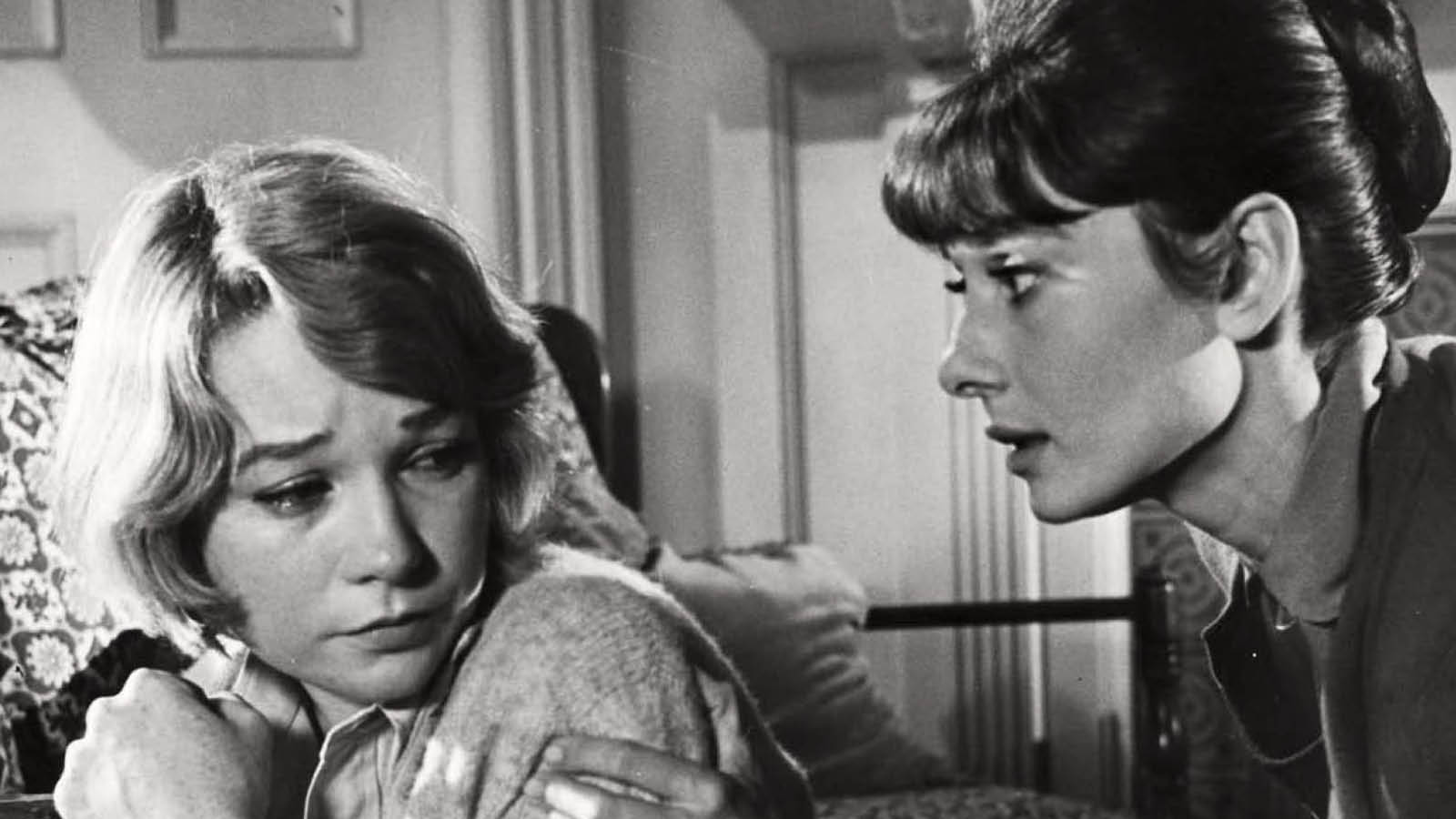
Tea and Sympathy (1956)
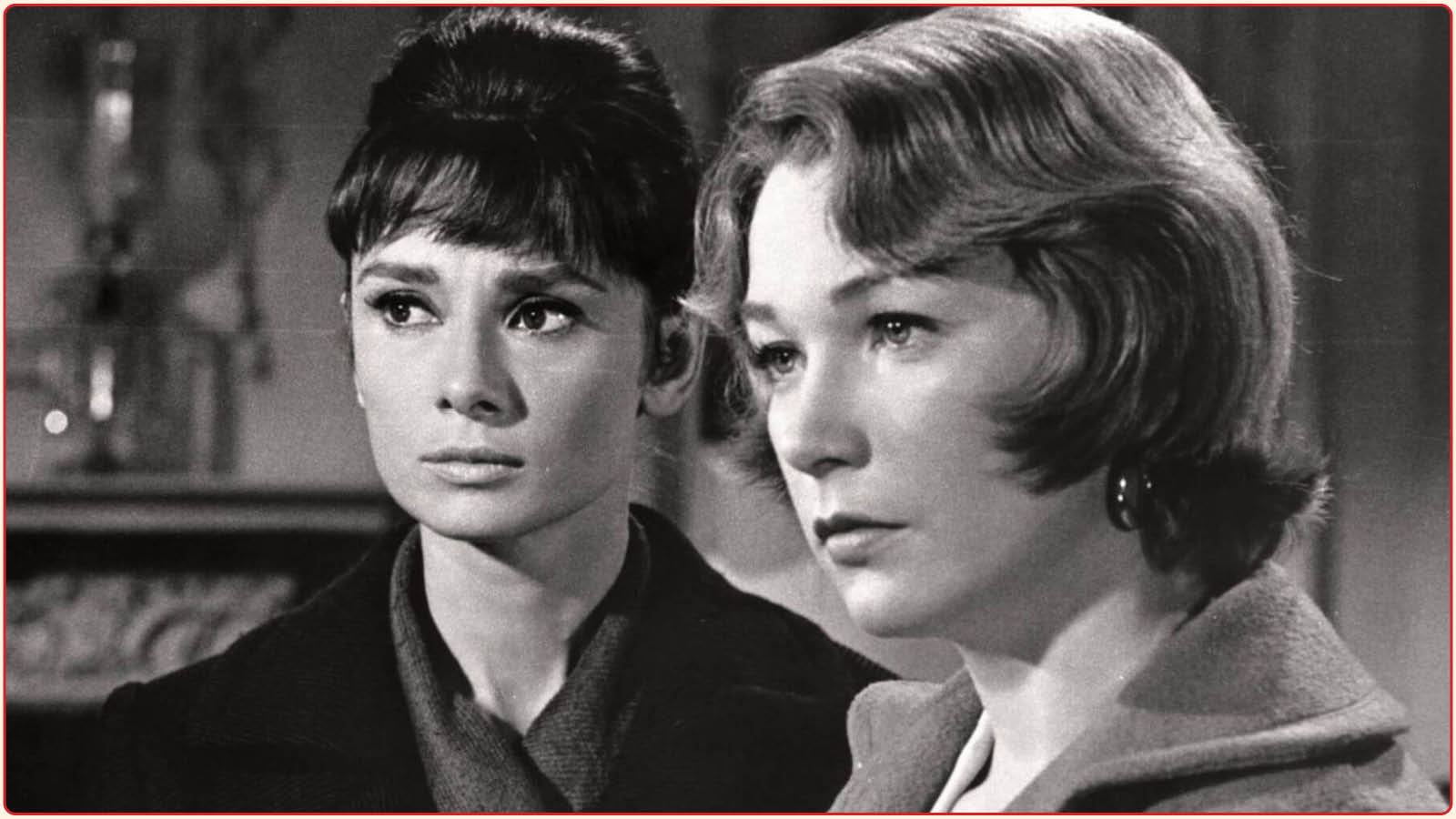
NICK PINKERTON: You open your fine book with an anecdote about showing William Wyler’s 1961 The Children’s Hour to an undergraduate class that you were teaching. And this is something that interested me very much, as somebody who has had occasion to teach a little myself: how different movies, seen through different generational lenses, can generate very surprising responses. For example, as somebody who has had more than a handful of students who are various shades of queer, I was astonished to find that in the under-25 set, William Friedkin’s Cruising (1980), which was once considered such a bad object is now so universally beloved!
MICHAEL KORESKY: Who would have thought! Yeah, if the focus of this book had extended on into the future, if I were also covering Stonewall and post-Stonewall cinema, I would certainly have written about Cruising.
NP: As it is, you focus on granular readings of, really, a handful of Golden Age Hollywood films. The two Wyler adaptations of The Children’s Hour essentially act as bookends, defining the boundaries of your study. Because there’s not a superabundance of movies from the United States in the period you’re discussing that even tacitly approach queer subject matter, some of the selection of films has been done for you in a sense, but were there films you considered including and then ultimately decided against?
MK: The selection came about over a series of years. A lot of it was because of the classes I was teaching; the pedagogical aspect is really the glue in a way. Seeing how young people responded to these movies, how taste changes, and how the idea around queerness, and what’s acceptable, changes—my surprise at their responses made me realize there was something here worth digging into. It’s not just history for the sake of telling this story in this particular way, but actually realizing that these films have a cultural currency now. Movies like Tea and Sympathy (1956) and The Children’s Hour, Rope (1948), even Dance, Girl, Dance (1940), the Dorothy Arzner film… watching the students respond was fascinating. That gave me a baseline. So the movies I ultimately selected were either ones that I felt still mattered—in a surprising way—to young people, and that had previously been dismissed, or movies whose queerness is carrying us along a little bit down a path. By the point in the book that I get to The Children’s Hour remake in ’61, I wanted to convey the sense that that there is a coherent, linear history, that all the movies discussed had gotten us to this point.
NP: One of the student comments you quote that stayed with me concerns Tea and Sympathy. I’m paraphrasing badly, but it addresses the very thing that might have seemed like a cop-out or compromise for certain viewers: the absence in the film of a definitive coming-out-of-the-closet moment. But for this particular student, it’s anything but; the John Kerr character doesn’t necessarily have to be either/or.
MK: That really struck me, too. Though, the response wasn’t isolated. A lot of people responded to Tea and Sympathy in a very particular way, which was, “This movie’s challenging, this movie has obviously been compromised.” We talked about what the Production Code did to the film, and the addition of that strange, very anti-feminist wraparound, and all the things that were done to almost negate it. But it doesn’t actually take away from the weird central paradox that no matter how much you try to identify this person through the narrative, he, and the original author, resist the identification, and that resistance is actually much more interesting to young people now than if he had said, “Oh, yes, I’m definitely queer,” “No, I’m not queer, I’m gay,” “I’m not gay.” The fact that it’s ambiguous, which previous generations have called cowardly, is now something that makes it fascinating.
NP: Something I admire so much in the book is that it’s filled with apparent digressions that aren’t, in fact, digressions at all. For example, Lillian Hellman emerges as a major character, and you get into her relationship with Dashiell Hammett, and her difficulties with the House Un-American Activities Committee. A reader might wonder at points what this has to do with queerness in Golden Age Hollywood movies, but it becomes clear that in fact it’s all part and parcel of repressive forces at work in American society. You even touch on the degree to which certain figures played up a supposed connection between communism and homosexuality… How much of this structural undergirding emerged in the process of research?
MK: You know, I knew a bit about Lillian Hellman, but now I find her an utterly captivating historical character, and when I first decided to jump into this I knew that she would be a main character, that this highly contested historical figure would thread through the whole narrative. My original pitch for the book was a history of The Children’s Hour, because I just felt that film is so rich—the way that it cascades down through the decades, and is still talked about, and wrestled over, the different versions on stage and screen—I felt there was a history of queerness there, as well as a history of Hellman’s own wrestling with her own liberality. When I decided to broaden the scope, I realized that the two film versions of The Children’s Hour actually bookend the period being discussed so perfectly—I have 25 years exactly, right? Lillian Hellman comes to Hollywood only a few months after Joseph Breen was put in place and became the draconian force that made the Production Code what it was in’ 34, and one of her first assignments was to adapt her own play with lesbian themes and take all the lesbianism out. Then, in 1961, she worked with Wyler yet again to put the lesbianism back in for a supposedly more progressive era. Once I realized I had those bookends, I started to try to fill the blanks in-between. What were the films that brought us to this point, and who were the filmmakers worth talking about. How do I discuss queerness in Hollywood? But Hellman, Hellman was always going to be there. I want that to be a fun surprise of the book for people who read it, I want them to go: “I didn’t realize this was going to be a Lillian Hellman book!” In a way, she’s the book’s stealth narrator.
Suddenly, Last Summer (1959)
NP: Knowing your fondness for the seedy gay bar in Advise and Consent (1962), I know it must’ve been difficult for you to lay off that, though both that film and The Best Man (1964) come in for name-checks…
MK: I get to bring it in in the epilogue, when I talk about Celluloid Closet author Vito Russo. One of the reasons Russo became politicized was seeing the Don Murray character kill himself in Advise and Consent… He thought, you know, “This is my lot in life?” It was edited out, but I also had a section in which I wrote a bit about Vito Russo’s antecedents: Robin Wood and Parker Tyler and his Screening the Sexes. As you can imagine, there was more here but it had to be streamlined.
NP: Another key player here is Tennessee Williams, a figure who has loomed so large for so long that one can almost take for granted how seismic his impact on American culture was… and you do a great deal to remind the reader of his importance, of what a taboo-buster he was. There are a couple of great, typically acerbic Gore Vidal quotes about Williams in the book, too.
MK: There’s so much catty shit between those two supposed “friends.”
NP: I could audibly hear you chuckling in those bits.
MK: I’m so glad you picked up on that. But, Tennessee Williams… I think his impact is taken for granted. In American cinema of the 1950s, studios, kind of like they were in the Pre-Code era, were pushing against this weakened censorship board. They were dealing with the fallout from television, the loss of market share, and they desperately wanted sensational material, which they kept turning to Broadway for. All these hit shows had a lot of gay content, a lot of provocative, sexualized content… and they kept turning to Williams! They kept buying these plays, and then they kept having to change things in them! It was almost comical. They’re spending hundreds of thousands of dollars—it was $40,000 when they bought The Children’s Hour in the ’30s, then like $100,000 or $200,000 when they bought A Streetcar Named Desire in 1947. And they kept saying, “Oh, shit, we got this, now what are we going to do with it?” It’s so comical. It’s like the Keystone Cops.
But then every single Williams film starts to chip away at the strictures of what’s permissible, right? You had Otto Preminger doing a lot of that work at the same time; Joseph L. Mankiewicz, too. And to an extent Stanley Kramer, even though his films were very respectable, social realist films like Judgment at Nuremberg (1961). But Williams got audiences used to seeing really shocking behavior, out-there material. There’s these undercurrents of sexual perversity in his work, even when it’s compromised, that became weirdly acceptable as the 1950s wore on.
NP: It makes perfect sense to have Hellman and Williams as, to some degree, co-stars, because your book is, among many other things, interested in the relationship between stage and cinema—which is much closer in the period that you’re writing about than it is today—and how Broadway and off-Broadway to some degree acted as an incubator for heretofore unacknowledged things that are slowly going to start seeping into films. You’ve seen Jack Garfein’s The Strange One (1957), I imagine?
MK: Yeah, based on the play End as a Man by Calder Willingham.
NP: Which is very, very homoerotic! What’s the Gazzara character’s name? Jocko? Jocko De Paris!
MK: God, the scene with the sword… and the scene in the shower… I mean, it’s grotesquely homoerotic; it turns homoeroticism into a sick joke. I love The Strange One. And it’s a great example. I mean, at that point Hollywood is just picking the bones of anything that has queer content, and then they’re kind of pretending like, “Oh, we didn’t know.”
And then they get that letter from Breen… One of the things that I thought was so funny in doing all the research in the PCA archives at the Herrick Library—which of course is so much fun, you can look at that stuff forever—is that these plays, most of them were so popular instantly, that the second that they were in the public consciousness, Breen or his successor, Geoffrey Sherluck, or whoever would send a note immediately to the studios and say, “Don’t even think about this one!” And then of course it just made them want to do it more! Like: Tea and Sympathy? Can’t adapt this one! No homosexuality! Or The Children’s Hour. The day after The Children’s Hour premiered on Broadway, they’re getting memos saying, “Don’t go near this!” And it’s like what happens with a kid when you go “Don’t touch that cupcake, whatever you do…”

Crossfire (1947)
NP: So, Hellman was obviously always going to be a part of your story, Williams almost had to be a part of it… Were there any figures who maybe you had not been as familiar with who, through your research, surprised you with their central role?
MK: Yes, and one of the things that was surprising to me while writing it is how many connections there are between things. You have one person, one movie, then the same person shows up again. Like Richard Brooks; he was stuck in his own brick foxhole during World War II, stuck stateside at Quantico, and he was horrified by the bigotry that he saw in his fellow soldiers. So he wrote this novel, The Brick Foxhole, about a fatal gay bashing—in early 1943! The book is an amazing psychological portrait. The description of the killing of this gay man is really shocking, and beautifully done. And the book caused a stir. The military was really angry with him for having published it on their watch without permission. He was almost court-martialed. And then… a studio buys the rights to the novel, but of course the Code says, “Can’t adapt that.” So they changed it into a film about anti-semitism: Crossfire (1947). And it became something else: a historically important film. But then the fact that Richard Brooks wrote that and went on to become a filmmaker who ended up directing the film version of Cat On A Hot Tin Roof (1958), which was one of the eradicated gay texts of the 1950s based on the Tennessee Williams play… that was really interesting! And that Dore Schary, who was working at RKO, and who really wanted to make Crossfire as an anti-antisemitism film because he wanted to do socially righteous films…. the fact that all these liberal-minded, ostensibly heterosexual men were driven to work with these queer texts… It’s all so interesting. I don’t psychoanalyze it but something’s going on there. It’s fascinating to see how these projects professing progressive values tend to wind up just doing what’s socially acceptable at the time. Schary always said he wanted to make movies for altruistic reasons, but after something goes through the mangler of the Production Code…
NP: I’m sure you’ve read Lillian Ross’s book Picture, in which Schary is a major character, and which very much details the way film projects that start out with certain intentions get gradually watered down and mutilated and cannibalized….
MK: Yep, yep. Yep. So I would say Dore Schary and Richard Brooks I discovered in the writing of the book. And just getting to wrestle with Hitchcock, in this particular mode, was really interesting. Specifically, Hitchcock and Rope, and some of the received ideas about him and the film; Hitchcock and perversity and queerness and sensuality. But I love Rope. I think Rope is one of the best and funniest movies he ever made. I was really interested in the fact that Rope and Crossfire came out within a year of each other, and one of them is based on a gay text where they did everything they could to get rid of any reference to homosexuality, and the other one is a film where Hitchcock was dead set on getting the queerness back into the material as best as he could. And that helped me write it, because I wanted to do something different with this. I don’t want this to be rote. Everyone’s read about Rope at this point, right? Well, not everybody, but a lot of cinema studies people, perhaps. I wanted to get a new angle on Rope and I’m happy with how it came off; I crosshatch those narratives to make it more of a portrait of men and masculinity in the post-war period. The way the book is structured, I’ve been talking up to that point about women, about lesbians, going from These Three (1936) and The Children’s Hour, discussions of lesbian audiences, Marlene Dietrich as a lesbian icon, and Arzner… I was excited to start focusing on men particularly in terms of World War II.
NP: Though your book is very much focused on the American scene, you also suggest the role played by imported films in the heady heyday of the “arthouse” cinema, in which you see a greater level of candor with regards to all sorts of human sexual behavior, which had begun to attract not only American audiences but American stars, like Rope’s Farley Granger, who trots off to Itay to make Senso (1954) for a very not-closeted Luchino Visconti… with English dialogues by Paul Bowles and Tennessee Williams!
MK: Yeah, La Dolce Vita (1960) was huge. And Victim (1961), the Basil Dearden film, released in the US the same year that they finally amended the Code, which allowed The Children’s Hour to be produced as originally written. The case of Victim is really interesting; anyone who’s seen Victim knows that it’s the talkiest, least sexual film about gayness you could possibly have, and it still got slapped with an X rating by the PCA. It shows how clearly non-progressive things still were.
NP: Sizzling hot stuff, Victim.
MK: I can just imagine all the young gay boys who rent this illicit film and watch it and are so disappointed. There’s not a single bit of bared flesh in the whole film. But yes, the influx of foreign films was another thing that helped, before television, before Preminger, to chip away at people’s ideas of what was acceptable. I talk about Bicycle Thieves (1948) a little in the book. Breen was horrified by the fact that the kid is seen urinating in the street, shot from behind, because you’re not supposed to think about genitals or bodily functions. I knew some stuff about what was in the Code before starting this book, and what was acceptable to Breen and what wasn’t, the separate beds and all that stuff. But the fact that you never see toilets…
NP: That was famously Psycho (1960), right? That was the film that introduced the toilet to American moviegoers.
MK: I mean, it’s just hard to believe that in the whole of 1950s cinema there wasn’t a single toilet!
NP: Somebody must have caught one in the background. Maybe it’s in a mirror reflection?
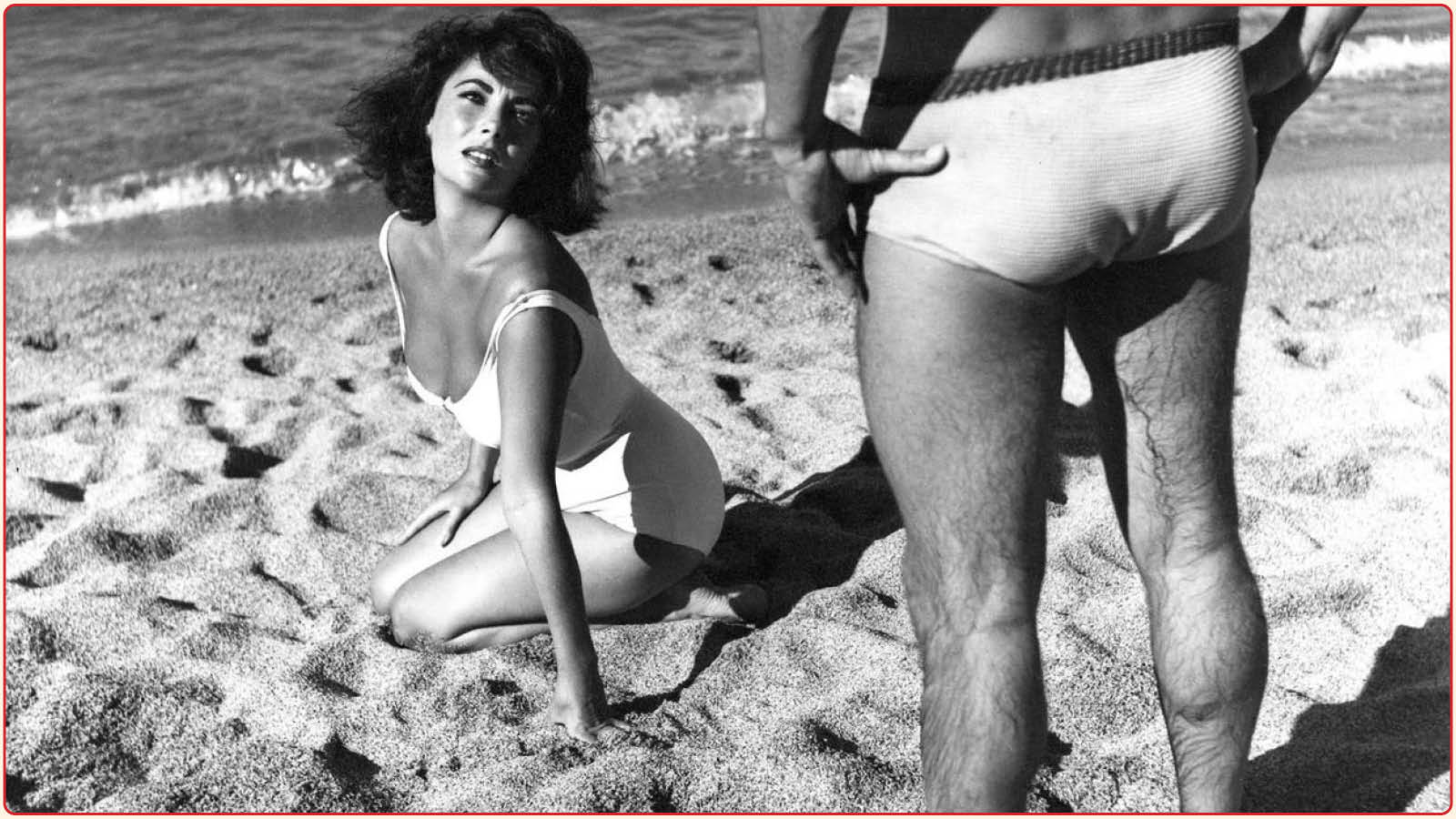
MK: Breen retired in ’54… After that, you’d think Sherluck would let a toilet get through, right? It’s like you’re watching Suddenly Last Summer (1959), and a man gets eaten—a gay man can get killed and eaten on camera, you can hear him screaming while he’s devoured alive—but you can’t show a shitter?! Oh no, there might be a turd floating in the bowl! What the hell is that?
The Children’s Hour (1961)
Share:
About the Contributor
Recommended
- The Maiku Hama Trilogy
 On the retro riffs and magnetic lead of Kaizo Hayashi’s newly restored cult trilogy.
 - Juliette Binoche
 On the eloquent hunger of the iconic French actress.
 - I’m Not Everything I Want to Be
 On Libuše Jarcovjáková, the queer photographer drawn to the social fringes of Soviet Prague.