

Ombres de Soie (1978)
Interview
Mary Stephen
An interview with the renowned editor about her beguiling directorial work, including her lyrical new feature and her newly restored oneiric debut.
Between East and West: The Cinema of Mary Stephen opens at Metrograph on Friday, October 3, with Stephen in attendance for select screenings.
Share:
In Ombres de Soie (1978), the directorial feature debut from Mary Stephen, one character resonantly declares, “Mummy told me that we were an uprooted generation.” The sentiment serves as a synecdoche for the film as well as for the overarching directorial vision of the Hong Kong–born, Paris-based filmmaker.
In a creatively rich and unique career that bridges the French New Wave and the Chinese Sixth Generation, Stephen is having a particularly busy year. Better known for her editing work with directors Ann Hui, Du Haibin, and most notably Éric Rohmer, amongst others, Stephen is in 2025 releasing her latest film as director, Palimpsest: The Story of a Name, as well as the restorations (done through M+ in Hong Kong) of both her early short works and Ombres de Soie, long out of circulation, the latter of which comes to Metrograph after premiering at the New York Film Festival.
Ombres de Soie portrays the friendship of two young women across two countries (China and France), two languages. It speaks of colonization, migration, and longing. The 1930s are rendered through a gauzy lens of nonlinear memory rather than nostalgia, and was made as something of a contrechamps to Marguerite Duras’s India Song (1975), a filmmaker Stephen adored. Stephen made the film aged 24 with a small crew, many of whom also appear in front of the camera. Though underseen upon its release, Ombres de Soie reveals already a masterful filmmaking sensibility at work. Its long shots, striking sense of space, and hypnotic musical score anticipates the work of the Taiwanese New Wave, with a distinct feminist and postcolonial gaze.
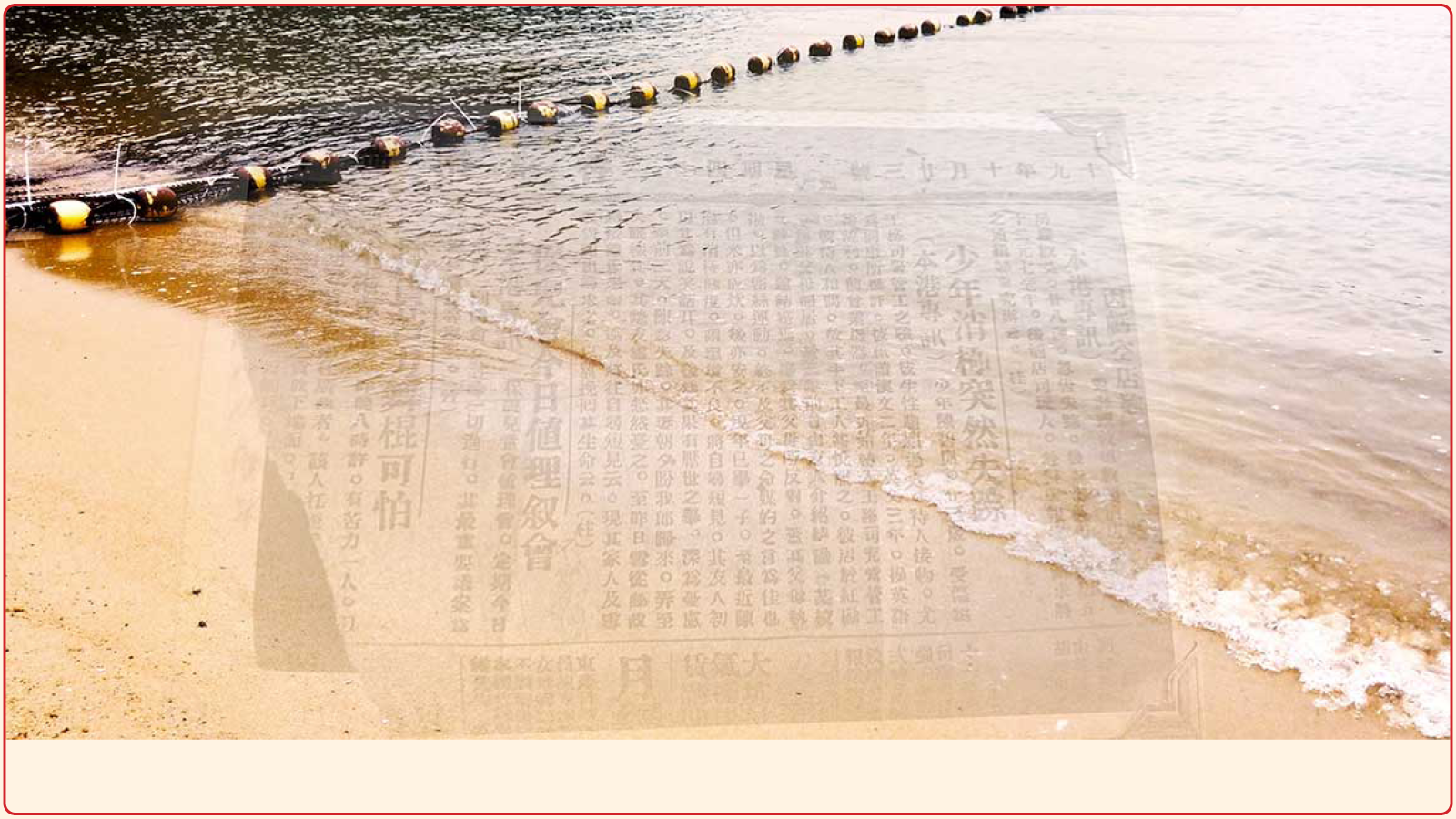
Made several decades later, Palimpsest: The Story of a Name is an intriguing bricolage of Stephen’s family history in Hong Kong and later Canada, as told through the prism of her Western surname. The beguiling film is assembled with an array of sumptuous archival family film footage, and weaves in many unexpected threads. The two features—the focus of our conversation—play beautifully together, as one maps onto the other, like a palimpsest. —Michelle Carey
MICHELLE CAREY: I thought we could start with Ombres de Soie. What was that period like for you, when you were making the transition from Montreal to Paris, and creating this film?
MARY STEPHEN: After I left Concordia University, where I studied Communication and Arts, I stopped for a year, because my mother was ill and passed away. That was the period, actually, when I made a short film about this, A Very Easy Death (1975), which has also now been restored. I found an American exchange program in Paris and decided to enroll. I went to Paris for a year with my partner John [Cressey], who was the cinematographer for my short films. In Paris, though, we realized the program was more about theory than hands-on filmmaking, so I dropped out of that and instead we got some money together with several very good friends and decided to make a film.
The first week I was in Paris, I went to see India Song (1975) by Marguerite Duras. And even before, when I was living in Hong Kong—when I was already fascinated with the French New Wave—one of the films showing in the cine-clubs there was Hiroshima, Mon Amour (1959), which impressed me a great deal. In Montreal, I had kept excerpts of Duras’s writing of Hiroshima, Mon Amour stuck up on my wall. So, I was very impressed with India Song—the style, this new film language. But I had a strong desire to make it from the other side, because India Song has a colonial point of view. I wanted to make it from an Asian perspective. And so, that’s how Ombres de Soie started.
At the same time, in this American exchange program—before I dropped out—we were allowed to sit in on other classes at the Paris University. And the only class I found that was about real filmmaking was Éric Rohmer’s. He was teaching from real experience. He had just finished The Marquise of O (1976), and was starting Perceval le Gallois (1978). One day, I, as his student, went to his office at Les Films du Losange to ask him if I could see one of his budgets, in order to draft one of our own for our film. His secretary later became a good friend of mine, but at the time she didn’t let me in, but she wrote down on the log, you know, her name is Mary Stephen, she’s an Asian girl who’s very pretty.

Mary Stephen, during the filming of Palimpsest: The Story of a Name. Photography by John Cressey.
MC: Very important detail. Suddenly, the phone rings!
MS: That’s how it started. And he helped us a great deal. First of all, he let me sit in on his rehearsals. I got to meet actors like Fabrice Luchini. I didn’t speak much French, but I was learning just watching them. And then, I started to write Ombres de Soie with my friend Ann Martin, who later became the Editor-in-Chief of Film Quarterly. We were students together. So that’s how the film started—it’s more like an homage [to India Song]. That’s why we put the Duras quote [from Hiroshima, Mon Amour] near the beginning of the film, so that people would know that we weren’t imitating her, but that it was a tribute.
MC: Did the film screen anywhere?
MS: At one point, I had asked Éric Rohmer to come by to the editing room, and he looked at what we were doing and appreciated it very much. At the time, we also had to make money to survive. We all did odd jobs, including commercials. From that, and through Éric, we got to know Frédéric Mitterrand who had a chain of cinemas at the time, L’Olympic, where he would release independent films by filmmakers like us as if it were a completely normal release, inviting the press to write reviews, etc. Even if they would play only once or twice a week, it would still get all the necessary press coverage. But that’s how Ombres de Soie was released. Ombres de Soie really brought out a lot of connections—for example, at the time I met [director and influential festival scout] Pierre Rissient.
MC: What was the reception to the film, and what was it like as a woman of color working in such a boys club in Paris?
MS: There’s lots to be said about it! I mean, in hindsight especially. It wasn’t just a boys club, but a boys club that had a special fascination with exotic women. Looking at the MeToo movement now, I don’t know how I navigated through all that completely unharmed. They were all very respectful. There were fishy moments, but when I say no, it’s no.
MC: I’m glad to hear that. And it sounds like you were surrounding yourself with some really fantastic women, especially with making Ombres de Soie. This film is already very layered—it’s a gorgeous rendering of 1930s China through the lens of Paris in the 1970s, which is a heady combination—but as you say, you made it as a student film. The art direction must’ve been so fun. How did you assemble all this evocative furniture, locations, and costumes to make it look so authentic?
MS: Strangely enough, it’s probably quite related to my present film, Palimpsest. For one thing, when I got to Paris, when I started to try to make this film, Ombres de Soie, I did return to Canada once. My mother had passed away, and so after, I took all those Chinese dresses that you can see her wearing in Palimpsest with me. If you look carefully, there might be some of the dresses on me in Ombres de Soie. Other than the ballgown, which we got cheap at a flea market, all those dresses, the jewelry, were all hers, which she had left me as a heritage. Plus, we went to a lot of flea markets. And all the locations, believe it or not, even the big house was in the Cité Universitairé, the student residence in Paris.
MC: It also has this Last Year at Marienbad (1961) or Duras sort of feeling.
MS: Yes, it was the Southeast Asian student house. It’s still like that, the garden is the same. The ballroom where the girls tango is the big salon in the Canadian student house. And the tennis courts are in the student residences, too. Somehow, we found an alleyway in the 16th arrondissement that looked authentic. So we just parked the two cars that we had rented there and did our shot. But that was it.

Ombres de Soie (1978)
MC: The music in the film is beautiful too, including this gorgeous jazz song, “Shades of Silk,” which lends the film its title, and which you actually wrote.
MS: All the music that I had wanted to use—Erik Satie, the song “Blue Moon” by Billie Holiday—we couldn’t afford. I then tried to find royalty-free music; there were of course no websites at the time. We found a composer, Alain Leroux, and I told him what I wanted. He made the piano theme, which is like an imitation of Satie. And for the Billie Holiday song, he said he could make the melody. “In that case,” I said,” I will write the lyrics.” So I wrote the lyrics, thinking about “Blue Moon.”
MC: After this, you made the short film Justocoeur (1980), which I know you’re still looking for, the original print. That would be fantastic to restore one day as well.
MS: Yes. Both of these films, the negatives were exported to Canadian labs so that we didn’t have to pay the French taxes, because they were supposed to be Canadian films, but then the labs went bankrupt. Somehow, Ombres de Soie ended up having a security copy at the National Archives. And Justocoeur, you know, it should have gone to the Cinémathèque québécoise, but there are only posters and photographs. Somebody told me there are still things in the Cinémathèque that are not catalogued, but how would I even begin to look? I have no idea.
MC: The search continues. Which brings us to your new film, Palimpsest: The Story of a Name. The amount of archival footage and research is striking. The film is composed of this beautiful collage of home movies and photos and recordings. It’s very textured. I remember when I first watched it, I presumed the archival footage was taken from the cinema of the era. But I understand it was shot by your father? Was he interested in filmmaking?
MS: Definitely. In my childhood memories, we were always being filmed by my father. This kind of filmmaking was all around us. I wouldn’t say he was a cinephile, or a particularly crazy film lover, but definitely, he was a construction worker who was working his way up to be a businessman and a sort of society person. Acquiring a camera was more a status symbol than anything else. But there was a passion about it; when I was researching this film, once I had all the material digitized, I realized how much more than just home movies they were. I found one scene, for example, where my parents are toasting each other, and I realized the footage is cut up. It’s really sophisticated stuff. And we see him editing the films: you see titles being made in a sort of stop-motion animation style.
And we did go to the cinema all the time, to see all the latest American English films, and so on. I remember the first film I saw was a Hitchcock film. So early on, we had a popular film culture, if not necessarily a refined film culture. Then when I got to my teenage years, I started going to cine-clubs, and that’s how I got acquainted with the other films.

Palimpsest: The Story of a Name (2025)
MC: So it was in your blood. At what point did you decide to make Palimpsest? Or has it been something you’ve been thinking about your whole life, the starting point of your name?
MS: It really started 20 odd years ago, when a writer friend of mine from Hong Kong came to my house, looked at my Virginia Woolf books, and said, “Did you know that Woolf’s maiden name is Stephen?” Which I did not. Later I found out that actually there was a Chinese story to her nephew, who spent a lot of time in China and had an affair with a married Chinese woman writer. I put two and two together: my mother, who loved to write, and my brother, who left me all of the magazines that she wrote with a pseudonym. I’d long thought about this idea of putting these two stories together and making them interact.
MC: It can be a perilous thing sometimes, for a story to have so many threads, but you pull them together in such a masterful way. And there’s also something very literary in the writing. The film almost feels like a form of cinematic autofiction. It’s quite playful.
MS: Definitely. My daughter says that if I hadn’t made this film, I would have written a book. The literary influence was definitely there, for me. I was thinking about it in the terms of a book, with all the threads—it was very challenging. I mean, it took me almost two years to complete editing. I like the structure now, but it was not easy. It’s a film that you have to see at least twice, I think… The more I think of it, this is really an editor’s film. I don’t think anyone other than an editor could have made it. I did have an editing consultant, because I am so close to the material that at one point it was just overload. I needed somebody outside, to have fresh eyes for input. I wanted somebody who came from a completely different cultural background, but who had experienced displacement, exile, all of that stuff. So in the end Chaghig Arzoumanian helped me, who is a Lebanese Armenian editor and director herself. She helped me a great deal, pushing me to not self-censor, to look carefully through all my father’s archives and not be afraid to use them, not to worry that people would be bored, and skip over them. That was important.
MC: For me, the two people in this film who really stand out are that of your mother and your grandmother, the latter who I understand died when you were only 10. She seems like such a mysterious, glamorous character.
MS: Yes. I must say I gave my grandmother a special place in the film because I think she really deserved it. She was a concubine. That’s all I knew about her. I don’t even know her name or where her grave is. She passed her life quietly, on the sidelines. And I remember her, but always as this shadowy figure. And my mother said she never had a happy day in her life. I don’t know anything about her but I see her in the footage. My mother, of course, you see in the footage that she became a very flashy, kind of high society woman in Hong Kong. But that’s another film….
MC: In Palimpsest you also mention your own daughter, who is a talented artist, too. I was touched because it’s a film that, predominantly, is looking back, and that tells a story across the 20th century, but you end with your grandson, who’s still little, because he also has an interesting story with his name.
MS: Yes. It was a surprise. Many things in this film were surprises while I was making it. My daughter had wanted to get rid of her father’s surname to honor me—because I raised them—to just keep my surname, Stephen, and her partner’s name. So that one day, she would be able to give one of these names to her son. And so, with my grandson, this Stephen name ends up being perpetuated, in spite of the fact that I had ambiguous feelings about it. It wasn’t scripted. But obviously this was going to be the end.
Palimpsest: The Story of a Name (2025)
Share:
Recommended
- Juliette Binoche
 On the eloquent hunger of the iconic French actress.
 - I’m Not Everything I Want to Be
 On Libuše Jarcovjáková, the queer photographer drawn to the social fringes of Soviet Prague.
 - Letters to His Wife
 Translated into English for the first time, a selection of the esteemed Soviet filmmaker’s devastatingly honest and bittersweet letters.