
Columns
Listen Up! The Silent Eye
Metrograph’s Listen Up! column, in which we revisit movie scores and soundtracks of note, continues with a look at Amiel Courtin-Wilson’s revelatory, experimental portrait of Cecil Taylor and Min Tanaka.
Share:
Amiel Courtin-Wilson landed in New York in April 2014, determined to make a film about Cecil Taylor. He, like many others, regarded Taylor as one of the greatest musicians of the 20th century. Throughout his decades-long career, Taylor excavated the piano for all its musical capacities, frequently breaking strings and keys while approaching it with aplomb. His playing, though, was always highly considered; in his first recorded interview from 1959, Taylor stressed that composition and improvisation are essentially “one,” revealing the importance that lay in the tension between the musically structured and free. Courtin-Wilson had first seen the pioneering free-jazz musician in the late 2000s, stunned by the ferocity of his playing. But Taylor proved hard to track down—he didn’t have a cell phone, an email, or manager. It was only after speaking with a poet at The Stone, the once-East Village music venue founded by John Zorn, that Courtin-Wilson got an address. And so he sat at Taylor’s doorstep, 10 hours a day, waiting to make a connection. “I’ve been watching you,” he recalls Taylor telling him on the seventh day, like some sort of deity. “You seem very patient; come inside.”
This was the beginning of a roughly two-year period where the Australian filmmaker lived with Taylor, learning of his routines and stories and relentless energy. He cooked and cleaned for him, effectively acting as a live-in carer for Taylor near the end of his life. Across three days in January 2016, Courtin-Wilson shot footage of the musician performing inside his Brooklyn brownstone with Min Tanaka, the esteemed Japanese dancer who for over three decades collaborated with Taylor, through to the pianist’s death in 2018. After breaking with his training in ballet and modern dance, Tanaka’s early public shows followed incredibly minimalist parameters (“No music, no costume, no stage, no seating for the audience—and no beginning, no ending,” Tanaka once said). Their nakedness, as well as the literal nakedness of his body in performances back then, acted as a magnifying glass to the most minute gestures. If Taylor and Tanaka’s art was startling, it was because they unearthed new and untapped possibilities of their respective instruments: the piano, the body.
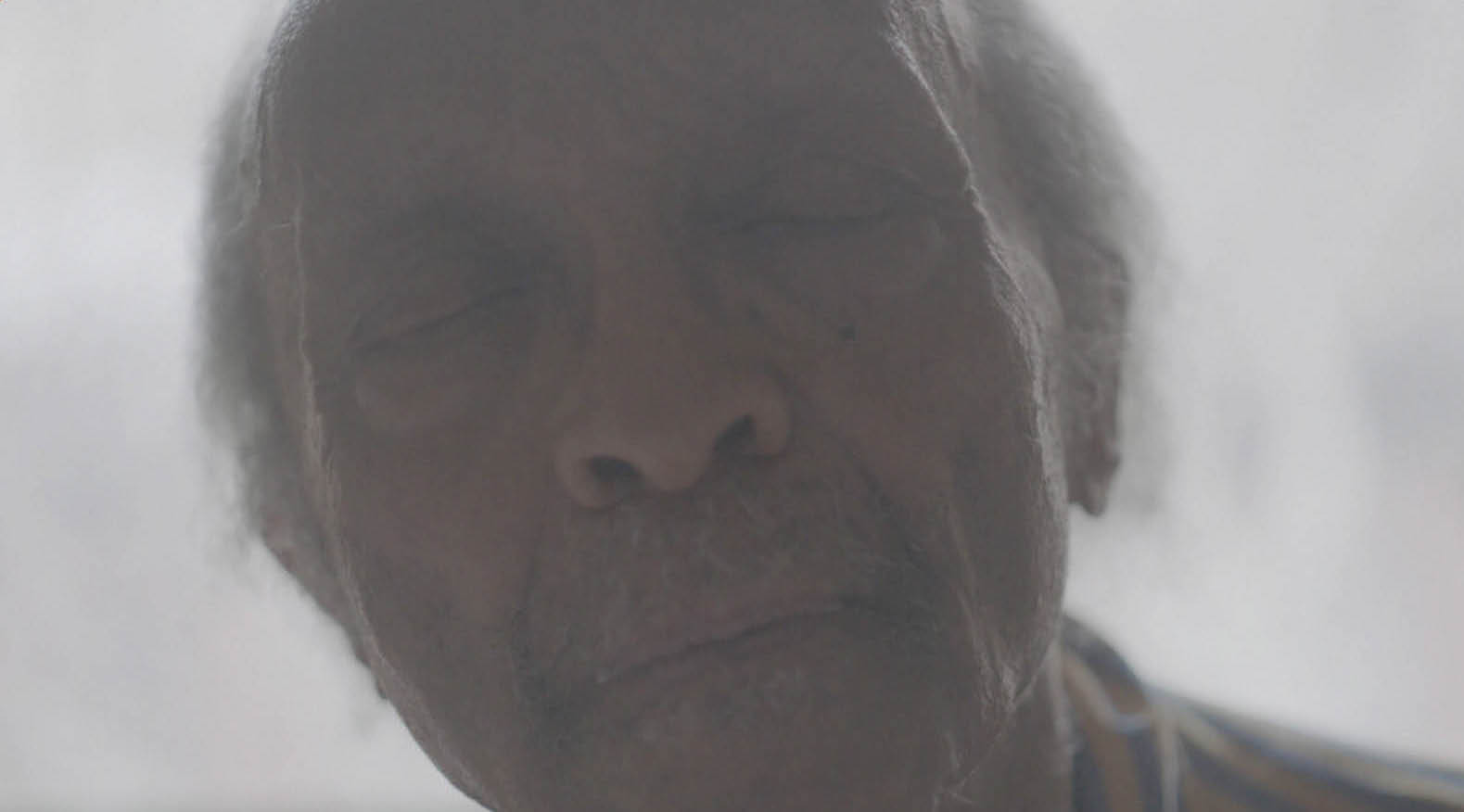
The Silent Eye, Courtin-Wilson’s 2016 documentary portrait of Taylor and Tanaka, commissioned by the Whitney Museum of American Art, elegantly captures their collaborative performances without introduction or exposition, confident that their art can convey enough about their artistry. Across 68 minutes, Courtin-Wilson stitches together three sessions of the duo in full concentration, engaging in a largely wordless dialogue. Taylor sits at his black grand piano, its keys badly weathered. (His instrument is suffused with as much history as his home, where walls are adorned with framed posters and illustrations from years past.) When Taylor slams the piano, he does so with an unexpected tenderness—far less bombastic than his usual playing—and it’s matched by Tanaka’s graceful movements. To describe cluster chords or jerky twitches with such adjectives isn’t terribly common, but the words are fitting given what they force upon the viewer: rapt attention through thoughtful synergy. When the camera shows Tanaka dancing, and then reveals a smiling Taylor, it feels as though he’s delighting at their unity, in the magic they’re conjuring on the fly.

The Silent Eye (2016)
It was four decades ago when Tanaka declared, “I dance not in the place, I dance the place.” He understood that any given movement would feel different depending on where it was performed—a desert, a forest, a rooftop. There is a 1993 VHS titled Mountain Stage, released by the record label Incus, that shows Tanaka performing with guitarist extraordinaire Derek Bailey. They’re outside in Hakushu, Japan, and there is a moment when Tanaka lifts his head and arms heavenward as Bailey is in front of him, plucking his guitar. I remember my first time seeing this, and how this particular framing had me contemplating Tanaka’s movements not just in relation to the ground, but also the sky above him. Every gesture, suffused with drama, was shaped by the tension that existed between his body and everything around him, in every single direction.
Tanaka does a similar motion about five minutes into The Silent Eye. His hand rests in the air alongside a framed image of a piano—a cheeky signpost for how Tanaka is, in some way, informing how Taylor plays his music. But there is another, more striking passage when he throws his arms up and the camera racks focus to make the image blurry, his body transforming into strokes of pure color. While this is reminiscent of Hal Hartley’s The Other Also (1997), Courtin-Wilson goes further: the reduction of Tanaka’s form is mirrored near the end of the film when he runs his fingers along a window’s cold glass pane. He leaves curlicue streaks on the clear surface, and visible on the other side is a tree, its branches echoing their curvature. This metaphorical linkage recalls something Taylor said in a 1986 interview with DownBeat: “What goes into an improvisation is what goes into one’s preparation.” He explains this after extolling the importance of studying one’s instrument alongside “looking at a bridge or dancing or writing a poem or reading or attempting to make your home more beautiful.” Man and nature, art and life—these things are all related and, at their core, the same.

Cecil Taylor
Despite this collapsing of identities, The Silent Eye is fairly traditional in how it encourages viewers to engage with the proceedings. While this is not a straight-ahead concert film, our ears generally focus on Taylor while our eyes focus on Tanaka. We don’t get to hear Tanaka’s movements throughout the film. This is a wildly different experience from Music and Dance, a cassette with two duo performances by Bailey and Tanaka from 1980. That album contains “Rain Dance,” a remarkable piece of music that takes place during torrential rainfall in a building with a leaky roof. The allure in hearing this work comes in the unknowability of the performance. Is this sudden noise Tanaka’s movement or just some extraneous sound? Is that rain I’m hearing or something traditionally musical? Watching The Silent Eye, rather, is more akin to watching the 1983 Berlin performance of the Cecil Taylor Unit, featuring the dancers Mickey Davidson, Leon Brown, Pauline Tagnelie, and Ron McKay. With so many instruments already at hand, the dancers can’t help but be relegated to a strictly visual affair. One longs for a bit more mystery, or something more to scramble the senses.
Still, The Silent Eye proves a unique watch entirely different from hearing one of Taylor’s solo piano records. We’re always aware that this is a duet, and in a sense, cinematographer Germain McMicking’s digital handheld camera acts as a third performer as it roams around the room. His camerawork, in addition to the intimacy of the domestic space they’re in, creates chances to think about these artists’ interactions. There are so many striking passages that feel Pygmalion: Tanaka takes on a statuesque pose, and Taylor’s asymmetrically repeated melodies imbue his figure with charm and passion. Sometimes Taylor’s dissonant playing acts like the soundtrack to a calamitous meltdown. But these feelings can switch in an instance, too: pain becomes beauty, terror becomes gentleness, confusion becomes clarity. Sometimes all it takes is a change in facial expression, sometimes it’s the shifting rhythm of a twisting melody.
At one point, Taylor stops playing entirely and recites a poem, as he would often do in his musical performances. “What was in male was also in female / And what was in female was male / They are one,” he says, like he’s riffing on Aristophanes’s speech in Plato’s Symposium. It’s a crucial moment in the film’s final third because one recognizes so many different facets of his speech: the tone, the cadence, the repetition of phrases, the theatricality of his voice. It primes one to examine all these aspects in Taylor’s own piano playing. There’s a greater sensitivity to what he’s doing, and suddenly, a single note can feel like it holds a world of emotion.
Share:
About the Contributor
Recommended
- The Holy Girl
 On Lucrecia Martel’s transfixing portrait of adolescent fervor.
 - Somersault
 On Cate Shortland’s assured directorial debut on sexual awakening.
 - Can She Bake a Cherry Pie?
 On Henry Jaglom’s effervescent anti-rom-com.