
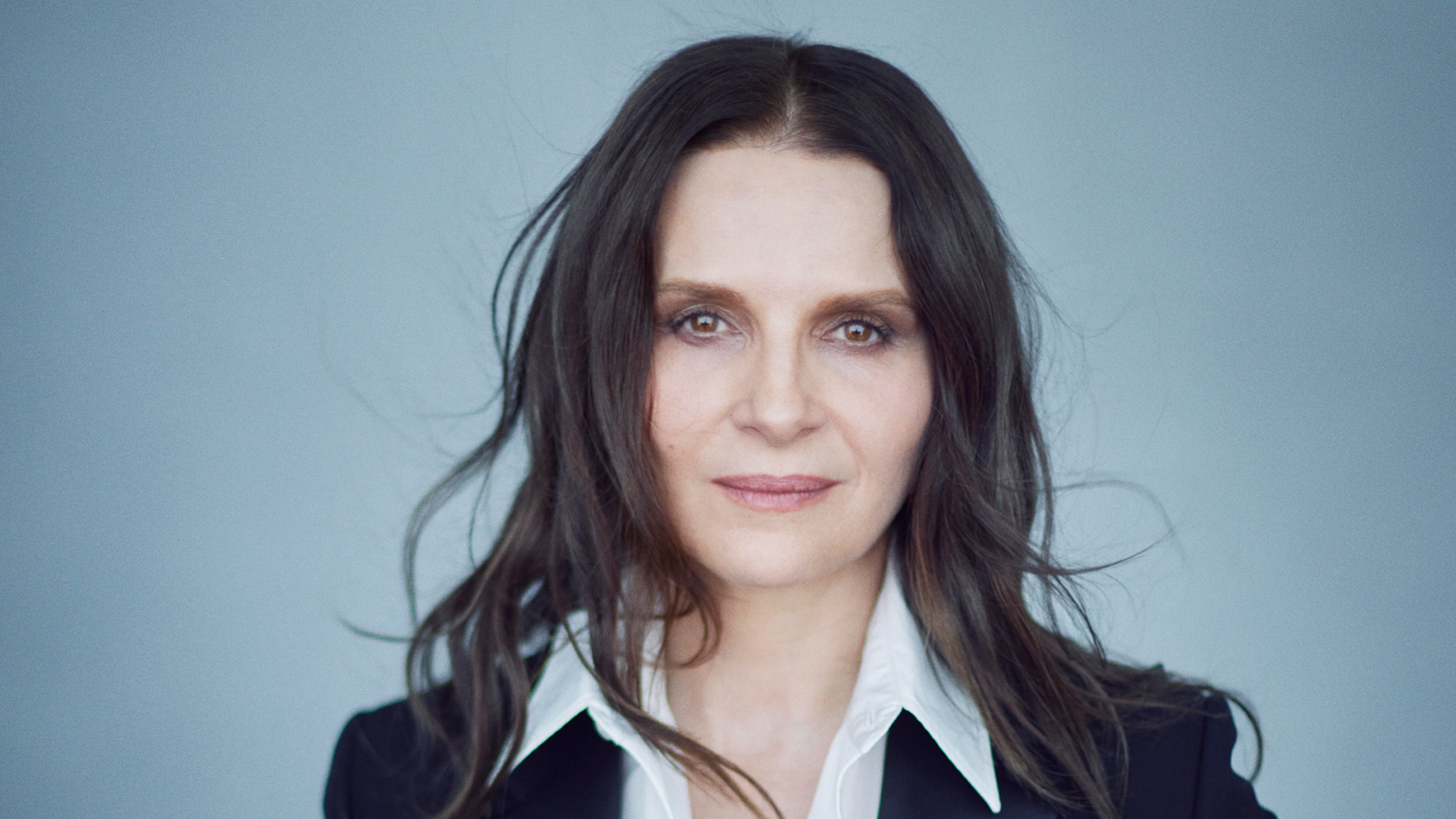
Juliette Binoche © Patrick Swirc
Interview
Juliette Binoche
An interview with the icon of French cinema, La Binoche.
Juliette Binoche, Emotion in Motion our 10-film tribute, including her directorial debut In-I In Motion (2025), is now playing at Metrograph.
Share:
TO DESCRIBE JULIETTE BINOCHE AS a workhorse doesn’t quite cut it: over the past 20 years alone—less than half her career, by which she had already achieved legend status—she’s starred in more than 40 films, from Certified Copy (2010), Abbas Kiarostami’s classic, oblique character study of a couple wandering through Tuscany, to Godzilla (2014), in which she eats it in the first scene. A riveting presence on-screen and a fearless humanitarian advocate off, Binoche is an icon of French cinema and has collaborated with a laundry list of brilliant directors: Krzysztof Kieślowski, Leos Carax, Claire Denis, and Olivier Assayas among them. She parlays that lifetime of experience into In-I In Motion (2025), a raw and intense vérité documentary about the creation of In-I, her 2008 performance piece with British choreographer Akram Khan at BAM. Ahead of the series honoring Binoche at Metrograph, I emailed with her about staying curious, auditioning her directors, and her own turn to directing. —Shaad D’Souza
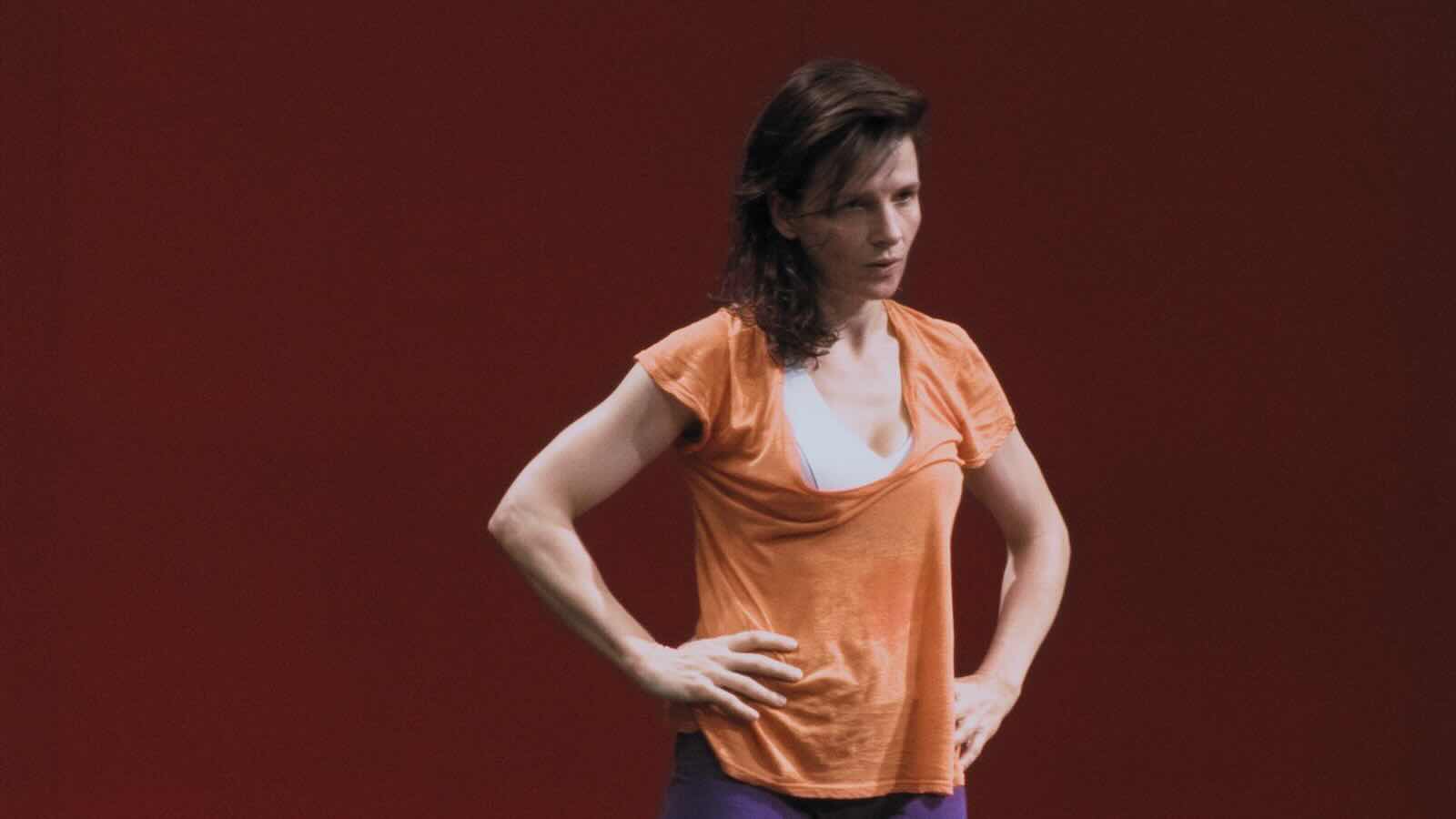
In-I in Motion (2025), dir. Juliette Binoche
SHAAD D’SOUZA: In-I In Motion is your directorial debut—did you always aspire to direct, or know you could? Or was this something you realized more recently? What understanding did In-I In Motion give you about directing that you didn’t have earlier?
JULIETTE BINOCHE: This film was made with the need to share what Akram Khan and I had created. But it also came from the need to return to a creative process that brought with it a lot of questions. I was excited to enter a new realm, to ask new questions, and had aspirations in confronting a story I want to tell.
I was never behind the camera as I was filmed by my sister Marion Stalens who was making her own film for Arte as we were rehearsing. I had the privilege to use mostly her footage as well as the working camera’s tapes. I had 200 hours of rushes—a lot of choice.
Spending the time editing, I discovered I really enjoyed working on the sound. It gave me freedom in re-creating the steps, the breathing in the show, but also linking scenes, giving a new space for the film, etc. It was a long journey, working on the images, the colors, transforming old tapes into the new techniques of today. I met with really wonderful post-production technicians and artists, and I discovered a whole chapter of filmmaking I’d never had the chance to experience. Finding the film’s journey was a work of patience, sometimes a time of torture, as well as a lot of satisfaction when it finally came together.

Rendez-vous (1985), dir. André Téchiné
SD: Coming back to In-I after nearly 20 years, what did you discover about the performance and its creation that you didn’t know at the time?
JB: I remembered everything, but I didn’t know what was filmed. And I didn’t know how I was going to tell the story of the making of the show. The intensity was the main feeling I remembered; the demand was really big—daring to be beginners again, and having to make a show in six months without knowing each other and not having a canvas, a story, or an idea to start from.
SD: You’ve worked really consistently, basically nonstop, for the past 15 years. What keeps you going, and what do you enjoy about keeping up such a pace?
JB: I don’t think of my work pace. I choose projects that excite me. It is difficult sometimes to find some time off; I’m trying to work on that.
SD: Do you still audition for roles? Do you like auditioning?
JB: No, I don’t. But I am not against it. But I do audition my directors!
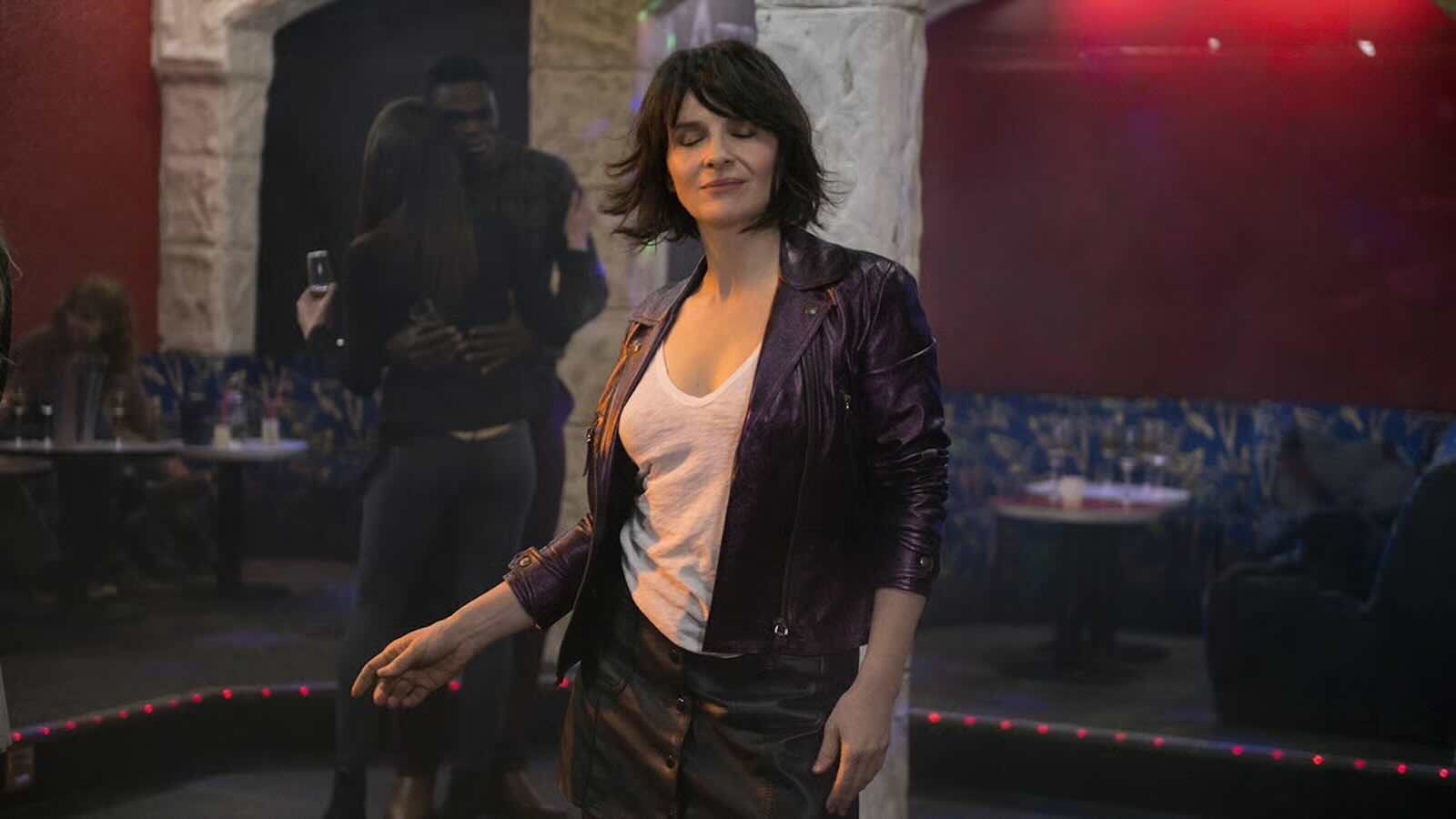
Let the Sunshine In (2017), dir. Claire Denis
SD: You’ve said that you aim to give all of yourself to each role; do you feel the intensity of that work is diminished when so many people are watching films on phones or on streaming services?
JB: I don’t really care what people do, but I know that when I watch a film, I want to be transformed. I want to be different at the end of the experience. I don’t need to watch a lot of films. I need to watch films that will stay in me, that will live in me. So yes acting is an act of resistance, an act of truth, an act of love and hope. Acting is a part of who I am, and as I’m acting, I’m growing.
SD: You’re highly decorated as an actor. What do you think makes a perfect acceptance speech?
JB: Probably thanking God and all the angels working with you! We, as actors, should inspire people’s lives and souls. There are too many awards and decorations.
SD: What technological advances or cultural shifts have impacted you as a performer? Conversely, what advances did you think were going to change filmmaking—only for them to amount to nothing?
JB: Life is what had the most impact on my acting, and when a director trusts me. It goes directly to my love for freedom and my feeling of gratitude. It brings the best out of me, I think. Also encountering Susan Batson, who is an acting coach, has enlightened my life and my awareness of acting, as well as Véra Gregh and Jean-Pierre Martino, who are beautiful coaches too.
SD: Are there any of your past performances that you would like to return to, with more experience as a woman and an actress?
JB: What is past belongs to the past, I’m more interested in the new.

Share:
Recommended
- Futures and Pasts: Socrates
 Rossellini’s one-of-a-kind approach to the costume drama, and his 1970 film on the last years of the Athenian truth-seeker.
 - The Illiac Passion
 On the most elaborate of Gregory Markopolous’s modern myths.
 - Jollof Films
 Senegalese visual artists and curators discuss the towering cinematic figures who inspire their craft.