
JANUARY IN THEATER
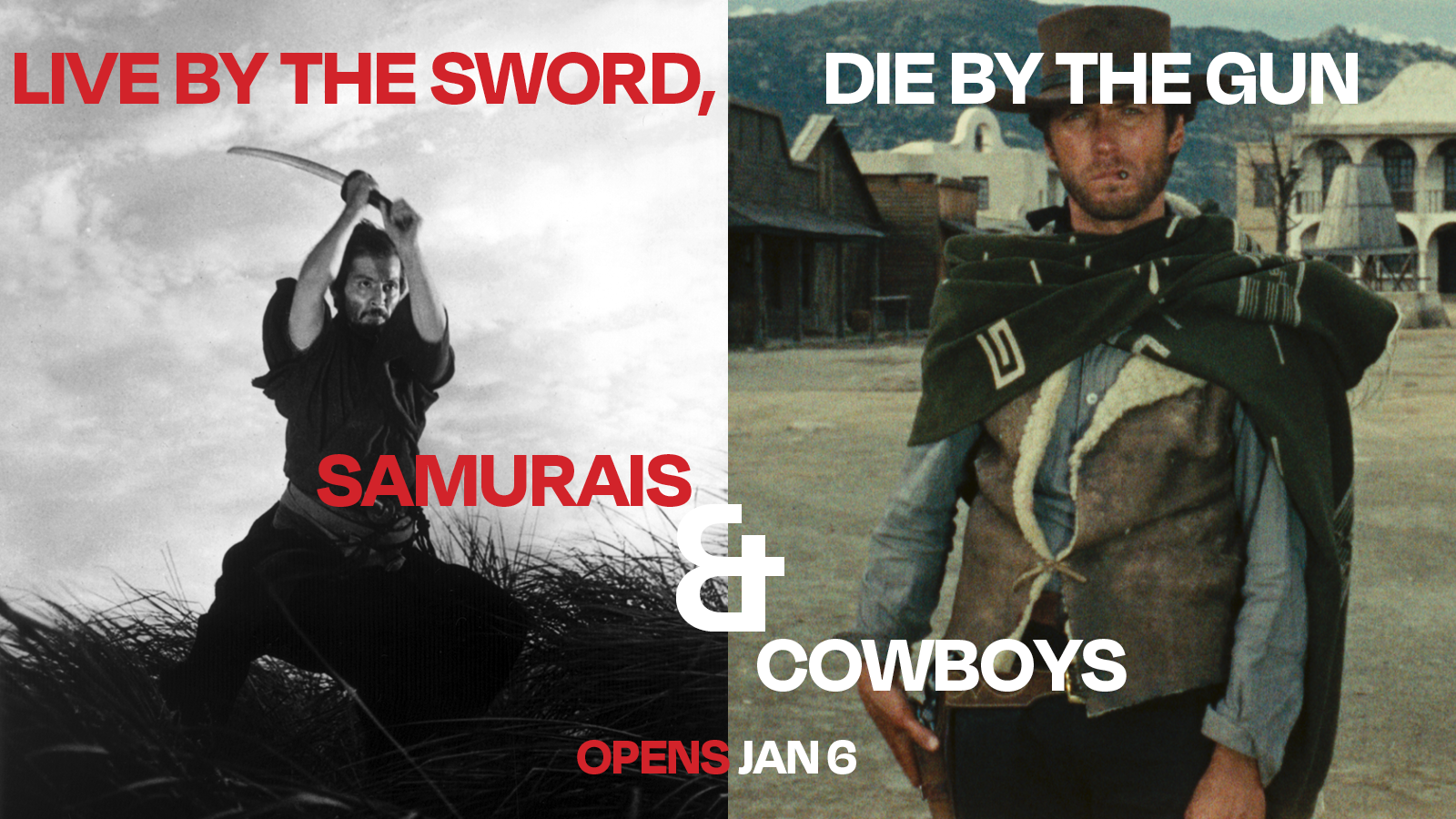
Live by the Sword, Die by the Gun
opens January 6
The chambara, or samurai film, has much the same relationship to Japan as the Western does to the United States. Both are historical genres that allow artists in their respective countries of origin-or in other countries, in the case of the Italian “Spaghetti Western”-to create a rich body of modern folklore, explore issues pertaining to their national character and neuroses, and mine grand drama out of the clash between the individual and the community (or, in the case of the chambara, the clan.) Bringing together the swinging katanas and blazing six-shooters, Live by the Sword, Die by the Gun reveals the many shared affinities-and even shared plot elements-of two grand cinematic traditions born an ocean apart from one another. Squaring off certified classics from both, this is one climactic showdown where everybody wins.
Series Includes:
Django – My Darling Clementine – The Wild Bunch – The Great SilenceThe Hateful Eight – Lady Snowblood – Johnny Guitar – Meek’s Cutoff
The Magnificent Seven – Seven Samurai – Yojimbo – The Tale of Zatoichi
A Fistfull of Dollars – Once Upon a Time in the West – The Sword of Doom
Lone Wolf and Cub: Sword of Vengeance – Lone Wolf and Cub: Baby Cart and the River Styx – Harakiri


Also Starring… Joe Pesci
opens January 6
Born and raised in New Jersey to working-class Italian American parents, Joe Pesci had been a barber, a singing waiter on Arthur Ave. in the Bronx, and a stage comedian before he found his way into the movies, starring with comedy partner Frank Vincent in the 1976 low-budget crime thriller The Death Collector, which caught the eye of a up-and-coming director named Martin Scorsese. What Scorsese saw in Pesci, presumably, are the qualities that have riveted audiences since then any time that he’s on-screen: a stand-up’s sense of comic timing combined with a total natural’s absence of actorly affect, which among other things has allowed Pesci to play some genuinely frightening short-stack heavies. (Standing under 5 ½ feet tall, he’s a throwback to bantam bruisers like Edward G. Robinson and Jimmy Cagney.) Is he a clown? Does he amuse you? All that, and a helluva lot else.
Series Includes:
Easy Money – Casino – EurekaMy Cousin Vinny – Goodfellas – The Irishman
Metrograph A to Z
OPENS January 6
When Metrograph opened its doors in 2016, we did so with Welcome to Metrograph: A to Z, a way to introduce moviegoers to our particular take on cinema history. Now that our booklet is back, we have relaunched A to Z. Every four months, a new programmer will create their own idiosyncratic alphabet: one film per letter, neither canon nor anti-canon, but rather a selection of favorite films that serve as life-changing revelations or enduring personal passions, and ultimately films of which Metrograph exists to spread the gospel. Starting this winter, Programmer Inge de Leeuw takes us from A-M, including stops at Leos Carax’s Holy Motors, Sofia Coppola’s Lost in Translation, and Bi Gan’s Kaili Blues.
Series Includes:
Afterlife – Blue Velvet – CachéLa Dolce Vita – What Now? Remind Me – Force Majeure
The Host – Holy Motors – Insiang
Jaws – Kaili Blues – Lost In Translation – Women on the Verge of a Nervous Breakdown
Metrograph Selects: Projection Team
opens January 6
Select films, chosen specially by Metrograph staff. For the latest iteration of our recurring series, Metrograph Projectionist Matthew Reichard, Will VanKoughnett, Kim Garcia and Dustin Ersek-Mull pick some of their personal favorites.
“Movie projecting isn’t an ideal way to watch a lot of films. When you’re paying more attention to the equipment than the stories and images unfolding in the auditorium, you miss quite a lot of stuff. Some films, though, are so immediately compelling that you find yourself dreading the moment that duty demands you leave their world even for a few minutes. These are some of the films we’ve loved projecting over the years. Needless to say, they’ll look great on the big screen.”-Matthew Reichard, Will VanKoughnett, Kim Garcia and Dustin Ersek-Mull
Series Includes:
Dreams – Shadows of Forgotten Ancestors – Picnic at Hanging RockMcCabe & Mrs. Miller – Some Came Running – Marketa Lazarová

Hunter Harris Selects
one night only – January 13
Writer Hunter Harris comes to 7 Ludlow on January 13 to present two of her selects, Joseph Sargent’s The Taking of Pelham One Two Three and Spike Lee’s Inside Man.
“The original Taking of Pelham One Two Three, one of the most iconic movies about New York City, and Spike Lee’s big-budget cop thriller, Inside Man: maybe I just have the same taste in movies as a divorced father of two, or whoever’s programming midday movies on TNT. (My other ideas were The Departed and Frances Ha-both movies about friendship, when you really think about it.)
“These are movies about cops and criminals, movies that make me root for the good guys and bad guys in equal measure. There’s an engine in both, a real momentum that I can’t resist. They are deft crowd-pleasers with sly tricks. Both let a cop and a criminal collide, and then let us decide who comes out the victor; civil bureaucracy, particularly in New York, is its own hermetically sealed subculture. The final bemused smile from Walter Matthau! The year Clive Owen was Spike Lee’s white boy of the month! I’m drawn to the duality there, that maybe, on a different day, both pairs of cops and robbers could have traded places. These are big, raucous movies bursting at the seams with noise and action and life. I never get tired of watching them.”-Hunter Harris
Series Includes:
Inside Man – The Taking of Pelham One Two Three
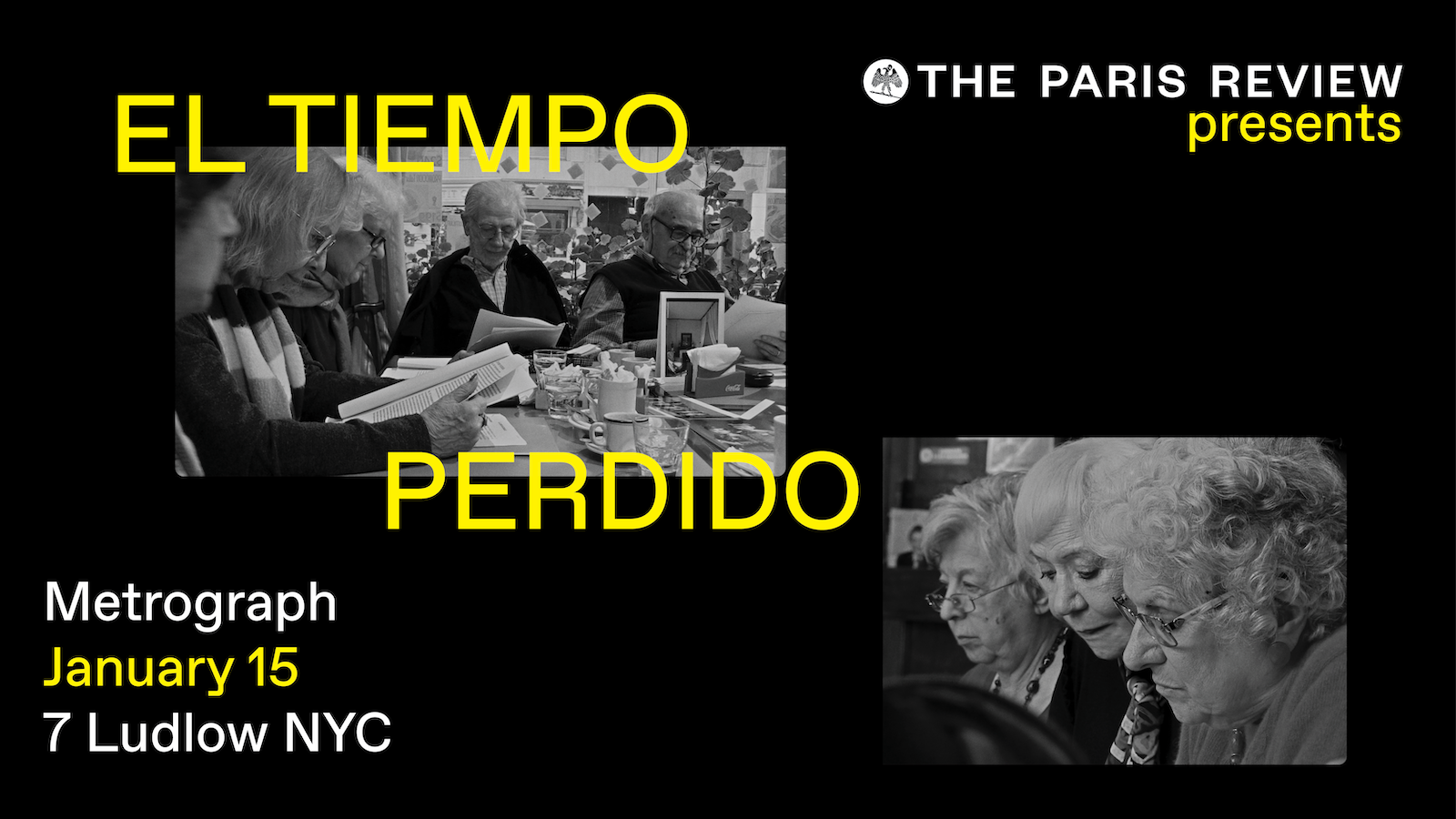
The Paris Review Presents: El Tiempo Perdido
January 13
In celebration of book clubs the world over and the general book club culture of NYC, The Paris Review presents a screening of María Alvarez’s documentary El Tiempo Perdido, an ode to Proust’s ecstatic tome and the book club that has been gathering for 20 years to read it.
Introduction by Emily Stokes, Editor on The Paris Review
Following the screening, please join members of The Paris Review team in the Metrograph lobby for a cocktail hour, to compare notes on the film, reading groups, and lost time.
Lunar New Year
opens January 20
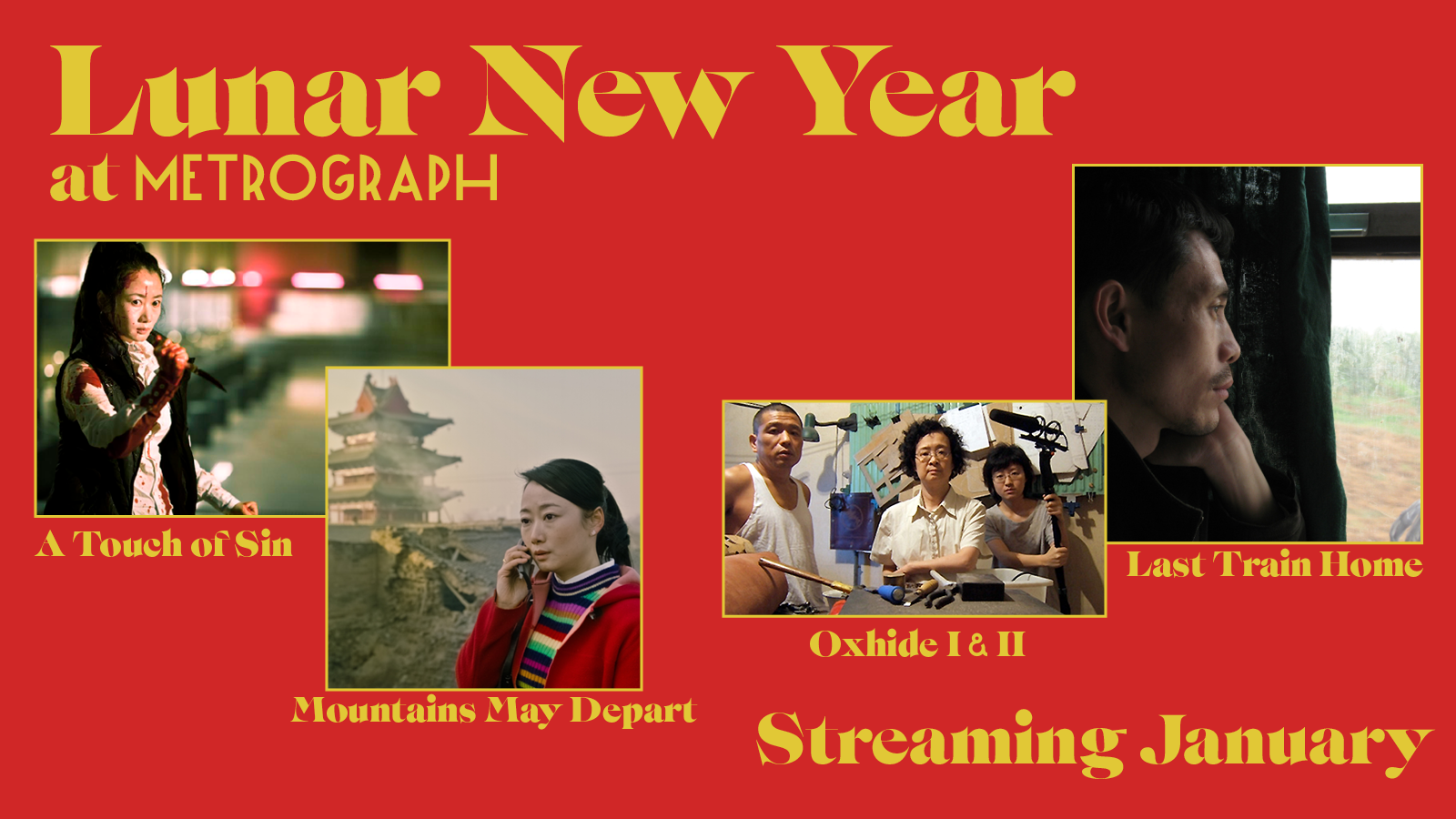
The Lunar New Year blockbuster rollout is a treasured holiday tradition in multiplexes from Hong Kong to Shanghai to Taipei, but over at Metrograph we’re taking the occasion to celebrate the other side of Chinese cinema-films that challenge narrative convention and turn a critical eye on a changing society. Included in the series are favorites by Jia Zhangke, perhaps the greatest of the “Sixth Generation” Mainland filmmakers; Liu Jiayin’s two-part “home movie” epic Oxhide, shot in her family’s Beijing apartment; and Lixin Fan’s documentary Last Train Home, which depicts, through the microcosm of one family’s journey, the massive annual homeward-bound migration of Chinese workers for the New Year. There’s no place like home for the holidays… but a movie theater isn’t a bad substitute.
Series Includes:
Mountains May Depart – A Touch of Sin – Last Train HomeOxhide – Oxhide II
Filmcraft: ACE
January 20
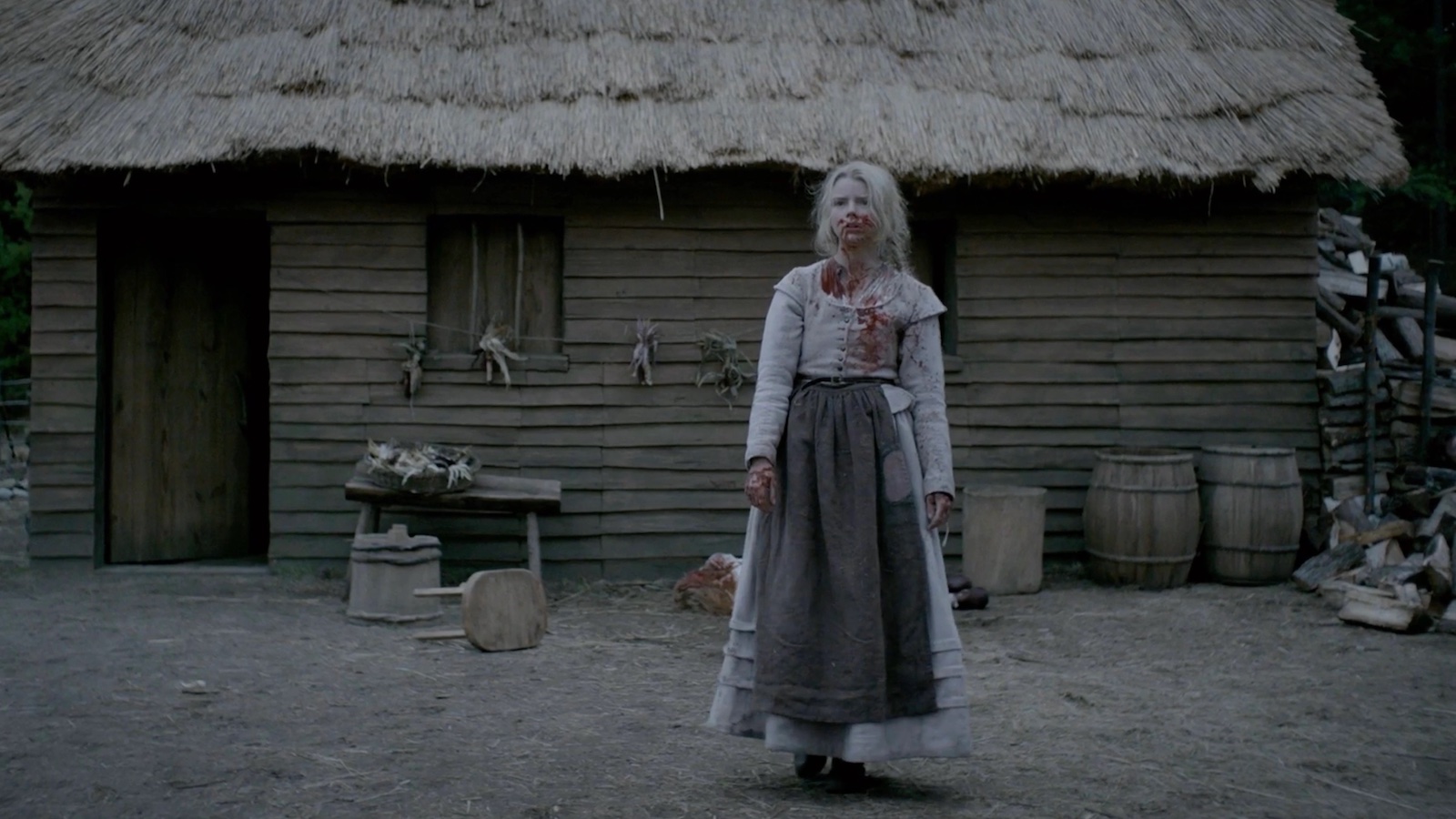
Editor Louise Ford, ACE joins Metrograph to discuss her work on Robert Egger’s film The Witch.

Saturday Afternoon Cartoons: Winter Wonderlands
January 20
Saturday Afternoon Cartoons is New York City’s prime theatrical showcase of early and classic animated cartoons, shown in vintage 16mm film prints from the personal archives of historian Tommy José Stathes. Beginning over 20 years ago as a casual effort to find and see early cartoons that were unavailable on home video, Stathes’s collection has grown to become perhaps one of the largest of its kind. It includes many titles and “orphan films” that are difficult to access or view elsewhere.
Stathes joins us in January with Winter Wonderlands, a selection of early cartoon films featuring frigid frolics in beautifully icy snowscapes. Enjoy some animated snowball fights, snowman building, ice skating, and all sorts of other funny deep freezes. Spanning the 1920s through the ’50s, this assortment showcases classic characters such as Betty Boop, Frosty the Snowman, Mutt and Jeff, Dinky Doodle, Woody Woodpecker, and more.

Film Bites Man
opens January 20
For the folks who’ve had it up to here with treacly tributes to the magic of moviemaking, we’ve put together a series about the menace of moviemaking-films in which camera crews find themselves implicated in the unsavory acts that they’re recording, and even run the risk of becoming part of a gruesome spectacle themselves. No dry dissertations on the ethics of nonfiction filmmaking here, just some harrowing handheld cautionary tales about the dangers of sticking your lens where it doesn’t belong, including bleak Belgian mockumentary Man Bites Dog, Oliver Stone’s media-saturation satire Natural Born Killers, and the movie that launched a new cycle of found-footage horror, The Blair Witch Project.
Series Includes:
Troll Hunter – Man Bites Dog – The Blair Witch ProjectNatural Born Killers – REC
Folktales, Ghosts, and Parallel Realities
opens January 27
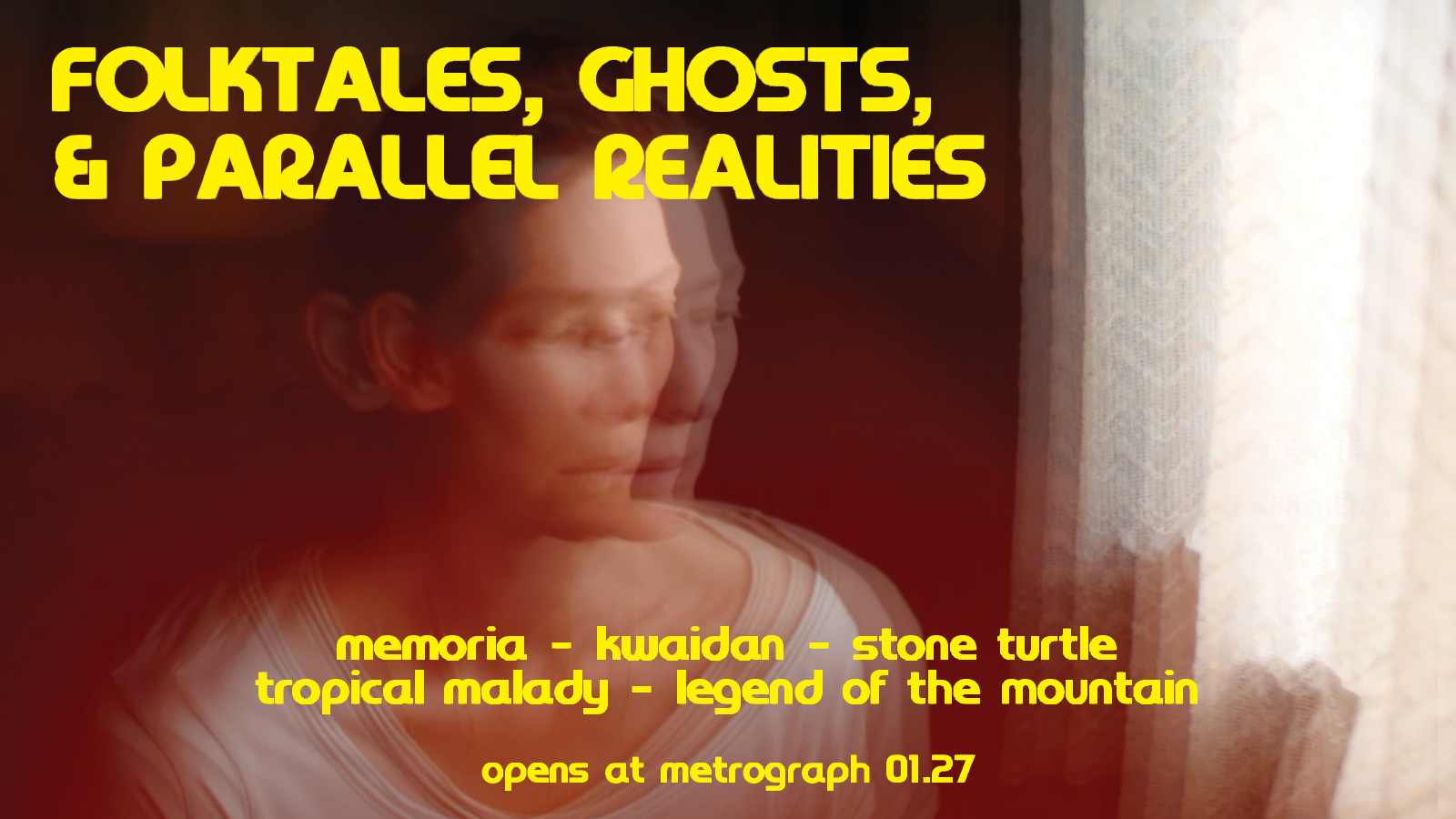
Apichatpong Weerasethakul’s lyrical cinema is steeped in the folk tales of Thailand’s rural northeast, and though his latest, the Columbia-shot Memoria, strikes out for territory new to his filmography, in conjunction with its Metrograph run, we’ll be conjuring up a few favorite cinematic specters and assorted otherworldly beings to haunt our screens. An opportunity for uncanny encounters with the spirit-shaman of Weerasethakul’s Tropical Malady, the assorted Japanese apparitions of Kwaidan, and the heady blend of traditional folklore and experimental storytelling in Woo Ming Jin’s recent festival favorite Stone Turtle, among other visitors from the beyond.
Series Includes:
Tropical Malady – Legend of the Mountain – Stone TurtleKwaidan – Memoria
TICKETS ON SALE SOON
Jiří Menzel x2
opens January 27
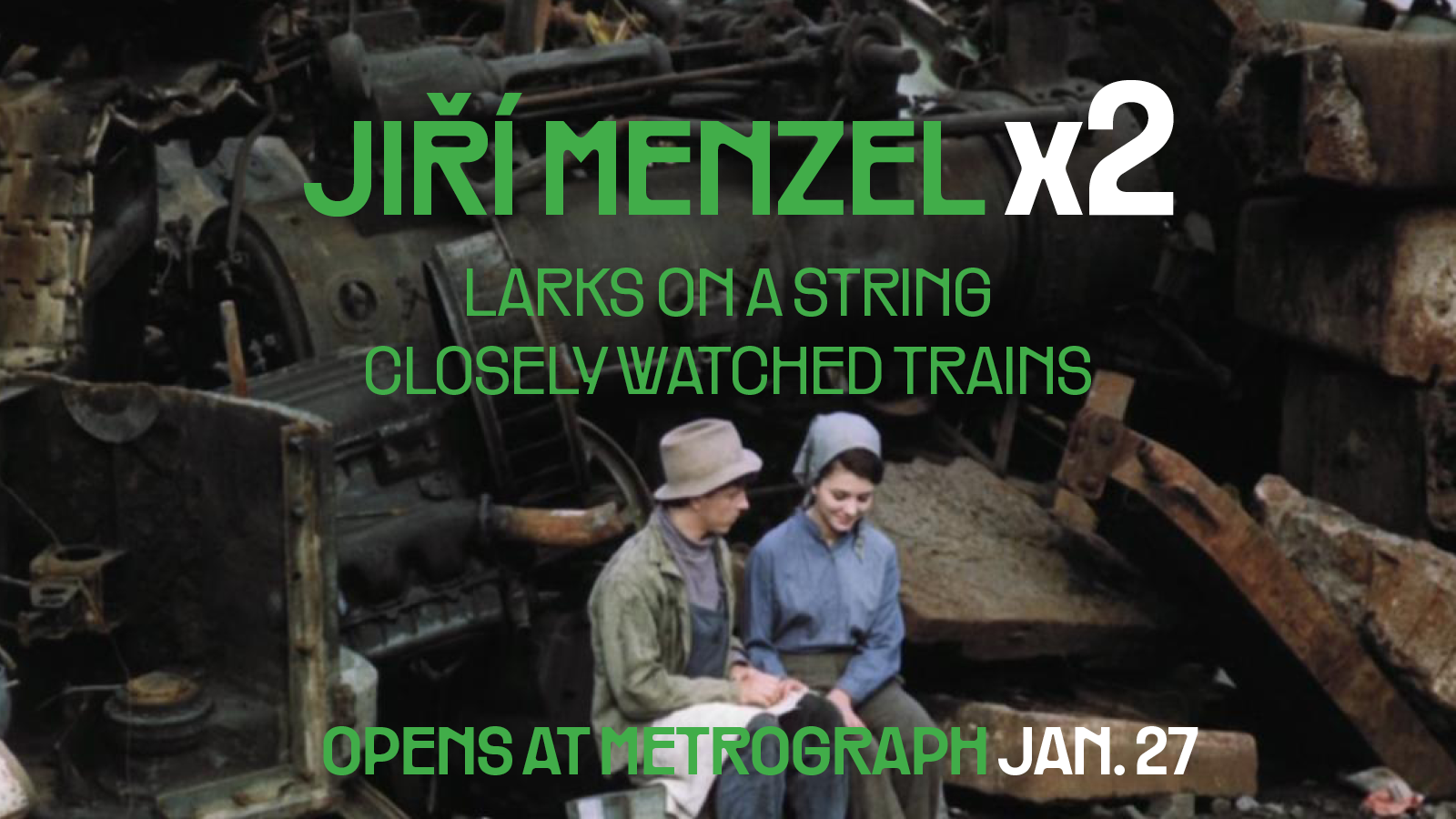
We lost one of the last living giants of the heroic age of the Czech New Wave in 2020 with the death of 82-year-old Jiří Menzel, more responsible than any other single director for announcing Czech cinema’s arrival on the world stage when his tender, tragic Closely Watched Trains, an international arthouse phenomenon based on a Bohumil Hrabel novel, won Best Foreign Language Film at the 1967 Academy Awards. This two-film tribute to Menzel pairs that beloved title with another, lesser-known Hrabel adaptation, Menzel’s biting 1969 satire Larks on a String-lesser-known only because it was suppressed by government censors until the Velvet Revolution of 1990, when audiences could finally see a “new” film from Menzel at the peak of his powers, when gentle, humane artistry could seem to the authoritarian state like an imminent threat.
Series Includes:
Closely Watched Trains – Larks on a String