
[wpbb post:terms_list taxonomy=’category’ html_list=’no’ separator=’, ‘ linked=’yes’]
[wpbb post:title]

The Eternal Daughter (2022)
[wpbb post:terms_list taxonomy=’category’ html_list=’no’ separator=’, ‘ linked=’yes’]
BY
[wpbb archive:acf type=’text’ name=’byline_author’]
A chat between the two filmmakers from 7 Ludlow on occasion of the release of The Eternal Daughter.
The Eternal Daughter returns to Metrograph on December 30.
Joanna Hogg x3 is available to stream on Metrograph At Home.
MARTIN SCORSESE: Joanna, would you want me to say a little about how we first met?
JOANNA HOGG: I think that’s nice. Yeah.
MS: I was shooting a 3D film called Hugo (2011) in London and it was a Saturday. We were overscheduled and over budget, under very, very strict union laws, a lot of intensity. I received a DVD of a film called Archipelago (2010) from the BFI, who said, “You should look at this.” I had no idea who made it. I didn’t know anything about it. So I was by myself and I put it on. I was under a lot of stress and I watched the first 15 minutes, and I just couldn’t connect with it. I said, “What is going on with these people? God, they were complaining! What, they have a nice house and a nice island, what is this? I can’t watch this kind of thing.” I turned it off, but that night I thought about it. First it starts with the paintings, you know? But then the brother and the sister and the mother, when they arrive at the house after the helicopter shot, this little house in Scilly-is that it?
JH: Isles of Scilly.
MS: Right. And so, they’re offering them a different room to stay in. Apparently it’s a house that they go to every year. The angle’s kind of low. The ceiling, there are sharp angles which are almost crushing in on the characters. And it’s all in the body language. It’s really the mother standing behind her son, and the sister saying, “We can give you this room, but could you, would you mind staying upstairs?” He goes “No, it’s fine. I can stay upstairs.” And the mother says, “You’re sure it’s okay? Because it’s your holiday.” And he goes, “No, no, it’s okay. It really is all right.” She goes, “You sure?” And all of a sudden, the sister says something like, “Oh, you’re being so nice!” He goes “No, it’s really all right.” And he goes up to this little room. He’s a very tall guy, he can’t fit in the bed, that sort of thing. But that scene stayed with me and I wondered why. Ultimately, I said, “I wonder what’s going on with these people?” The next day I put the film back in and watched the whole thing. I was quite stunned by it. I fell in love with it, and found myself, I must say, I just found myself living in that world. What I mean is that there was a quietness about it that had a lot of intense emotional rumbling under it, which erupts only a few times in the picture. Off-camera, usually. And you say, “Well, you make pictures that are so violent, things like that don’t matter.” For me, it was something so special, there was a vision that was so unique in the design of each frame, and the handling of the body language of the actors, and the short discussions of art and attempting art. All of this meant I found myself going back to the picture, and I was shooting something very, very different; Hugo, it’s a film about Georges Méliès… In any event, when the film opened, we came back to London. That’s when I met you?
JH: Yeah. You were getting an award at the BFI. You were getting a fellowship.
MS: Yes, of course. You’ve got to be very old to get that; sorry! [Laughs] Then you made Exhibition (2013) and you brought it to America. I saw it in New York.
JH: You were involved. I asked you to be executive producer of it, and you were very involved. I remember having conversations. Actually, I had gone back to the Scilly Isles with my sister because I’ve got a history of going there as a family. I remember talking to you about a cut of Exhibition, and I was hanging out of the window. The signal was really bad, I don’t know if you remember.
MS: Yes!
JH: It was hard to hear you, it was very frustrating!
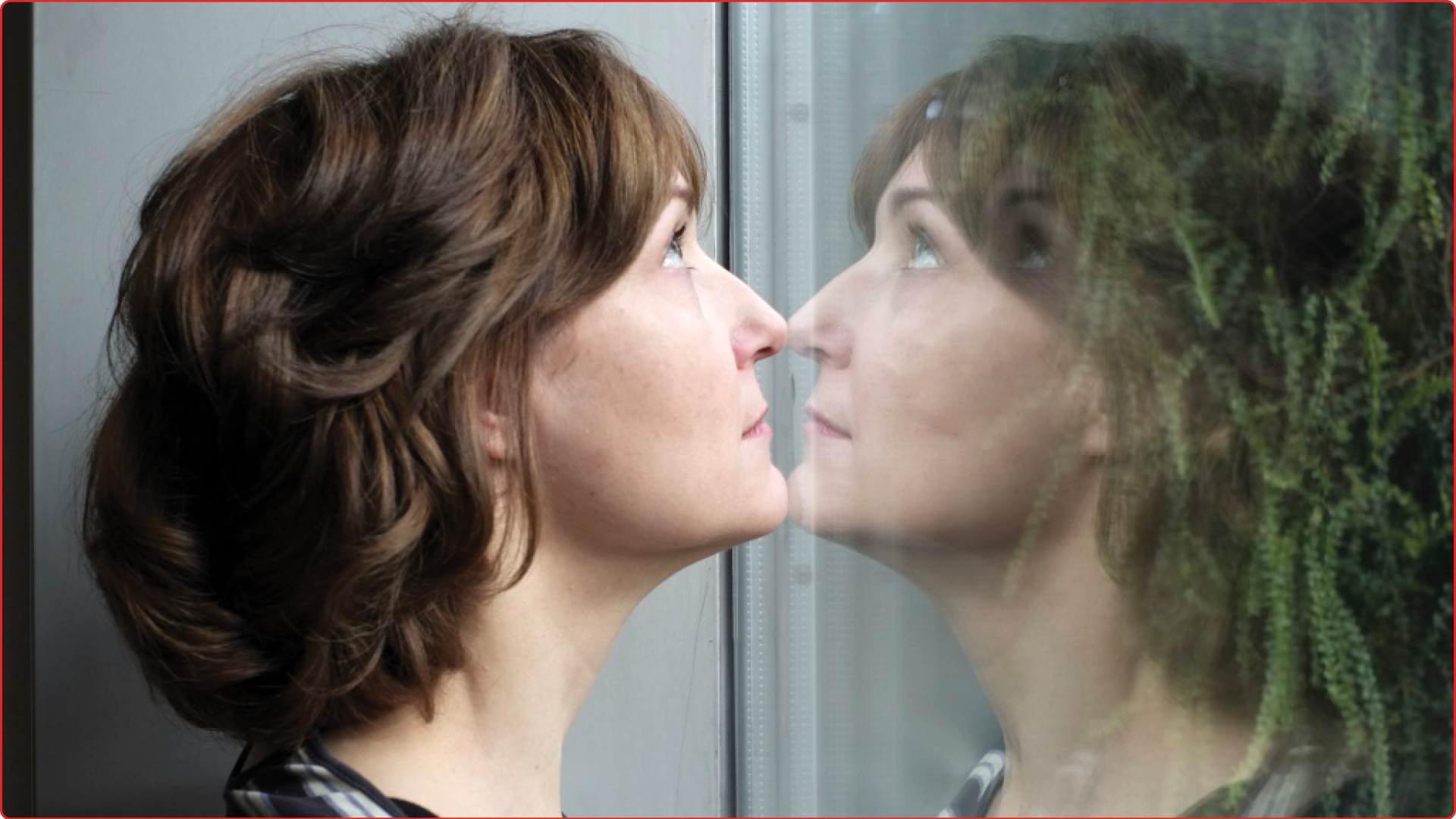
Exhibition (2013)
You were so brilliant in pointing me in a direction and somehow knowing what’s going to spark ideas and inspiration
MS: I thought you said, “I’m up in Sicily.” And I said to myself, “Oh, Sicily! I’ve been there myself.” This goes to show you. You know, last night I checked the film out again just for the opening, and I wound up watching the whole thing.
JH: You’re incredible.
MS: But go ahead.
JH: Well, then we made Exhibition and you saw various cuts of that. And we had these conversations where the signal was really bad. After that, there was a moment when I came to New York and I wasn’t sure what I was going to do next. But I was interested in something about ghosts, something gothic, but also autobiographical about my time as a film student. I was sort of grappling with which direction to go in. I remember leaving your house armed with a DVD of Jacques Tourneur’s Night of the Demon (1957). And two volumes of M.R. James short ghost stories. Very nice going-away gifts. You’d even marked the ghost stories that I should look at.
MS: Because you had discussed certain aspects of this. You told me a gothic film, and immediately I thought of two pictures: The Innocents (1961), of course, and The Haunting (1963). Again, these things are 50 or 60 years old. Doesn’t matter. These things seem to not age in any way, both those films, and particularly The Innocents. But I felt that what you should be aware of was not only M.R. James, the literature, the casting the runes and that sort of thing, but Night of the Demon, Tourneur’s film, is so unique in that it’s made by a man who actually believed in the supernatural.
JH: It feels that way.
MS: He really did. Also his film I Walked With A Zombie (1943)-unfortunate title, but a beautiful work of poetry. But this guy really believed in it. You feel there’s a subtle undercurrent of the supernatural, if you want to use that phrase. So I thought that would be something you should take a look at.
JH: I definitely digested it… Then I went to make The Souvenir (2019), so I didn’t immediately make my gothic story at that point. I came back to it. The first lockdown we had in London, we had COVID, and we were talking. I came back to ghosts then, I suppose, because it was very much a time of thinking about mortality, and grief was in the air somehow, even if I wasn’t experiencing it directly. The Eternal Daughter came up again because I’d written it in 2008-before Archipelago in fact, because I was going to make it back then. Then I wasn’t brave enough to. I was too worried about what my mother would think if I made it. In a way, I put all the energy and ideas into Archipelago, but at a distance… I wasn’t representing myself there, but I was sort of representing a family that I knew. Then I came back to [The Eternal Daughter] during that lockdown time and thought, even though my mother was still alive then, maybe I was ready to do it? I asked you for some more short ghost stories to read. You recommended all sorts! Walter de la Mare’s “All Hallows” and “Seaton’s Aunt,” and Robert Aickman as well. Henry James.
MS: Henry James! Philip Horne has just done a beautiful new edition of the short stories of Henry James and “Jolly Corner” is in there and is quite unique.
JH: That was one you specifically recommended. And then the key one that really penetrated my imagination the most was Kipling’s “They.” It’s part of a book of ghost stories. “They” is one that’s autobiographical, isn’t it?
MS: Yes.
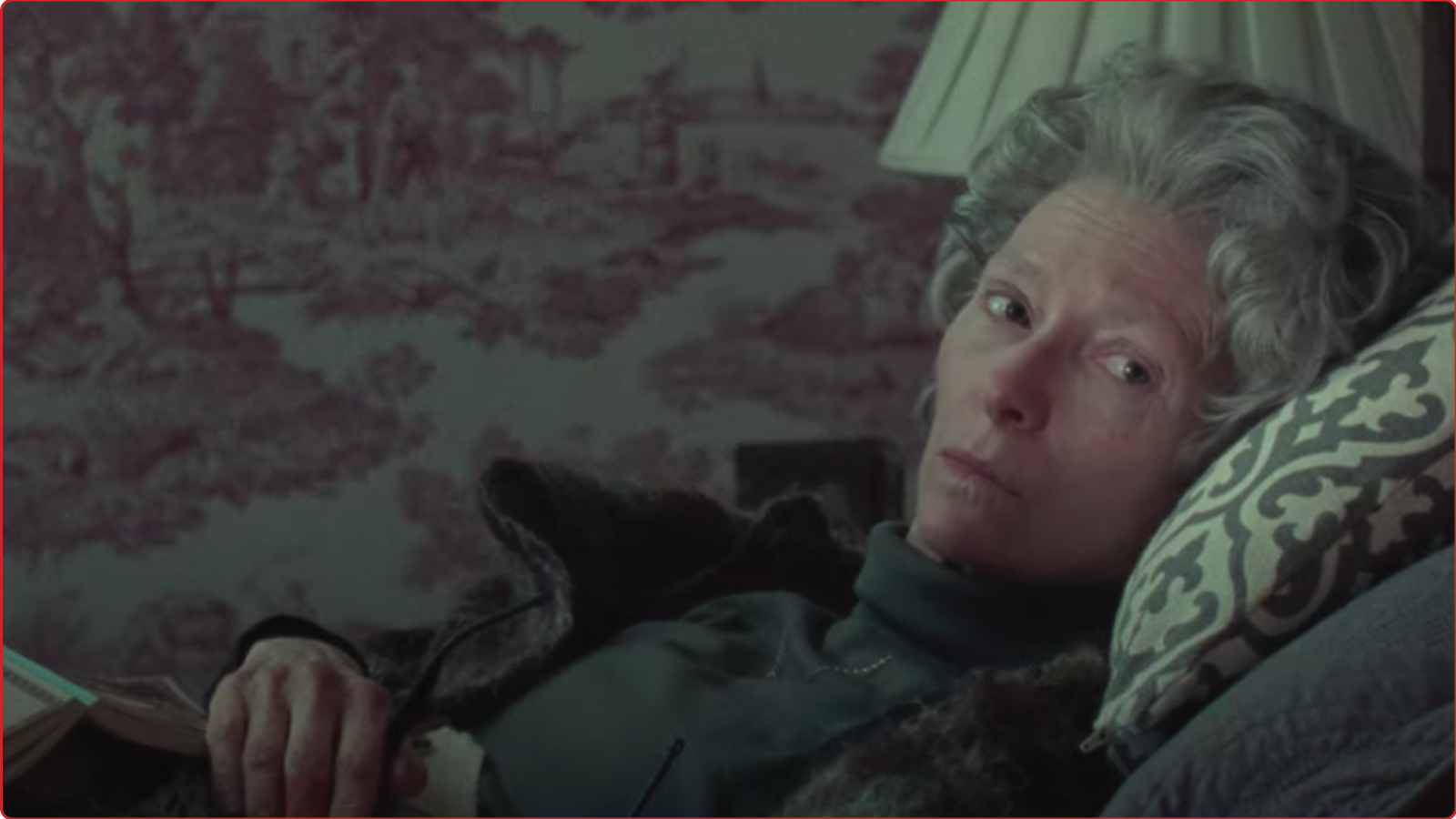
The Eternal Daughter (2022)
JH: Because he lost a child, a daughter, when she was very young, and this story was worth seeking out. It really inspired me. You were so brilliant in pointing me in a direction and somehow knowing what’s going to spark ideas and inspiration. It’s really true. Pointing me towards “They” really turned a corner with The Eternal Daughter in that I thought, it can be a ghost story, but it can also be something very emotional and very personal. I hadn’t seen that in a ghost story or a film before.
MS: Well, that short story surprised me. I can tell you, the ending suddenly hit. Tears well up in your eyes. It’s quite unique. That comes through Michael Powell, actually, because he talked about it to Thelma [Schoonmaker], and Thelma told me about it for years. And finally, a few years before Covid, I read it. That’s why I said, “This is the one. Take a look at this.” It’s a very sad, very beautiful piece. I thought, somehow if I pushed you in that direction, you’re going to go somewhere. Because I know when we were doing The Souvenir, when I helped with that, when you said you were going to show me the script, the script is not a script. It’s not even a treatment. Would you describe that a little?
JH: Well, with The Eternal Daughter, I set myself the task of writing a short ghost story. I thought if I can write something that has an unsettled, spooky nature, then that’s it. I think of my other scripts in a way as short stories. Treatment doesn’t exactly quite describe it, but.
MS: No, it’s in paragraph form, kind of? I thought, it’s going to be interesting because I could see it’s open here and open there. I mean, I get it. But it’s quite unique. And I’m just assuming this, that when you’re in-I hate to say rehearsals, because everything’s a rehearsal, it isn’t like, “Okay, now we’re starting rehearsal”; everything, just saying hello to the actors, is a rehearsal. Ultimately, during the shoot, I figure all of this is going to come alive. And here [in the treatment] you have the heart of it. But you’re going to bring it out from the people around you, including the crew, as you’re doing it, which is really bold, and quite remarkable.
JH: And fun, in a way. I mean, it’s exciting because you don’t know what’s coming next. So yeah, this document is really just a starting point. I’m not interested in looking at it once I start shooting. It’s a reminder of the underlying themes, and it describes what characters are feeling, which you’re not meant to put in scripts traditionally. You described it really well. It’s an underlying document, and then we fly off into the story from there.
MS: I think to a certain extent, your work-I didn’t realize until you did Exhibition about the still photography. Between that approach and still photography, it makes for a very singular vision of filmmaking. Meaning that there’s a tension in the frame, but within the frame anything could happen; people walk out of the frame, the camera doesn’t pan, they come back in. Now, we’ve seen this in many other films, of course, but there’s something about the framing of all the pictures, The Souvenir, and particularly this film that has that freshness to it, compositional freshness. It allows a viewer, if you put yourself in that space, you’ve got to stop. And watch it. And read it. Don’t rush past. Take a look, and stay there. That’s the thing. And it’s going to be rewarding when you finally come out the other side.
JH: Although, I’m really interested in moving now more! [Laughs] To take a leaf out of your book, I want to be a bit more kinetic, I think. I don’t know what everyone’s experience was of The Eternal Daughter, but I was trying to do something more. I was trying to move.
MS: Is there movement in the film?
JH: There is. There is. Is there? [Laughs] Not in comparison with you! For me, there are zooms. There are crash zooms.
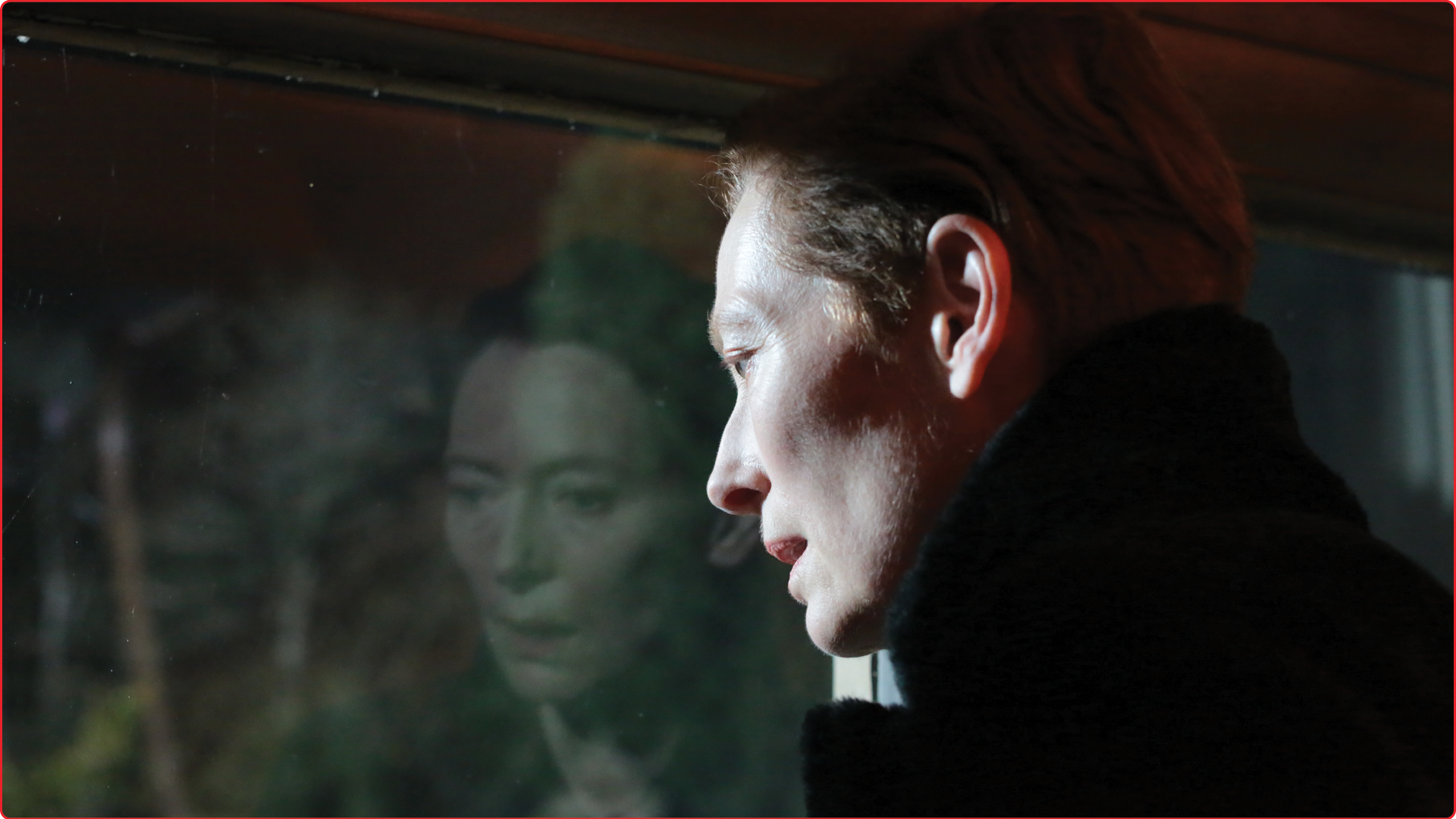
The Eternal Daughter (2022)
MS: I know the film very well, of course. While I was shooting this film called Killers of the Flower Moon (2023), I was looking at the different cuts of this picture. And it was a respite. I think possibly some of what I saw in your work over the past 10 years affected what I was doing in terms of Killers. There’s a lot going on, but there’s a stillness there. When I saw the first cut-you know, I have three daughters and two granddaughters so, for me, mothers and daughters is a fascinating mystery. I read a lot about them, books by women, about their daughters, about their mothers. And this one goes very, very deep in the relationship. And it does so with such a restraint, which is even more powerful ultimately, by the end. You said you had wanted to do this back in 2008?
JH: Yes. It just felt too personal. In a way, when I came back to it in 2015, nothing had changed because my mother was still alive. But there was something about it becoming this gothic thing. Then eventually casting Tilda, I separated it from my mother and… I mean, I have to admit when we were preparing it, I thought, “Well, you know, something’s going to happen. We’re not going to be able to make the film.” But there was a point where I actually wanted something to happen; I wanted somebody to come down with COVID so that I didn’t have to make it and feel guilty! Guilt was a big thing.
MS: Yeah, I know it is. It is. In a way, the casting of Tilda-who’s an old friend of yours-as both mother and daughter, it seems to indicate, at least, some sort of acknowledgment of a sameness in the mother and daughter. You don’t know where the line blurs. It’s almost the same person.
JH: They have the same voice.
MS: The same voice, everything. Yeah. How different am I from her? Who am I? What does she mean by that? All that comes together in the casting and the choice of having the same actor play both parts. It’s the same person. The character.
JH: That was Tilda’s idea to play both parts… which made it a very intimate process, working with a really good friend and going to depths that I don’t think would have been possible had I not known Tilda, and she me. The role of director and actor dissolved, so we were just two friends working together.
MS: That’s the key. Yeah. Ultimately, whether the mother has died in the hotel or whether she hasn’t died, it doesn’t matter. That narrative, what we expect of a pretty straightforward narrative is out the window, it doesn’t matter. It’s really the grief that’s there.
JH: Yeah, yeah.
MS: It’s really the grief and this extraordinary bond of love, which in these characters is something that can’t be shaken. Whatever disagreements, whatever differences, the love is there. Sometimes I’m amazed by being involved with it-or as a father, between the mother and daughters. It’s quite remarkable and very beautiful. This picture, by the last sequences, digs deeply into that. I say the word “love” because I don’t want it to be an abstraction. It’s real. And I know the picture. I’ve seen it many times. So I know it’s there. It touches upon that bond I don’t think like anything I’ve ever seen, quite honestly. And the use of mirrors.
JH: Yes.
MS: Is there anything you could tell us about that?
I say the word “love” because I don’t want it to be an abstraction. It’s real. And I know the picture. I’ve seen it many times. So I know it’s there.
JH: I mean, it was about, obviously, the doubling of mother and daughter. I guess I’m fascinated with mirrors and the idea that Rosalind isn’t there. So she’s like a ghost… I guess because I was trying to go into a genre space, I’m not sure if I did it successfully. I feel like I’m still really interested in that space; I want to go further with it than I have with this in a way. The mirrors … I find it hard to separate the mirrors with the color palette. I wanted to make something very, I don’t know what the word is, cohesive. Or something that was very much creating a world but with a sort of limited palette. Limited movement. Everything very considered and very crisp.
MS: Even in the wallpaper, to a certain extent. The couches, the wallpaper, the costumes-all of this fits beautifully.
JH: Some of it was constructed and some of it wasn’t. Actually, the wallpaper was there already. though it’s not paper, it’s material. Just an aside, I had quite a few ghost skeptics on the crew. But the boom operator was leaning against the wall and felt a hand.
MS: Oh, no. I’m out of there!
JH: But there were a lot of, there were a lot of happenings.
MS: You’re telling me that place was haunted, wasn’t it?
JH: Yeah. That was in Wales.
MS: The style you were going for, too, has elements of the gothic film-you know, the old house in Wales, in England or Ireland or whatever. The fog. The stained glass. But in any event, the staircases. The staircases are always very important in a gothic film. Very important.
JH: Well, you showed me The Uninvited (1944). I became a bit obsessed with it. I watched it many times. Particularly the staircase shots. I really thought about that. I had a very different shape staircase in the house in Wales, but I really thought about movement, gliding up a staircase. And the presence of something at the top of the staircase.
MS: Maybe you could talk a little about how you implemented the different elements of that style-whether the fog, the sound effects or lack of sound effects, music, that sort of thing-that hearken to what you may call a ghost story. What we know now as the genre.
JH: I can’t remember the exact order, but the house obviously came first. In fact, when we first went to visit the house, it was a little misty and seemed completely isolated… The idea of the misty haunted house story, I didn’t even need to re-watch those things, they’re just engrained somehow. I knew I wanted to start with the car journey. I think that was Night of the Demon, actually.
MS: Yes.
JH: I’ve watched that opening sequence quite a few times. Obviously that has a particular speed to it. It’s really great. I wanted to start with this car journey and then the taxi driver who’s telling the story about seeing the face in the window. Actually, the taxi driver really told me that story.
MS: He did?!
JH: It’s extraordinary. I cast him, and then he told me that story. And I said, “Well, I’m sorry, you’re going to have to tell that story.”
MS: Do it again! [Laughs]
JH: So there’s a lot of coincidences.

The Eternal Daughter (2022)