
Interview
Gregg Araki
New Queer Cinema pioneer Gregg Araki speaks to Thora Siemsen about road movies, mortality, and why there’s no sex in cinema anymore.
Share:
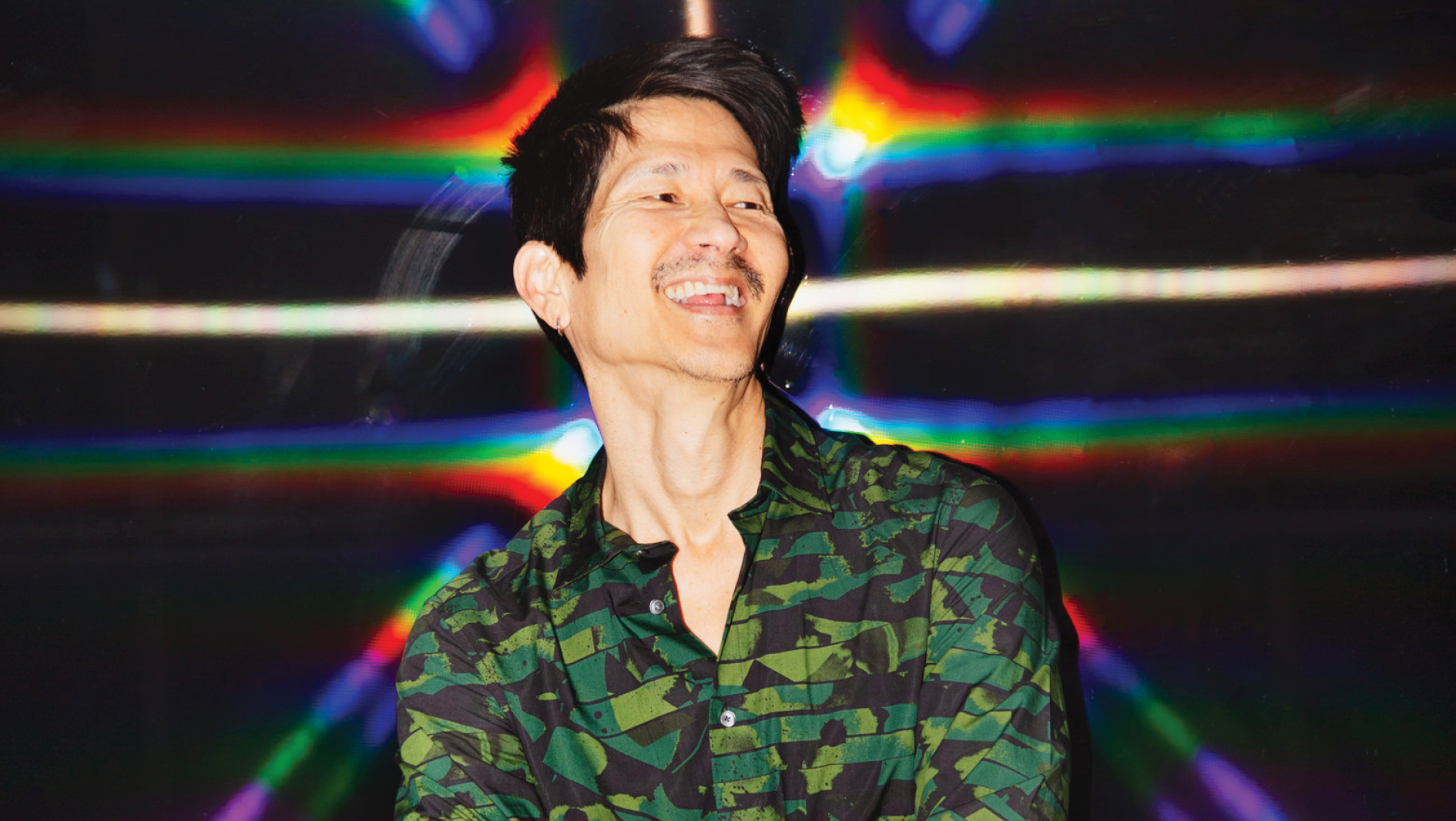
Gregg Araki, the crown prince of queer slacker punk, maintains his edge without making a fuss in his real life. He seems like the type who wouldn’t mind if you left off the second g of his name on his cup at Starbucks, which is where he writes, according to his collaborator Karley Sciortino (they wrote and produced his 2019 television show Now Apocalypse together). Raised in Santa Barbara, like Edie Sedgwick, Araki emerged from film school with a guerilla sensibility that cemented his status as a pioneer in the New Queer Cinema movement. 1992’s The Living End, considered his breakthrough though still filmed on a shoestring, featured Warhol star Mary Woronov. His quintessential Teenage Apocalypse Trilogy—1993’s Totally F***ed Up, 1995’s The Doom Generation, and 1997’s Nowhere—circulated through knowing crowds for years, popping up on video store shelves and fashion designer’s mood boards long before the internet made his titles more accessible. The success of this year’s 4K restoration of The Doom Generation has primed Nowhere for the same invigorating treatment. Below, the director and I discuss his career and what he sees as apocalyptic now.—Thora Siemsen
THORA SIEMSEN: Hi, nice to meet you. Where are you calling from?
GREGG ARAKI: Los Angeles. I’m in beautiful Hollywood, in my apartment.
TS: What was your first job?
GA: My very first job was working at a fast food place, but shortly after that I was working in a pet store, so I’m very in touch with animals and pets.
TS: I’ve read that you’re not very hedonistic in your personal life.
GA: People think that I live this crazy, wild life, but it’s very sedate and boring. My daily life is not like my movies.
TS: That’s great. You can take it out on a fictional world. How do you stay healthy?
GA: I’m kind of vegetarian. I’ve always worked out. Gay guys always work out. Gay guys don’t really eat any carbs, and they always work out.
TS: How did growing up in California inflect your expectations of working in the movies?
GA: I grew up in Santa Barbara, so I was 100 miles away, which was kind of a perfect distance. I always used to read about movies and filmmaking. I was into the arts page of the Los Angeles Times. I was very into music, so I was always reading concert reviews and album reviews.
TS: Yeah, your soundtracks are always great. How did you originally get into Slowdive? I love the way their songs are used in your movies, especially Mysterious Skin (2004).

Mysterious Skin (2004)
GA: In the ’90s. Slowdive, when they first came out—they were so obscure in the US—they released those three EPs with cardboard sleeves on Creation Records. I remember hanging out at a friend of a friend’s house and seeing the EPs. I was always very interested in music, alternative music, but also album art, cool packaging. I started listening to them and I was obsessed.
TS: Karley [Sciortino] told me you write music cues into the scenes, which is rare.
GA: Yeah, music is such an inspiration for me. I listen to music literally 24 hours a day. I have an iPod which has 32,000 songs on it—from the ’80s, from the ’90s, from the ’00s, from the 2020s. I just collect it all and then shuffle it. It’s like Coachella used to be, a mix of everything. I get a lot of band recommendations, which is cool, because you can tell from my soundtracks what I’m into. When I write, I always listen to music on my headphones. I remember when I did Doom Generation, I was super into Nine Inch Nails and industrial music. That anger, the spirit of the Doom Generation, is from that musical influence at that time.
TS: Who are your ideological enemies? And are they the same as when you made The Doom Generation?
GA: My ideological enemies? There’s so many of them. Thankfully, some of the ones from the ’90s, namely Jesse Helms, are dead. But there’s always new ones. I mean, obviously, Trump and Putin and all these fucking crazy people that are making the world such a fucking dangerous place. All the right-wing shit is so scary. It’s so much worse, even than it was in the ’90s.
TS: The Doom Generation features some great cameos, from Margaret Cho to Heidi Fleiss.
GA: Margaret Cho! I think it was one of her first film roles ever. She had just booked her sitcom All-American Girl and the casting director was like, “There’s this new comedian, and she’s amazing.” I love Margaret to death. And she’s such a good sport. She showed up to this dingy Kwik-E-Mart in the Valley and we were pouring blood on her. She’s great.
TS: It was also Rose McGowan’s first lead role. What do you remember from that casting process?
GA: I remember the casting process of Doom Generation being very involved, very long. It was my first movie working with a casting director. It was my first movie with a crew and a decent budget. I remember being super particular about the casting of the three of them. [The role of] Jordan was written for Jimmy [James Duval] after we had done Totally F***ed Up together. I wrote Doom and Nowhere for Jimmy. He became the center of the trilogy. But then for [the roles of] Amy and X, I didn’t have anyone in particular in mind. I had an idea in my head that was essentially Winona Ryder in Beetlejuice (1988). I wanted her to be this little, tiny thing driving that big car, just spewing venom. I had a thing she couldn’t be over five feet. Actors came in, some pretty famous actresses actually came in on that movie, or rather they went on to become famous. And I was like, “No. She’s 5’ 4”,” she’s too tall.
And X, the same thing. I knew I had this weird sex vampire vibe. All of these hot guys at the moment, they were all coming in. I was just like, “No, no, no, no, no.” And then Johnathon [Schaech] came in and it was, “Oh, there’s something about him I really like.” I remember telling the casting director to give him the script, and the caseworker was shocked because I didn’t give the script to anybody, they just got sides. So John was the first one to actually get the script.

The Doom Generation (1995)
TS: Do you stay in touch with many of the actors you’ve worked with throughout the years?
GA: Yeah, I actually just had burgers last night with Jimmy, and Gilbert Luna, who is also in Totally F***ed Up. I see Thomas [Dekker] all the time. Roxane [Mesquida] and I are good friends. Actors are a weird breed. They’re nomads. They’re in and out, they’re doing jobs all over. God bless actors, but it’s a hard life. Some of them you stay more in touch with, but I’m friends with basically every actor I’ve worked with. And I’m so happy when—like Juno Temple is kind of blowing up right now because of Ted Lasso, and I love her to death. If I saw Juno at a party or something, I’d give her a big hug.
With the actors I work with, they know what I do. There’s always a bonding, kinship thing going on. No actors I work with ever do it for the money. A lot of times an actor just takes a job because he needs money. Because [in my movies] the pay is always crap, because they’re little indie movies, they’re there for the right reason. They’re there for the art of it. They’re there because they’re excited about the material and the character. It’s always a really fun collaboration.
TS: The Doom Generation is a great road movie. Where do you think the road movie genre is heading?
GA: My theory of road movies—and that’s why I think I made both Doom Generation and The Living End road movies—is that they tend to come out in times of social and economic crisis. There were a lot of road movies in the ’30s during the Depression, and a lot of road movies in the ’60s when there were anti-war riots and all sorts of civil unrest. That was my theory as to why, in the ’90s, it felt appropriate to be making a road movie.
TS: Where are some of the best road trips you’ve been on?
GA: My boyfriend and I just went to Palm Springs. I’ve never driven cross-country on a real road trip myself. I don’t like to be uncomfortable.
TS: Why don’t you like traveling?
GA: I have two dogs. I just like to be at home. I don’t like to be out of my element.
TS: Is your penchant for kooky set design reflected in your home?
GA: [Points at giant smiley face on the wall]. This is the kookiest thing in the apartment. This is actually from Nowhere. It’s a piece of set dressing that I inherited and kept all these years. Besides that, it’s very Zen.
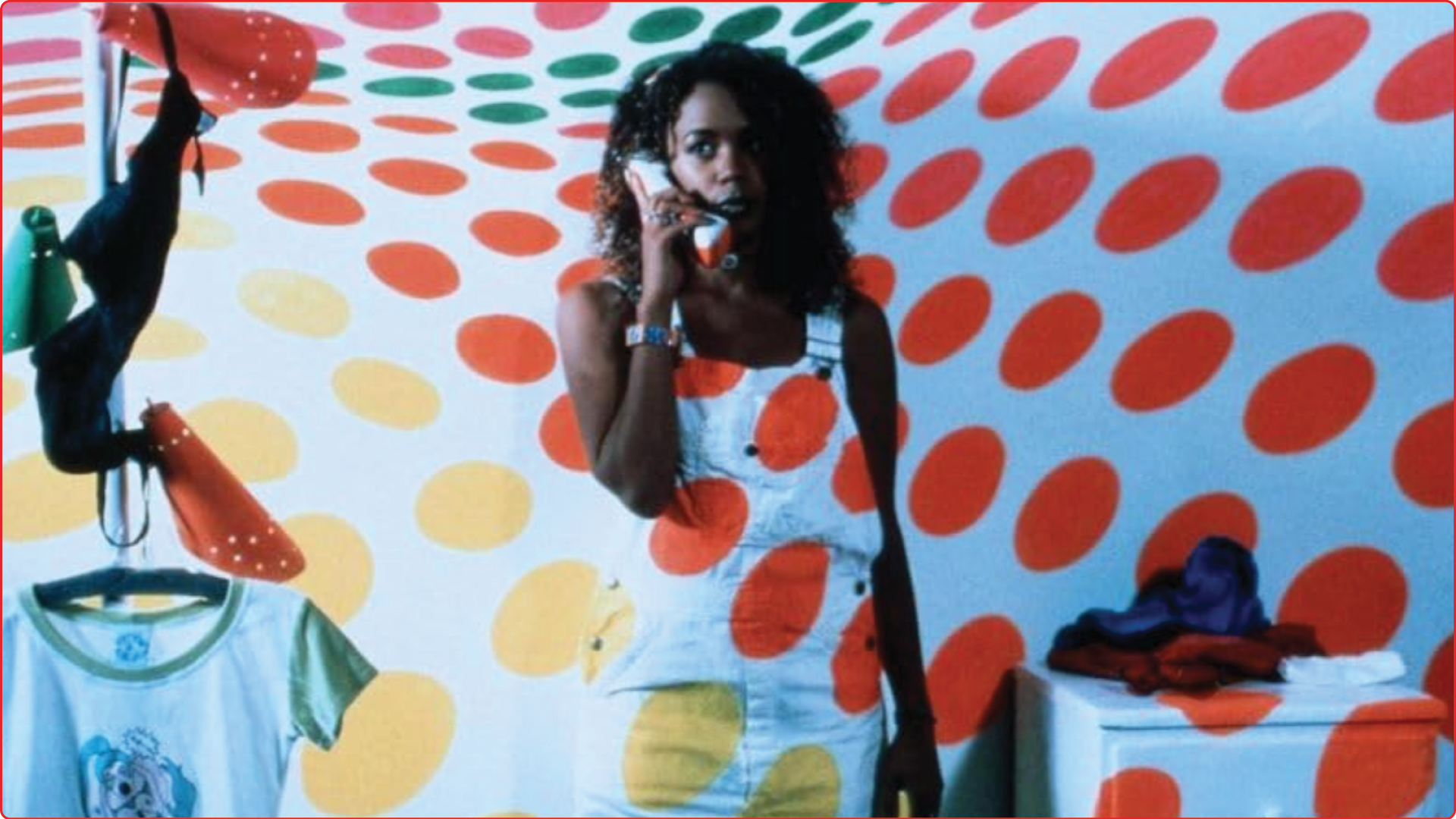
Nowhere (1997)
TS: You’ve done quite a bit of TV in recent years, directing episodes of American Gigolo, Dahmer – Monster: The Jeffrey Dahmer Story, Riverdale, 13 Reasons Why. It must be challenging to parachute into an already established world when you have such a vision yourself.
GA: That’s what I like about it. It’s like being in film school. You try to make the best episode you can, but it’s not your creation. You apply all your directing and filmmaking skills to your episode. You get to make a cool little mini movie. It’s quick. Usually the episode takes 10 days to shoot. You edit for three, four days, and then you’re done. As opposed to a movie, like Doom Generation, 28 years later I am still working on it. They’re like kids, they never go away.
I did my own show with Karley [Sciortino] in 2019 called Now Apocalypse. Karley and I wrote all 10 episodes, I directed all 10, and that was a lot. It was also probably the most rewarding and exciting creative experience I’ve ever had. The network Starz let us do whatever we wanted.
TS: Did you have a second season written for Now Apocalypse?
GA: Yes, they paid us to write the whole second season. They paid the cast their full salary for season two. We were scouting locations and doing prep. The executive who bought the show, who was our shepherd, got fired. It was one of those Hollywood stories.
TS: You lost your champion. Also, the pandemic happened right after.
GA: We would have been able to shoot, because we were supposed to in the summer of 2019. We would have been wrapped, and in editing, by the time the pandemic hit, which would have been perfect. I haven’t lost hope. I’m just looking for some benefactor to come in and save it. I love it so much, and it was really my dream. It sucked because it was on Starz, which nobody had, or none of my fans anyways. The reaction from people who didn’t even know who I was, who had never seen any of my movies, was amazing, exactly the reaction I wanted. It had a very passionate cult following. So me and Karley are both really hopeful that one day we’ll be able to shoot it.
TS: Which television shows do you watch?
GA: There’s only a few that I watch. I loved White Lotus. I’m really into And Just Like That, it’s super bold. And I like that show The Other Two a lot, there’s something about it. It’s my brand of snarky and also extreme.
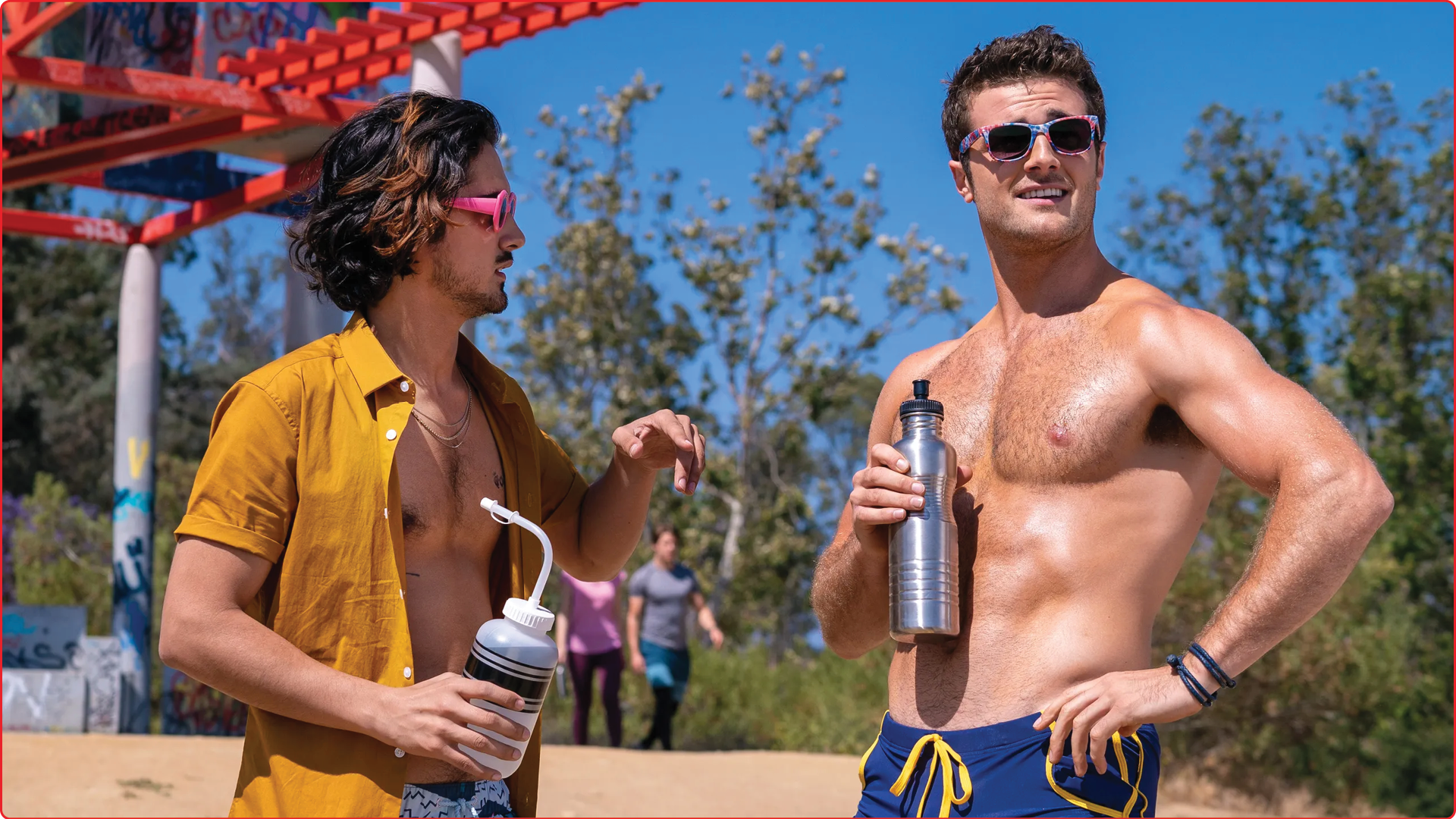
Now Apocalypse (2019)
TS: Do you consider yourself tough?
GA: Yeah, actually. I think part of it is, again, from New Wave music and alternative culture. It’s always been the sensibility. And my movies, Doom Generation in particular, have been very polarizing. There’s people that love them. And people that hate hate hate them. If people hate Doom Generation, it’s not like I go home and cry about it. I’m tough in that way.
TS: Are you the same way with criticism from people you care about?
GA: For the most part. Because one of the things I learned in film school at the very beginning was that cinema is super subjective. Everybody brings to it their character, their life, their psychology, their sensibility. The film is just a film. It’s the reaction to the film that makes that experience, and it’s different for everybody. There’s movies that everybody fucking loves that I fucking hate. Everybody has their own subjective experience. Of course, it’s nice when people like mine as opposed to hating them. But I don’t hold it against people.
TS: How important is being funny to you?
GA: It’s pretty important. I turn down a lot of projects because they’re too dark. Doom Generation is funny. Doom Generation and Kids (1995) came out at the same time. And, to me, Kids is pure nihilism. They’re just kids, and they’re fucking and shooting drugs and giving each other AIDS. It’s a little too much for me, whereas Doom Generation is more fun to watch.
TS: I agree. I re-watched Kids recently because I profiled Chloë [Sevigny], and I found it really hard to watch as an adult.
GA: It’s just so nihilistic. Doom Generation to me has always been a little more romantic at heart. But not to denigrate Kids. It is a great film, just not a film I would have made.
TS: Is there a film where you think, “I wish I did make that”?
GA: I just said the other day that I’ve never seen a movie where I thought, “I wish I’d done that.” I’m happy with the movies I did.
TS: Nowhere is being restored now, too. How did that come about?
GA: The Doom restoration turned out really well. It looks great, and it’s been getting a lot of buzz and attention. It’s doing well in theaters. We got the green light to do Nowhere next, and we’re starting to work on it, which I’m super excited about.
Doom Generation was released on DVD, although it was a shitty copy that I don’t know if I approved—it doesn’t look good. I’m amazed that people watched it, it still became a cult movie, even with this crappy copy. Nowhere, however, was never released on DVD in the US.
In the US release, a lot of scenes were cut out because the distributor got slapped with an NC-17 rating, and they wouldn’t release an NC-17 film. I thought it was going to be PG-13! After going through the NC-17 thing with Doom Generation, I wanted to do a movie for young people that still has this edge. I was watching 90210, Melrose Place, all those soapy LA shows. I wanted to do a Twin Peaks version of that. If you notice in Nowhere, they never say shit or fuck the whole entire movie. They’re not saying motherfucker this, motherfucker that. I did that because I didn’t want to get a R rating. Then the MPAA came back, skipped over R entirely and went straight to NC-17… Most of it has to do with the Ryan Philippe and Heather Graham characters, because they’re constantly fucking the whole movie. There’s no real sex or anything, but it’s just the idea of it. Their dialogue was super funny. But the MPAA did not like it.
TS: How did the ending of Nowhere, in which Dark and Montgomery’s romance gets interrupted by some last-minute body horror, come to you?
GA: Obviously, I’d read Metamorphosis by Kafka. I remember sitting in Insomnia Cafe on Beverly in Hollywood, I used to write my scripts longhand there. I don’t know where it came from exactly. That scene—which has become legendary because it’s such a crazy scene—was not supposed to be in the real movie. The idea was it would end with the two of them in bed together. Then, this scene was supposed to be at the end of the credits, after everybody had left. When I was editing, I realized I had to put it into the movie.

The Doom Generation (1995)
TS: Do you see your films as going up against other currents?
GA: Oh, like a cultural current… Yeah, that’s the thing about Doom Generation: it was so shocking at the time when it came out. There were these ultra-violent movies like Natural Born Killers (1994), but nothing that had that level of transgressiveness—also the sexuality of Doom Generation—which is one of the reasons why I think it’s lived all this time.
I remember when I set out to make Doom Generation, I said I wanted to make Last Tango in Paris (1972) for teenagers. I was really into those early Almodóvar movies like Law of Desire (1987) and Matador (1986), where they really push the envelope of sex and sexuality. There was really nothing like Doom Generation when it came out. And there’s really nothing like it today. To me, it’s even worse now. There’s a weird, puritanical thing going on. We’re living in a weird cultural moment. It’s the best of times, and the worst of times. I read this thing the other day that said something like 25% of Gen Z identify as LGBT. It’s a huge number compared to when I was younger. There’s been such a shift in that direction—towards polyamory and pansexuality—what Doom and Nowhere were talking about in the ’90s. But at the same time, there’s so much less sex. Kids aren’t having sex as much. There’s no sex in the movies anymore. It’s a weird double standard of openness and also closed-mindedness. Everything is hidden. There’s porn, but it’s something secret. Sex and sexuality are not in the open. They’re not being discussed, culturally, in an intelligent way. It’s all back room, with a lot of shame attached. Sex positivity is in a weird, weird place right now. I think that that aspect of the movies is very needed.
TS: Some of your films integrate home-video qualities. Did you make your own home videos at the time?
GA: Not really. Even in Three Bewildered People in the Night (1987), there’s a video artist. Video, particularly in the ’80s, was this new thing. In a way it was like social media is now, just a part of documenting your world.
TS: How do you document your life now?
GA: I feel like as I get older, time becomes more and more precious, and I’m more aware of wasting it. That’s why I don’t do social media. I don’t want to do all these things that are busy work. It’s frustrating when I don’t have enough creative time.
TS: Do you keep a journal?
GA: No. I have in the past, but my films are really my journals. That’s one of the things that stuck out to me when we were doing the recent screenings of The Doom Generation. I used to keep notebooks of feelings I’d have about the world, and so much of that ends up in the movies.
TS: Your work is so much about epidemic burnout. What have you observed since Covid?
GA: My work is about that?
TS: Your characters are registering the effects of living through epidemics. It’s a through line in your work.
GA: Yeah, definitely. Doom Generation in particular. I started writing it in the midst of the AIDS crisis. By the time it came out in ’95, AIDS was a little bit better. But that’s where a lot of the anger and the despair of that movie comes from. I think it’s very much related to AIDS. Living End and Totally F***ed Up are definitely AIDS-related movies. Living End is not far from that shadow.
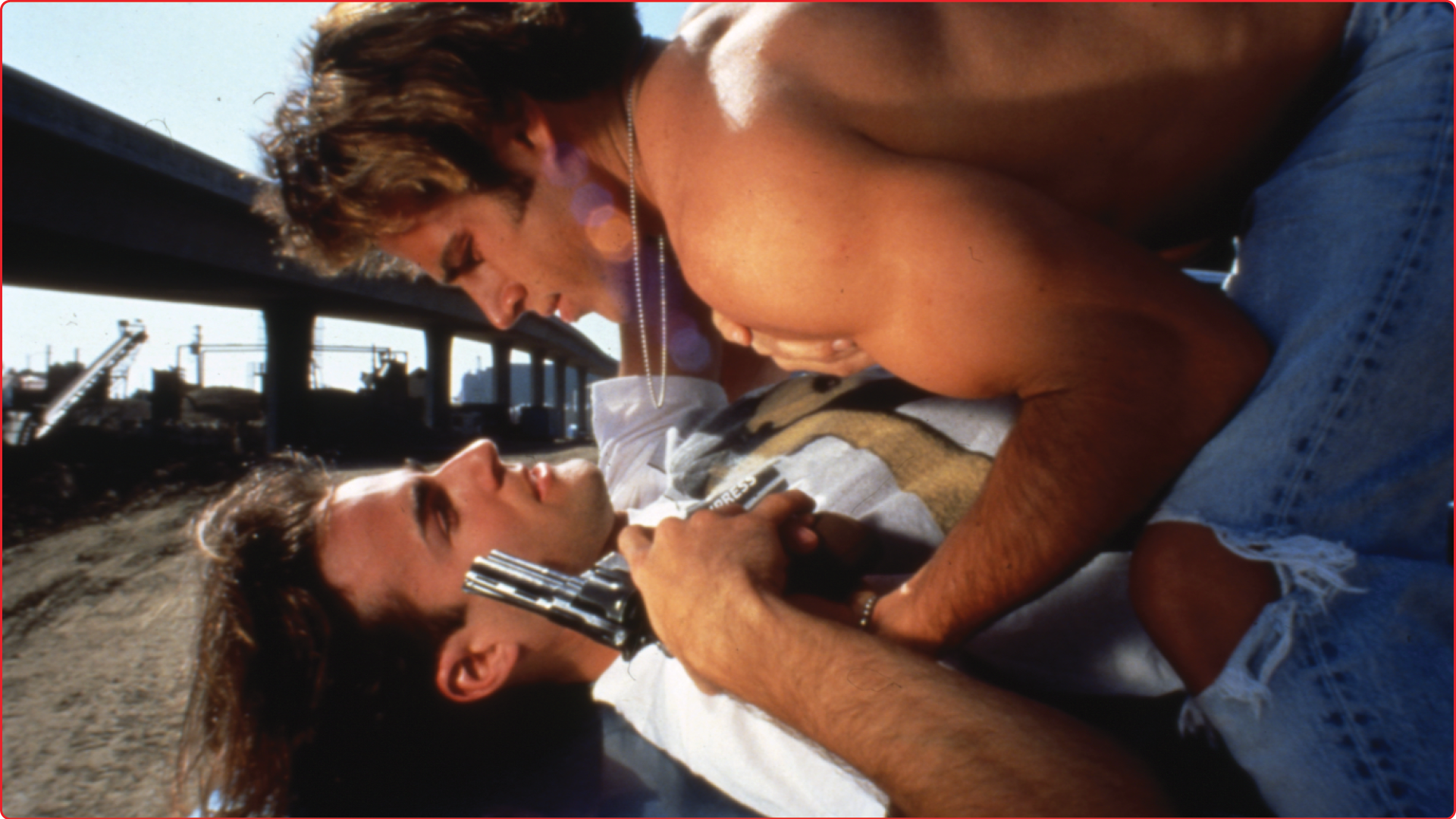
The Living End (2002)
TS: What observations have you made during Covid? About its effects on how people are relating to each other?
GA: We were just talking about that at dinner last night… It’s not just Covid. It’s four years of fucking Trump and everything else. The world is so fucked up right now, so damaged. People are just losing it. There’s so many fucking shootings, everything’s so polarized and it feels very precarious. It’s Fox News, and it’s Trump, and it’s the internet, and Twitter, and misinformation, and conspiracy theories. The world is upside down, on top of global warming, climate change, the seas rising. It’s very apocalyptic.
TS: How avidly do you keep up with the news?
GA: One of my few regrets in life is that there’s too much information and it’s too hard to not read it. There are times I hate having the internet, because you receive so much information all day long. I’d rather spend that time creatively, or doing anything else besides reading about fucking Marjorie Taylor Greene. Back in the old days, where I come from, it was an effort to pick up the newspaper. I regret the wasted time of taking in information I don’t need or that is upsetting.
TS: What are your thoughts on artificial intelligence?
GA: Oh God. It’s known that AI is super dangerous. And once it takes hold and starts thinking for itself, the level of its growth is exponential. So, it’s not only the whole thing about writers worried that scripts are going to be written by AI, but just in general, the idea of the world being taken over by fucking robots is terrifying.
TS: Are there any ways you think it could be beneficial for art?
GA: Well, like the internet, like all technology, the possibilities of it being put to good use are amazing. But at the same time, the dangers far outweigh the benefits. I’d rather work with a human collaborator, frankly, than a robot.
TS: Who is someone you want to cast that you haven’t worked with yet?
GA: Off the top of my head, I love Zendaya, I think she’s amazing. She’s so cool and so beautiful and so stylish, such a movie star of the moment. I wish that she would do a movie where she’s wearing crazy outfits, being an assassin. I don’t really want to see her as a recovering drug addict wearing sweatshirts and no make-up or whatever. Every red carpet she’s on, she’s fucking fabulous. I want her to be fabulous in a movie. She should be doing kung-fu, jumping off mopeds over bridges.
TS: Which movies do you rewatch the most? Not necessarily ones that inspired your own work, but films which bring you pleasure…
GA: It’s always somehow related to work. I just rewatched Twin Peaks: Fire Walk with Me (1992) not that long ago for this podcast I was on, talking about movies that really impacted me. I’ve always loved that movie. Because I’m a director, I get pure pleasure watching directors who have a real vision.
TS: I remember one of the characters in Totally F***ed Up referencing Dennis Cooper, who has since written about your work. You almost adapted his novel Frisk at one point?
GA: That was a long time ago. I didn’t feel like it was that adaptable to me. I don’t know if enjoy is the word, but I really liked the book. It didn’t work out, so they ended up making the film without me.
TS: What are you reading right now?
GA: I actually just got—and it’s funny, because they’re playing on my stereo right now—a tour diary of the Pet Shop Boys called Literally. I’m reading that, and it’s interesting. All that music is such an important part of my formation. The Cure were at the Hollywood Bowl last week and I was so bummed that I didn’t get tickets. I was watching parts of the concert on YouTube and it was just so moving, the idea that Robert Smith and The Cure have been part of my life for 40 years. We’ve been through so much together… Robert Smith is my age. I think the new Cure album [Songs of a Lost World] is going to be their last, and very much about mortality and looking back on their life. At one point in the concert, they were about to do this song from Kiss Me, Kiss Me, Kiss Me called “A Thousand Hours,” which is one of my favorite, favorite Cure songs. He was talking about how, listening to these old songs, he couldn’t believe how sad he was when he was younger. That’s true for me too. The other day I was just looking at Three Bewildered People, because they are showing it in London in July. It was very much a diary of how I was feeling at the time, of being in my twenties and so existentially depressed. But, the flip side was that I was so young and so innocent. I had the whole world ahead of me.

Gregg Araki on the set of Mysterious Skin (2004)

Share:
About the Contributor
Recommended
-
Susan Seidelman
 An intimate conversation with the trailblazing American filmmaker.
 -
Carol Kane
 Fifty years in 50 minutes with the irrepressible screen icon.
 -
Mark Lee Ping-bing
 The legendary cinematographer reveals his three core beliefs.