
Columns
Futures and Pasts: We’ll Always Have Paris, aka Radley Metzger Goes Hardcore
On the sophisticatedly salacious pleasures of three newly restored, ’70s XXX classics-in-waiting.
The Erotic Cinema of Radley Metzger: New Restorations opens at Metrograph on Saturday, April 18.
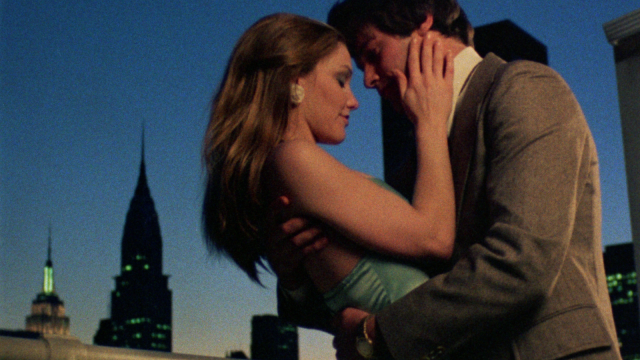
Maraschino Cherry (1978)
Share:
APPROXIMATELY ONCE A WEEK FOR the past 15 years or so, social media—a make-work program for the chronically insane, which is to say most of the inhabitants of the industrialized world—judders with the racket of what has come to be called “sex scene discourse.” This generally begins with someone proclaiming that sex scenes in films are egregious, exploitative, or some combination of the two, and altogether unnecessary as they do little if nothing to advance the narrative or, as it’s commonly put, “move the plot along”—evoking an image of the filmmaker as drover, the film as cattle drive, its lone function to make sure the precious story arrives safely in San Antone (or something like that). The initial provocation then engenders a lively tussle between cultured, intelligent cinephiles and depraved perverts, the latter of course being the gormless cretins who prefer the competent, streamlined execution of a three-act plot to watching a bit of on-screen “how’s your father,” simulated or otherwise.
One cannot imagine the cinema of Radley Metzger without the sex scene any more that of Delmer Daves without the crane shot, that of Max Ophuls without the sinewy moving camerawork, or that of Christopher Nolan without the stultifying boredom. Born in 1929, Metzger came of age on the Bronx’s Grand Concourse, the borough’s most chic address, a broad thoroughfare laid out in imitation of the boulevards with which Baron Haussmann had crisscrossed the French capital. Does this, in part, explain Metzger’s later gravitation towards the Continent, the fabled land of sophistication, suavity, happy corruption, and sexual permissiveness, as well as his later taking, once he’d turned his hand to directing hardcore pornography, the nom de porn “Henry Paris”? Hard to say. What can be said is that for Metzger, as for Stanley Kubrick, another Jewish Bronxite born just a year before Metzger who cultivated a pronounced fetish for the music and literature of imperial Vienna, the epicenter of art and elegance was to be found somewhere Over There.
Like Kubrick, Metzger began his directorial career loitering in the run-down neighborhood of noir, self-financing a moody little number titled Dark Odyssey which played to empty theaters in the summer of 1961—the same year that Italian Federico Fellini’s La Dolce Vita, a sprawling cinematic debauch that dared to acknowledge the existence of sexual intercourse, became the sixth-highest grossing film in the United States, having already been a succès de scandale in Europe the year prior. Sensing, with the waning power of the Production Code and of state and local censorship boards, that a sea change was coming vis-à-vis sex on screen, Metzger set up a production and distribution company, Audubon Films, with Ava Leighton, a colleague at Janus Films, where he’d been employed cutting trailers, and the duo made a priority of acquiring risqué imports selected on the basis of their likelihood to titillate American audiences. (The company was named for the Audubon Ballroom on 165th Street in Washington Heights, where Metzger had seen his first film, and where, in February 1965, Malcolm X would later be assassinated.)
Naked Came the Stranger (1975)
With titles like Le Quatrième sexe (1961) and Douce violence (1962) keeping the Audubon coffers filled, Metzger was able to return to the director’s chair, now committed to making gauzy softcore dramas for the discriminating erotic connoisseur. His 1965 The Dirty Girls, filmed in Paris and Munich, established the template that Metzger would follow in the decade ahead: Euro locales, opulent sets, naff tailoring, high-finish cinematography, a spirit of good-natured sybaritism, baroque rituals of seduction involving the baring of much flesh and, as often as possible, a highbrow literary inspiration: Prosper Mérimée (1967’s Carmen, Baby), Alexandre Dumas, fils (1969’s Camille 2000), Luigi Pirandello (1970’s The Lickerish Quartet… sort of). As with his steering of Audubon, there was an element of commercial consideration to this turn, but also an undeniable affinity for the subject matter: it is a fact that Dostoevsky wrote voluminously because he needed the money, but what he wrote could only spring from a pathological conviction.
The glossy, sultry, swanky, sophisto eroticism that had been Metzger’s stock-in-trade, however, would be all but entirely muscled out of the marketplace by the mid-1970s with the appearance of hardcore pornography in American movie theaters (as opposed to basement rec rooms, Elks Lodge smokers, fraternity houses, and the like, where it had previously found grateful audiences). The public had had a glimpse of, to borrow from Mark Mothersbaugh, poles in the holes, and they weren’t going back. And so Henry Paris—the sobriquet gracing nearly all of Metzger’s hardcore films—was born.
If there was some room for debate as to the potential of the softcore film as a vehicle of artistic expression—indeed, Metzger’s films enjoyed a fairly respectful critical reception—it was a matter of general consensus that hardcore was beneath serious consideration, a wholly utilitarian genre intended not to merely whet the sensual appetite but to encourage the pocket pool crowd to full release, its efficacy in this regard attested to by a new crustiness in the seat cushions of certain cinemas from Times Square to Hollywood Boulevard. The Moroccan French filmmaker José Bénazéraf, “The Antonioni of Pigalle,” a filmmaker somewhat akin to Metzger in the artistic ambition of his erotic cinema, disdained hardcore for its tendency to sate rather than stir. Pauline Kael claims to have been rebuffed by New Yorker editor William Shawn after filing a review of Deep Throat (1972), never to darken the august pages of his publication, and most respectable outlets for cultural criticism followed suit. (The foppish film critic played by erstwhile Frankie Lymon and the Teenagers member Joe Negroni in 1975’s Metzger-directed Naked Came the Stranger gives some indication of his opinion of the profession.) A rare highbrow figure to consider the creative possibilities opened up in exploring new avenues of explicitness was Kubrick, who at one point had planned his adaptation of Arthur Schnitzler’s 1926 Traumnovelle—eventually completed in 1999 as Eyes Wide Shut—as a hardcore epic to star Steve Martin.

The Image (1975)
As the VCR’s appearance on the market began the slow decline of the porno theater, it would stand to reason that cinematic exhibition of hardcore, were its only function the purely practical one ascribed by its naysayers, would have all but disappeared in the current Gooncave Era. Such is not the case. A handful of hardcore titles—most of these gay-themed—have found a place on the repertory film circuit: the queer canon includes Metzger enthusiast Andy Warhol’s Blue Movie (1969), Fred Halsted’s LA Plays Itself (1972), Curt McDowell’s Thundercrack! (1975), Joe Gage’s Working Man Trilogy (1976-79), and Dietrich de Velsa’s Equation to an Unknown (1980), while Stephen Sayadian’s Café Flesh (1982; directed as “Rinse Dream”) is the odd (primarily) hetero outlier. One hopes that the Museum of Modern Art—which has honored LA Plays Itself with a place in its permanent collection—will in due time also recognize the merits of exercises in abjection like Jamie Gillis’s On the Prowl (1989) and John Stagliano’s Buttman Confidential (1998), or perhaps devote six months to a complete retrospective of the oeuvres of, say, Gerard Damiano or Gregory Dark. (Oh, to hear the theme from 1986’s White Bunbusters pumping from the speakers at the Roy and Niuta Titus Theater!) Given that public masturbation is frowned upon in every cinema in the five boroughs save the venerable Fair Theatre in Jackson Heights, it stands to reason that something in these films continues to resonate through the decades.
Three Henry Paris films—The Private Afternoons of Pamela Mann (1974), The Opening of Misty Beethoven (1976), and Barbara Broadcast (1977)—are by now firmly ensconced in the Valhalla of the fuck flick. Given that these titles have enjoyed sufficient praise, I’ve limited the scope of this piece to three slightly lesser-known features: Naked Came the Stranger, The Image (1975), and Maraschino Cherry (1978), all newly restored, and every bit as deserving of attention as their lauded brethren.
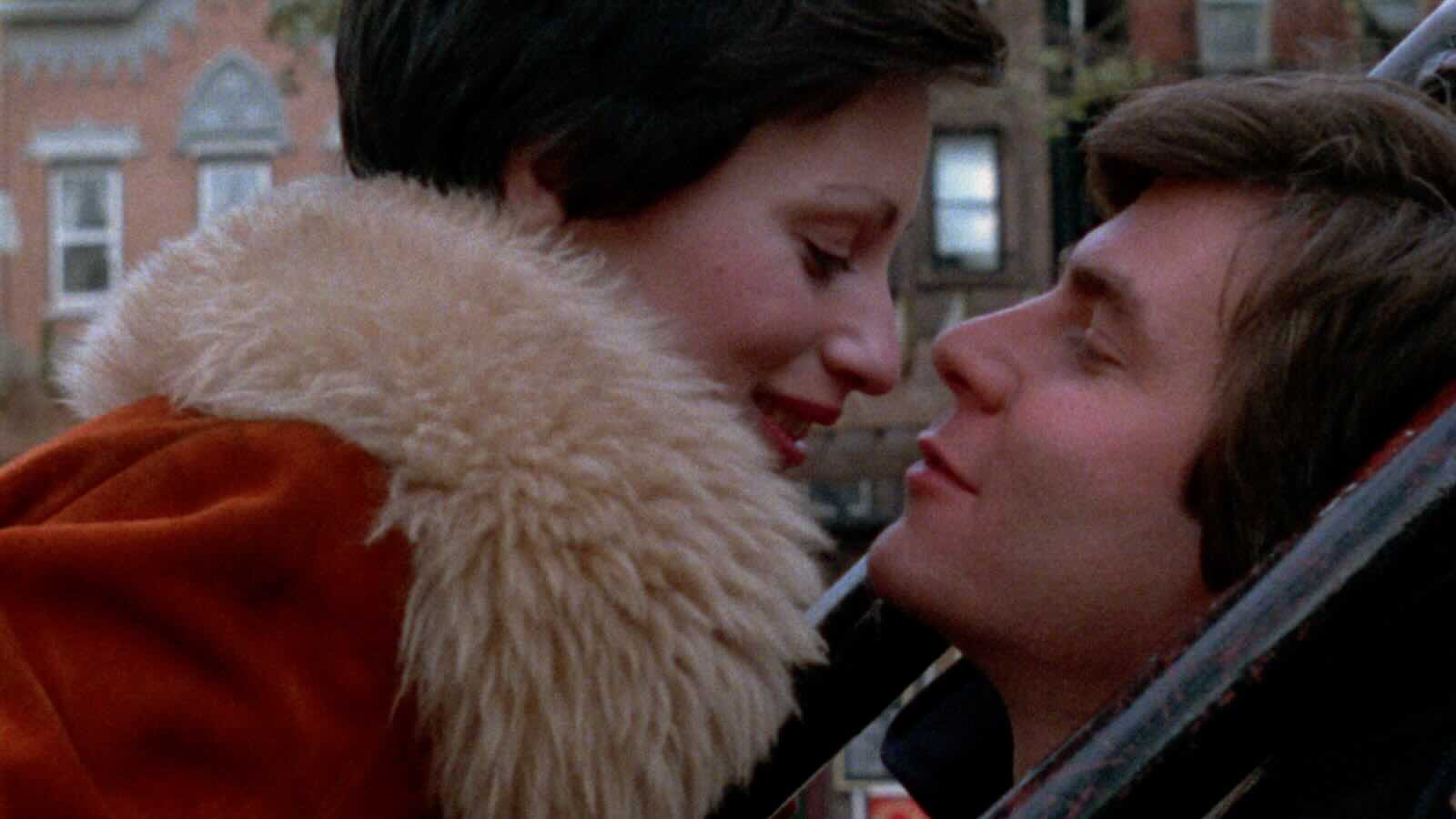
Metzger’s hardcore films are plotty by the standards of most contemporary fare in the same field, much of which can barely be bothered to establish an identity for its “characters” (real estate agent, stepsister, home invader, slutty gamer, girl in yoga pants, slutty gamer in yoga pants, etc.) before getting down to business, but they’re not exactly Bleak House. Naked Came the Stranger, adapted from the 1969 novel of the same title—a literary hoax pulled by a group of Newsweek journalists sending up the trashy paperbacks devoured by the American reading public—concerns the married hosts of a New York drive-time radio chat show, Gilly and Billy (Darby Lloyd Rains and Levi Richards), their numerous, graphically documented infidelities, and their final, juicy reconciliation. The Image—the lone XXX picture to which Metzger signed his birth name—has its source in a 1956 novel, L’Image, credited to one “Jean de Berg,” the pseudonym of Catherine Robbe-Grillet, wife of Nouveau Roman pioneer Alain and, at least last that I checked in, still among France’s most in-demand dominatrixes as she approaches her centennial year; as one might well expect given the author’s identity, it’s an S&M odyssey, focused on a ménage à trois between mistress, slave, and a more-than-slightly self-regarding novelist. (The setting is Paris, the character names French, but leads Marilyn Roberts, Rebecca Brooke, billed as “Mary Mendum,” and Carl Parker are resolutely American.) Maraschino Cherry, Metzger/Paris’s hardcore swan song, is in essence a series of sketches framed by scenes of the eponymous owner of a tony cathouse (Gloria Leonard) teaching her visiting younger sister (a charmingly guileless Jenny Baxter) the ropes of the escort biz.
Maraschino Cherry (1975)
The elements that set Paris’s hardcore apart from the lower order of fap fodder are much the same that established Metzger as one of softcore’s gold standards: a keen compositional sense, a unifying air of suavity and ease, a sharp ear for comic dialogue, an aptitude for getting the best from performers, and a nimble erotic imagination uncolonized by pornographic cliché.
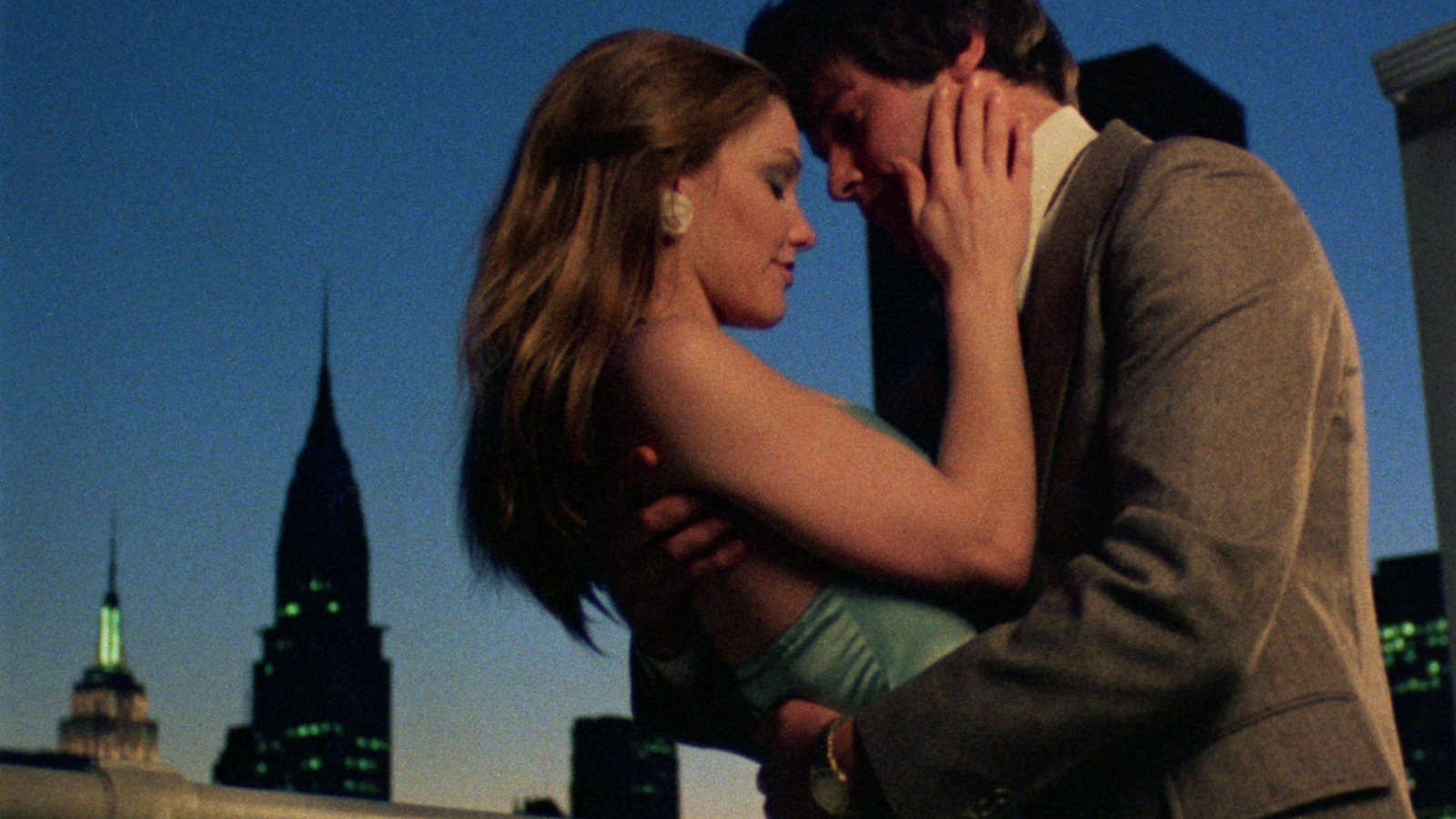
To the first point: while the technical polish in Monsieur Paris’s pictures is not quite up to the consistency of Metzger’s softcore outings—there’s the shadow of a camera here, a focus pull arriving a split second too late for the cumshot there—it’s far from the grainy, grotty, pubic-hair-in-the-gate look that one may associate, fairly or not, with much of the era’s hardcore. In Naked Came the Stranger there are a couple of long shots taken at magic hour, sun lowering over Long Island Sound in the distance,that I would not hesitate to call “gorgeous.” The Image throughout maintains an air of gelid grace, a film with the feel of frosted glass, with a sequence following its central trio on a stroll through the rose garden of the Parc Bagatelle particularly ravishing. The film-within-a-film that appears in Maraschino Cherry opens with a shot of a couple embracing against a backdrop of Manhattan high-rises at dusk that is achingly beautiful and swooningly romantic, a vision of urbane eroticism so potent one wonders how anyone consigned to owning a split-level ranch in the suburbs ever possibly manages to be aroused.
The cinematographic sumptuousness is suited to the milieu of Metzger/Paris’s films, one of leisurely libertinism taking place amongst sumptuously appointed surroundings—after altering the setting of his Score (1974) from that of the off-Broadway play it adapted, he famously quipped, “Who wants to see sex in Queens?” The characters that people these pictures are well-heeled, wry, pithy, unruffled. They are smartly turned out, beautifully styled, and while there is no lack of lingering anatomical detail in these films, they also function as voluminous love letters to women’s coiffure. (When, I ask you, was the last time that, while watching pornography, you’ve had occasion to think, “Man, she’s got great hair!”) Little indication is given that the working girls of Maraschino Cherry, for instance, have turned to their profession out of financial desperation, and the walls of the suite in a Manhattan skyscraper in which they ply their trade—more like the offices of an in-demand interior decorator to the smart set than a hot-sheet hotel—are tastefully decorated with reproductions of Beardsleys and Mirós.
Work of any other kind occupies little of the day, instead dedicated to various connubial delights. Parker’s “Jean” in The Image is, we are told, a writer, but the only evidence given of his occupation as wordsmith is a tendency towards orotund pomposity: egging on Brooke’s character during a vigorous blowjob, he tells her “Good girl… You’re about to reap the fruits of your labor…” (It’s unclear what exactly Jean writes; I’d imagine it’s a bit like the novel that Peter Coyote labors over in vain in Roman Polanski’s 1992 Bitter Moon.) Watching these productions, one never has the sense, as with certain other artifacts of hardcore’s rough-and-ready New York period, before the biz left for the sunny San Fernando Valley, that the performers will be rushing back to the cab stand or the go-go bar as soon as they hear “That’s a wrap!” Not a value judgement, mind you, merely an observation; those who prefer rutting of a proletarian variety will have to find their pleasure elsewhere.
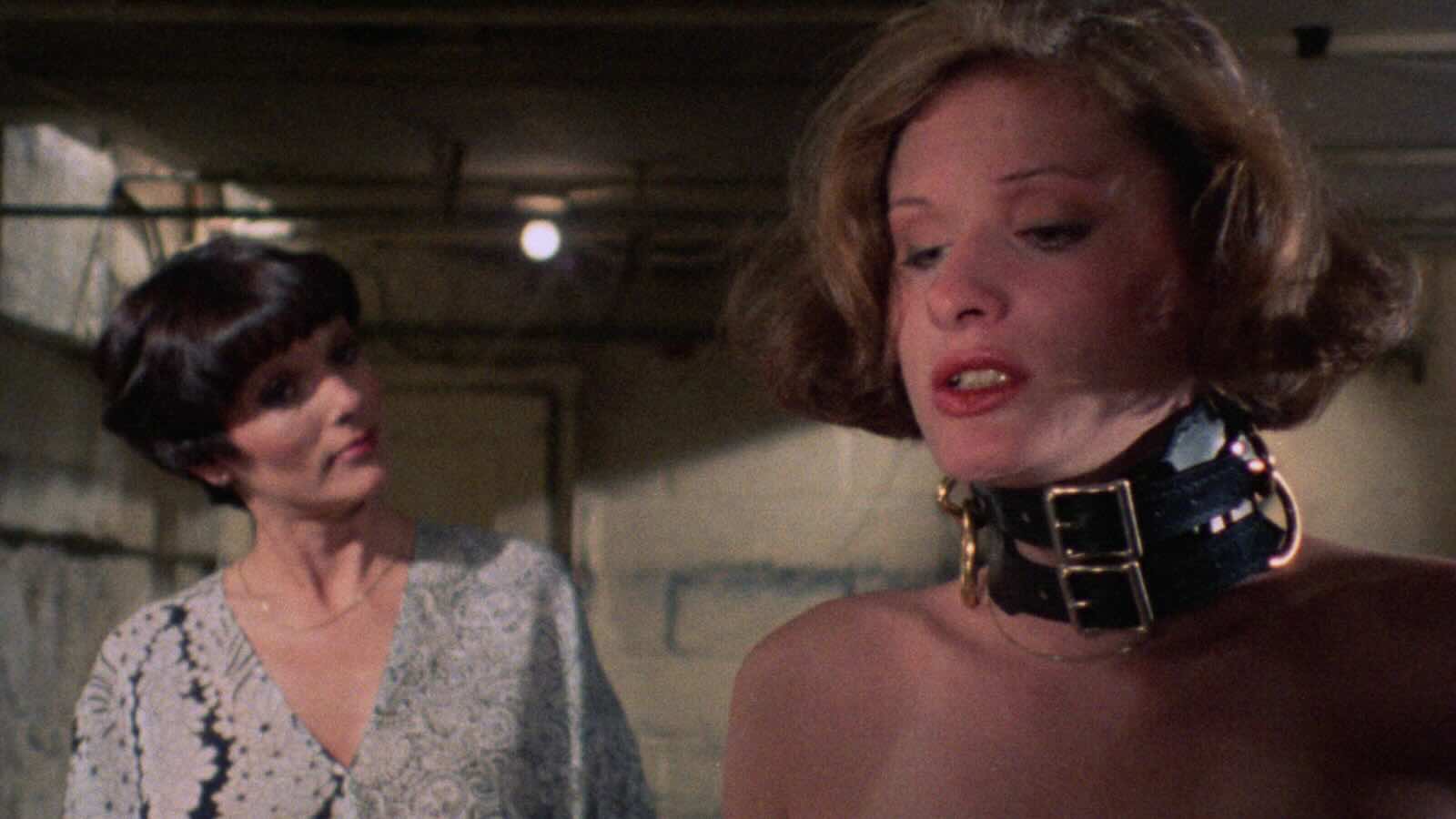
There is, however, a world of difference between such blithe eroticism and, say, Helmut Newton’s glacial, Teutonic vision of luxe sex in five-star Swiss hotels, a pawky humor that survives even in the forbidding atmosphere of The Image, a film whose climax takes place in a fully equipped dungeon called “The Gothic Chamber.” Here, as in the master-and-servant scenes in Maraschino Cherry, one has a sense that the filmmaker is more than a little tickled by the po-faced decorousness that accompanies S&M mise en scène, and it is hard to imagine that a digression in which Parker is seen covertly depositing caviar and crudités between Brooke’s thighs during a candlelit dinner isn’t meant to register as at least a bit… silly. While Paris, no less than Metzger, is a sexual gourmand with a refined palette, this doesn’t prevent him from noting that the homo sapiens, when in the grips of horniness, is prone to rather ridiculous behavior—see for further reference the inane, childish pillow talk that occurs between Richards and pixie-ish mistress Mary Stuart in Naked Came the Stranger (“Big Love Bunny’s got his finger on Little Love Bunny’s fuzzy!”) Herein, perhaps, lies the key to the longevity of Paris/Metzger’s hardcore films: they admirably evoke both the tunnel-vision avidity of lust and the ironic distance that comes following its fulfillment, or, as I recall memorably seeing it once described on an internet message board, of “post-nut clarity.”
Therese and Isabelle (1968)
Metzger, who wrote all three films discussed under an additional pseudonym, that of “Jake Barnes,” has an aptitude for one-liners considerably more refined than smuttily suggestive double entendre, but the ensembles he’s assembled deserve more than a little credit for putting them over. Rains, the jilted wife of Naked Came the Stranger and early inductee into the X-Rated Critics Organization Hall of Fame, proves a particularly spry comedienne, reminiscent of Jane Curtin in both her high-cheekboned blondeness and her tart delivery, dead game when, for instance, desperately trying to suck life into a recalcitrantly flaccid bartender in the wine cellar at a swanky soirée. Equally impressive is Alan Marlow’s turn, in the same film, as Gilly’s first successful extramarital conquest, Marvin, whom she picks up in a rented City of London double-decker bus and proceeds to fellate as they cruise around midtown, Marvin’s response to her sexual aggression shifting from skittish panic at the prospect of being seen to snide disdain for the pedestrians visible on the passing sidewalks—“Fuck you all! How do you do? Go fuck yourselves!”—as she vigorously goes about her business. (A delightful discursive detail, of the sort almost entirely absent from today’s hardcore: the recurring cutaways here to the back of the bus driver, whose dangling right hand holds a cigarette with even-lengthening ash.) As has oft been observed, it was difficult enough, in the world of pre-Viagra porn, to find male performers who could maintain an erection on camera under the heat of studio lights, while to find one who could do so and remain in character was nigh impossible.
Those unacquainted with “Golden Age” hardcore will find much that is unfamiliar in the Paris/Metzger oeuvre. Erections the size of Italian hoagies do not spring eagerly to attention from lowered briefs, and hard-ons must be patiently coaxed into existence; there is nary a pneumatic breast or blighting tattoo in sight. It is not exactly accurate to say that the ensemble casts here look more like people you might encounter in real life than those of contemporary productions—half a century now separates us from these films—but they look like people you might have seen around the city 50 years ago, the folks milling about the streets of Manhattan in Chantal Akerman’s News from Home (1976), say. (Here we might recall that Akerman, during her first stay in New York, was a ticket booth attendant at the 55th Street Playhouse during its years as a gay porn house.)
Most unusual, however, is the sense of invention in these films, products of an “industry” still in its improvisational mode, not yet descended into industrial impersonality. The silent film interlude in Naked Came the Stranger, complete with intertitles; the meet-cute at Central Park’s Conservatory Water model boat-sailing pond in Maraschino Cherry—these are moments, per the latter film’s title character, “both unexpected and original.” Here we are dealing with a hardcore whose tropes have not yet hardened into immobility, and Metzger/Paris’s frame of reference is not limited merely only to other pornography: the highlight of The Image is a delectable dressing room threesome between Brooke, Parker, and a lingerie shop clerk played by Valerie Marron almost certainly inspired by the flirtation, during a sudden downpour, between Humphrey Bogart and Dorothy Malone’s “Acme Bookshop” salesgirl in Howard Hawks’s The Big Sleep (1946). (Parker: “Do you think it’s gonna rain? Like in the movies?” Marron: “It’s very possible.” Parker: “Well, everything’s possible…”)
With full knowledge that invoking the word “play” in the context of sex can evoke the most off-putting “poly” couple you’ve ever met, it must be said that Metzger’s Paris films are united by their fresh and lively playfulness—and, as the great Dutch historian Johan Huizinga tells us in his Homo Ludens, “civilization arises and unfolds in and as play.” Proust and an apple notwithstanding, I can think of few more civilized ways to while away the idle hours than with the work of Henry Paris, that most aristocratic of pornographers.
Share:
Recommended
- Futures and Pasts: We’ll Always Have Paris, aka Radley Metzger Goes Hardcore
 On the sophisticatedly salacious pleasures of three newly restored, ’70s XXX classics-in-waiting.
 - The Given Word
 An essay from the newly released compendium Ken Jacobs: I Walked Into My Shortcomings.
 - An Introduction to Jan Švankmajer
 A primer on the work of the visionary Czech artist.