
Column
[wpbb post:title]
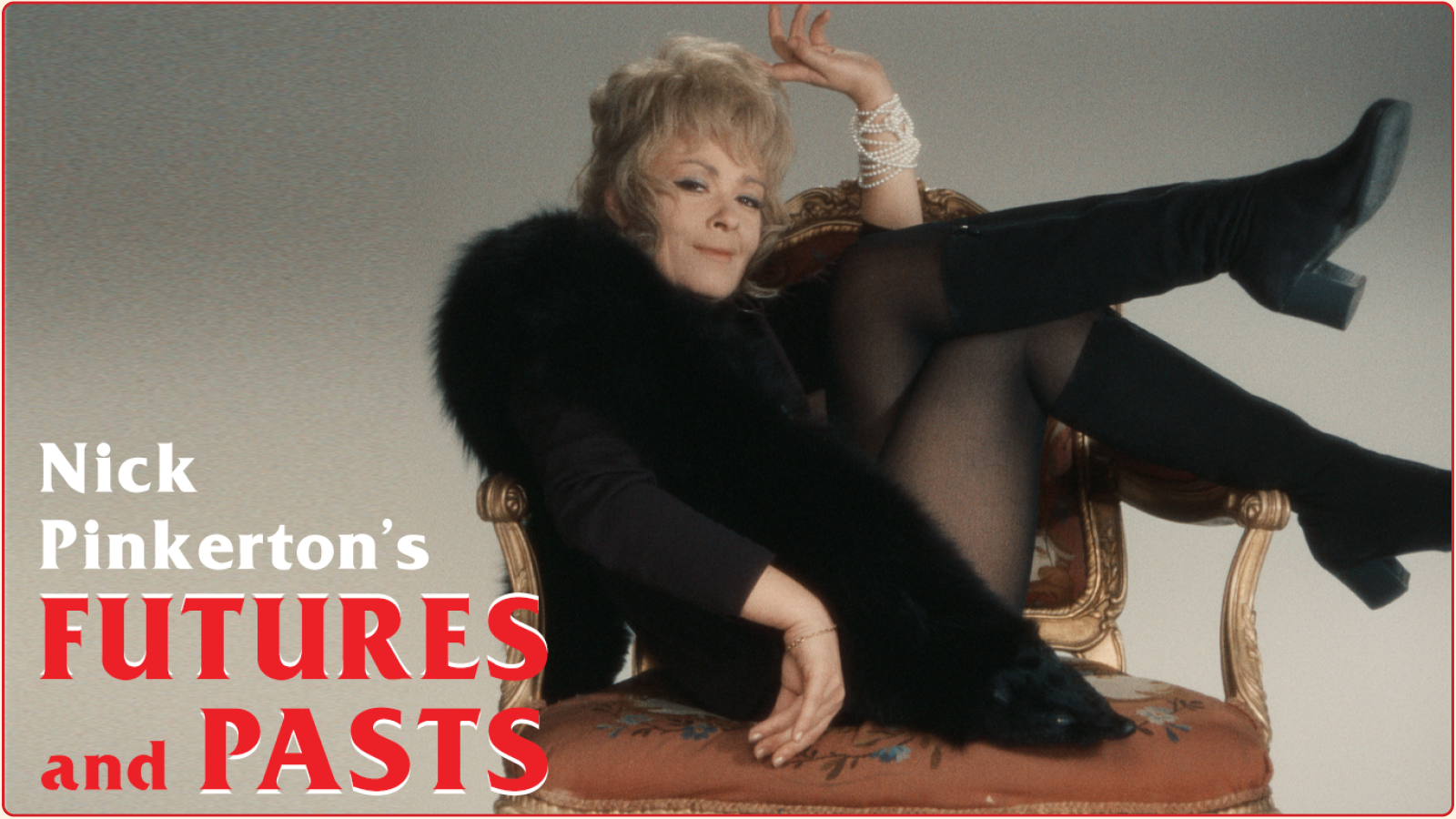
Murdering the Devil (1970)
Column
BY
[wpbb archive:acf type=’text’ name=’byline_author’]
In Futures and Pasts, Metrograph’s Editor-at-Large Nick Pinkerton highlights screenings of particular note taking place at the Metrograph theater. For the latest entry, he considers the lone directorial feature from the Czechoslovak New Wave’s secret weapon.
Murdering the Devil (1970) plays at Metrograph from Friday, October 25 as part of The Phantom of Ester Krumbachová.
Costume and set designer, screenwriter, canny script consultant, and director, Ester Krumbachová was an incalculably crucial utility player collaborator in the Czechoslovak New Wave, leaving her mark on films by more widely heralded figures like Jan Němec, Zbyněk Brynych, Otakar Vávra, Jaromil Jireš, and Věra Chytilová. When watching Murdering the Devil (1970), Krumbachová’s lone directorial effort, a comparison to Chytilová’s Daisies (1966)-one of three films the women made together with Krumbachová acting as co-scenarist and costumer-is nearly irresistible, alike as they are in being films of gluttony and parasitic gorging. But while the relationship between men and women and food is central to Daisies and Murdering the Devil both, the latter film is practically a mirror-image inversion of the former. In Daisies, hedonistic heroines Jitka Cerhová and Ivana Karbanová blithely batten off middle-aged lechers, stuff themselves to bursting on sumptuous repasts at Prague’s finest restaurants, and never once pick up a check or put out to pay back their benefactors. In Krumbachová’s film, it is the male’s turn to play voracious sponger, the woman the bled-dry host… up to a point, that is.
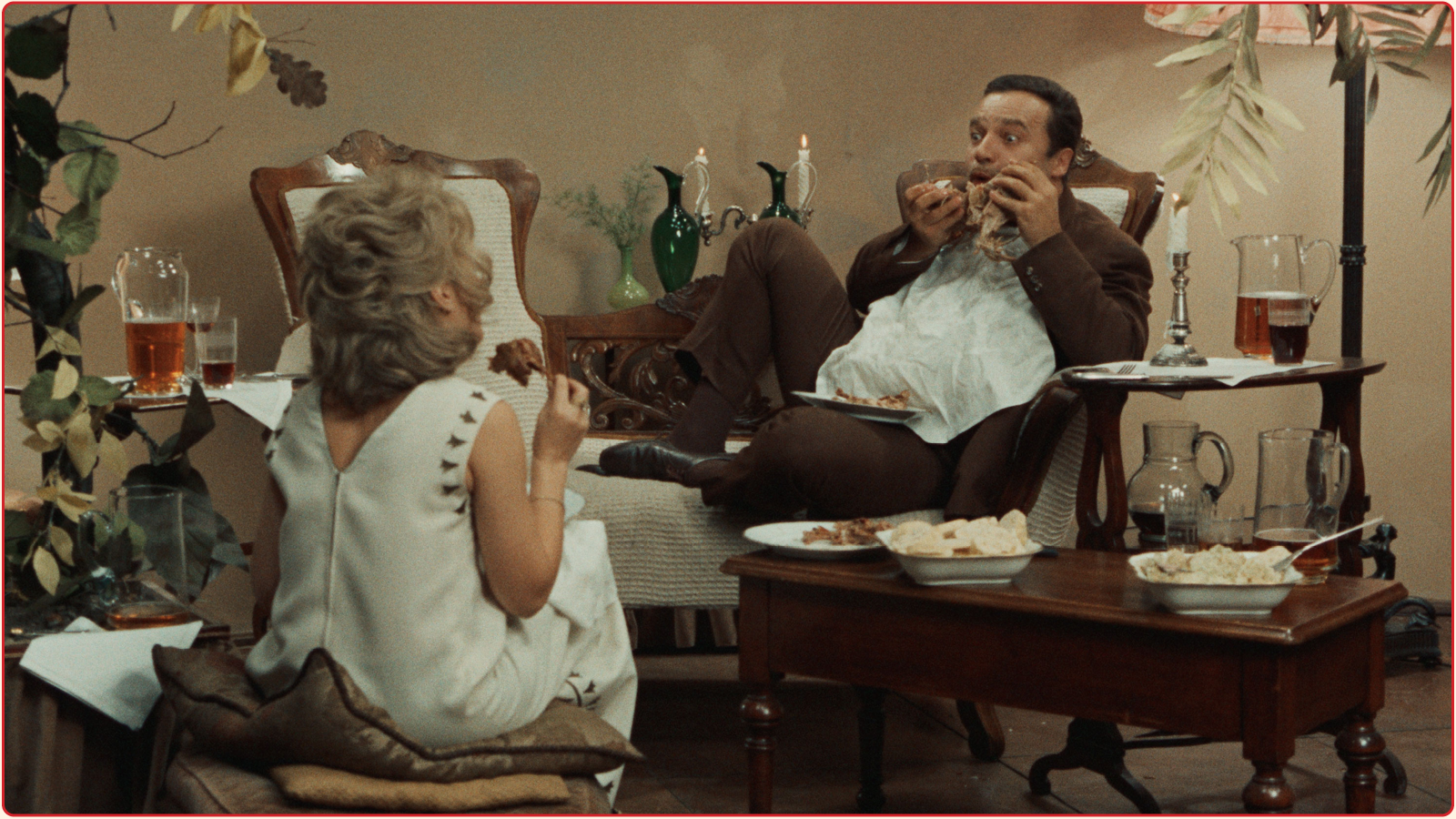
The central unmarried couple in Murdering the Devil, Ona and Bohouš Čert (“Čert” meaning “devil”), are played by Jirina Bohdalová and Vladimír Mensík, both popular screen actors with dozens of film credits behind them and scores more to come-he can be seen in Juraj Herz’s The Cremator of the previous year playing a perennially ill-natured husband who berates his hapless wife in the background of several scenes. For much of its runtime, Krumbachová’s film is essentially a two-hander, depicting the duo embarking on a tentative courtship taken up years after a distant, youthful acquaintance. Their meetings take place in her bachelorette pad, which is made up of a sitting/dining room dominated by an overhanging artificial plant that canopies a goodly portion of its area; a spacious, well-appointed kitchen that will see much action in the course of the movie; and a small bedroom that will be entirely neglected.
Both Ona and Čert are somewhere in the neighborhood of 40, but while she has kept herself in good trim and, before their every rendezvous, labors over the sophisticated-yet-comely outfits that show off her shapely legs, he wears his years as badly as his clothes; his jacket is frayed, and when he slouches at her dining table, where he spends as much of his time as possible, his hairy belly bulges out from under his shirt. Though slovenly in appearance, he is possessed of an immaculate self-assurance, and acts as though he’s condescending to do Ona a favor by calling on her; when first arriving at her door he greets her with the gallant words, “You’ve fattened a lot… You’re not the youngest anymore, either…” His idea of pitching woo involves bemoaning the still-smarting recent loss of a younger, “very beautiful” lover, and yammering about Freud and Nietzsche, whom he seems interested in only to the degree that they can serve as intellectual validators of his own low opinion of the female of the species.

Ester Krumbachová
Ona and Čert’s evenings together are filled with crosstalk and food; it’s obvious that the breathily flirtatious Ona, forever kittenishly sidling up against her guest, is game for something else, but Čert’s oral fixation seems to be limited to gastronomy, and from what we see it’s no great mystery as to why his young lover didn’t stick around. Nevertheless, Ona is sufficiently starved for company to induce the ever famished Čert to keep coming back, and this she does by presenting him with a succession of sumptuous multi-course meals, exquisitely prepared and plated, then devoured by him with a slurping, smacking relish that fairly puts her off her appetite. Steaks served with noodles, homemade pâté, two roast geese with fermented cabbage and oval-shaped knedliky dumplings, breaded pork tenderloin řízek, boiled mushrooms and compotes and cakes-all these and more will disappear into the seemingly bottomless abyss that is Čert’s stomach. With its smorgasbord of mouth-watering comestibles, Murdering the Devil is something like an ironic celebration of the glories of Czech cuisine-ironic because all the intensive labor Ona evidently puts into preparing these meals is wasted on Čert’s indiscriminate appetite. When a plate of knedliky falls on the floor, he wolfs down the shattered bits of crockery along with the morsels of bread, and when Ona is preoccupied in the kitchen, he’ll feast on her furnishings, beaverishly whittling down the legs of her antique sofas and end tables to spindles and stripping the foliage from her decorative tree’s branches.
There is a presentiment here of the coddled, gangly adolescent son who silently tucks into his mother’s laboriously prepared meals in Jeanne Dielman, 23 quai du Commerce, 1080 Bruxelles five years later-the same oblivious entitlement, but without the excuse of youthful egotism. At a slim 72 minutes, Krumbachová’s film devotes nowhere near so much time to closely observed process as Chantal Akerman’s, though its world, like that of Jeanne Dielman, is claustrophobic, interior; even more hermetically sealed, in fact. Dielman at least gives us a fleeting glimpse of the Brussels streets. No ray of sun penetrates Murdering the Devil, no breath of fresh air blows through it. The only scenes to take place outside of Ona’s apartment involve a trip to a mustachioed female cartomancer and an outing to a chamber music concert, both with her best (only?) friend, Miriam (Ljuba Hermanová), and Ona’s dream vision of a demonically cackling Čert afloat in a row boat, beating back a dozen drowning women, including herself, clamoring to get aboard-the first two staged in black box voids, the last clearly shot on a soundstage.
Murdering the Devil (1970)
Working in these entirely enclosed and artificial settings-Krumbachová dressed sets alongside production designer Boris Moravec, designed the film’s jewelry and sewed its costumes, even prepared the meals seen in the film herself-the writer-director creates a contemporary battle-of-the-sexes fable that makes no concessions whatsoever to the dictates of realism. Bohdalová and Mensík’s vaudevillian performances are broad enough to register in the back seats of the largest music hall, their Ona and Čert two ham actors so enamored with playing their stock roles to the hilt-hers that of the tittering, worshipfully besotted coquette; his that of the lofty-minded, well-rounded, patriarchally patronizing man of the world-as to only sporadically remember the existence of their scene partner. The claustrophobic, unventilated Murdering the Devil is a film of exacerbated archetypes; even Ona’s inner thoughts-of which we get glimpses in a series of monologues that Bohdalová, framed as though speaking in a mirror, addresses directly to camera-tend to be expressed in the clichéd language of cheap romance story periodicals. And as the film progresses, our Punch and Judy couple will revert to the archetypes of another, earlier, more superstitious time: Čert the self-satisfied, destructive boor reveals himself to be a creature of the stygian depths, befitting his surname, while Ona, the brittle, secretly tippling bachelorette of a certain age will have to make recourse to witchy wiles in order to be rid of him.
Murdering the Devil began its life as a short story by Krumbachová, published in the literary magazine Plamen in fall of 1968, then adapted into a radio play by Krumbachová and Němec, who’d been married in 1963, and whose tempestuous but creatively productive romance was then nearing its end. In Chytilová’s 2005 documentary about Krumbachová, Searching for Ester, Němec, who appears briefly as an extra in the movie, would say, “I know of no stupider film than Murdering the Devil“-a hyperbole suggesting a bitterness whose roots go deeper than mere aesthetic gripes. Whatever interpersonal issues may have existed between the couple notwithstanding, the period of the film’s release was not a happy one for Czechoslovak filmmakers drawn to formal and ideological provocations as a body. State censorship of the Czechoslovak industry, always a concern-the Němec-directed Party and the Guests, whose screenplay originated with Krumbachová, had been banned in 1966-became increasingly draconian in the period of “normalization” following the Soviet invasion of the country in August of 1968, quashing the moment of liberalization remembered as the Prague Spring.
Released to a sour critical reception in September 1970, Murdering the Devil, along with Vávra’s Witchhammer, on which Krumbachová acted as production designer, premiered earlier the same year, and Jires’s Krumbachová co-scripted Valerie and Her Week of Wonders, which appeared in theaters that October, retrospectively seem to represent the end of the heroic age of the Czechoslovak New Wave, whose most exhilarating and insubordinate figures would mostly expatriate, work beneath their talents, or languish for want of use in the years ahead. Němec found employment abroad as a for-hire videographer. Krumbachová, likewise now a pariah in the film industry, passed her time selling handmade jewelry, working covertly with the experimental Laterna Magika theater and, per writer Martin Šrajer, “writing dark fairy tales.” There was drinking and other assorted dissipation as well; Chytilová, who secured her friend a comeback of sorts as co-scenarist of 1983’s The Very Late Afternoon of a Faun, recalls Krumbachová’s steady downing of cups of “coffee”-in fact filled with rum-as part of their writing process.

Murdering the Devil (1970)
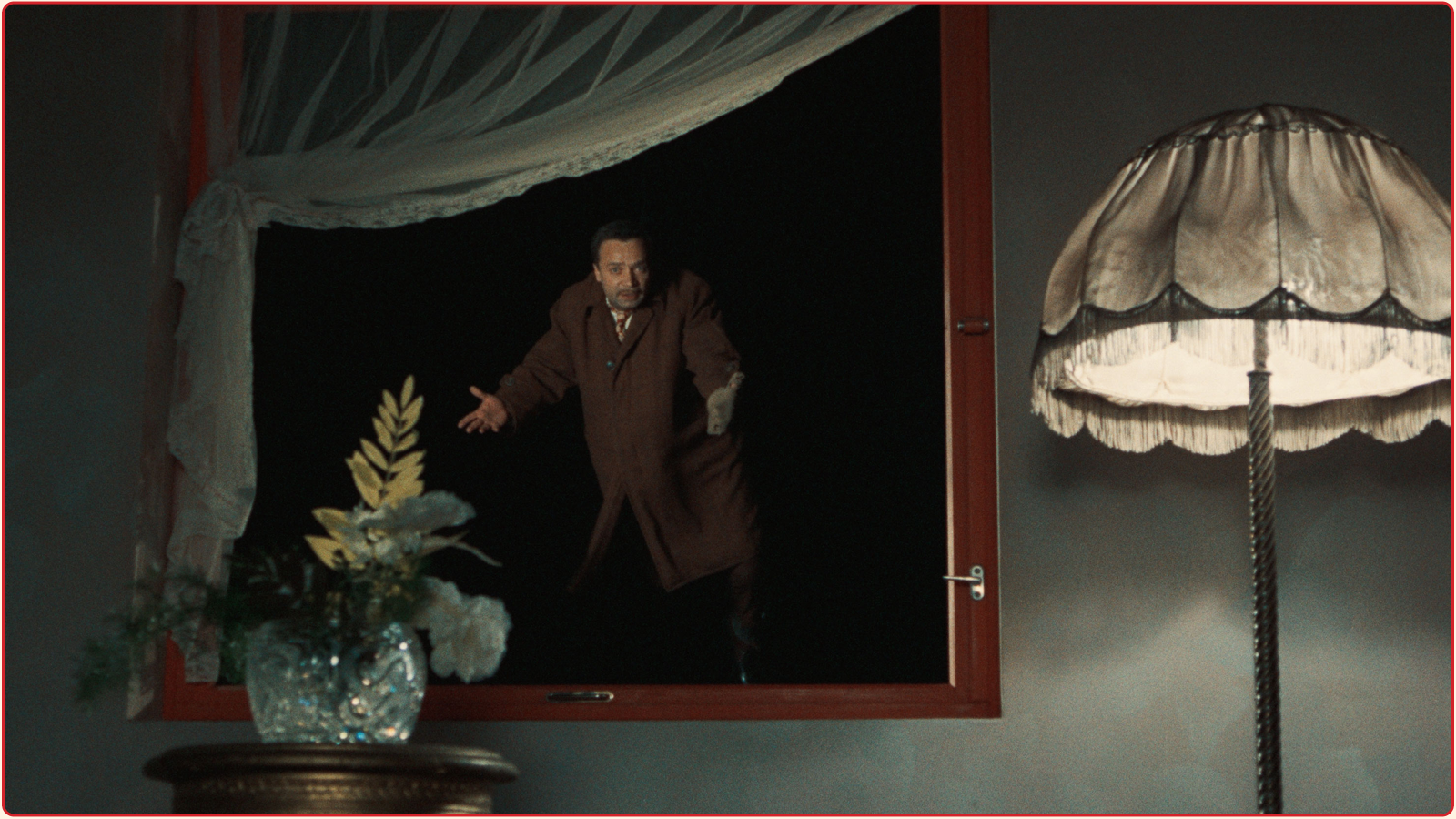
Krumbachová was picking up piecemeal film and television assignments again in the years preceding her death in 1996, though her screenplay adaption of Zdena Salivarová’s 1972 novel Honzlová would go unmade, leaving Murdering the Devil her final will and testament as director. Here, at least, we get a kind of happy ending: Ona, having finally had quite enough of Čert, decides to use his two known weaknesses-his voracity and his allergic vulnerability to currants-against him, leaving him alone with an industrial sized burlap sack of dried fruits and letting his untamable appetite do the rest. Trapped in the bag, Čert appears to dissolve, his duplicitous essence decanted into the currants, which when consumed now pack a punch “more effective than hashish of the best quality,” inducing vivid pipe dreams of fantastic fulfillment-sampling the stash herself, Ona has visions of being fêted by tuxedoed suitors that hang on her every word-found rarely if at all in real life. At the film’s close, Ona has established herself as head of a small cartel, earning a small fortune by selling the psychotropic remains of her old beau to a growing base of consumers eager for release-and so, the hoggish consumer becomes the consumed.
The role of food in Murdering the Devil, as enticement and ultimately as weapon, recalls the work of that most epicurean of American genre writers, Charles Willeford. Willeford’s fiction is filled with descriptions of meals, palaver about recipes, and observations about gendered relations to the dining table; for example, in his 1962 novel Cockfighter, narrator Frank Mansfield, being stuffed to the gills by a ladyfriend, observes: “I believe women really do like to see men eat, especially when they’re fond of the man concerned, and he’s eating food they’ve prepared for him. I have never denied any woman the dubious pleasure of watching me eat. Outside of taking care of a man’s needs, women don’t get much pleasure out of life anyway.” The author’s stated views on the subject, considerably more nuanced than those of his creation, are further articulated in a 1972 column in the Miami Herald by Betsy Poller, who would become Willeford’s third wife, titled “Food Used as Weapon: ‘Rape in the Kitchen.'” In the piece Willeford expostulates a theory-drawn, he says, from “Kate Millet’s explanation of the term ‘nurturance'”-that certain women take to overfeeding their men into an early grave as a form of vengeance on their partners; “This is deliberate aggression,” says Willeford, “The only legitimate retaliation she can get.”
The connection between two such disparate figures as these may seem spurious, but Willeford’s observation in the same column that “women are much more interested in the study of men than men are in women” finds an echo in Krumbachová’s own declaration: “I am far more interested in men than women. They are much more dangerous. Their aggressive sexuality often defies love. And eventually results in wars.” And while masculine sexual aggression, per se, is markedly absent in Murdering the Devil, this statement throws the film in a particular light-a proposal for peace by way of preemptive stealth strike.
Nick Pinkerton is a Cincinnati-born, Brooklyn-based writer focused on moving image-based art; his writing has appeared in Film Comment, Sight & Sound, Artforum, Frieze, Reverse Shot, The Guardian, 4Columns, The Baffler, Rhizome, Harper’s, and the Village Voice. He is the editor of Bombast magazine, editor-at-large of Metrograph Journal, and maintains a Substack, Employee Picks. Publications include monographs on Mondo movies (True/False) and the films of Ruth Beckermann (Austrian Film Museum), a book on Tsai Ming-liang’s Goodbye, Dragon Inn (Fireflies Press), and a forthcoming critical biography of Jean Eustache (The Film Desk). The Sweet East, a film from his original screenplay premiered in the Quinzaine des Cinéastes section of the 2023 Cannes Film Festival.
Murdering the Devil (1970)