
[wpbb post:terms_list taxonomy=’category’ html_list=’no’ separator=’, ‘ linked=’yes’]
RUN THE JEWELS
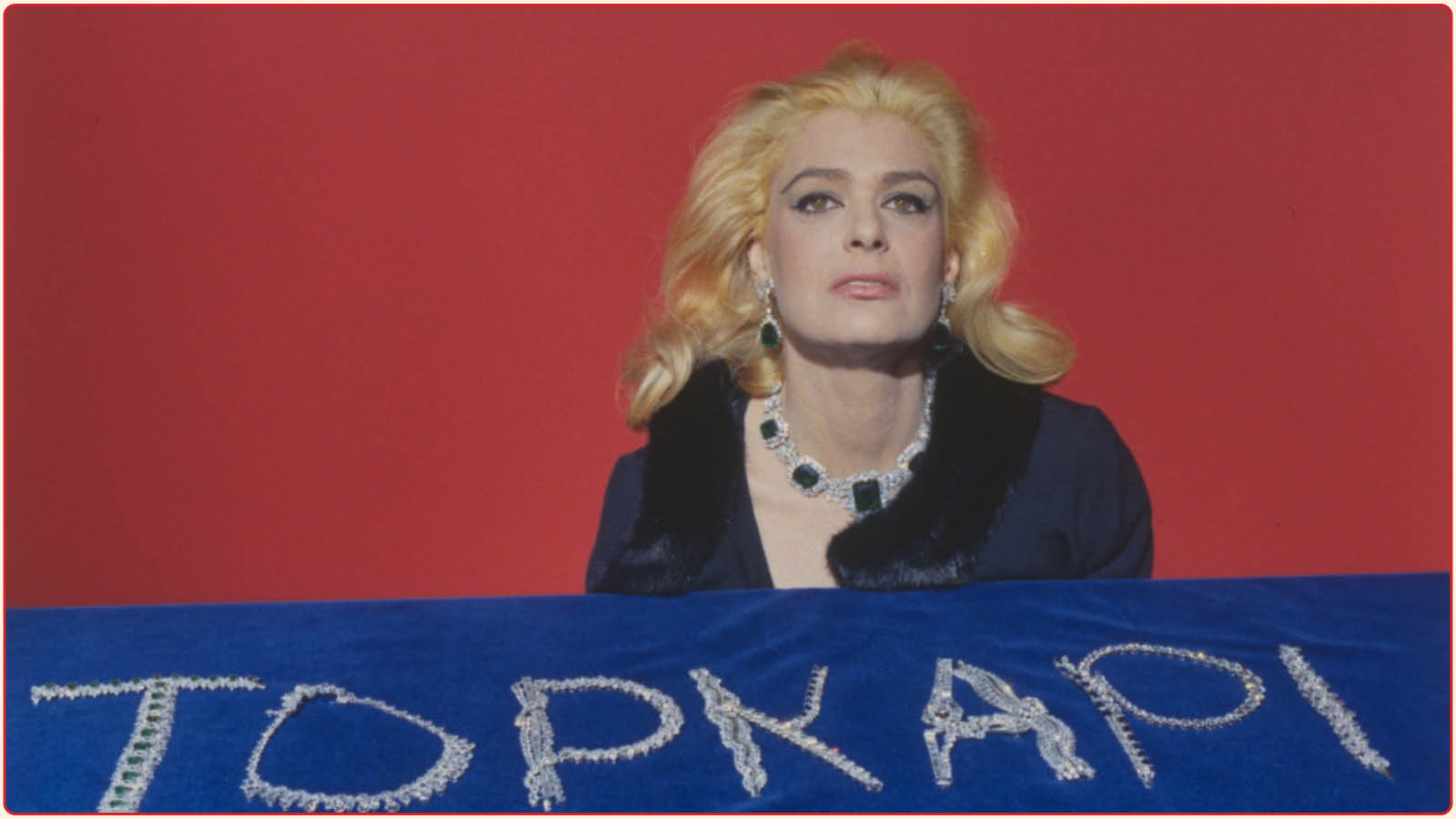
Topkapi (1964)
[wpbb post:terms_list taxonomy=’category’ html_list=’no’ separator=’, ‘ linked=’yes’]
BY
DANIELLE BURGOS
A look at the dynamic heist film Topkapi (1964) that embodied the electricity of both its filmmaker Jules Dassin and star Melina Mercouri.Topkapi opens at Metrograph on Friday, June 7 as part of Euro-Heists.
Elizabeth Lipp: I’m beginning to wonder if anything is real.
Out of all the films in Metrograph’s Euro-Heists series, only Topkapi is motivated by a lady too horny for emeralds. Please don’t take the “too” as moralizing; it’s meant in the spirit of excess that permeates the film. It isn’t even the sole Jules Dassin movie centered around a jewel heist, with his better known and much-imitated Rififi (1955) in the mix. Mario Bava’s Danger: Diabolik (1968) also features emerald fixation amid candy-colored camp, but it’s heist-as-foreplay for the film’s villainous power couple, the emeralds a glittering symbol of their triumph. Even Kinji Fukasaku’s Black Lizard (1968), with the rare lady criminal mastermind, has her committing crimes for the romantic art of it.
Topkapi‘s superficially singular lady gem obsession is sleight-of-hand stand-in for Dassin’s real-life focus on the film’s star: Melina Mercouri, whose ardor, in front of and behind the camera, sells the movie. She plays jewel thief Elizabeth Lipp, the architect of a scheme to smuggle the emeralds of Turkey’s Topkapi Palace out of the country. Recentering the heist film-traditionally a genre of cool male experts-around a passionate, playful woman leading a band of amateurs, Dassin frees himself and Mercouri from their respective career expectations while merging their disparate styles.
There’s an irony to Dassin assembling an international crew, caper-style, to make Rififi, then playing a foreigner whose horniness undoes the entire scheme. The filmmaker fled America permanently in 1953 to avoid persecution during the Red Scare, but his attempts to work with European film studios were repeatedly thwarted by Hollywood pressure. He was brilliant at concretely executing his on-screen desires, achieving the “naturalism” of The Naked City‘s street scenes by having a juggler distract crowds from the camera. Dassin limited his desires to what he believed were noble social causes, until the 1955 Cannes Film Festival, when he met singer and stage actress Mercouri. Rififi, Dassin’s first feature since his formal blacklisting by HUAC, played earlier to great acclaim. Mercouri’s screen debut at the festival in Michael Cacoyannis’s Stella confirmed her as not only a film star, but a Greek national icon. According to Mercouri, when the lights came up on Stella, Dassin ran towards her climbing over the theater seats saying, “I love the way you laugh; I love the way you walk!” She described their first meeting as “fatal and final.” From then on, their lives revolved around each other.

Topkapi (1964)
Peter Ustinov, who plays Topkapi patsy Arthur Simpson, noted Dassin “could have had a rather more remarkable career if he had not dedicated himself so devotedly to [Mercouri’s] service.” Is it not remarkable a writer/director known for a cool, detached style would drop it to follow a mutually burning desire? Their films leading up to Topkapi show the struggle of a romantic couple working to balance their diametric styles. Reviews described Mercouri as “a phenomenon” and “objecting that she overacts is like pointing out that the Parthenon would make an uncomfortable living-room.” Meanwhile, Dassin was famous for pessimistic social issue noirs like Brute Force (1947) and Thieves’ Highway (1949), though Mercouri saw what he tried to hide. “Julie, as a filmmaker, is slightly schizophrenic,” she complained. “He enjoys making films whose sole purpose is to entertain, but then later gets embarrassed… We’ve even had sharp words about it, and I made long speeches about entertainment being a social contribution.”
The serious foreign director and passionate Greek actress were each locked into roles they struggled to get out from under, while needing to work together. Mercouri recalls, “Julie insisted that I must make films with other directors, but he did not like to make any without me…I suffered terrible jealousies at the thought of his making a film without me.” Never On A Sunday (1960) parodies their positions, with Dassin playing a visiting foreigner bent on shaping Mercouri’s fiercely independent sex worker into his Grecian ideal. He fails, leaving for America alone. Phaedra (1962) reconciles Mercouri as both modern woman and Greek myth, though as a tragedy of fatal desire, she, of course, ultimately fails. But with Topkapi, both Dassin and Mercouri succeed, despite failure being the film’s running theme. The object of obsession is captured and adored (Mercouri, not the emeralds) despite the heist’s ultimate defeat. All Dassin had to do was accept making a film to entertain.
Topkapi (1964)
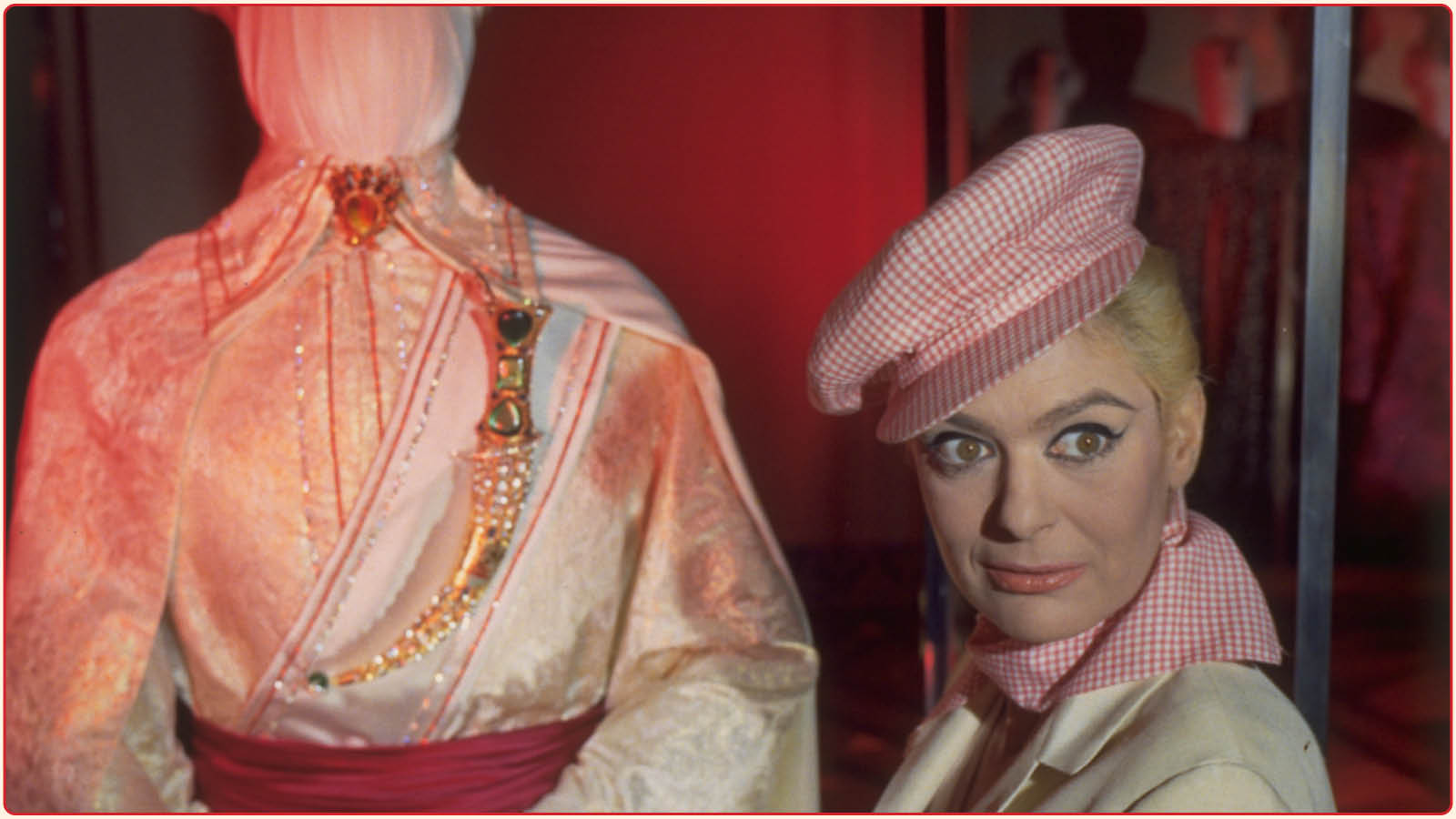
In a 1978 New York Times interview, Dassin lamented, “For about 10 years I was a refugee from Naked City. You name the metropolis, I was asked to do a Naked City there. Even today, I am a refugee from Rififi.” He sought asylum in filming another incredible heist movie, but one self-aware and indulgent of the pleasures cinema (especially this genre) could offer. After our dazzling introduction to Mercouri in Topkapi‘s opening credits, she breaks the fourth wall to address the audience personally. From the very start, we’re made aware this is a heist film we’re watching; we are the first to be recruited. With her English-sounding pseudonym, flitting across countries and accused by her housekeeper of being a Russian spy, Mercouri as Lipp is untethered from nationality. To meet her is to fall for her; this is Dassin’s entertainment.
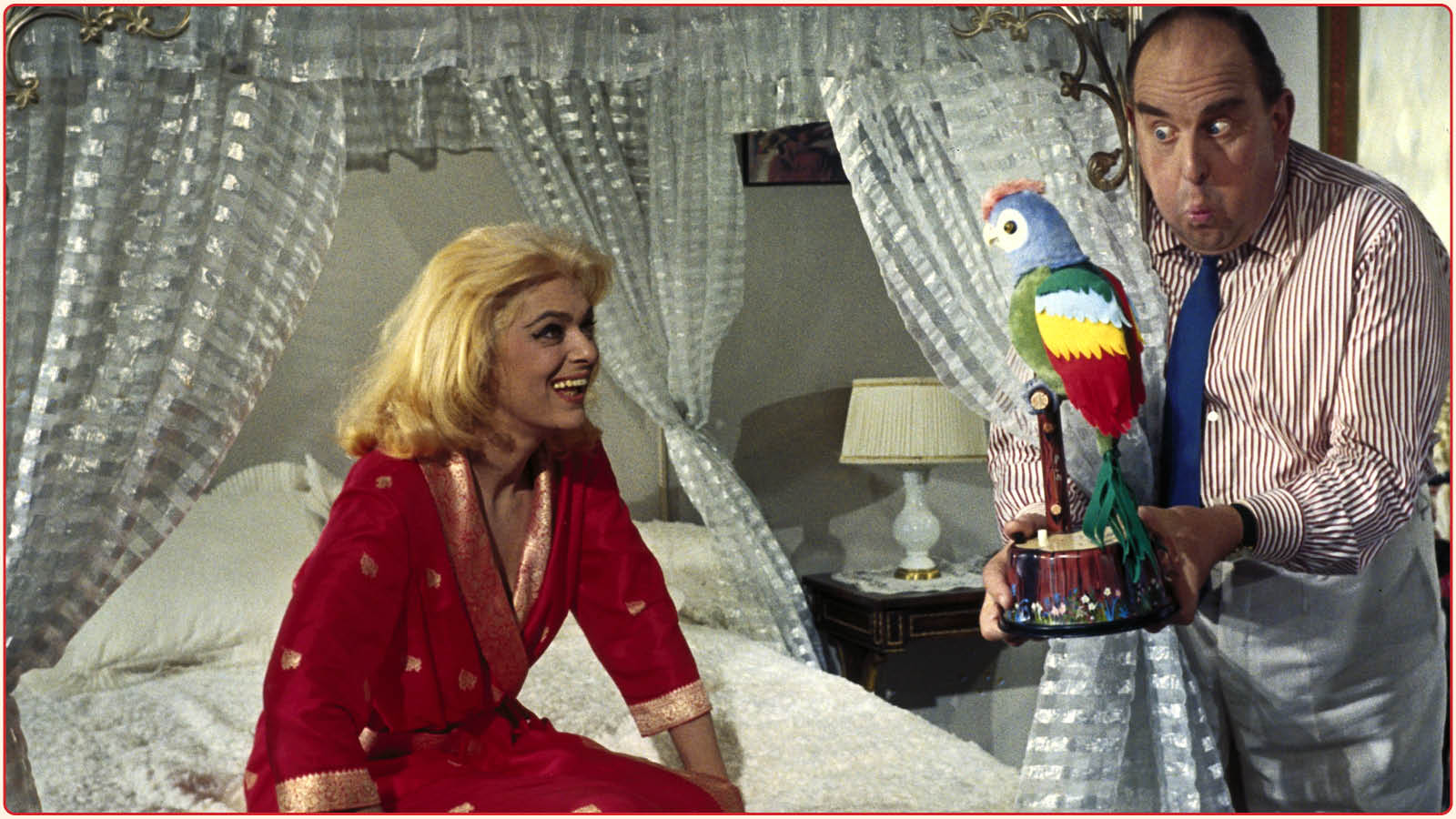
In his essay “On Pros and Cons and Bills and Gates,” Julian Hainch suggests heists are “the most tactile of all genres this side of pornography,” with “the specialized craft of the touching hand, but also the genre’s emphasis on what not to get in contact with.” Topkapi doubles down by providing physical solutions to technical problems. Robert Morley’s English inventor figures out the floor alarm, but the solution is to avoid the floor with an acrobat. While pulleys suspend him, they’re manipulated by two men and some chalk. Guns and smoke bombs are happily replaced by heist organizer Walter (Maxamillan Schnell, better known to MST3K viewers as Hamlet) with a literally hands-on solution to slow down gears. “I never liked that gun. It upset the artist in me,” Walter declares.
On top of the kinesthetic pleasure of watching precise movements from our own resting bodies, Topkapi adds self-proclaimed nymphomaniac Elizabeth’s constant caresses, kisses, and admiring observations of physical strength and acrobatics, her voluptuousness coloring the entire film. A key part of her plan hinges on the crew’s government watchers unable to peel their eyes away from the virile action of the film’s other major set piece, all-day Turkish wrestling. With oiled colossi in soaked leather shorts grappling to the last man, the scene takes as long as the actual heist, lingering on greased limbs as the gang nips out into the fray of a bazaar of belly dancers and contortionists.
Topkapi (1964)
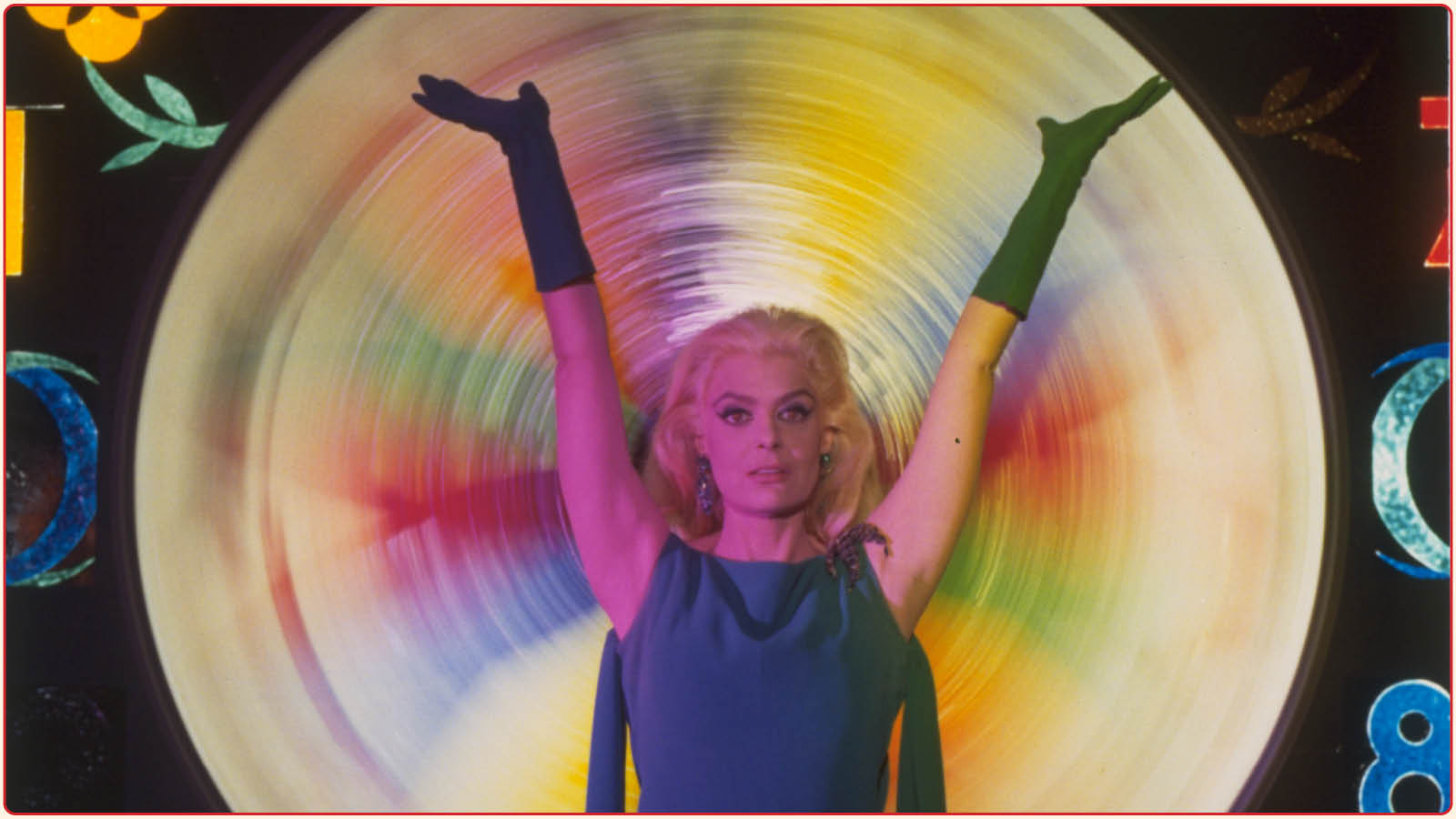
On Rififi, Dassin refused to shoot in daylight, but with his first color feature he revels in a sun-saturated, vibrant palette. Topkapi was lensed by Henri Alekan, a man no stranger to fantasy (La Belle et la bête, 1946) or the charm of location (Roman Holiday, 1953); and the film takes plenty of breaks to enjoy the view: driving by tourist attractions and savoring the confusion of street life. Though we’re repeatedly reminded this is an engineered reality, Dassin avoids the zany “unreality” that made later Topkapi imitators so grating (no musical interludes, supernatural powers, or ape costumes here). The heist is plausible (enough for Brian De Palma to nab it for 1998’s Mission Impossible), and events are believable, if silly and stylized; it’s theft as holiday. The only suspense is literal: during the heist’s suspension via pulley of their acrobat into the Palace, leaving the need for precision and caution literally in the hands of the crew’s lone incompetent, Arthur. When Walter enters Elizabeth’s studio early in the film, he compliments her impeccable handiwork in forging the jewels, a skill reflecting (a trait that reflects that of what that of the lover behind the camera is doing): an intense study resulting in gorgeous fraudulence that would happily fool anyone.
Critics of the time raved about the film, declaring it topped Rififi. Dassin had reinvented the heist film yet again by combining his passion (his beloved) with an onscreen counterpart as brilliant and warm as the emeralds she craves: a liberated, libertine woman new to the screen, not femme fatale but femme vitale. It was just Mercouri having fun in her own skin, but it was novel on screen as a delight and not a danger to be punished. Gaylyn Studlar’s essay “Men, Women, and the Heist Film” suggests the absence of women in earlier heists was due to their being stereotyped as more moral than men, and incapable of the “basic qualities-skilled professionalism, cool rationality, and silence-that a heist demanded.” Topkapi makes Elizabeth’s not being quiet an integral part of the job; it’s her loud laugh and joyfulness that lures a guard away at a key moment. Coolness is ignored; everyone is motivated by Elizabeth’s passion. Unlike Rififi, where the heist succeeds and all are doomed, in Topkapi the heist fails, and all seem pretty happy with the outcome: each proving themselves up to the challenge, if undone by natural error.
The film’s credits imply incarceration was just a minor bump on the way to another adventure: a sequel called The Crown Jewels was planned, but never made. In the end, Elizabeth fails to hold on to her emeralds. But even Turkish prison is a literal walk in the yard when you’re focused on what you love. It’s the infatuation of an artist-Dassin viewing Mercouri as Elizabeth ogling jewels-generously refracted through the prism of screens to audiences everywhere.
Danielle Burgos is a writer, editor, and film programmer in NYC. Hit her up for your next heist.
Topkapi (1964)