
Interview
[wpbb post:title]
Interview
BY METROGRAPH
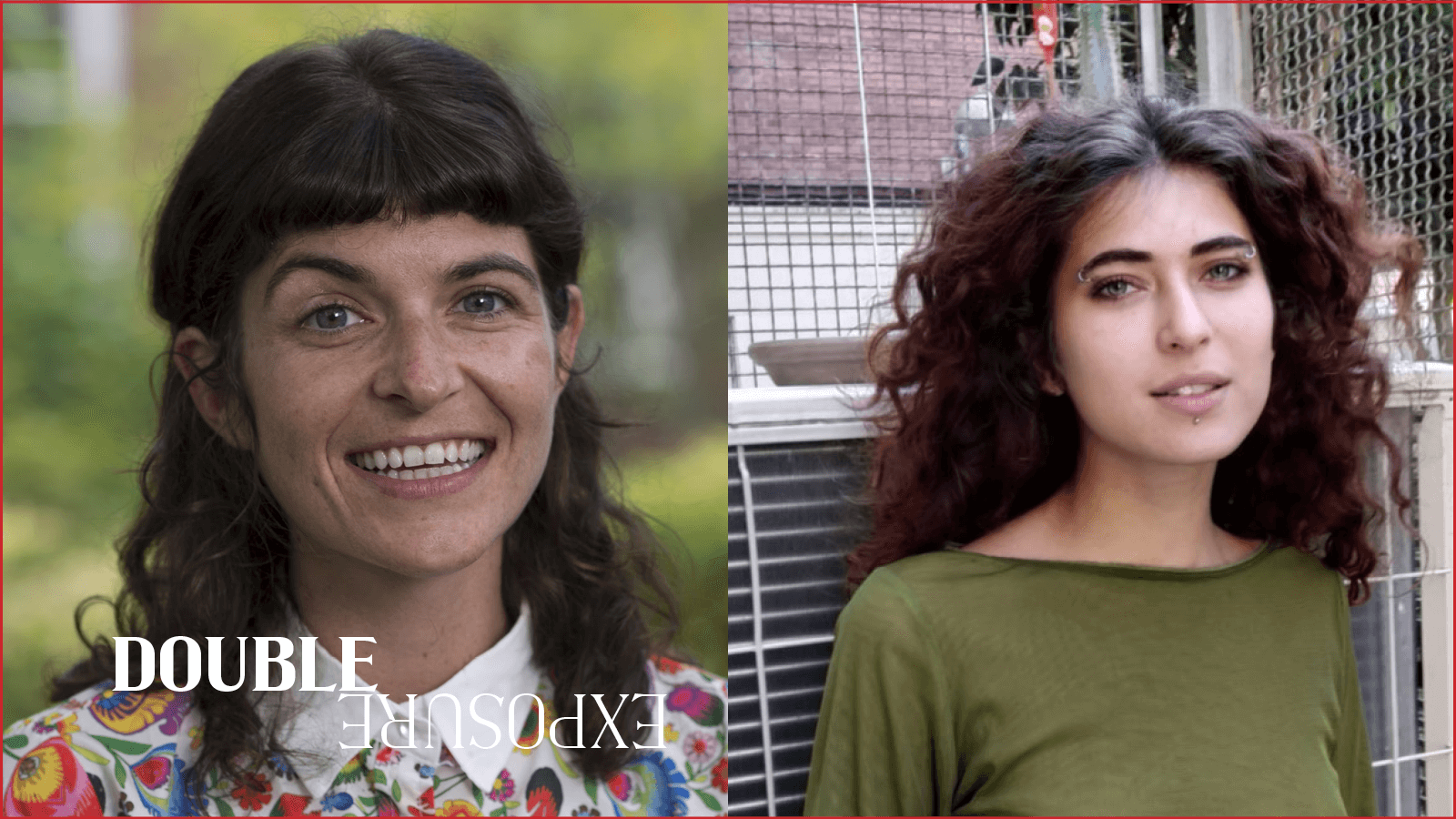
Welcome to Double Exposure, Metrograph’s column in which two filmmakers interview one another about the craft.
Jodie Mack’s Mack Does Macdowell: Woodlands Woodlands Sketches Sketches and Julia Mellen’s Yung Lean, Please Be My Yung Love both screen at 7 Ludlow on Saturday, December 16 as part of Highlights, Favorites, and Deep Cuts from Filmmaker Magazine’s 25 New Faces, and are available to stream At Home, alongside Mack’s The Grand Bizarre.
For our latest Double Exposure column, we bring together Jodie Mack and Julia Mellen-two alums of Filmmaker’s 25 New Faces list, who, though at different stages in their respective careers, are producing work that lands at the most exciting fringes of experimental animation today. Variously making use of everything from stop-motion and 3D modeling software to flicker effects and live performance, they’ve each crafted a set of disarmingly vibrant, playful fables for a globalized world, and a cinematic language all their own.An associate professor at Dartmouth College, Mack is best known for her 2018 feature-length tour de force The Grand Bizarre, an examination of the textile industry that bursts forth as a ravishing, rhapsodic orgy of color and texture. For the Filmmaker 25 New Faces program, Mack is sharing the previously unseen Mack Does MacDowell: Woodlands Woodlands Sketches Sketches, a 10-part series inspired, per Mack “by the ghosts and magic” of the work of composer and pianist Edward MacDowell-just one of many eclectic experiments she has made over the last two decades.
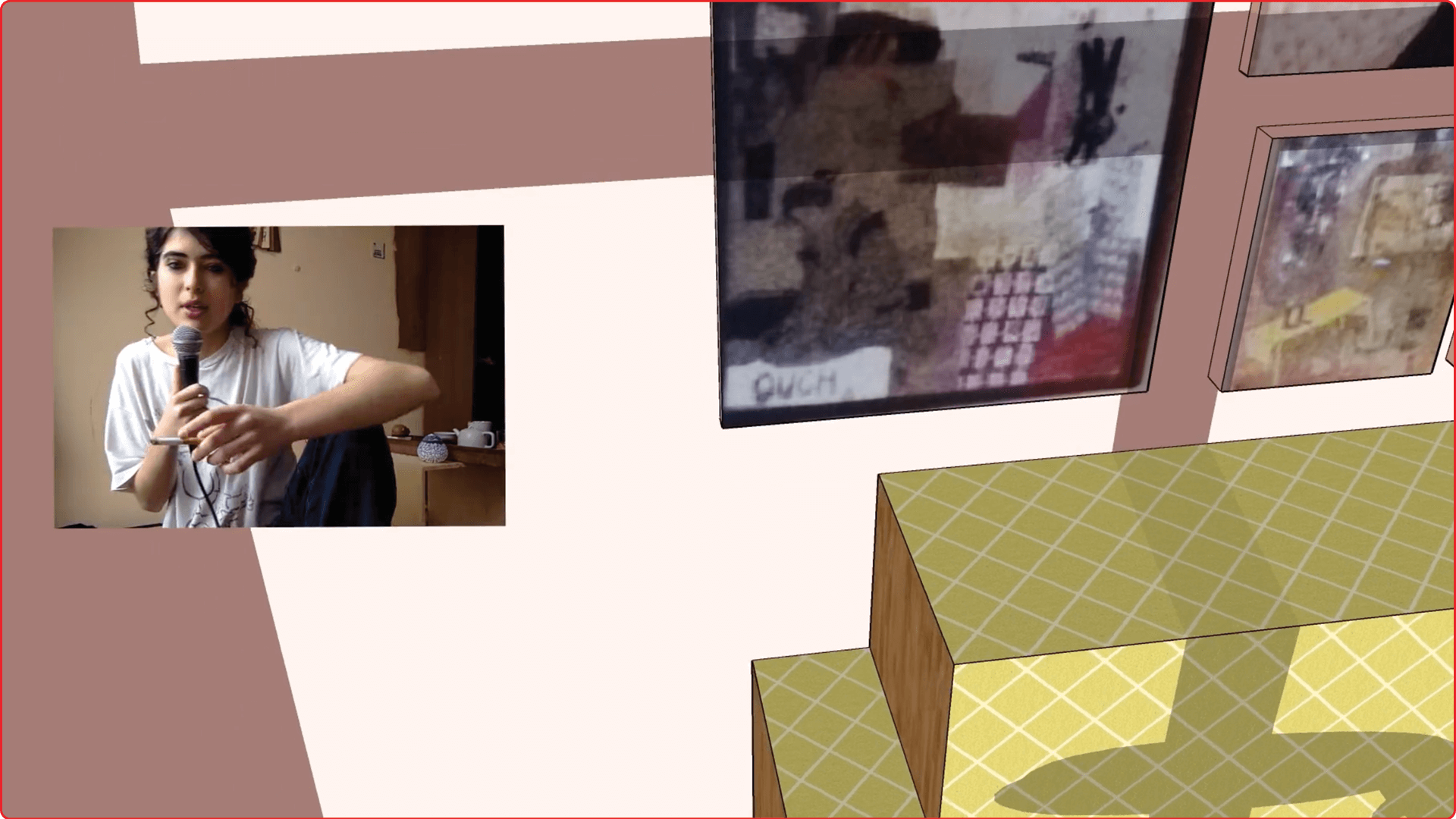
A recent graduate of the Art Institute of Chicago, the Brazilian American artist Mellen first gained attention with her 2018 short Yung Lean, Please Be My Yung Love, in which she performs a darkly comic single-take monologue, pitching woo to the Swedish rapper while living out a beguiling computer-animated fantasy first date. Her work is currently being spotlighted on Metrograph At Home, alongside the world premieres of two of her earlier works, New Years and I Fight These Hoes in the Shower.-Annabel Brady-Brown
JULIA MELLEN: Hey Jodie, it’s so nice to meet you.
JODIE MACK: You too! Excited to add another JM into my roster. I love experimental time-based practitioners with the initials JM. Jesse McLean, Jonas Mekas, Jennifer Montgomery, Jesse Malmed.
MELLEN: There’s a lot! Powerful initials.
MACK: It’s a collection for me in progress: chosen family by the alphabet.
MELLEN: You’re definitely a pattern-matching sort of person, I can see that. I studied your work in school, actually. My teachers would be flipping out right now.
MACK: That’s so cool. I saw you went to the School of the Art Institute of Chicago (SAIC), too. I went there for my MFA, a long time ago, but a lot of the teachers are still there. I didn’t know your work before this interview, but I got to spend time with your films, and I really felt Chicago in them. This style, which ties together a lot of what I interpreted and felt through at SAIC. The notion of direct address and diaristic video, of course, relates to YouTube performance…but also some of the diaristic video work I associate with Chicago and the Video Data Bank. The work is also fertile with the new media energy that’s there in Chicago, from the IP Lab at UIC and Dan Sandin’s Image Processort and the philosophy of “copy it right” to the contemporary Glitch culture alive in the city today… There are also amazing creations in 3D space that play alongside live action, I think, is so beautiful.

The Grand Bizarre (2018)
MELLEN: Yeah, they really throw new media down your throats at SAIC. I grew up without a stable computer at home so when they kept pushing me into new media, at first I was like, “Why are you making me do this? I just want to draw!” But then it was like, “Wow, you actually get to exercise a lot of control.” Animation is a great place for control freaks like myself.
I just re-watched The Grand Bizarre last night. Can you tell me a bit about how you made it?
MACK: Sure. That film was made over a five-year period and condensed into one hour. It came out of making another film about my parents’ poster business. It had a live performance aspect, so I kept getting invitations to perform the film and started traveling a ton, and really taking the harsh toke of what it means to live in a globalized world, where I’m seeing Olive Garden in Mexico City, all this stuff, thinking about the tchotchkes people want to sell me and how they relate to this continuum of handmade objects being digitized, copied, and mass-produced in different ways.
Watching your film Yung Lean, I was thinking about the personal information that comes out of that, like how you lived for a period in Brazil, and went to Kentucky. I was like, “What is real? What is made up here?”
MELLEN: It’s real. I’m in Kentucky right now, visiting family.
MACK: Okay, cool. I was born in England and then my family moved to Florida, so I sense this parallel between us of living in other places, then moving to places that really aren’t considered art-adjacent places… I was thinking about little Julia leaving Brazil, coming to Kentucky, moving to Chicago, and thinking about how animation could possibly relate to this idea, as you mentioned, of finding control.
Also, I love the kind of cognitive dissonance going on in your work between the text and then the performance and these created images. There’s this beautiful disconnect that, to me, reflected back a possible, maybe subconscious, understanding of yourself as an immigrant searching, recreating memories, through these spaces, and latching on to this possible idea of home or belonging. I don’t know if that resonates?
MELLEN: I was born in Los Angeles, but Brazil was a big part of my life. We would go there every year, I speak fluent Portuguese, I’m American, but I’m Brazilian… Now, I am living in Madrid. I think I’ve largely given up on the idea of finding home. I don’t think it’s something that’s in the cards for me? Which is fine. I get to be a citizen of the world, or whatever. So you lived in Florida. Then did you go straight to Chicago?
MACK: I had a brief stop in Portland, Oregon.
MELLEN: Were you involved in art before you moved to Portland?
MACK: Kind of. I was really into community theater and theater growing up. I always joke that community theater-everyone makes fun of it-but it’s such a gateway drug for people who grow up in non-art-adjacent communities, outside of Connecticut, or LA, or Chicago, or places where there is real cultural infrastructure. And I went to a Magnet High School for Performing Arts, then switched to directing and playwriting. So I’ve been interested in the arts for a long time, but cinema didn’t stick for a while.
Yung Lean, Please Be My Yung Love (2018)
MELLEN: Yeah! The same thing happened to me. I was always drawing and painting. Then in Chicago, I was like, “They’ve all had a computer since they were seven.” Everybody was from New York City, or they’re from Chicago, or they’re from LA. I went to the new media art classes, and they would just say these words; I was like, “These concepts have never come close to reaching my brain, what are these people talking about?” It was isolating. But in the end I think it actually gave me a bit of an edge. Being kind of ignorant from the get-go forced me to become much more humanistic in my approach to making work.
MACK: Had you done much performance before you started making movies? I really appreciated the performance element of your videos, and found your persona so compelling-so raw and rich with both emotion and cerebral thinking. I loved how there’s often a reveal of the apparatus. You’re like, “My sound’s not working,” or “My rig is spinning around,” which is hilarious. I love that.
MELLEN: First of all, I find it funny. Second of all, my phone was held with dental floss…
With painting, you can see expression, you can see the brushstroke, but for me, with stuff made on a computer, it’s very important to get that human touch element. My favorite work is always a mix of a high effort and low skill. Like little kids who create a whole play where everybody’s giving it their all!
I wanted to ask you about the music. Especially in The Grand Bizarre, most of the soundtrack is using recordings you were making in-field during this this trip, no? The Skype EDM moment was so wonderful. That sound brings back so many traumatic memories of my family trying to scream at each other, it was great. Did you make all that yourself?
MACK: Yeah, I made the majority of the music-I had some help for the first song; I kind of composed it, then someone helped with instrumentation. I’d built this sample bank of diegetic sounds, like the field recordings. There’s this thing called the International Phonetic Alphabet that was used to map out all the different phonemes; I recorded as many as possible. I also borrowed from things here and there, including the Skype EDM moment… I feel I always want to make music out of my computer sounds, because it’s funny how fast they become obsolete. I feel both The Grand Bizarre and Yung Lean resonate differently after the pandemic because Zoom stepped in and that became the new vernacular.
MELLEN: What about the 10-part one, Mack Does Macdowell: Woodlands Woodlands Sketches Sketches? Specifically that one film about water lilies, I love that-is that your music as well?

Mack Does Macdowell: Woodlands Woodlands Sketches Sketches (2020)
MACK: No. For this Filmmaker Magazine 25 New Faces series that we’re both part of, I chose to show that, which I haven’t released as an actual piece, and that film [about the water lilies] is one of the 10 pieces. There’s a residency called MacDowell that is on the land of this composer, Edward MacDowell, who made Woodland Sketches, an album of 11 compositions. The music [in my film] is actually from doublings of his recordings: the videos are made by taking two videos of people performing to the song and then flickering them together. So for each, the audio was in the video, then staggered. They’re kind of Aaron Copland-esque. The one I’ve chosen to show in the screening is the one where I’m having sex with myself.
MELLEN: I love that one!
MACK: …in flicker! That’s me having Julia bravery right there. I’m like, “Yeah, I’m going to make sweet love to myself on this rock, and flicker, and here you go, everyone!” I chose to show that one [at Metrograph] because I think it’s funny. I don’t necessarily consider them a “real” thing, but making them moved me further into where I’m at right now: I’m working with this idea of the ghost, and making a film about the state of Florida and personal, historical, and familial ghosts. And it actually incorporates people in animation. So that selection was a stepping stone to working with humans again. I’ve worked with people in the past-I made a film with my mom as an animated puppet-but I’ve been in the fabric and paper, plant world for a while now.
I’ve been working on it for about two years now, between teaching. You know, when the spirits enchant the production… What about you? What are you working on right now?
MELLEN: I was working on a film for, God, like two years. But it’s 3D animation. It got to a point where I was saying to myself, “This is the sort of thing that’s made with, minimum, three people! And you are one person. And there’s a good good fucking chance that you could be working on this for five years, and it will go absolutely nowhere.” So that more ambitious project is on the side, which is a shame… But I get the impression that doesn’t deter you from anything. Now, you’re already on this two-year-long… I don’t know how you do it. I’m jealous of that tenacity and focus.
MACK: I feel like it’s actually a big question and problem I have. The labor of art really comes to the foreground in animation. It’s such a hotbed for issues of the history of labor, the history of outsourcing, efficiency, production. And so to make artisanal animation is really intense. Animators have to make such serious sacrifices. Because no one’s the author of the revolution or whatever. And the revolution, like animation, is frame by frame! I’m looking for a life of more humility, in a way. But wait, what was your film about?
MELLEN: It was a short about how I had an abortion and I had a party for my abortion. It was great.
MACK: That is so you, I love it.
MELLEN: It was such a beautiful moment. I invited all my neighbors, and people from the art school. It was an amazing little time capsule because I got pregnant with my dumb, very sweet, very smart Polish ex-boyfriend who was moving back to Poland in two weeks. I had no money. He had no money. And the people who were invited were the gangbangers who live next door and were devoutly Catholic, but they heard there was cheap booze so they showed up; my weird ska punk neighbor who is 65 years old with an Asian fetish; my roommate who was Chinese-just a bunch of random, very Chicago people, and then kids from the Art Institute. It was complete mayhem and nonsense. It would have been very topical when people were still interested in Roe vs. Wade… But you can’t really go into a grant thing being, “I want funding to make a film about a party I had for my abortion.” That is going a little too far.

I Fight These Hoes in the Shower (2021)