

[wpbb post:terms_list taxonomy=’category’ html_list=’no’ separator=’, ‘ linked=’yes’]
[wpbb post:title]
By [wpbb archive:acf type=’text’ name=’byline_author’]
Young introduced Franco Rosso’s 1980 film at 7 Ludlow.
Babylon is available to stream on Metrograph At Home.
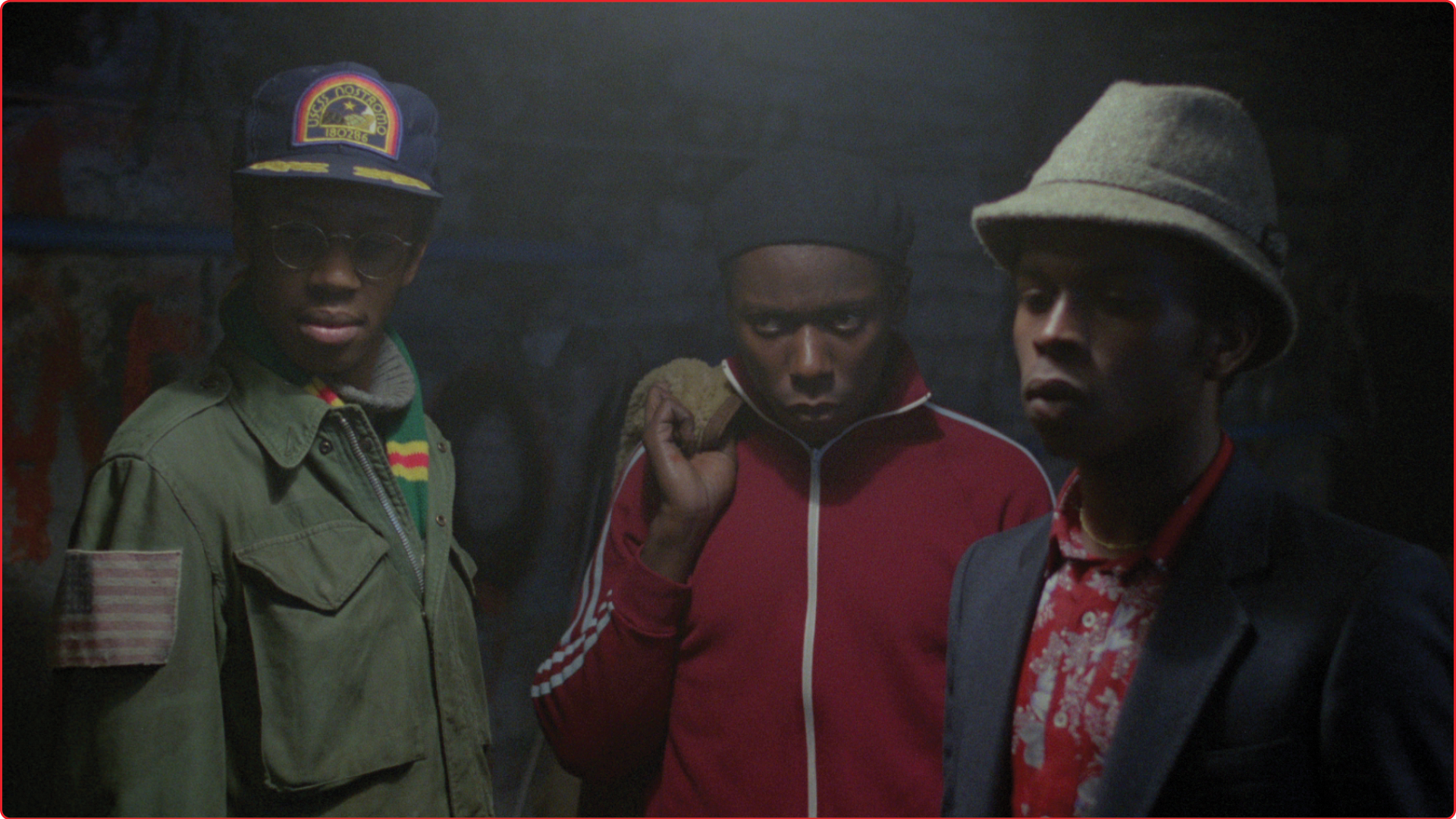
 Babylon (1980)
BRADFORD YOUNG: I think everybody I know has a similar story about Babylon (1980), Babylon was a discovered gem for most of us. I’ll make it real short, because I think you have to see the film to understand it. A lot of us, our filmmaking practice or our understanding of what film could be got forged out of knowing or relating to a whole movement in London, which came post-1982, 1983 resistance in Handsworth, resistance in Brixton. Many songs that we, with Jamaican background heritage, grew up on, listening to people like Steel Pulse talk about Handsworth-all these songs that were familiar to us, and that came out of London sound system culture, New York dubplate culture, and people from Jamaica going to Jamaica, hearing reggae, and then understanding all this comes from a culture of resistance. There were these songs that kept coming up that were about these towns and cities I had never been to.
In London, a lot of the kids who came out of that moment of resistance, the government gave them funding to make movies. They started what we know now as the London film collectives, people like John Akomfrah, people like the amazing cinematographer Alwin Küchler, who shot lots of their films, Isaac Julien, the list goes on and on with folks who made contributions. And Handsworth Songs (1986), which is one of John’s films, was the first I saw that documented this moment of a collision of the politics of Margaret Thatcher’s England and young, first-generation kids of the Windrush to London who were using sound systems that they brought from the Caribbean to unify their voice, spinning dub plates, and gathering DJs like Jah Shaka, Linton Kwesi Johnson, Dennis Bovell, who are all in the film. All of these kids came out of sound system culture, where they were supported by the community to keep kids off the streets, and prevent them from being harassed by the police, which, as we know, similar to here [the US], ignited the riots.
Then, and this is not in the film, that led to the development of tabla culture in London, mainly stretched and developed by Sikh kids, which then turned into drum and bass. The lead in Babylon is the lead singer from the band Oswald, so there are all these connections to things that, when I first saw the film, I felt were relatable-this system of resistance through music, which didn’t have a film component that I was aware of. It was the first film that was actually took an inside look into what sound system culture is, and what it’s about. Then, the icing on the cake, the cherry on the top, is that it’s also about these kids who are growing up in first generation England during Thatcherism-the things they had to endure, the things their parents had to endure, and watching them try to survive in the environment.
It really was an inspiring film for me because I had a connection to the music but I had not been in the culture, which is very different from Jamaican sound system culture.
Totally inspiring. Why did it inspire Mother of George? Not necessarily in terms of the palette, but Chris Menges, the cinematographer who went on to shoot many films like The Killing Fields (1984), The Mission (1986), The Boxer (1997), he won an Academy Award, he was an incredible force. His use of minimal light, his use of color, the way he played with darkness. And the long lens.
So that’s why I picked this film. It’s that slightly objective look-meaning we’re stepping back, using a long lens, to look into the life of others, but seemingly, we’re just close enough to feel like we are one of the characters. Which is what Babylon always felt like to me. Not like I was an observer or an anthropologist, but it made me feel like I knew these kids, I know what this is about. Bablyon.
Babylon (1980)