
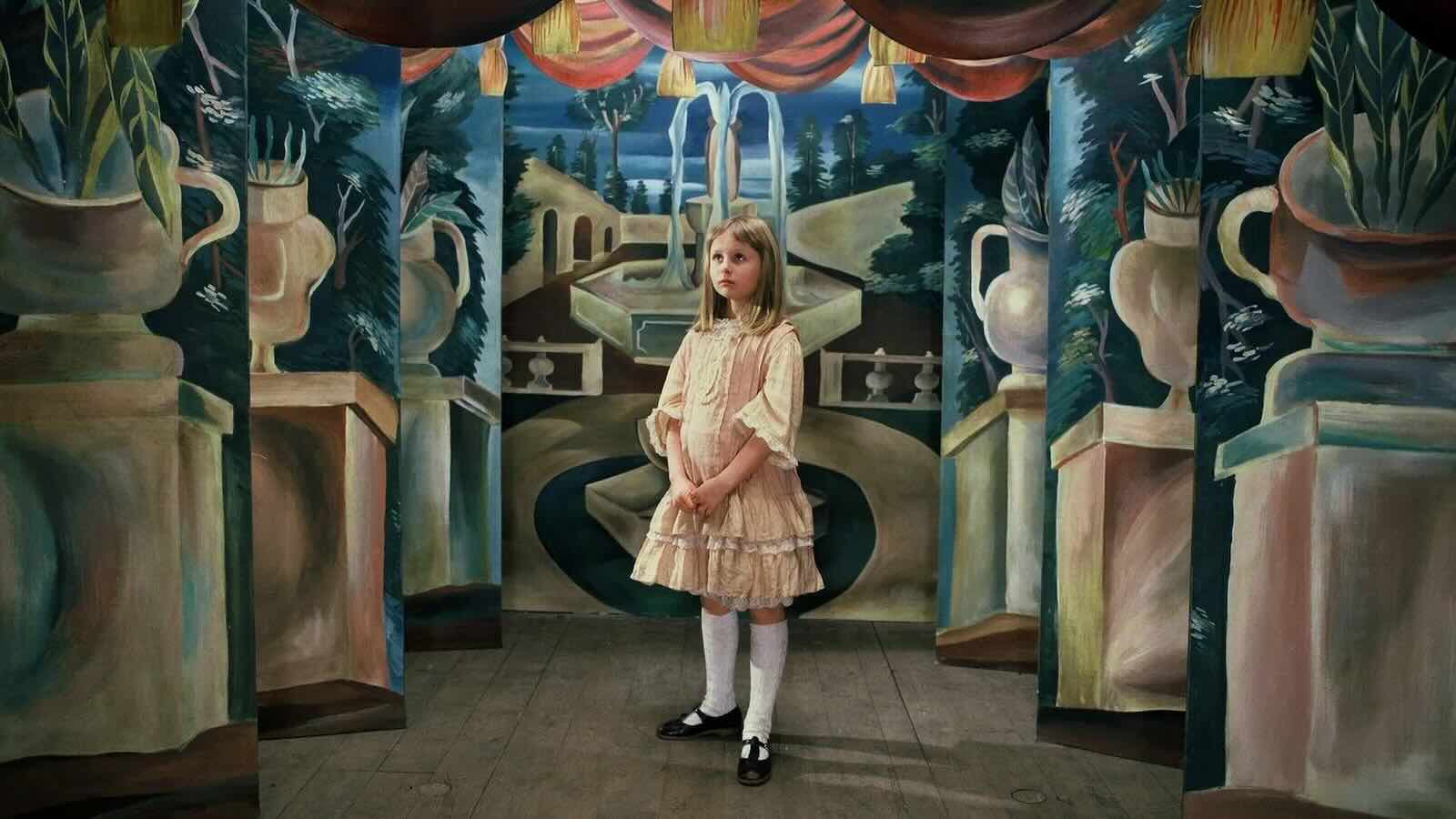
Alice (1988)
Essay
An Introduction to Jan Švankmajer
A primer on the work of the visionary Czech artist.
Alice (1988) plays at Metrograph from Sunday, April 5th as part of The Weird and Wonderful World of Czech Animation.
Share:
TURNING 92 THIS FALL, Jan Švankmajer is a unique voice in cinema, beloved for over a half century now for the imaginative brilliance of his stop-motion animated films. His exceptional vision was announced to the world through two shorts that immediately catapulted him onto the international scene, each of which point to a different source: his first, The Last Trick (1964), to puppet theater, confronting live actors with animated objects; the second, Johann Sebastian Bach: Phantasy in G Minor (1965), to his engagement with visual arts and the Prague avant-garde’s infatuation with the postwar movement Art Informel—its title taken from the French informe, meaning unformed or formless, whose followers emphasized the pursuit of spontaneity and the irrational.
Švankmajer’s journey to filmmaking was unorthodox. In childhood, puppet theater fueled his imagination—which he then went on to study at the Academy of Arts—and inspired an enduring interest in tactile objects and drawing. During his compulsory military service, Švankmajer hid inside a storage room in order to secretly make art, returning to Prague in 1960 carrying a box full of drawings inspired by Paul Klee. His self-described “militaristic isolation” had offered him a rare taste of uncontrolled free artistic practice that would forever shape his approach to artmaking, and, after joining the artist group Máj, he began exhibiting in group shows.
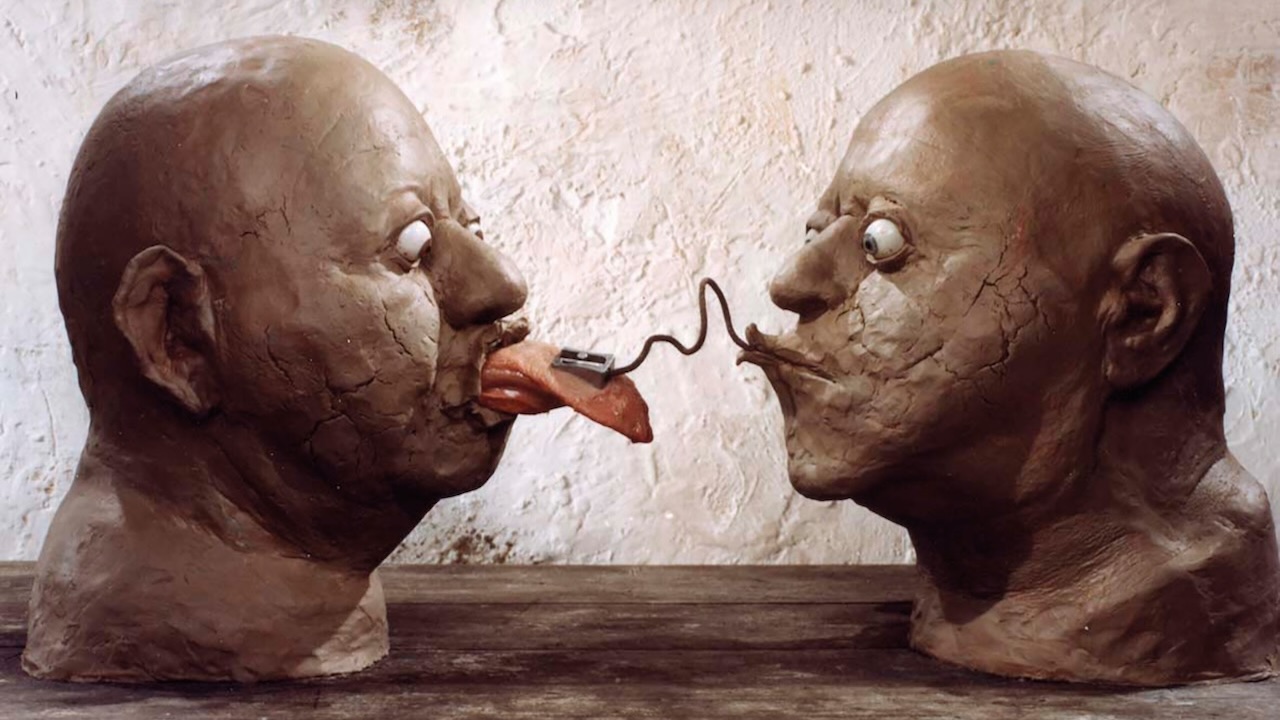
Dimensions of Dialogue (1983)
In 1960, he founded the puppet theater Divadlo masek, where he met Eva Dvořáková, whom he later married, marking the beginning of a rich creative and life partnership. After two years as part of the legendary Semafor theater, Švankmajer and his troupe were then invited by Emil Radok to join the innovative multi-genre theater Laterna Magika, an oasis of creative cross-pollination working on the border between theater and cinema, whose circle over time came to include filmmaking talents such as Evald Schorm, Jaromil Jireš, and Miloš Forman, to name a few. The theater provided the Švankmajers a “cultural exile,” a haven when the suppression of the Prague Spring marked the arrival of politically unfavorable times. Radok also inspired Švankmajer’s first foray into filmmaking, collaborating on Johanes Doktor Faust (1958), a short with a Faustian theme featuring actors as puppets. Later, they wrote several screenplays together.
The practice of making art—“tormenting matter” as Švankmajer has described the process—was a significant influence on his work in film. In his eyes, the agonies of the creative process are captured by the moving image, especially animation. Also, the importance of process over the final artwork—a tenet of surrealism, to which he remains committed since joining the Czechoslovak Surrealist Group in 1970 and meeting its leading figure, the writer Vratislav Effenberger; as Švankmajer has proclaimed on many occasions, surrealism “is not art, but a way of thinking, an attitude of life, a modern alchemy.”
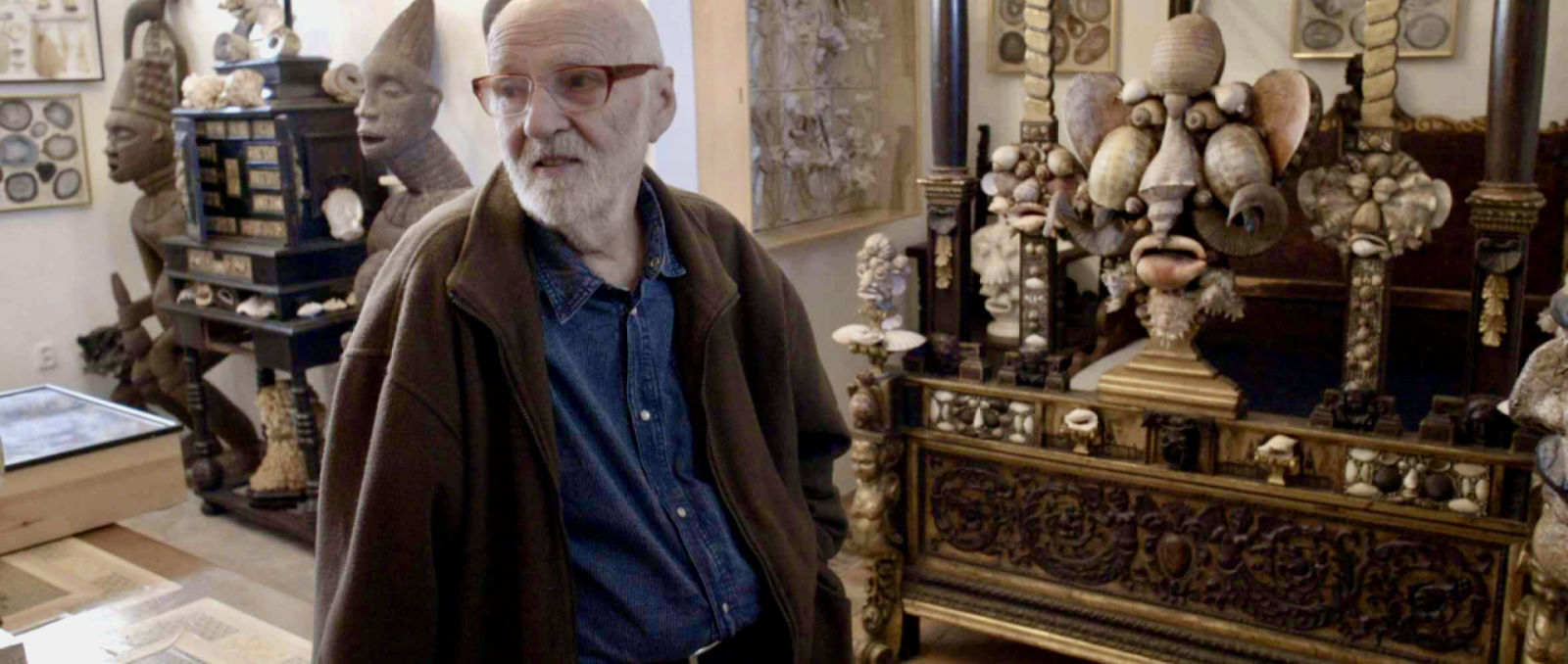
Jan Svankmajer, courtesy Jan Švankmajer
Working mostly underground and unable to publish the results of their rich, nourishing collaborations, the group, with the Švankmajers at the center, organized numerous collective actions. This became increasingly difficult with the advent of the normalization regime, when Švankmajer’s demand for full artistic freedom led the Communist authorities to sideline him and ban his work. In 1972 he rejected the censor’s request for cutting sequences from The Castle of Otranto. For seven years, he was not allowed to make films. This didn’t stop him from doing other creative work, though. After the enforced break, a series of short films culminated with Dimensions of Dialogue (1982), a resounding success which again ruffled the establishment’s feathers. To avoid close oversight, Švankmajer searched for ways to produce films independently. His first feature-length work, Alice (1988), was made outside of the Communist state studio system—an approach unheard of at that time—and became a cult sensation on the international scene.
Švankmajer followed over the decades with a steady stream of original shorts and features, including Faust (1994), Conspirators of Pleasure (1996), and Little Otik (2000). Visually poetic, and combining live action and animation, his films are marked by a mix of playfulness, black humor that can verge on the grotesque, and a deep appreciation of life. Since his avowed last narrative feature film, Insects (2018), Švankmajer has been busy making and exhibiting art—collages, sculptures, drawings, prints, and ceramics. He continues to create with a childlike approach to discovery and imagination, perhaps best epitomized by the magic formula that opens Alice: “Now you must close your eyes, otherwise you’ll see nothing!”
Share:
Recommended
- An Introduction to Jan Švankmajer
 A primer on the work of the visionary Czech artist.
 - A Few Musings on Specific Films
 The visionary Czech filmmaker shares his unique reflections on several of his legendary films.
 - Father Figure: Tahar Cheriaa
 On the era-defining champion of Afro-Arab cinema.