
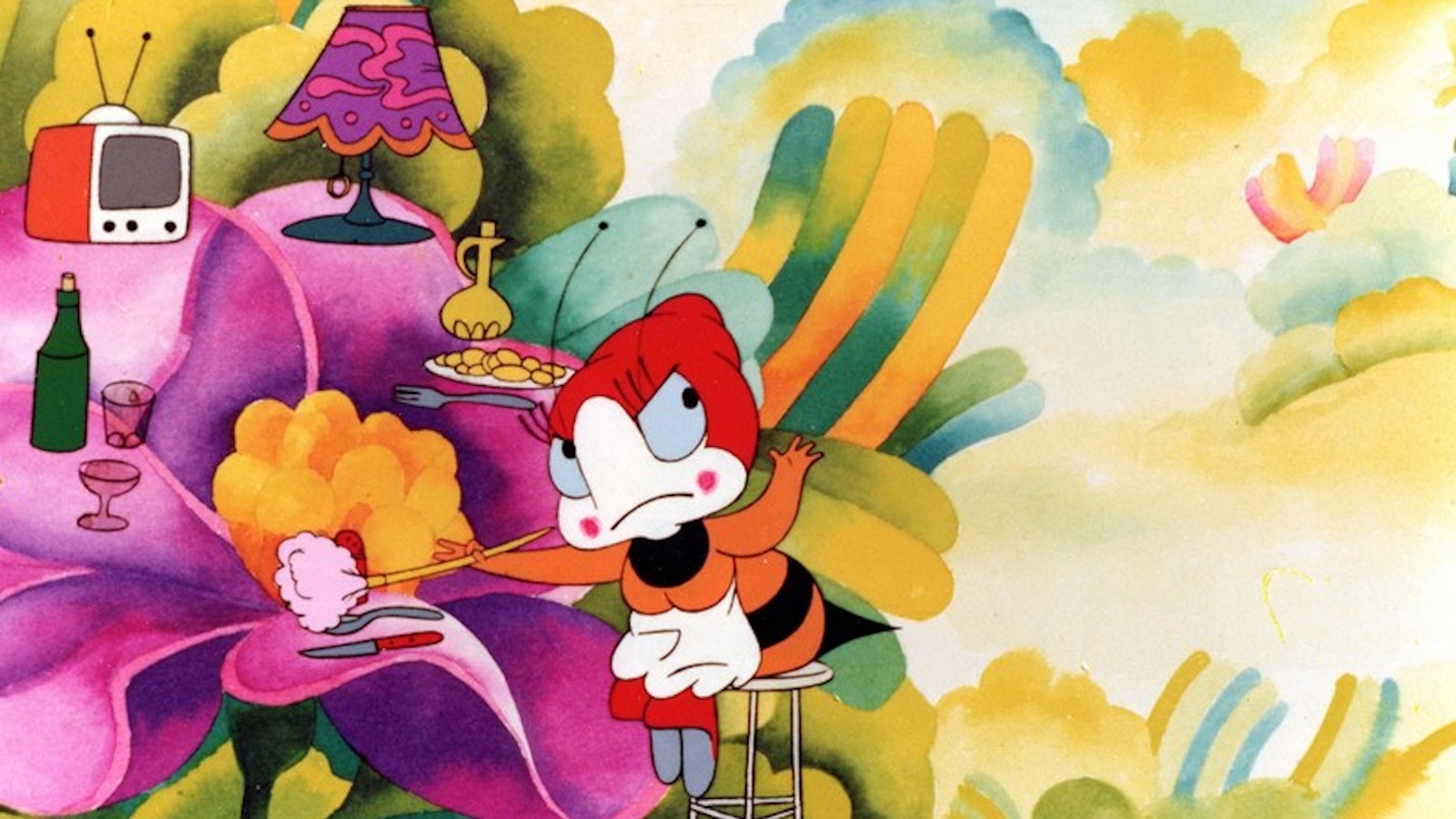
Allegro non troppo (1973)
Essay
Allegro non troppo
On the newly restored, lurid Italian riposte to Disney’s troubled union of animation and classical music, Fantasia.
Allegro non troppo (1973) and Fantasia (1940) play at Metrograph on Friday, March 27, as part of Animated Music.
Share:
THREE YEARS AFTER HE MADE a fortune by softening the Brothers Grimm, and decades before he hatched plans to annex Florida for his own personal Magic Kingdom, Walter Elias Disney made a conspicuous bid for the one world that a certain kind of mid-century American striver always struggled to conquer: highbrow respectability. Partnering with conductor Leopold Stokowski and the Philadelphia Orchestra, Disney put his animators to work against the music of Bach, Stravinsky, Beethoven, and other sacred names, with the hope that his populist genius could bring capital-A Art to the masses. Though Fantasia (1940) won some good reviews and was eventually willed into profitability after multiple re-releases, it has never quite shaken the reputation of being one of those grand megalomaniacal follies—an Intolerance (1916), say, or perhaps a Megalopolis (2024). “Well, we made it and I don’t regret it,” Disney said in 1961. “But if we had to do it all over again, I don’t think we’d do it.”
However admirable Disney’s intentions, such spectacular overreach from the man who would eventually bring us Son of Flubber (1962) begs to be punctured. Fantasia inspired at least one great parody following its initial run: Bob Clampett’s ACorny Concerto (1943), with Bugs Bunny in a bra waltzing to Johann Strauss. But the most comprehensive cinematic riposte came from Italy a decade after Disney’s passing, taking inspiration from Disney’s format while poking fun at the limits of his middle-class, conservative worldview.
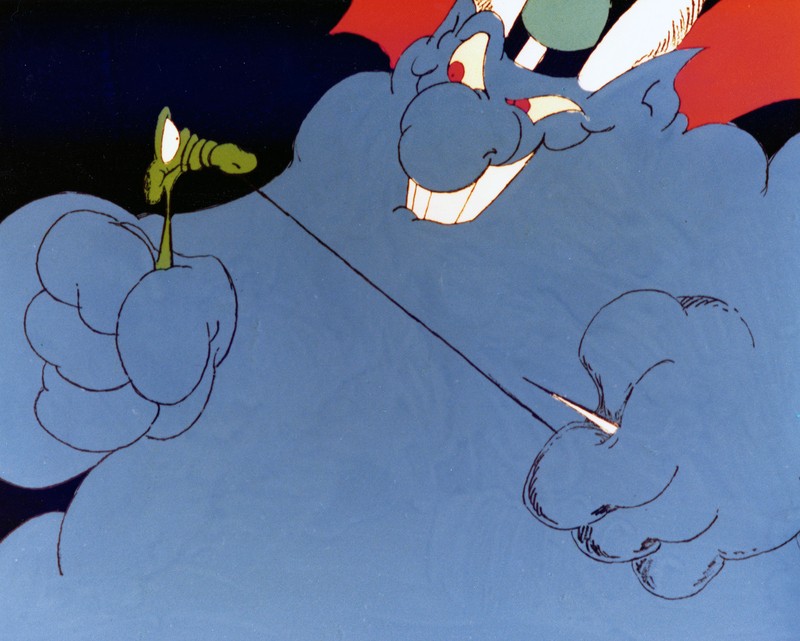
Allegro non troppo (1973)
Bruno Bozzetto’s Allegro non troppo (1976) opens with a live-action segment in which a sleazy producer in a crumbling symphony hall hypes up the film we are about to see as “an unforgettable show—a film destined to become immortal.” Never before, he tells us, has a feature film successfully achieved “union of animation and classical music—a union we are sure is destined to live on throughout the history of film.” A moment later he gets a phone call from Hollywood. Apparently someone has, in fact, already achieved this dream. “A certain someone by the name of Prisney or Grisney…” No matter. On with the show.
In the opening minutes of Fantasia, Disney and Co. establish a strict No Laughing in Church policy, with an introduction by a silhouetted Deems Taylor (then-famous as the voice of the New York Philharmonic’s radio broadcasts) thanking “all the other artists and musicians whose combined talents went into the creation of this new form of entertainment.” By contrast, Allegro shows us a barnful of old ladies herded like cattle into the back of a tractor-trailer to the concert hall, and an animator, who is unchained from a prison wall. If these touches are not direct digs at Disney’s history as a union-buster and HUAC friendly witness, these darkly comic images of dehumanization and exploitation prick at his self-conception as a benevolent ruler.
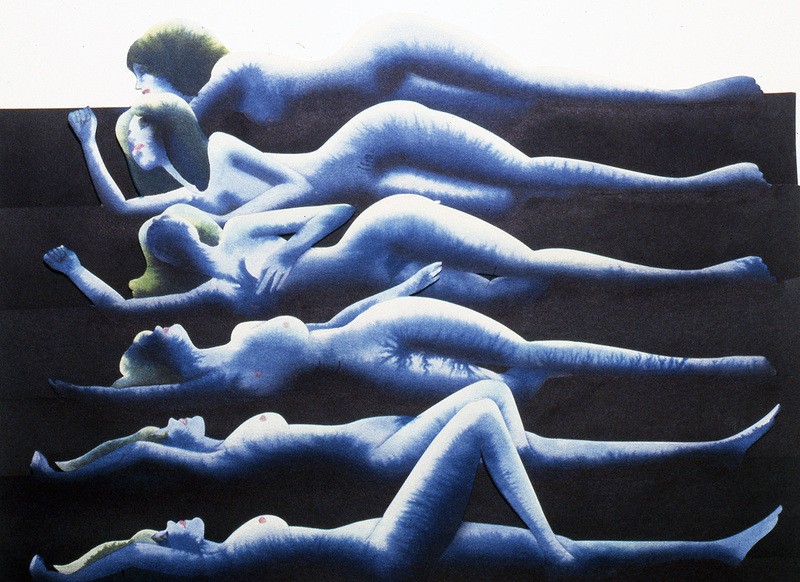
Purists who gripe that marrying music to animation is sacrilege will have the same qualms about Allegro as Fantasia… but if your issue with Disney’s vision was specifically the cutesy cartoon hippos banalizing the classics, then you might appreciate Bozzetto’s earthier images. In the first animated segment, set to Debussy’s “Prélude à l’après-midi d’un faune,” an elderly satyr is beguiled by a bare-breasted women, and seeks vainly to replenish his lost youth and potency. Other segments feature blunt social satire: Stravinsky’s “The Firebird” is used to retell the story of Adam and Eve as a cautionary tale about consumerism and the media. The standout segment sets Ravel’s “Boléro” to the story of evolution (or is it creation?), with the residue of an abandoned Cola bottle morphing gradually into plants, animals, dinosaurs, and, finally, modern metropolis-dwellers. The relationship between the film’s animated and live-action worlds is porous and sometimes contentious: the cartoon beasties sometimes try to break free of their paper prisons to sabotage the film, and die trying.
Allegro non troppo (1973)
From the moment Steamboat Willie (1928) first whistled, Disney loomed so large over the first century of animation that virtually everything else can be interpreted as a response. Remembering Italy’s postwar film culture in a 2022 interview, Bozzetto said, “I’m certainly proud to have made the first full-length animated feature in Italy after La Rosa di Bagdad … Nobody would watch animation in Italy except for Walt Disney’s films.” That milestone film, West and Soda (1965), was a stylish, pre-Leone spoof of American Westerns, which Bozzetto felt had grown predictable as Disney fairy tales: “One minute after you walk into the theatre, you would immediately be aware of who was the good, who was the bad.” With Allegro non troppo, Bozzetto destabilizes the high/middle/low-brow spectrum that Disney anxiously sought to straddle. Unlike Fantasia’s awesome gods and monsters, Bozzetto’s cartoon creatures are horny, ugly, violent, and frequently naked. If Disney felt called to elevate his audience, Bozzetto reminds us of the muck that we were born in.
Share:
Recommended
- Allegro non troppo
 On Italy’s lurid riposte to Fantasia.
 - Juliette Binoche
 An interview with the icon of French cinema, La Binoche.
 - Olivier Assayas
 The titan of contemporary French cinema visits Metrograph.