
Essay
All About Lily Chou Chou
On Shunji Iwai’s chronicle of life under the spell of the early internet.
Share:
On April 12, 2000, a website called “Lilyholic” appeared on the internet. The site featured a variety of images and articles related to a mysterious popstar named Lily Chou Chou, including a news story about a murder that had occurred at one of her concerts. Alongside these editorial fragments, the site hosted a message board for fans of the singer. Over the course of a few months, the board grew, and an online community formed around it. Then, the website abruptly closed down.
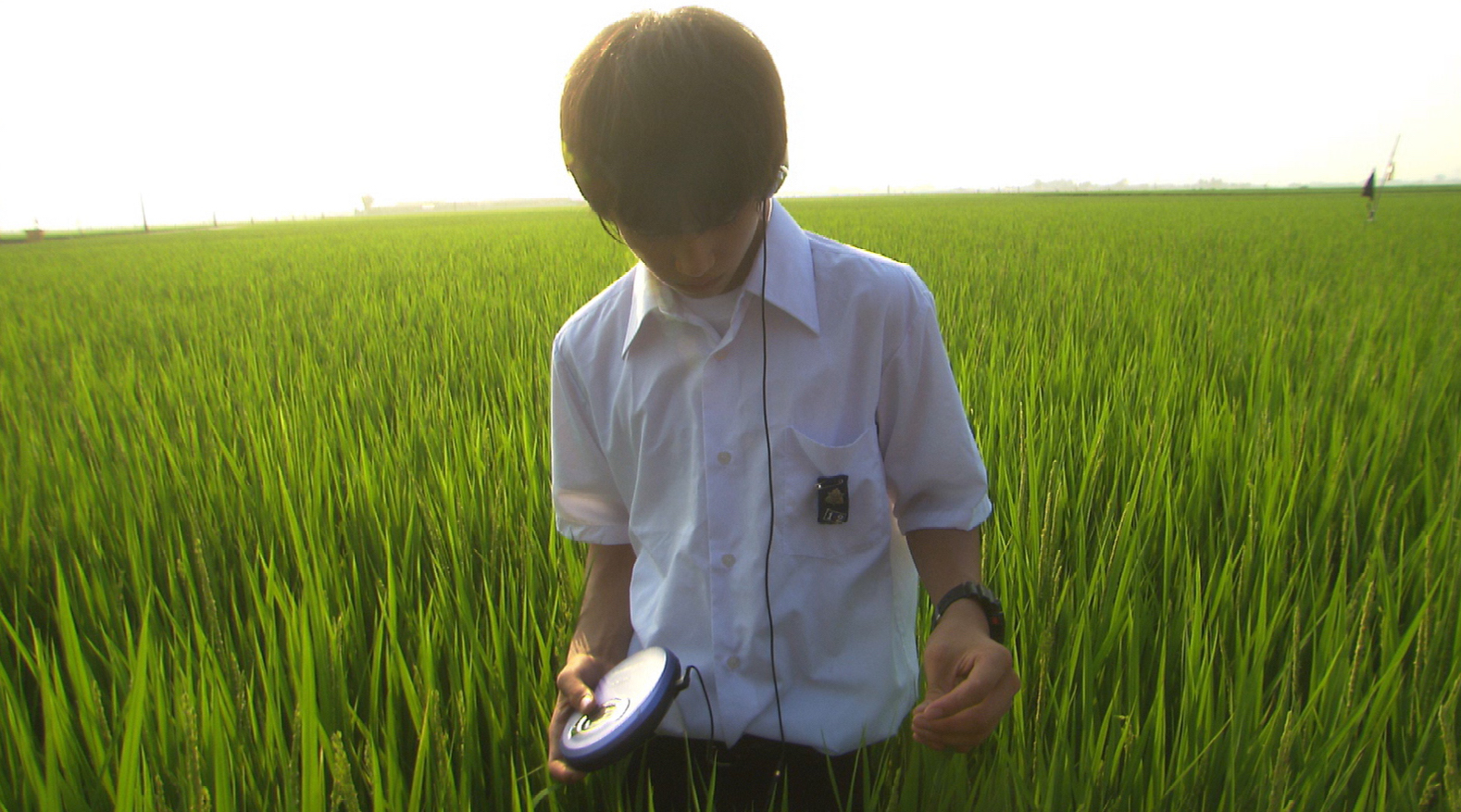
It turned out that Lily Chou Chou was a fiction created by filmmaker Shunji Iwai. The music released under her name was composed by one of Iwai’s collaborators. Iwai had published the website himself, and had been posting on its message board, roleplaying different characters and telling a story through their interactions. The other posters, Iwai’s interlocutors on the board, however, were all “real” people who had become unwitting participants in an experimental mixed media project that blurred the lines between reality and fiction. Iwai’s next film, All About Lily Chou Chou (2001), a movie about disaffected teenage fans of this fictional popstar, was an adaptation of this website.
Though All About Lily Chou Chou may have been the first film born on the internet, it certainly wasn’t the first to reflect upon its increasingly undeniable influence on human experience at the turn of the 21st century. In the early ’90s, films like Hackers (1995) and Ghost in the Machine (1993) explored anxieties provoked by the internet’s seemingly uncontrollable expansion into our homes; while 1999’s The Matrix and The Thirteenth Floor, projected these anxieties into the future, imagining virtual realities that outstripped and replaced our own, reducing our bodies to shadows of our digital selves. But All About Lily Chou Chou differed from these films in that it engaged these themes from the standpoint of lived experience and human relationships—it was an interpersonal drama: a story about a relationship between two boys at a junior highschool in small-town Japan.
Unlike its Hollywood predecessors, it depicted the internet not as an external antagonist to be overcome, or a tool to be used, but as a phenomenon deeply interwoven into the fabric of daily life and human subjectivity. Instead of posing a binary between the virtual reality of the internet and the physical reality of “real life,” it emphasized their interconnectivity and relativity; the movie does not take place in two dimensions, but in the space in between them. In this sense, All About Lily Chou Chou is not a movie about the internet, so much as it is a movie that captures the holistic experience of youth in Japan at the turn of the 21st century—an experience defined by a persistent sense of ambivalence, fragmentation, social alienation, interpenetration, and helplessness at the hands of social forces.
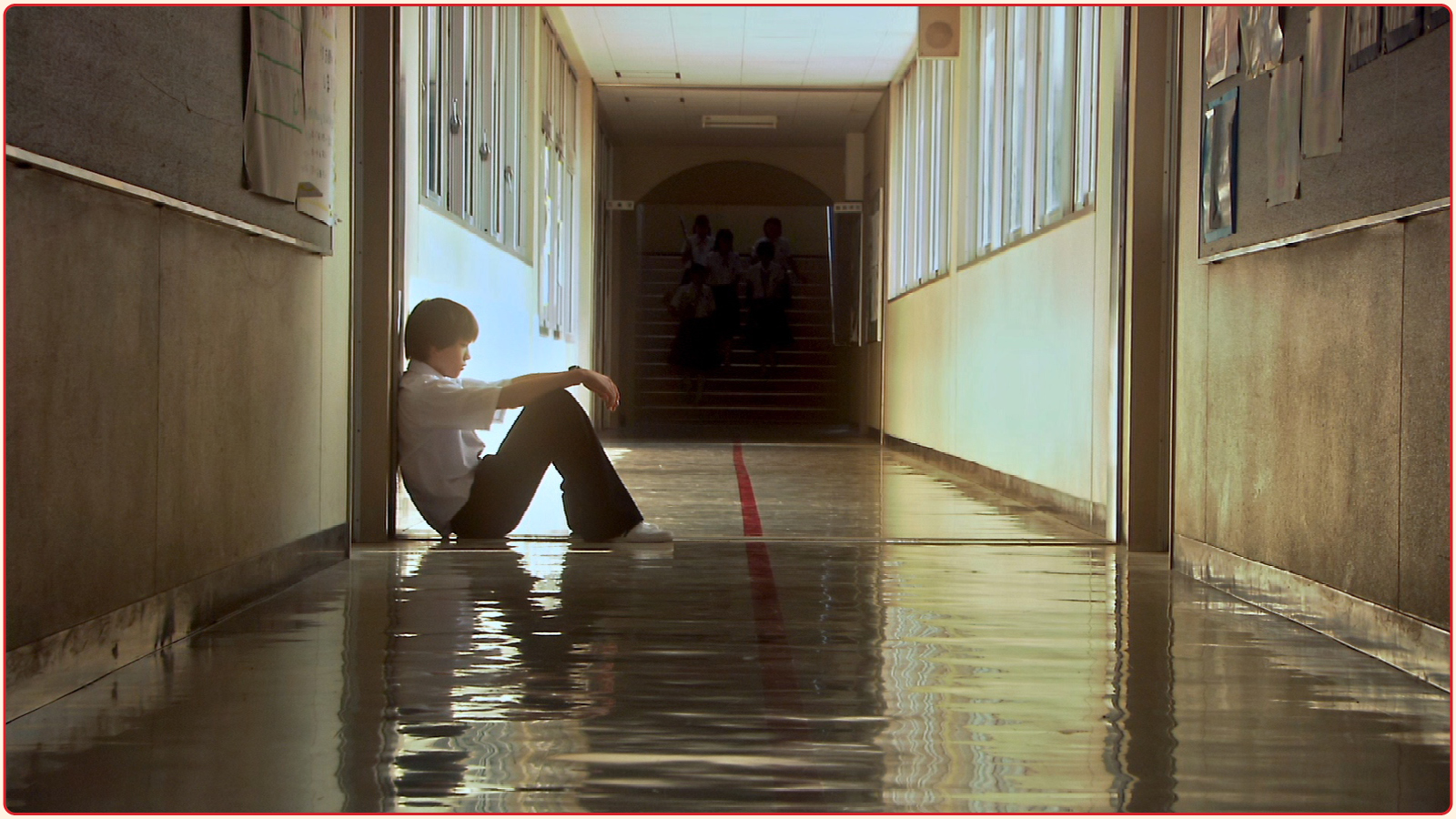
All About Lily Chou Chou (2001)
To draw out the substance of this experience we need some more context, both about the ways that the internet reshaped human subjectivity, and what it was like to grow up in Japan during the so-called “lost decade” of the 1990s.
In the ’90s, the internet entered people’s homes, and as the decade progressed, it became an increasingly integral part of their daily lives. People began to experience the world in fragments: in decontextualized snippets of text; in 10-second-long videos. And in much the same way that the proliferation of the novel reinforced people’s sense of themselves as a self-enclosed “I,” the internet began to condition their understanding of self as an open-ended multiplicity—one they experienced through multiple personas that they could swap between at will that changed character depending on context.
The freedoms the internet promised provoked enthusiasm and anxiety in equal measure. While it connected us with the world, it made us more vulnerable to invisible outside forces. Though it decentralized and democratized access to information, it fractured shared metanarratives at the foundation of our cultural and political cohesion. Though it expanded our capacities for communication, it isolated us in our homes.
In Japan, millenarian anxieties around the internet’s transformative incursion into daily life were compounded by a significant economic downturn that began in the early ’90s. The youth of the era, nicknamed “The Lost Generation,” faced an uncertain future with few options. While economic instability undermined Japan’s confidence in the efficacy of its notoriously rigid post-war institutions, Japan had always excelled at protecting its cultural mores from the violence of historical change. The pressure to conform to predefined social roles remained, even when the guarantees that justified their currency fell to the wayside. While life as a salary man or housewife no longer promised prosperity and stability, young people were offered no alternatives. So as the paths well-trodden crumbled beneath their feet, Japan’s lost generation had no choice but to march forward into the void, in quiet resignation to the stultifying conventions of an inert hollowed-out society. In All About Lily Chou Chou, Iwai captured the mood and themes of this moment, exploring the possibilities and impossibilities of human connection in a rigid, prescriptive, and increasingly atomized society where the internet has reshaped the ways people communicate with each other and understand themselves.
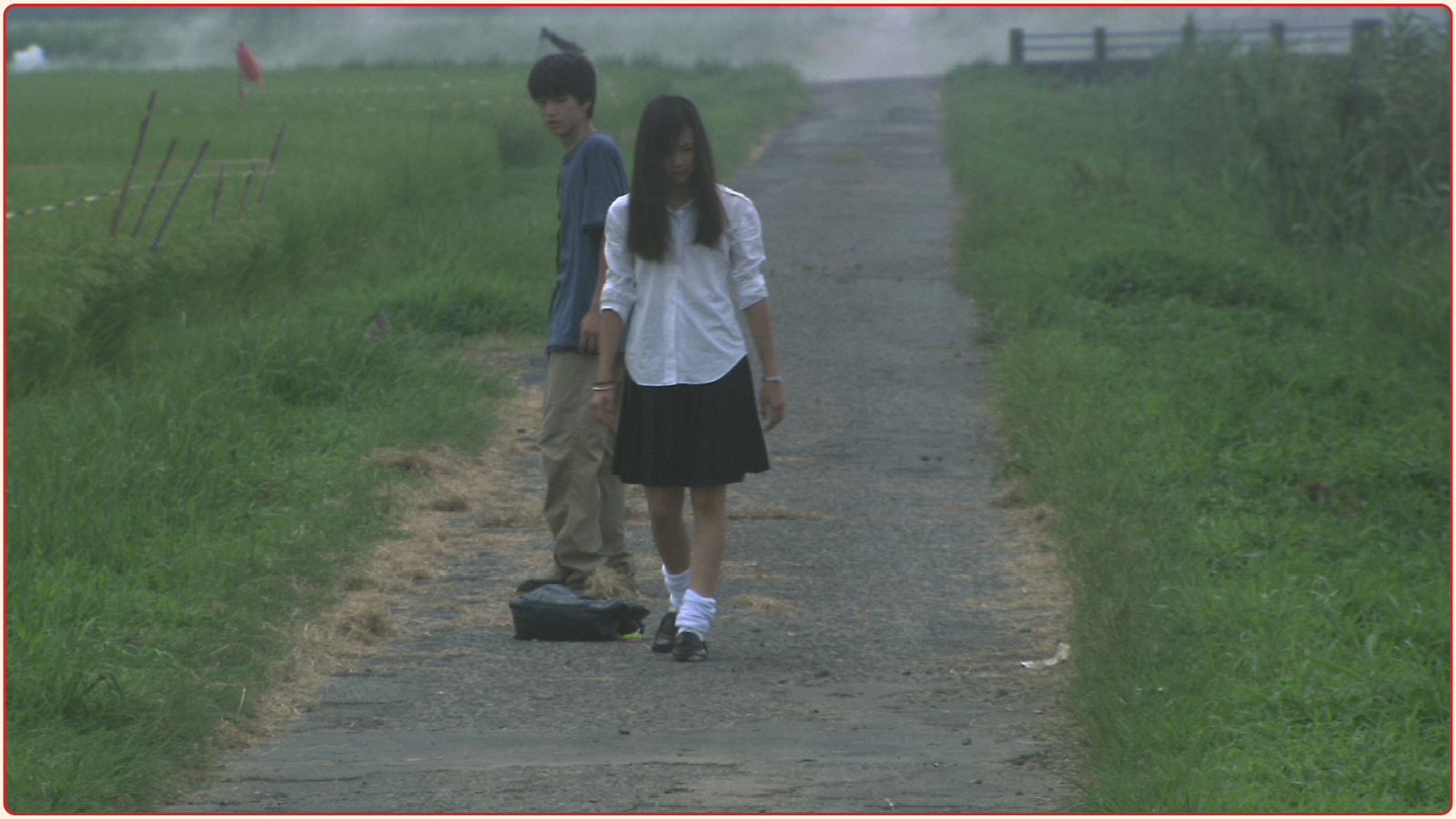
The film follows Yuichi, a troubled boy who moderates a message board for fans of Lily Chou Chou. Towards the start of the film, Yuichi becomes friends with a transfer student named Hoshino, who he meets through his school’s kendo club. However, after nearly drowning on a trip to Okinawa, Hoshino’s personality suddenly changes. He becomes a ruthless, sadistic bully, and manipulates Yuichi and his friends into following suit. As their wanton acts of cruelty against their classmates escalate, the boys become increasingly callous, alienated, and distant from one another; and as Yuichi becomes increasingly closed off, he seeks connection on the Lilyphilia message board.
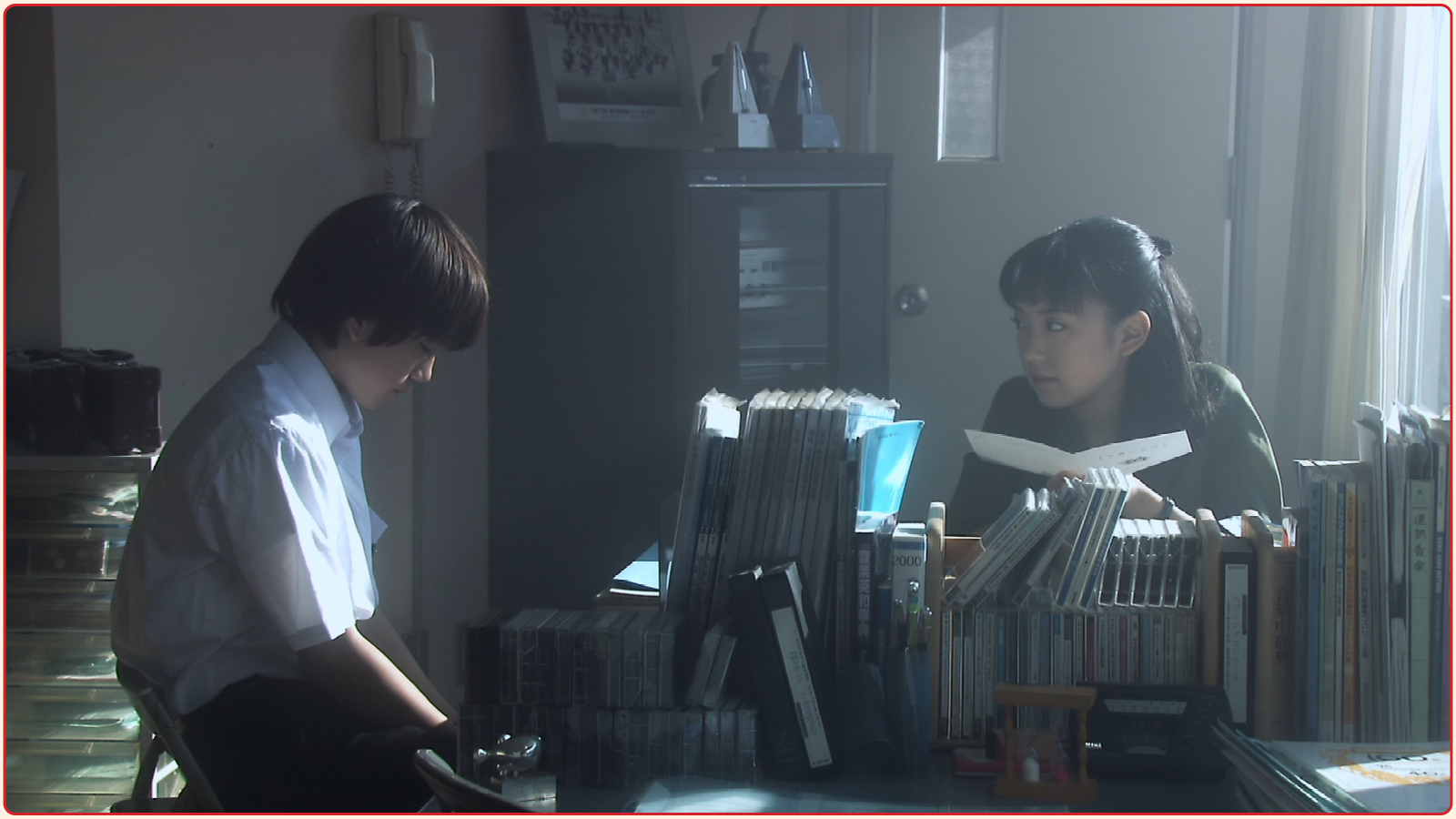
All About Lily Chou Chou (2001)
This narrative unfolds in two simultaneous dimensions: the physical world, where Yuichi is reticent, passive, and unemotional, and the ethereal nonspace of the internet, where he expresses a passionate desire to transcend his circumstances through the mask of his online persona, “Philia.” While the camera captures Yuichi’s apathetic resignation to the harsh realities of his day-to-day life, his forum posts as Philia, which appear on screen in overlays and intertitles of text, emerge into this reality in fragments of confessional prose revealing feelings hidden beneath the surface. By juxtaposing these two worlds, Iwai establishes Yuichi in a state of in-betweenness—of being two people in two places at once. His sense of self becomes decentralized—distributed amongst his peers, both online and off.
In his real life as a junior highschool student, this manifests as a peculiar lack of agency. Iwai never shows Yuichi and his friends enjoying the acts of cruelty they engage in. He never shows what they actually do with the money they make from pimping out and blackmailing their classmates. Their motives are absolutely ambiguous; their crimes seem to serve no particular purpose, other than to lash out at the world, or self-affirm their identities as “delinquents.” Yet their delinquency ultimately becomes yet another “role” they ascribe to with dutiful acquiescence, an ironic inversion of the repressive social apparatus they sought to escape. Yuichi thus becomes, in some sense, a paradigmatic representation of the lostness of the “lost generation.” He moves through the world without agency, as a vessel for malignant social forces he feels powerless to resist, inhabiting a role prescribed to him from the outside.
Online, Yuichi attempts to escape by incorporating himself into the monistic ether of the Lilyphilia message board. Here, Yucihi finds momentary respite from the social and material constraints of his real life, as his sense of self dissolves into fragments of text unmoored from the superficial markers of his real life identity. Iwai depicts this experience by attenuating the connection between Yuichi and “Philia.” Over the course of the film, Iwai shows the moment of physical interface between Yuichi and his computer only once. Nothing in the substance or style of “Philia’s” posts really distinguishes him from his interlocutors, either. He does not speak explicitly of his real life experiences; like the other posters, he only ever talks about his love of Lily’s music. As the text of Yuichi’s interactions with other posters flashes across the screen, the distinction between their authors begins to blur. From the audience‘s perspective, the textual dimension of the film, the online dimension, plays out like an ambiguous tone poem. It would be easy to watch most of the film without realizing that Philia and Yuichi are the same person.
Yuichi’s digital self thus emerges as the mutual engagement and interpenetration of multiple selves. Here, Yuichi’s being is redefined as a relationship, as the space between himself and others, rather than as a collection of individual qualities unique to himself. And it is precisely Yuichi’s lack of identity in this space that allows him to connect with other people seeking to extricate themselves from the bonds of their socially predetermined existences.
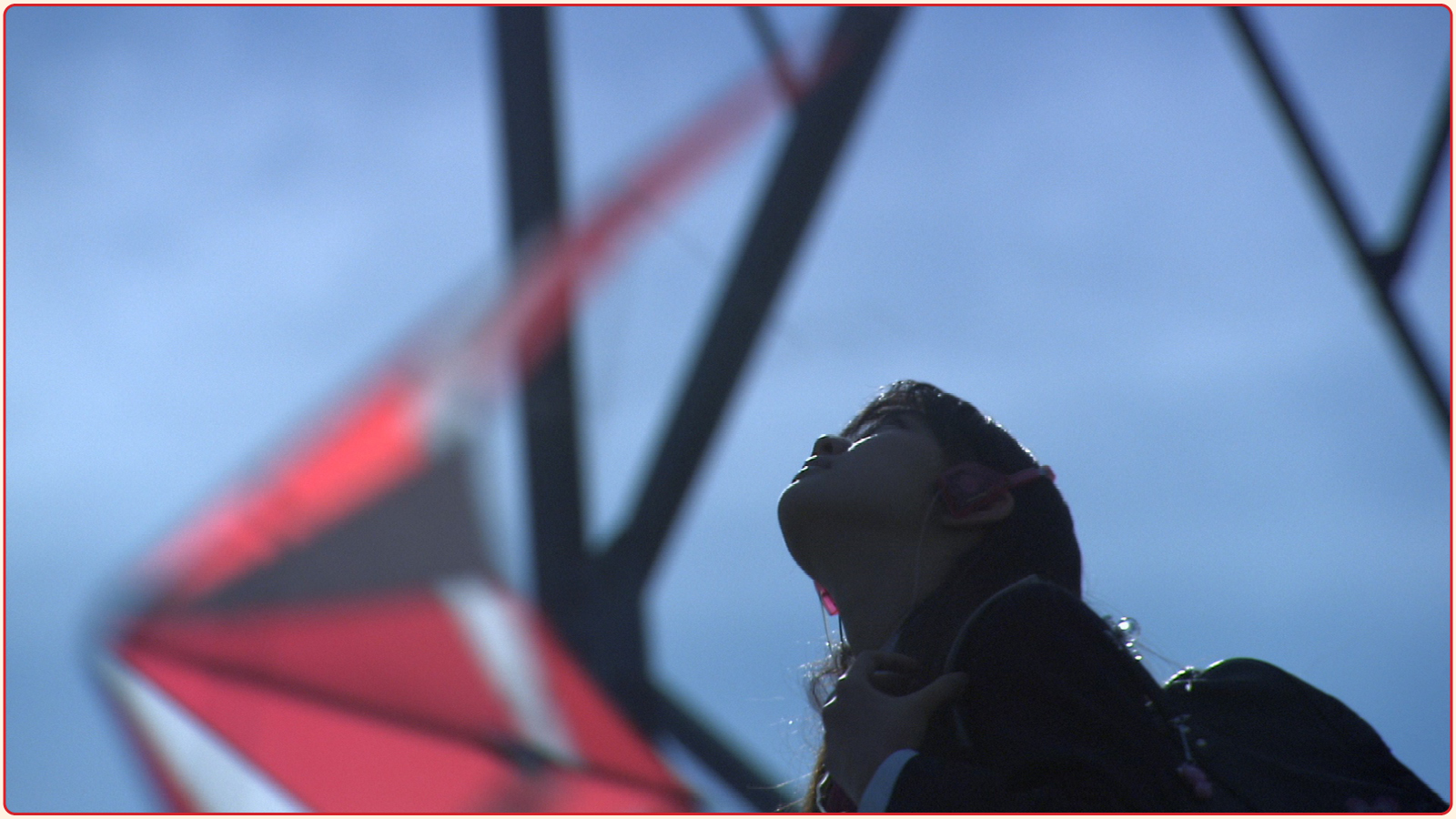
All About Lily Chou Chou (2001)
This process reaches an ironic climax as Hoshino and Yuichi engage in a cathartic dialogue through their online avatars, each unaware of the other’s “real life” identity. The text of their conversation appears on screen as one of their victims, a 14-year-old girl named Tsuda, steps to the edge of a roof to contemplate suicide. Yuichi, as Philia, confesses his despair: “I wanted to die… But I couldn’t. Falling! Falling! Falling! Like an endless loop!” To which Hoshino, as Blue Cat, replies, “I know the pain you feel.” Their dialogue escalates, and crescendos as each enjoins the other to breathe “Breathe! Breathe! Breathe!” writes Yuichi, to which Hoshino replies, “Sympathy! Sympathy! Sympathy!” Iwai then shows Yuichi, Hoshino and Tsuda each alone, with headphones on, listening to Lily’s music. In this moment, the suffering of these three characters, who in real life do nothing but hurt one another, becomes one. In real life, Hoshino and Yuichi are irreconcilable, but online the emotional boundary between them disintegrates in their mutual, anonymous passion for Lily Chou Chou.
However, the sympathetic union established through this online rapport cannot stand the test of a real life encounter. The scene ends with a shot of Tsuda‘s bloodied corpse at the foot of a cell tower. The boys’ exhortations to sympathy appear meek and disingenuous next to the pain they have inflicted on their peers. Iwai ratifies this conclusion when the boys decide to meet in real life at a Lily Chou Chou concert. On the message board, Blue Cat tells Philia that he will be holding a green apple. At the concert, Yuichi recognizes the apple and goes to meet Hoshino, but decides, as usual, to stay silent about his “true identity.” Then, in a characteristic display of wanton cruelty, Hoshino steals and rips up Yuichi’s ticket, unaware that Yuichi is the person he intended to meet. Thus Hoshino, confronted with a person from “real life,” slips into his role as a bully, and unintentionally severs the only genuine connection he had with another person.
Yuichi, then, is left alone outside of the stadium to watch Lily’s concert on a low-resolution Jumbotron LED screen, in a scene that feels like an apotheosis of the sense of in-betweenness that has defined his life since Hoshino’s fateful brush with death. The only genuine connections Yuichi has made up to this point have been mediated through a screen. His only chance to consummate these connections in real life is thwarted by an interposition of the world that he sought to escape. Lily herself, of course, also remains strangely undefined and ambiguous; but we are left with a sense that a physical encounter would somehow degrade Yuichi’s experience of her presence. Yuichi cannot escape real life, he cannot escape the ether, and he cannot reconcile the two sides of himself represented in each, because he decides not to reveal himself.
Many of Iwai’s films culminate in a moment of ecstatic emotional communion between his protagonists. In All About Lily Chou Chou, this moment takes on a decidedly more cynical edge. The impression it leaves regarding the possibilities and impossibilities of human connection in the digital era is profoundly ambivalent. The internet provides unparalleled opportunities for connection; but in becoming simultaneously interconnected with everything, you become connected to nothing. The dissolution of boundaries between two points, means a dissolution of the connection between them. A relationship is one thing that only exists as the interaction of two things. Ultimately, in the real world, we are defined by our differences and by the violence inflicted upon us by the fact of our being in time and space—by the relentless forward motion of history, by the people and things around us, by the material relations that produce us. Maybe one day, technology will help us transcend this circumstance, but for now we can only make ambiguous gestures to that effect.
All About Lily Chou Chou (2001)
Share:
About the Contributor
Recommended
- Can She Bake a Cherry Pie?
 On Henry Jaglom’s effervescent anti-rom-com.
 - Re-Wind
 On the AV dreams and celluloid nightmares of Hisayasu Satô’s Re-Wind.
 - Listen Up! Mihály Víg & Béla Tarr
 Metrograph’s Listen Up! column, in which we revisit movie scores and soundtracks of note, continues with a look at Mihály Víg’s haunting collaborations with Béla Tarr.