
Interview
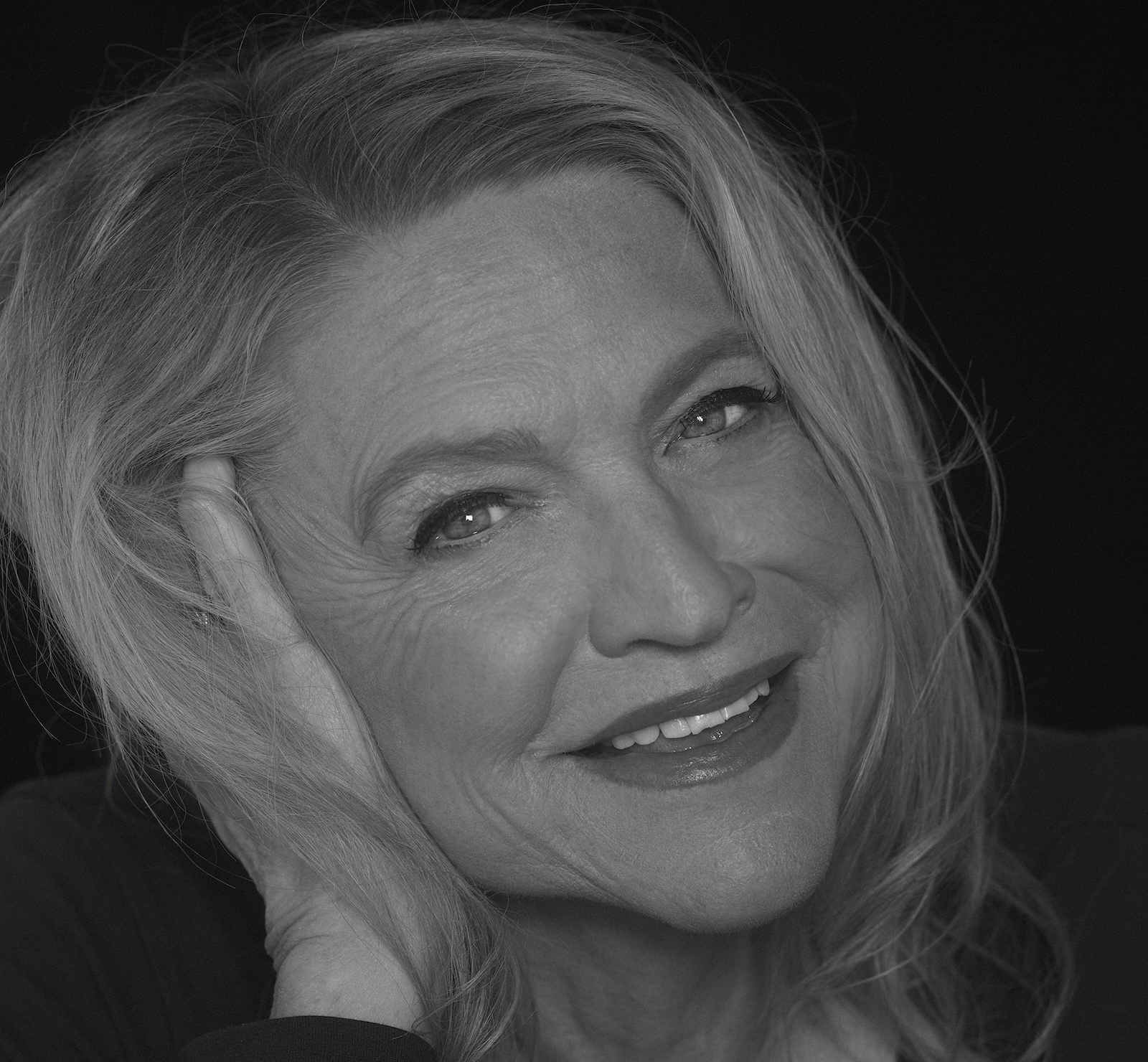
Nina Menkes
On the surreal dream worlds conjured by the American indie filmmaker.
Films by Nina Menkes are currently streaming on Metrograph At Home.
Share:
OFTEN DESCRIBED AS BEWITCHING AND dreamlike, the work of Nina Menkes frequently involves a form of passage, following women who are suspended, fleeing, on the edge. Grounded in psychic and spatial displacement, Menkes’s films combine techniques of experimental and documentary filmmaking in loosely narrative dramas that in their best moments achieve a kind of subliminal revelation: using mystery to disclose interior landscapes of women’s anomie and pain. Menkes began her career in Los Angeles while attending UCLA, where she made her first films with her younger sister, Tinka Menkes, who became the lead in her subsequent four key features. The director’s work has since been recognized at major international festivals such as the Berlinale, Cannes, and the New York Film Festival, with a major US retrospective in 2019 accompanying the restorations of her earliest films.
The perplexity and haunting allure of Menkes’s films made between her 1981 debut short A Soft Warrior and 1996’s The Bloody Child stem, to a great degree, from the onscreen presence of Tinka. Pale and withdrawn, yet possessing a piercing gaze and unwavering anguish, she embodies a series of startling transformations: a Jewish woman on a spiritual quest in The Great Sadness of Zohara (1983),a Los Angeles sex worker who is wrongly charged with murder in Magdalena Viraga (1986), a dazzling croupier in a Vegas casino in Queen of Diamonds (1991), and finally, a Marine captain presiding over a stark, surreal crime scene in The Bloody Child. Menkes’s unique, sororal cinema has continued to evolve without Tinka’s presence, through to most recently, her documentary Brainwashed: Sex-Camera-Power (2022). On the occasion of four of Menkes’s formative key works streaming on Metrograph at Home, we spoke about her process, the discipline of her visual style, and the personal and political archives that inform her work. —Yuka Murakami
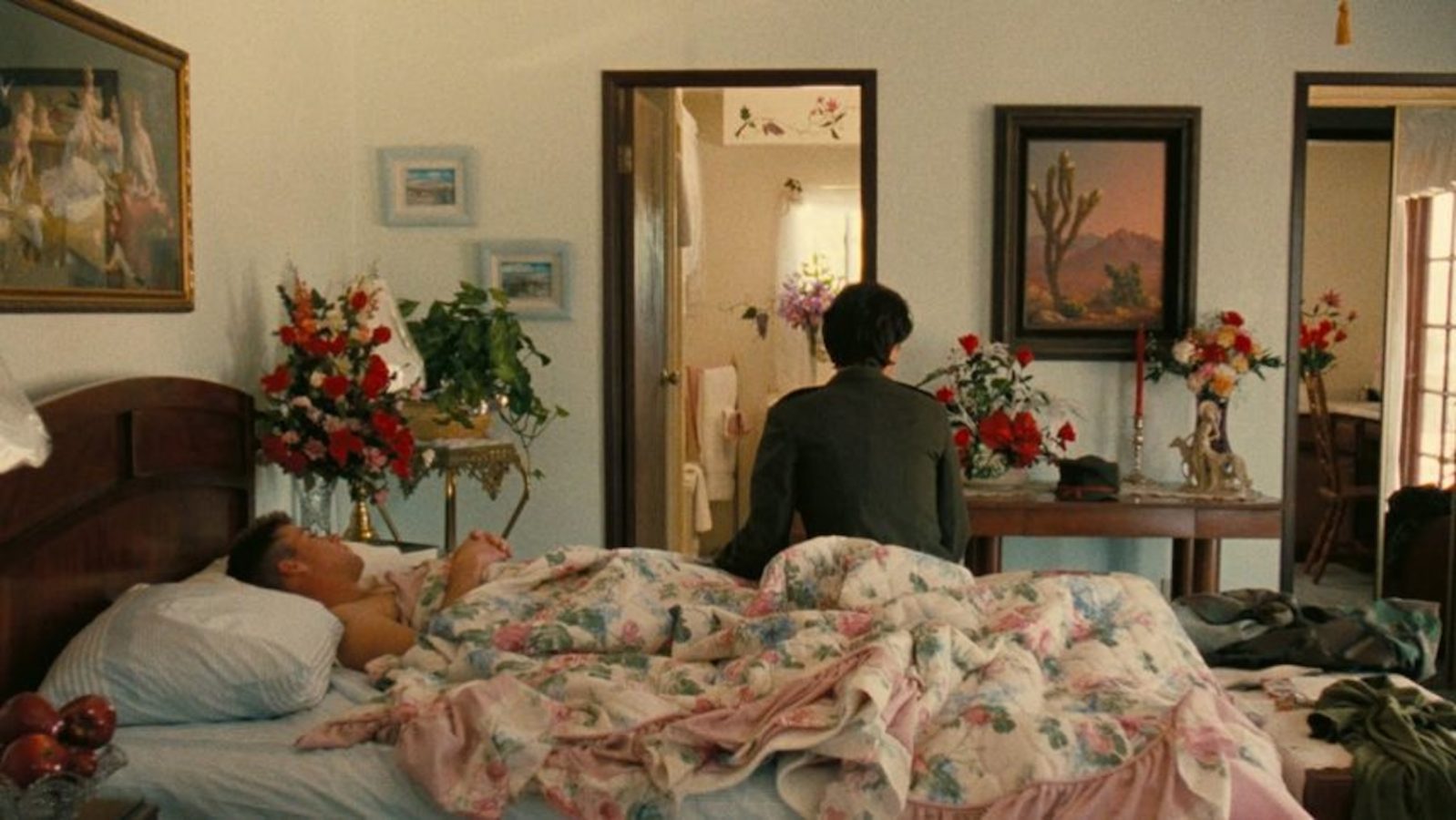
The Bloody Child (1996)
YUKA MURAKAMI: One thing I love about your films is their durational realism—a quality that perhaps comes out of their set-ups: you have a script, or a loose narrative plan, yet you shoot with a documentary sensibility, as you did in Magdalena Viraga and Queen of Diamonds. How do you navigate that in-between space?
NINA MENKES: It came partly from necessity, because I had so little money. But I find placing an actor in a documentary setting to be a wonderful way to work. There’s an element of not knowing how things will turn out that brings a truth to those scenes. I find that much more exciting than pre-planning, which I have never done. Gertrude Stein talked about the idea of repetition and how if you’re repeating something that you’ve already completely planned, there’s not a whole lot of discovery. Not to say that you can’t make powerful, incredible films through planning. But for me, that would take the total presence out of it.
YM: We often see desert landscapes in your films used as a characteristic setting, like in The Great Sadness of Zohara and Queen of Diamonds or The Bloody Child. These scenes were filmed predominantly in the Middle East, North Africa, and Southern California. What draws you to these regions?
NM: I have always been drawn to the desert. It has a spiritual energy: barren, threatening, an in-between zone. There’s a history of spiritual seeking in deserts across cultures. Of course, there’s also a political dimension: these countries have a relationship of exploitation with the United States. In The Bloody Child, the US Marines are all purposely white men, symbolic of the white patriarchal structure and its relationship to both women and the so-called Third World.
From a Jewish perspective, there is also the historical connection and tension. My mother grew up in Jerusalem, and that consciousness was part of my upbringing. This interest in the Arab world has been a focus for me from the beginning and is central to my new film, a fictional fantasy thriller set in Jerusalem’s Old City, which is a political allegory.
YM: The tension you’ve described is palpable in The Great Sadness of Zohara, especially in the moments of verité footage from Morocco where people on the street—including Zohara—look directly at the camera. What led to the making of this film?
NM: I wanted to do a film where a character from the West was a stranger in a non-Western space. I had the idea that it would be a Jewish girl from Jerusalem—my family’s background—who would go on a quest into a foreign space. The story would follow her leaving home, and returning home, profoundly changed.
I convinced my sister to do it with me. I saw nothing of what I had shot until many months later when we returned to Los Angeles. When I saw the footage, it was extremely different from my conscious experience of the trip. I thought I felt a lot of happiness and discovery, and I looked at this footage, and it was profound alienation. I was really confused by it, and it took me a while to understand it. The homecoming in the film is not triumphant at all. This was all an unconscious process of mapping this alternative hero’s journey, a heroine’s journey: she goes on a quest but when she returns home, she’s not victorious.
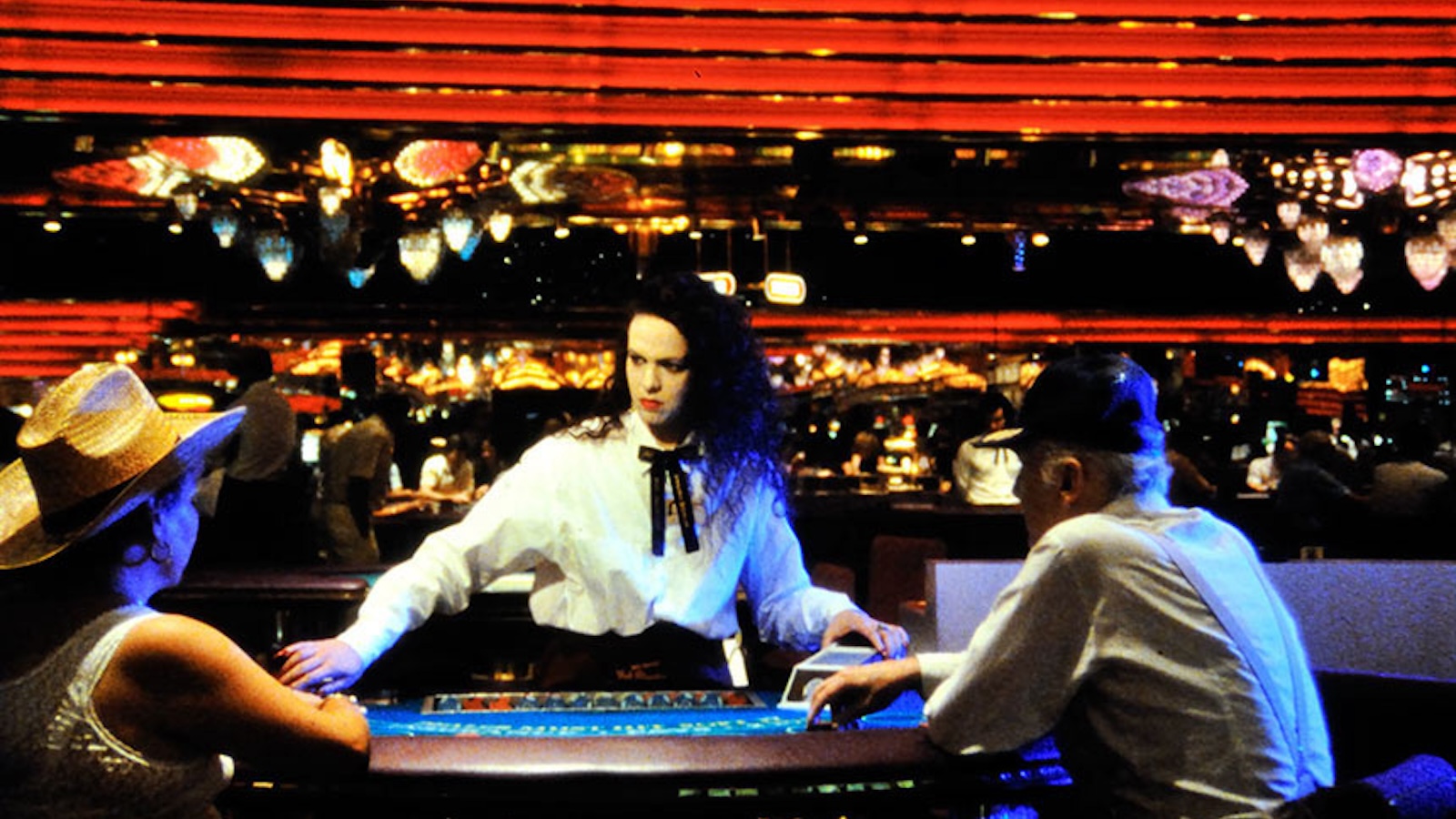
Queen of Diamonds (1991)
YM: What was it like working so closely with your sister, Tinka, as the lead actress in your earliest films? Was she a trained actor and did you have many rehearsals on set?
NM: It was different for each film. For Magdalena Viraga, we had some rehearsals of the dialogue scenes, but it was just us sitting in our kitchen. We especially rehearsed the poetry scenes, because I wanted them to read the poetry like their souls were speaking, so we worked on that. I mean, Tinka did all of this automatically. I don’t remember her preparing, at least not in any way I could see from the outside. She had no training in cinema, just an intuitive grasp—she dropped into that very deep space, and didn’t need a whole lot of direction.
YM: How has your working relationship evolved? Did you share artistic influences growing up?
NM: Our close, intense relationship and collaboration started with my first Super 8 film that we made, called A Soft Warrior. It was about two sisters, and the actor who was supposed to play her part failed to show up. Tinka ended up playing a sort of dream version of me. It was quite a surprise to us when we made that film, it came out so powerful. I suppose it was tied to our common history, and our rather horrendous, trauma-filled background of Holocaust survivors and God knows what else. We had that, but there wasn’t an overt connection, certainly not artistically, growing up.
YM: You mentioned feeling profound alienation when you later viewed the footage you’d shot for The Great Sadness of Zohara. Your films thereafter seem to operate by a deeply internal logic, where characters are subjected to other forms of societal estrangement: sexual, as with the women of Magdalena Viraga, or economic, as in Queen of Diamonds.
NM: Growing up, I was really interested in and influenced by my mother, who had been in Jungian psychoanalysis, which heavily involves analyzing dreams. She would tell me excitedly to write down my dreams. I think that helped, because when you write them down, that unconscious material is nurtured and evolves. It’s boring to say that it’s all an intuitive process, but all my films come to me from the inside out. It doesn’t feel so much like I’m “expressing myself,” as much as there’s something that needs to be expressed. It’s elements of unconscious material that I feel in service to express.
YM: What was it like shooting in the Vegas casino for Queen of Diamonds? I was struck by how Tinka’s character, Firdaus, always felt distinctly part of the background.
NM: [Laughs] It was really crazy. The owner of the casino, Bob Stupak, allowed me to shoot for two weeks in the casino and two weeks in the hotel, for free. The only thing we had to do, legally, was put signs at every entrance saying, “By entering the casino today, you agree to be photographed.” But no one paid any attention to those signs, and they paid no attention to a 35mm camera on a dolly and lights. People were so obsessed with gambling that they completely ignored us. The whole thing was surreal, but again, I was able to use that technique of placing Tinka as the directed actor within a documentary environment. I don’t think there’s any way to recreate that.
My cinematography is also guided by intuition. I just pick up the camera, and I’m able to feel the scene by only looking through the lens. I try to capture the most powerful and truthful frame for each moment; inevitably, it all cuts together. Tinka taught me that you “shoot for shooting and edit for editing”—a principle I later passed on to my students [at CalArts]. If you are true to each moment, the frames inevitably connect.

Magdalena Viraga (1987)
YM: Could you talk about the editing process in The Bloody Child? The film’s internal chronology feels more complicated than your previous work: it unravels, moves forward, returns, and layers parallel storylines. Was this also an intuitive process?
NM: The editing, at first, was intuitive. I shot with really no script and little concept of any structure. It was just a simple premise: there’s a murder in the desert, and I’m going to capture it. I was editing on 35mm, and after working for three or four months, I showed it to Tinka to get her input. After 10 minutes, she said, “Turn it off! You’re just making a sad movie about a murder. Who cares? Where are you implicated?” I was a little upset, but I believed she was right; we spent time discussing it, and came up with the structure of putting everything backwards. I took apart everything I had done. It was the most difficult editing job I’ve ever done, but in many ways, I feel like it’s my most radical and most powerful film. It’s probably also my most difficult film.
YM: How does it feel to see these four films particularly in your larger body of work now? The Bloody Child will have its 30th anniversary this year.
NM: I can’t believe it. The films that I made with Tinka, which were my first five films, map an inner trajectory. I was very influenced by the writer Doris Lessing, who wrote the novels The Golden Notebook and Briefing for a Descent into Hell. That sort of fragmentation and suicidal energy that is in those films, it is a long discussion, but I do think they form a trajectory. After The Bloody Child, there had to be a shift, because that was definitely the nadir of that descent. The other films were an attempt to move back up into the light, one way or another. My work is a melding of interior life and the political implications of that. And the politics of an interior journey is something that is still ongoing, for me: a process of discovery. Hopefully, other people find value in it as well.
Share:
Recommended
- Let the Dead Bury the Dead: A. S. Hamrah in Conversation
 On the so-called “death” of theatrical moviegoing, Romero’s oft overlooked fourth Land of the Dead (2005), and a whole lot more.
 - Nina Menkes
 On the surreal dream worlds conjured by the American indie filmmaker.
 - Hirokazu Kore-eda
 The master of meditative cinema on one of his most bittersweet humanist portraits… about a blow-up doll.