
Interview
Andrew Norman Wilson
Andrew Norman Wilson looks back at over a decade of professional life in the art world with fellow veteran Aria Dean.
Share:
In his recent essay for The Baffler, “It’s Not What the World Needs Right Now,” artist Andrew Norman Wilson chronicles in startlingly candid and honest detail what a decade of work that included four biennials and the acquisition of works by MoMA, The Getty, and The Whitney, actually looked like in an industry that pays in clout and almost never in cash. In anticipation of Wilson’s upcoming live performance of the essay at 7 Ludlow—see the trailer he cut for it here—Wilson and fellow artist and filmmaker Aria Dean discuss their views on the contemporary art world that they grew up in, predictions of where it can go, and plans for the future.
ARIA DEAN: There’s a built-in caginess in the art world when it comes to money and labor. Can you talk about why you sat down to write The Baffler piece?
ANDREW NORMAN WILSON: Honestly, I sat down to write it for money. Matt Shen Goodman, who is the editor-in-chief at The Baffler, reached out after I made a post on Instagram that included footage of me from the Academy Museum’s Oscars Experience, in which you pay something like $20 for a video of yourself holding an Oscar (a friend who works there gave me a free ticket). The caption of the post read: “2.5 years ago I decided to capitulate to the entertainment industry after being diagnosed with slipped rib syndrome. May this award serve as a reminder to all the boys and girls who dream of spending $100K on a Masters of Fine Art in reading Deleuze PDFs someday.” Like any good editor, Matt saw 5,000 words in those 50 and offered me a decent fee to expand upon them.
I vacillated over how much to reveal about myself in the beginning. But once the writing had momentum, my usual tendencies steamrolled those inhibitions. I’m at once drawn to art and stories with dynamic specificity and detail—baroque aesthetics, puzzle films, and so on—but am also a student of Marx, and believe that history can’t be told without addressing class, money, and labor. I recognize the contradictions here, but I guess I get a pass because I’m “creative.” Now I have agents at CAA and am writing a book-length version. Same deal—it’s for the money. But I’m having fun writing it, and want a broad audience to have fun reading it.
I’d say there’s a lot of caginess in the world in general when it comes to class, money, and labor. This helps hide everything from hypocrisy to horrors.
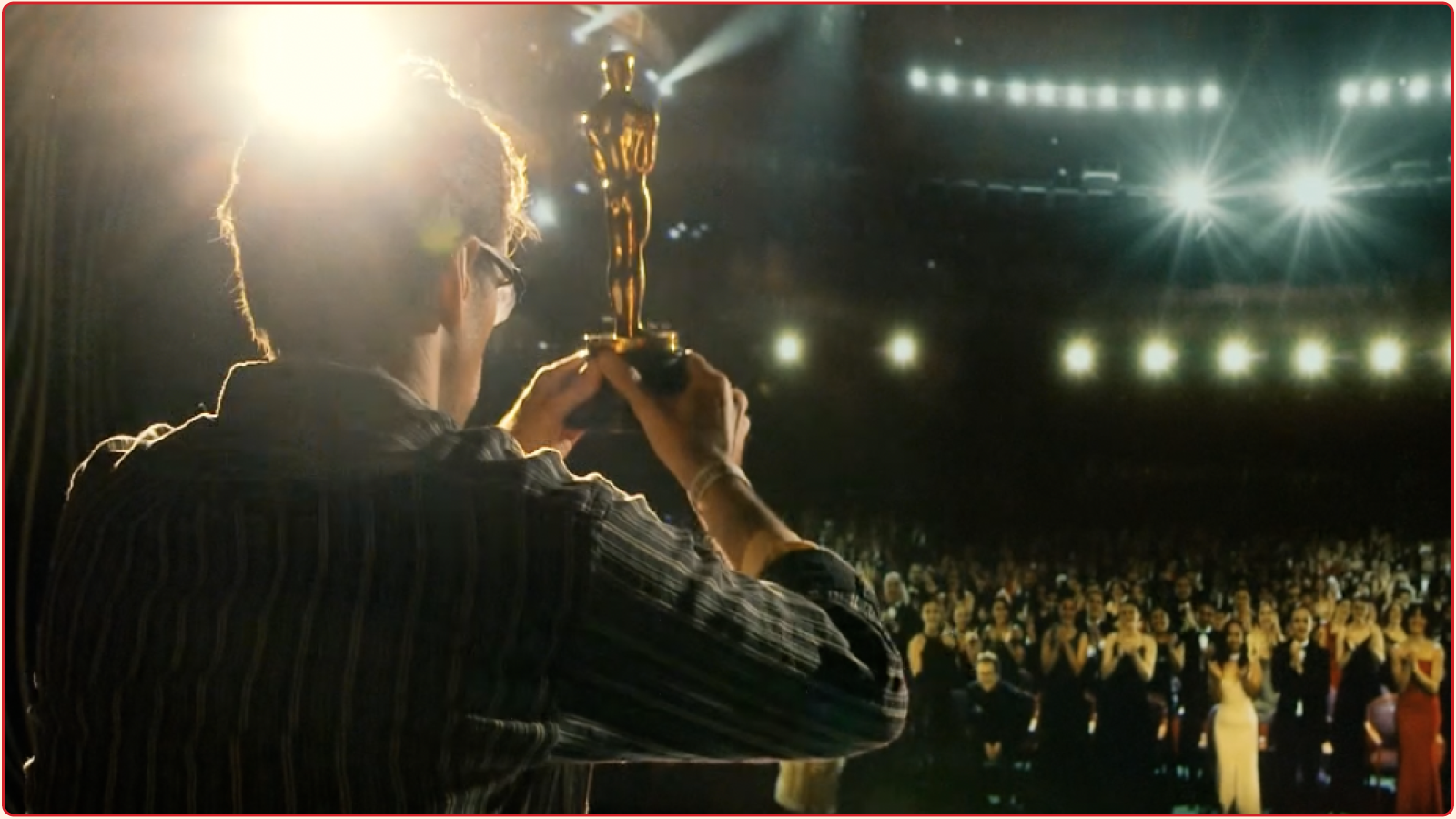
Photo courtesy of Andrew Norman Wilson.
AD: Art and film; let’s talk about the pros and cons of each world. To me, it seems the grass is always greener, but there are also real differences in funding models, agency and autonomy for artists, and at the bottom of this an important question about what “freedom” is, artistically and financially in late late late late late capitalism.
ANW: The fact that high finance stormed both the art world and Hollywood in the 2000s demonstrates that there aren’t many American markets left to invest in anymore. In the art world, this has led to the increased prominence of art fairs, record sales at auction houses, and what I think is an over-professionalization and commodification of artists. In film and TV, this has involved media consolidation, the reliance of franchise films, and the cutting of labor costs.
I’ve started to think it’s easier to make a name for oneself in art than in film when you’re not rich, because you can get away with simple artistic gestures as long as you construct a seductive artistic identity and know the right people. Due to the lack of “quality” control in contemporary art, one can find a lot of real cheap hacks. The more time I spend in the film industry, the more that it appears to me to be the provenance of nepos and rich kids. Like art, film is a networking industry. But writing a script and then turning it into a film takes so much goddamn time. Who can afford that time? And the privileged will always be able to pay people who actually know what they’re doing to make the work for them. This isn’t to say rich kids and nepos can’t make incredible movies. I’m having trouble thinking of good examples… But I worry about tomorrow’s Fords, Hitchcocks, Powells, and Chaplins—truly innovative artists—withering away without having had the opportunity they would have had a century ago.
I’m aiming to make my first feature for $1-2 million, but if that falls through I may just go micro-budget. Years of termite-like production in the art world primed me with a lot of creative problem solving skills. I made my short In the Air Tonight (2020) for $400 and it got my foot in the door of the industry; I can probably cobble something together for $40,000.
AD: I think what you’re saying about making a name for yourself via persona, self-packaging etc., when you don’t have a lot of financial power is really interesting. It definitely seems like an increasing percentage of “the artist’s” time and energy can be (should be?) taken up by this sort of activity. How does one balance this with “the art?” Is there a danger of simply becoming your own IP? A fear or a joy of becoming synonymous with oneself?
ANW: Yeah, that’s absolutely the danger. I’m not really interested in personalities or brands as conceptual art, and I typically don’t buy cultivated personas unless they’re backed by something inherent. People have it or they don’t. Gena Rowlands had it. Andrea Fraser has it. Watching her eat lunch was a miracle. Otherwise I’m drawn to obsessive, passionate productions. I really believe in art itself. Finding something that vibrates with a distinct frequency is special.

“Nightmare Paint” by Oneohtrix Point Never. Directed by Andrew Norman Wilson. Photo courtesy of Warp Records.
AD: Why do you think there are so many artists who are currently trying to make feature-length narrative film work, whether it’s via “crossing over” or just making that work within the art world? Have you seen this emerge over the years? Do you think many artists have always secretly nursed these ambitions or is it something about our times?
ANW: This is definitely a recent emergence amongst millennial artists. My best guess is that contemporary art feels spiritually aimless at the moment. We’re part of the last generation of the 20th century, and thereby inherited the DNA of the avant-garde. I think this tendency has now mutated into a pathology in which everyone’s just restaging past avant-garde techniques.
Personally, I went to college wanting to make TV and movies. And perhaps if the World Trade Center site wasn’t smoldering when I toured NYU and my parents didn’t scare me away from their scholarship-less offer, I would have launched straight into show business out of undergrad.
Fast forward over a decade, and I think running the film archive component of my This Light project during the pandemic reawakened the desire to make narrative work again. I was watching movies every day and processing thousands of files, many submitted by This Light users around the world. I started to revel in the idea that narrative is a form that everyone has a relationship to. It serves as a container for hundreds of artworks: beats, revelations, characters, props, sets, etc. As a filmmaker, this challenge of generating all of these artworks in collaboration with others, then arranging them so that they sync up in time and space, feels extremely rewarding.
I’m also more financially stable than I’ve ever been as an artist. I’m personally finding more ways to parlay my career as a filmmaker into commercial work. This summer I shot another music video and directed a fashion campaign. I’m still living off those fees, whereas [when I was trying to survive] as an artist, I’d work on shows with salaried curators and gallerists for months without getting paid a penny.
AD: Can you talk a little about the difference between working as a filmmaker, on set with others, and working as an artist Because, I feel the same way, and I’m finding that I feel it often even if I have collaborators. It’s almost as though the category of art brings with it a kind of loneliness.
ANW: I love being on set. I love the collaborations I’ve had and the relationships they’ve formed. As a filmmaker I feel like I’m more able to be a part of society as opposed to deluding myself into thinking that I occupy a position in some romanticized outside.
When I think of the production of a contemporary artist, I see an individual—maybe an assistant or two, if they’re lucky—emailing and clicking around in Adobe in a bare white room on the outskirts of a city. When I think of making a film, I see Richard Scarry’s Busytown. It’s not a utopia; the hierarchies of the capitalist economy are on display, but on average I’d say a wider spectrum of human identity is involved than what you’ll find inside an art gallery.

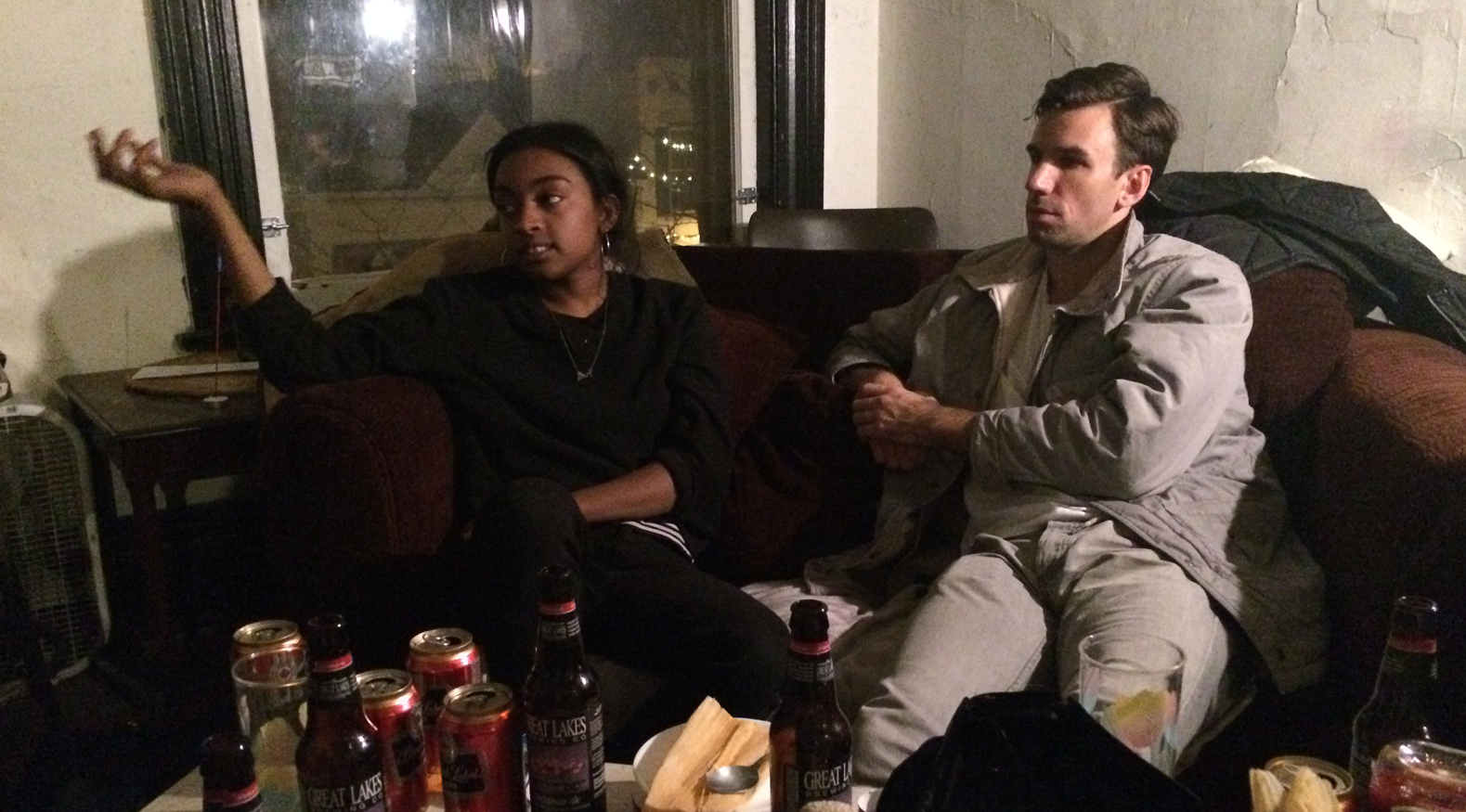
Aria Dean and Andrew Norman Wilson at Oberlin College in 2014.
AD: Can you talk a little about the film you’re currently trying to make?
ANW: It’s a romantic thriller set in Interlaken, Switzerland, where on one side of Lake Brienz there’s Jungfraupark—an ancient aliens research center and theme park called that was started by the sci-fi author and pseudo-scientist Erik von Daniken—and on the other side, a historical theme park called Ballenberg, which preserves traditional Swiss culture. I distilled these parks into two main characters, think Qanon and TradCath. They fall in love, or so it seems. And then a third enters the fray.
I find that my best work always involves dealing with material that I’m both seduced and repulsed by, like Phil Collins, Pokemon, macro photography of mosquitoes, and so on. The town of Interlaken really riles me up. Lowest common denominator tourism amidst beautiful alps and turquoise lakes.
The protagonist of Interlaken is a social media influencer, and while I love actual accounts like @crisis.acting on Instagram and Conner O’Malley’s YouTube, I despise most recent films that deal with social media. So the challenge is: how do I approach this hot potato in an interesting manner? Part of that involves what’s seductive about it; I get to smuggle experimental approaches to image-making into a more conventional narrative format.
AD: What are your five favorite Best-Worst Films?
I think it’s safe to say that big dumb movies like Spielberg’s War of the Worlds (2005) and Christopher Nolan’s Inception (2010) are great, so maybe I’ll list films that it seems I’m really not supposed to like: Polanski’s The Palace (2023), Jerry Belson’s Jekyll and Hyde… Together Again (1982), Kenji Goda’s Analife (2005), Mike Mitchell’s Shrek Forever After (2010)—I may be wrong about that one—and Clint Eastwood’s The Eiger Sanction (1975).
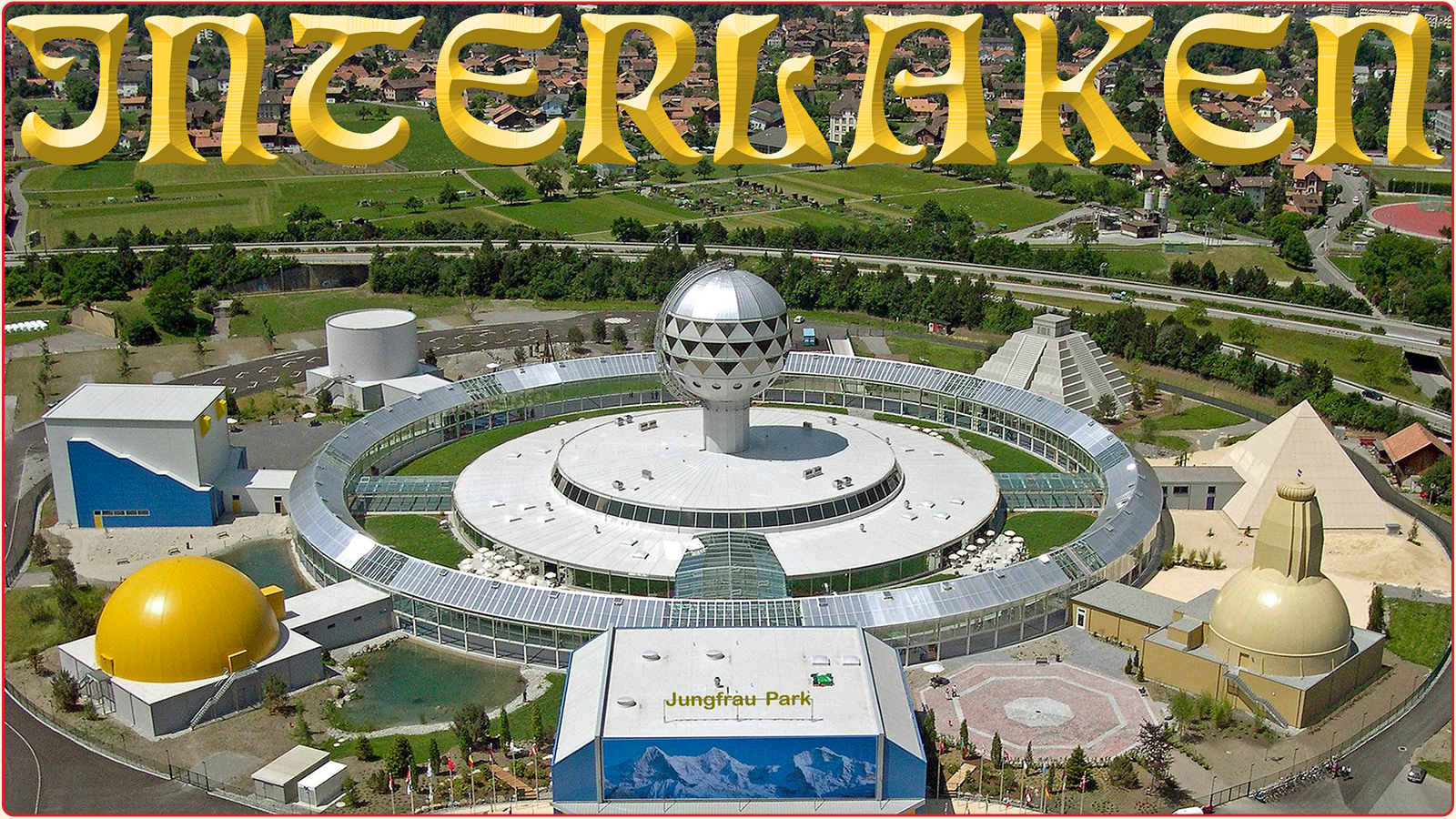
Photo courtesy of Andrew Norman Wilson.
Share:
About the Contributor
Recommended
- An Introduction to Jan Švankmajer
 A primer on the work of the visionary Czech artist.
 - A Few Musings on Specific Films
 The visionary Czech filmmaker shares his unique reflections on several of his legendary films.
 - Father Figure: Tahar Cheriaa
 On the era-defining champion of Afro-Arab cinema.