Essay
[wpbb post:title]
By Jessica Kiang
On Dublin mysteries and Kate Dolan’s folk horror feature debut.
You Are Not My Mother screens at Metrograph March 25-31.
Ireland, as you might know, is a damp place. The rain that turns our fields and hills so famously green also makes the skies low and gray for much of the year, an oppressiveness that bears down like rheumatism on the soft tissue of Kate Dolan’s poised, portentous debut feature. And it’s not just the settling drizzle of the autumn and winter months that slowly soaks your jeans, pearls on your hair and eyelashes, and chills morning and evening air to a misty remoteness. There’s water underfoot, too. Suzanne (Jordanne Jones) points it out to schoolmate Char (Hazel Doupe), squidging her mud-spattered shoe into the boggy ground of an abandoned lot on their Dublin estate, and watching her footprint fill up again instantly.
Dublin is crisscrossed with subterranean waterways with names like incantations-the Naniken, the Bradogue, the Camac-forced underground for at least part of their run by the city’s expansion into suburbs like the drab neighborhood where Char and Suzanne live. The best known is the River Poddle, a dinky name considering it used to power mills and factories and in medieval times was dammed by the Anglo-Normans to form the defensive moat encircling Dublin Castle. It was the Poddle, as recently as 2011 rebelliously prone to flooding, that forced the moving of Dean Swift’s grave, that fed the black pool (dubh linn) that gives the city its name, and that provided the fresh water that allowed settlement to happen here at all. Now it is dirty and hidden like a secret, channeled beneath tourist pubs and takeaways before draining, disregarded, into the Liffey through an ugly portcullis near the Clarence Hotel, which U2 owns. If the Poddle did have some kind of ancient animating spirit-as natural features of the landscape were sometimes thought to-that spirit would be justified in being fully pissed off.
You Are Not My Mother (2021) is a horror film that is unusually sincere in its sympathy for such superstitions, the ones hastily built over and, tucked out of sight in concrete culverts under tarmacked roads, quickly gone from the conscious minds of the people living out their unmagical lives right on top of them. What’s remarkable about Dolan’s vision, though-supremely confident for a first-timer-is not that it imagines these old, buried beliefs breaking back to the surface, disrupting normality in bursts of supernatural revelation. Instead it suggests that the lore of water sprites and changelings and trickster fairies has always been part of these prosaic surroundings, inescapable as the creeping, rising, falling damp. Shining the black light of genre into the cinderblock alleys and dreary living rooms of suburban Irish life, Dolan finds them alive with sinister energies that map superbly well onto the topography of an ordinary, awkward coming of age.
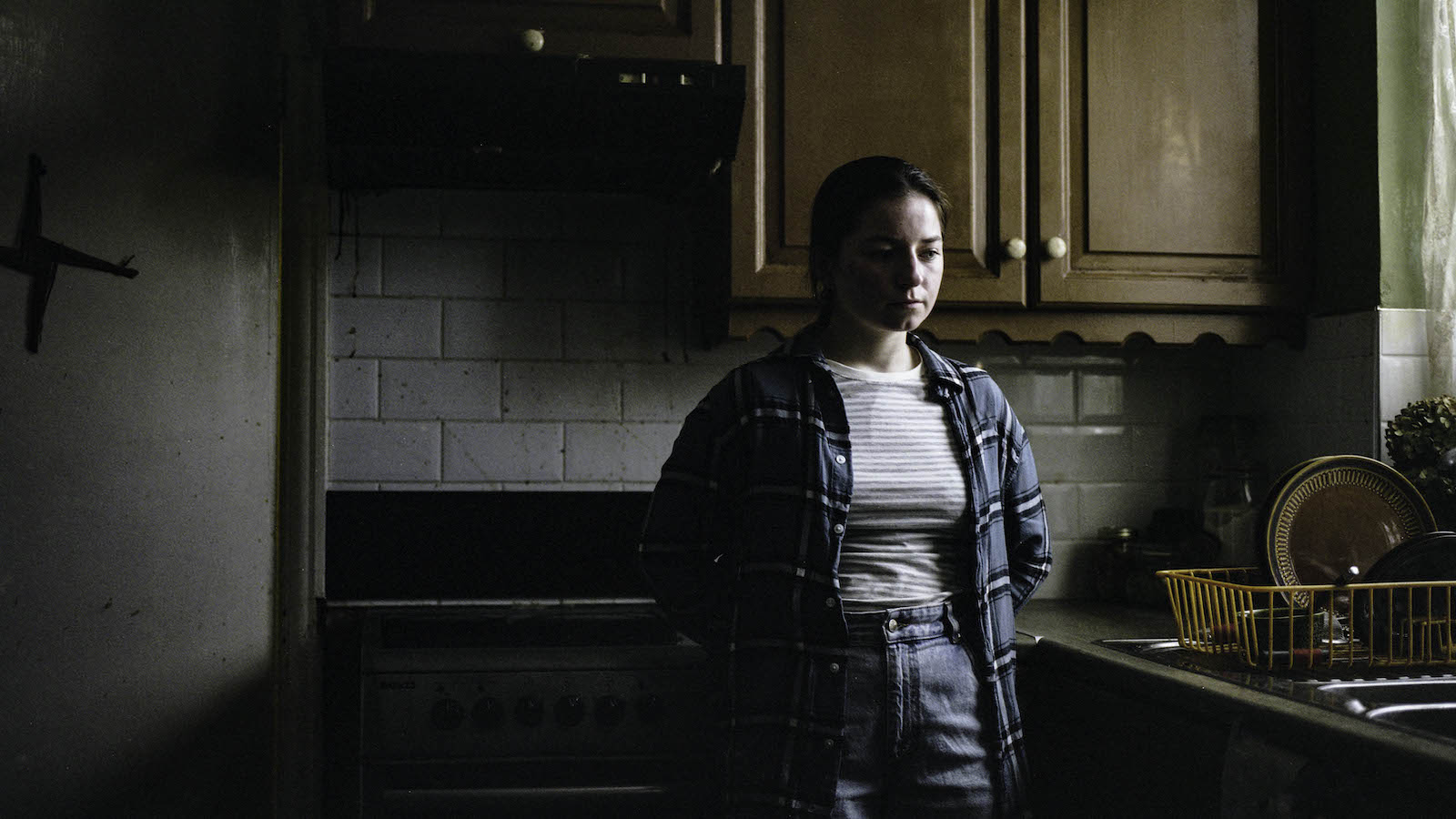
The setting is so authentically drawn that for the initiated, some of the observations must raise a wry, insider-y smile in an otherwise somber film. The mania for collecting abandoned pallets that grips teenagers citywide in October as they hoard wood for deliciously illegal Halloween bonfires; the fusty decor of the family home with its busy carpets and farmhouse-imitation kitchen cabinets; the fact that Char’s mother’s manic episodes are often soundtracked to-maybe even (understandably) triggered by-the ubiquitous kitsch of “You’re Such a Good Looking Woman” by Irish showband legend Joe Dolan (no relation, that we know of, but in Ireland one can never be sure). These details are wickedly specific and yet superlatively ordinary. Char’s street could be any of hundreds in the greater Dublin area; Char herself could be any of a thousand lonely teenagers.
Dolan suggests that the lore of water sprites and changelings and trickster fairies has always been part of these prosaic surroundings, inescapable as the creeping, rising, falling damp.
Consummately played by a heartbreakingly closed-off Doupe, she’s the kind of kid constantly trying to erase herself from anyone’s notice, retreating into the collar of a school uniform sensibly bought a size or two too big. Bullied for being smart (she’s been moved up a year), bullied for being quiet, bullied for the scar on her face, mostly she’s bullied because she can be: she’s alone. “I don’t want you talking to her,” says Suzanne’s dad to his daughter, on hearing that Char is “a Delaney.” The family’s reputation for weirdness has become a self-fulfilling prophecy for Char.
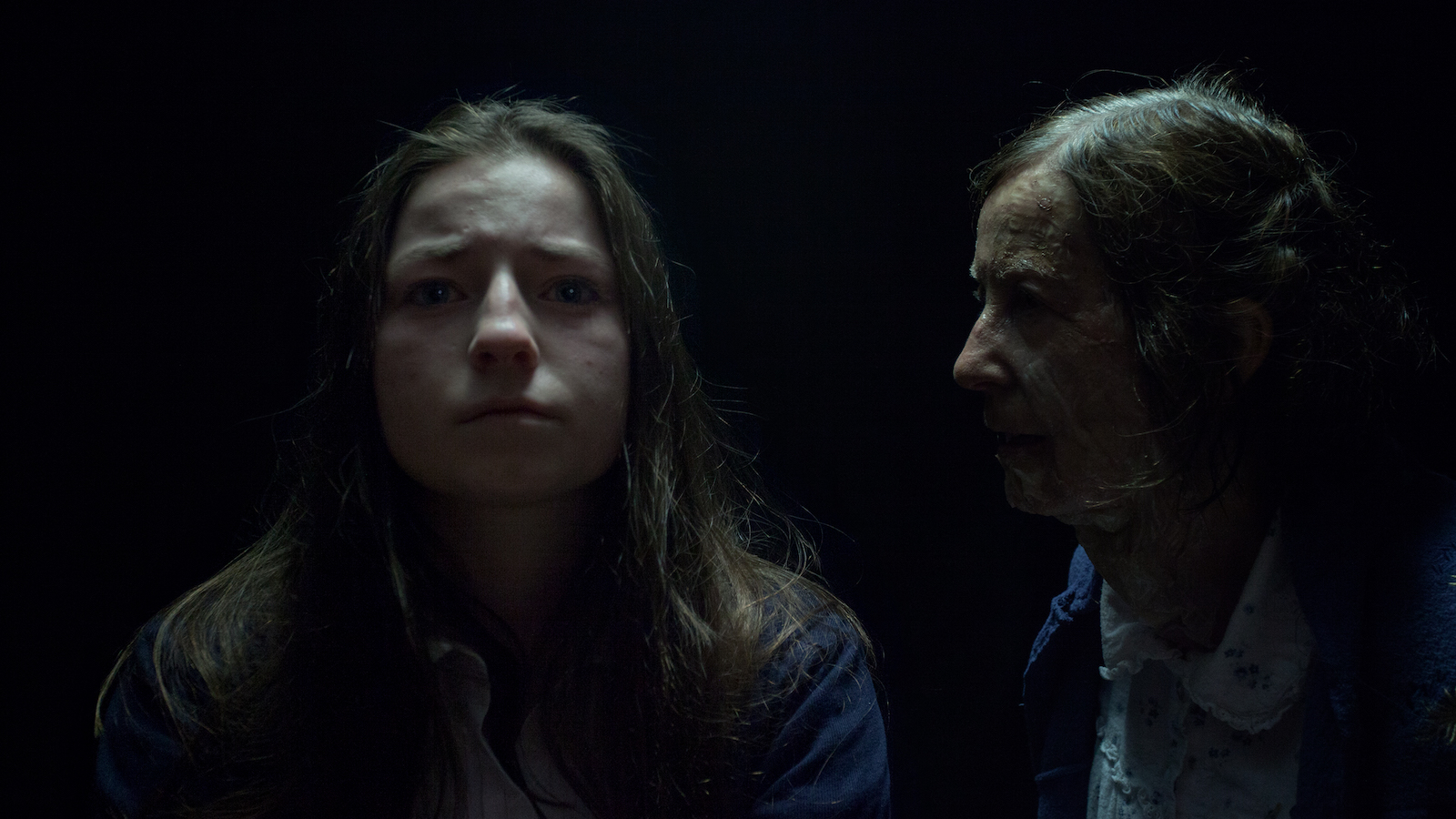
Then again, it’s a reputation earned. And not just because of that night years ago when, in the film’s arrestingly creepy opening, infant Charlotte was left squalling in a Rosemary’s Baby buggy under an Exorcist streetlamp. Char’s mother Angela (an excellent Carolyn Bracken, by turns distant, doting, then downright feral) suffers from bouts of depression severe enough that when she returns to a household made frantic by her sudden disappearance, she is prescribed lithium. But Angela’s mother Rita (Ingrid Craigie) does not attribute the subsequent improvement in her daughter’s mood to medication. Instead Rita, whose fingers are often at work weaving twigs and stems into golf ball-sized talismans of pagan protection, believes her daughter has been taken over by the changeling spirit that first tried to take Char as a baby, and now is back to finish the job.
Joe Dolan croons he’s “walking about with an angel at his side,” but in Rita’s eyes, Angela is now something far from angelic, a malicious vengeful thing that can be glimpsed in the corner of your eye, or in a dingy reflection in the mirror. Aside from everything else, You Are Not My Mother is a haunted house movie, but one that never cheats. The haunting is observed in dispassionate, composed images, as though to emphasize the solidity of the walls, the unshifting geography of the landing and the banisters and the hallway, the calm fact of where a doorway is and whether it might be possible for a terrified girl to make it there if something else is in the room that really doesn’t want her to. Narayan Van Maele’s camera is eerily self-possessed in its depiction of people and places possessed by entities other than the self.
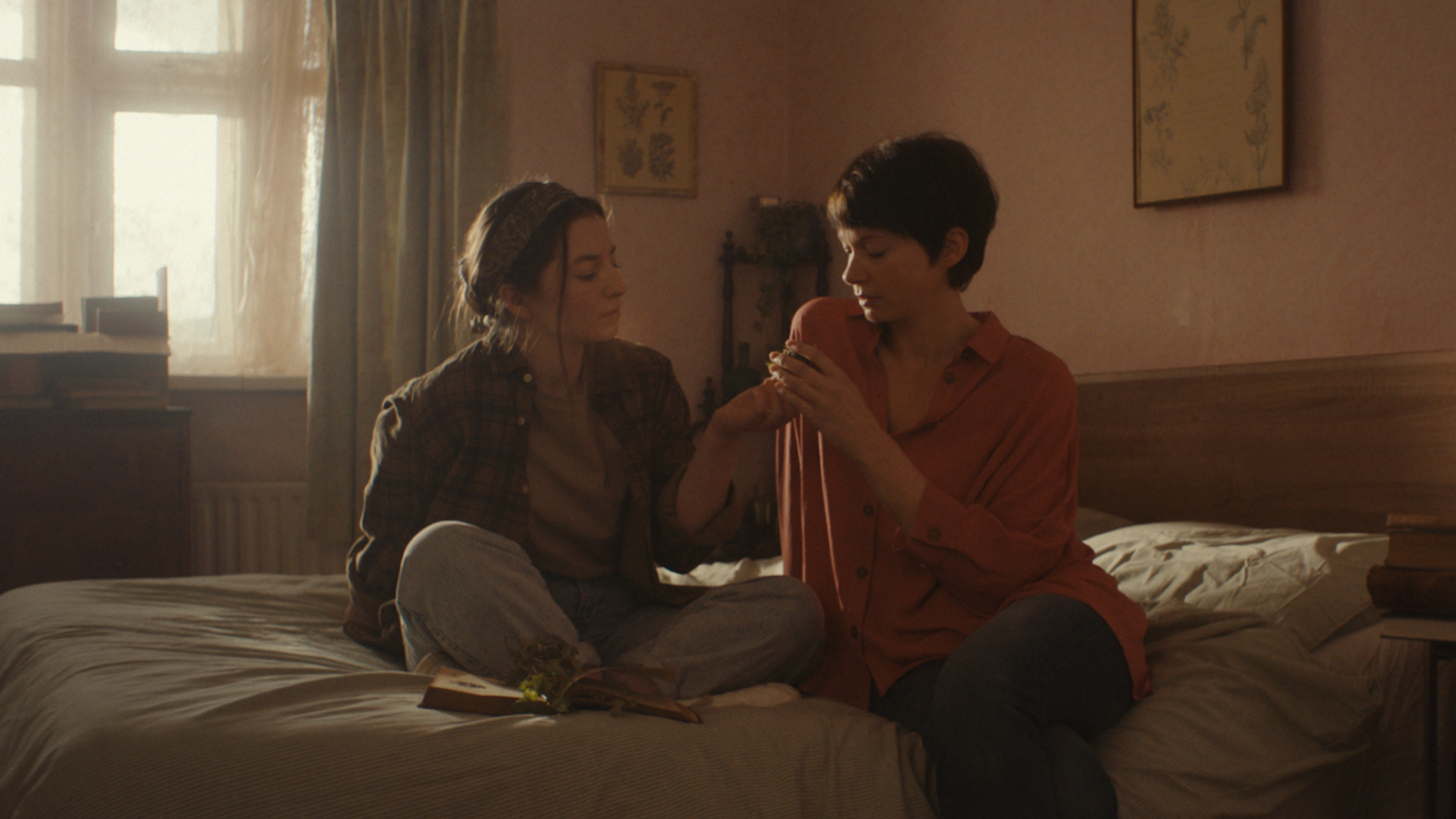
It is also, explicitly, a household of women. Char’s grandfather is presumably long dead; her father is never seen nor even mentioned. Her uncle Aaron (Paul Reid) lives elsewhere, though he pops over to fix a door latch, to deliver a pumpkin, and to be poisoned by a cup of milky tea laced with ground-up pills. Char attends St. Brigid’s girls’ school where both her teachers and tormentors are female; on the back door of the kitchen there hangs a St. Brigid’s cross. Brigid is the “matron saint” of Ireland, who Christians look to for learning, healing, and protection, and her feast day, February 1st, is to become an Irish public holiday from 2023. But Brigid (coincidentally the name of a Tipperary woman murdered as late as 1895 by her husband, who claimed she was a changeling) is also a Celtic goddess from pre-Christian times. And February 1st is also Imbolc, the Gaelic festival of the beginning of spring, and the vernal counterpart of Samhain-Halloween-when You Are Not My Mother is set, and when spirits walk among us. Or in Angela’s case, limp, on an ankle sickeningly broken during a particularly bacchanalian dancing fit. Oh me oh my you make me sigh / You’re such a good looking woman…
The similarities between this movie and Natalie Erika James’s Relic (2020)-another female-directed horror debut involving three generations of women in the same family-are evident. But Dolan’s movie is also its own, strange little thing. It’s less involved with exploring mental illness through the metaphor of a haunting, and more with establishing the possibility of the messy, contradictory mutual coexistence of the people-world and the spirit world. You might not believe in these invisible forces. But that hardly matters if, as the axiom goes, they believe in you.
There’s a comfort here with unexplained ambiguities that is again unusual in a first feature, when the neophyte’s impulse is often to overexplain. Perhaps it feels frustrating, or like prevarication, that for all the dichotomies of real and mythic, human and inhuman, everyday and extraordinary, none can be neatly mapped onto the duality of good and evil. There is no more a clear reason why the Delaneys have been so especially marked out for the attentions of the vengeful uncanny than there is a simple motivation behind the real-world viciousness of Char’s bully-in-chief Kelly (Katie White). Even the water vs fire motifs are complicated: water is life-giving, a symbol of purity, of baptism. But if it is cleansing, it is also dangerous, the portal to a netherworld that claimed Suzanne’s mother and nearly does the same to Char. Fire, too, is ambivalent. It marked Char for life-a life that almost ended in the petrol-nourished flames of that makeshift Candyman pyre. But in the right hands, it too can cleanse and renew; it can release a loved one from the bondage of bewitchment. Why should we expect tidiness and logic when Dolan imagines a world where folk superstition, religion, and banal reality are braided together tightly, like rushes woven into a St. Brigid’s cross-a symbol that is itself Christian and pagan, and the kind of domestic knick-knack that might hang undusted on a kitchen door.
“Come away, O human child! / To the waters and the wild / With a faery hand in hand, / For the world’s more full of weeping than you can understand.” W.B. Yeats’s ‘The Stolen Child’ invokes the very same Celtic changeling myth-but there, to escape the weeping world the poem-child has to go away. In You Are Not My Mother, with the wind and the wet and the network of rivers, seen and unseen, spiderwebbing through the land like veins, the Irish wilderness and its attendant mythology is all around us all the time, even on the humdrum streets and housing estates of scuffed suburbia. However mundanely modern you feel, the past and all her mysteries are closer than you think. However firmly planted your feet, the ground beneath them is swollen with secrets, waterlogged and waiting.
Jessica Kiang is a freelance film critic with regular bylines in Variety, Sight & Sound, The New York Times, The Los Angeles Times, The Playlist and Rolling Stone.